
Develop addition skills Addition & Subtraction Worksheets for Ages 3-8
4 filtered results
Difficulty Level
Grade
Age
-
From - To
Subject
Activity
Standards
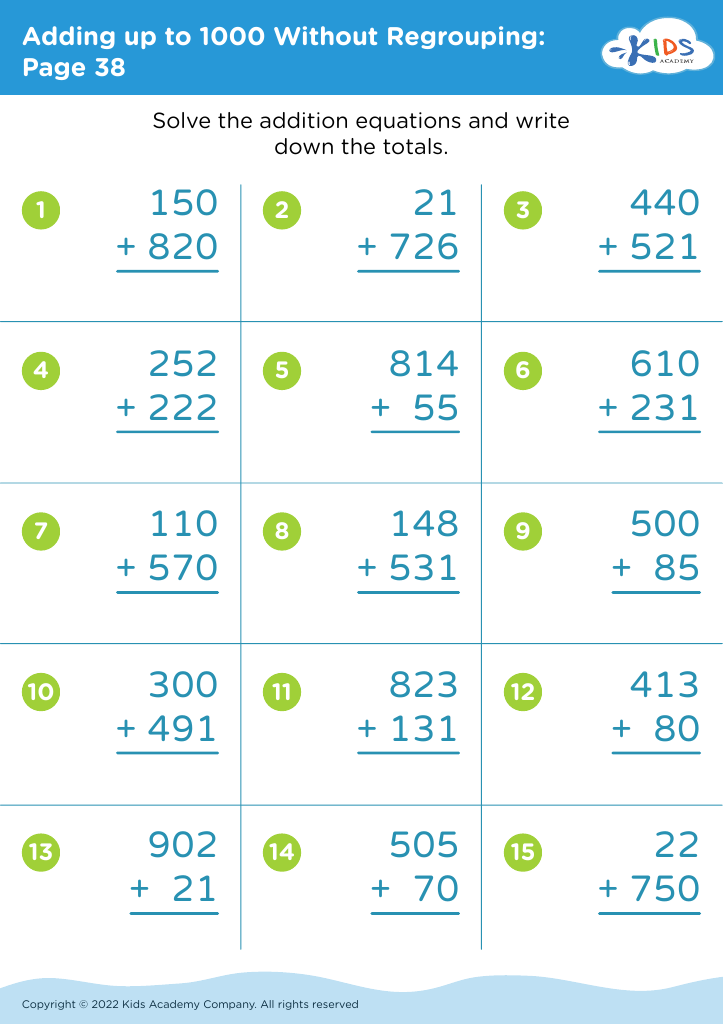
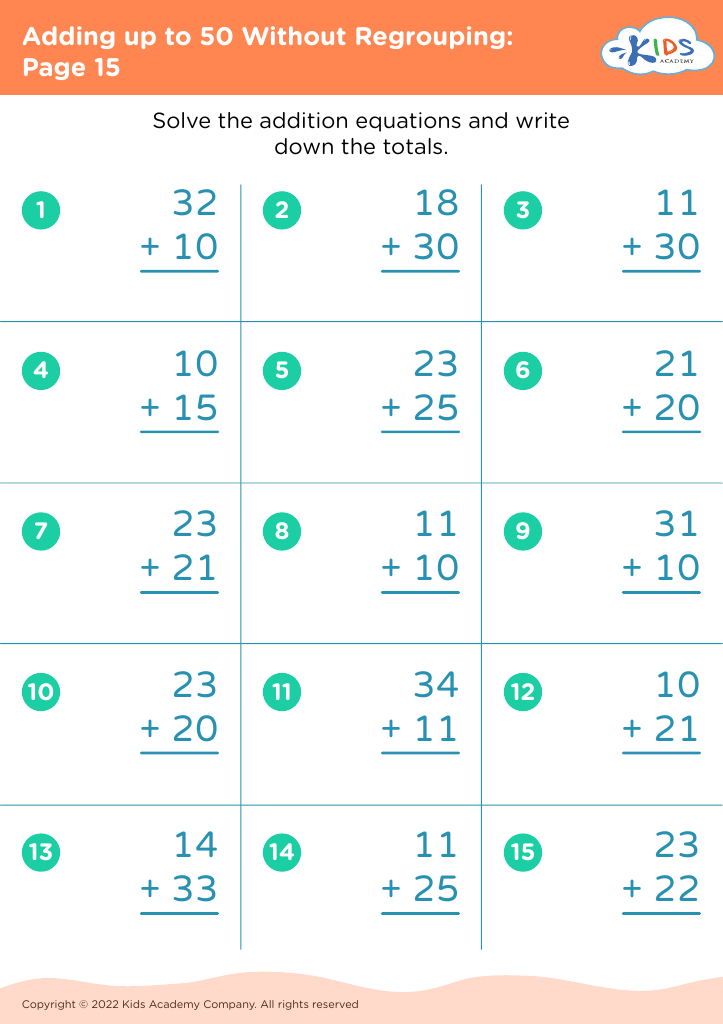
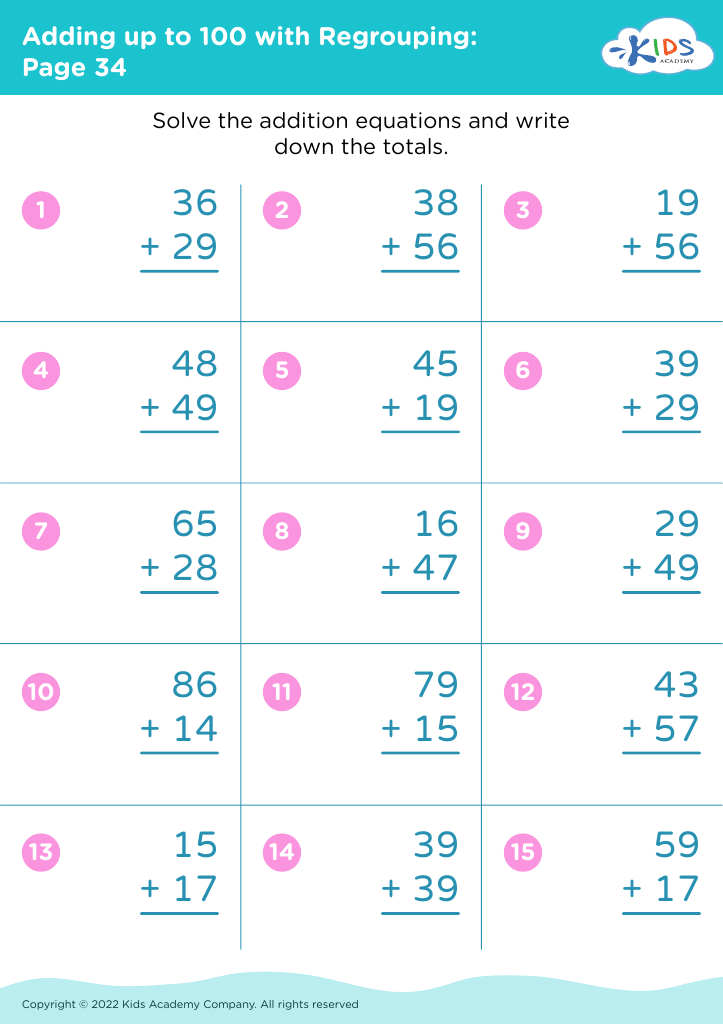
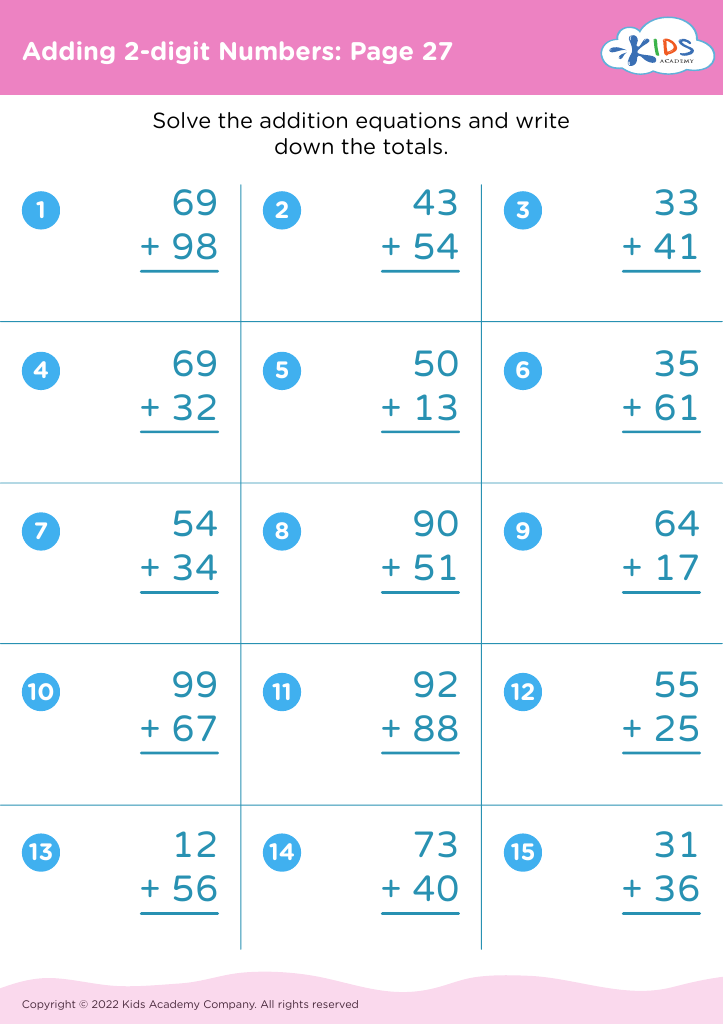
Boost your child's math confidence with our "Develop Addition Skills: Addition & Subtraction Worksheets for Ages 3-8." These expertly crafted worksheets are designed to make learning fun and effective, enabling young learners to master addition and subtraction step by step. Each worksheet features engaging activities, vibrant visuals, and age-appropriate challenges tailored for children aged 3 to 8. Perfect for both home and classroom settings, these worksheets support essential math skills, promote critical thinking, and build the foundation for future math success. Equip your child with the skills they need for a bright mathematical journey.
Favorites
With answer key
Interactive
Learning Skills
Join Kids Academy for Free
Who is primarily going to use this learning content?








Parents and teachers should prioritize developing addition and subtraction skills in children aged 3-8 because these foundational math skills are crucial for their cognitive development and real-world problem-solving capabilities. Early mastery of these concepts lays the groundwork for more advanced mathematical learning in later years. By introducing addition and subtraction at a young age, children develop essential number sense, which includes understanding quantities, relationships, and patterns among numbers.
Moreover, learning to add and subtract encourages logical thinking and enhances memory recall, aiding overall academic performance. It also nurtures critical thinking, as children become adept at seeing relationships, making connections, and solving problems in and out of academic contexts.
These skills translate to real-world applications; children use addition and subtraction in everyday activities such as counting toys, sharing snacks, and managing time. Early math proficiency builds confidence, reducing anxiety related to math subjects and fostering a positive attitude toward learning.
Finally, engaging with math through games and activities at a young age promotes collaboration, communication, and patience—all valuable life skills. Ensuring strong foundational math skills in early childhood paves the way for future academic success and functional life skills, making it a critical focus for both parents and teachers.








