Enhance fine motor skills Addition & Subtraction Worksheets for Ages 3-8
4 filtered results
-
From - To
Unlock your child's potential with our "Enhance Fine Motor Skills Addition & Subtraction Worksheets" designed for ages 3-8! These engaging worksheets are specifically crafted to combine essential math concepts with fine motor skill development. Through colorful, interactive exercises that involve tracing, coloring, and creating, children will not only practice addition and subtraction but will also strengthen their hand-eye coordination and dexterity. Perfect for homeschooling or classroom settings, these worksheets make learning fun and effective. Encourage your child's love for math while enhancing their fine motor skills today! Explore our vast collection and see your young learners thrive!
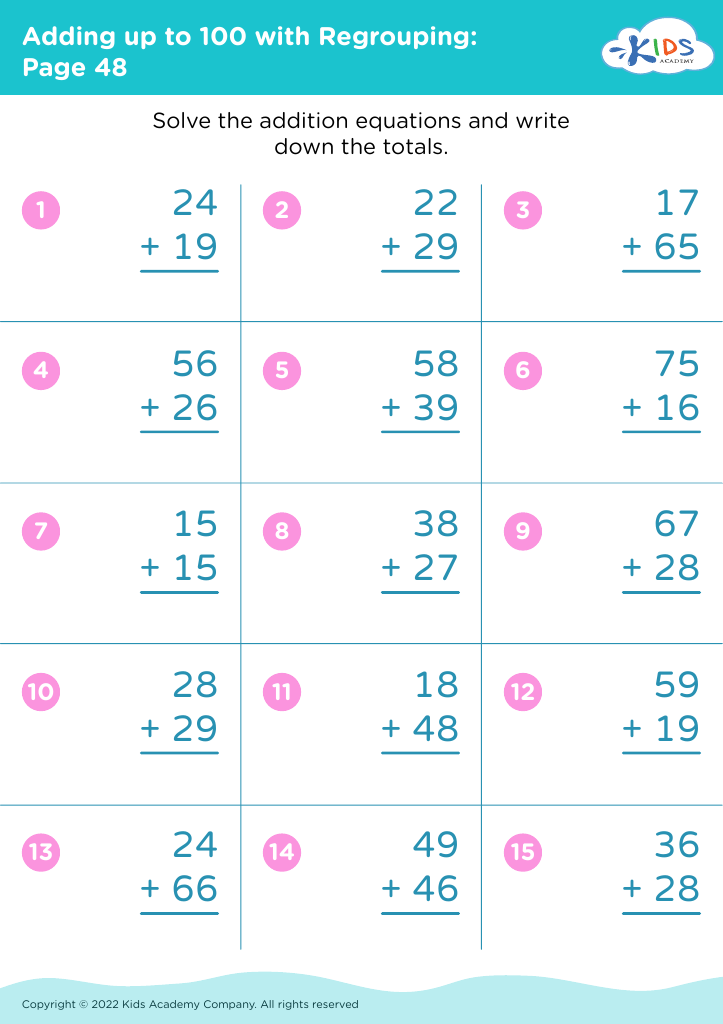
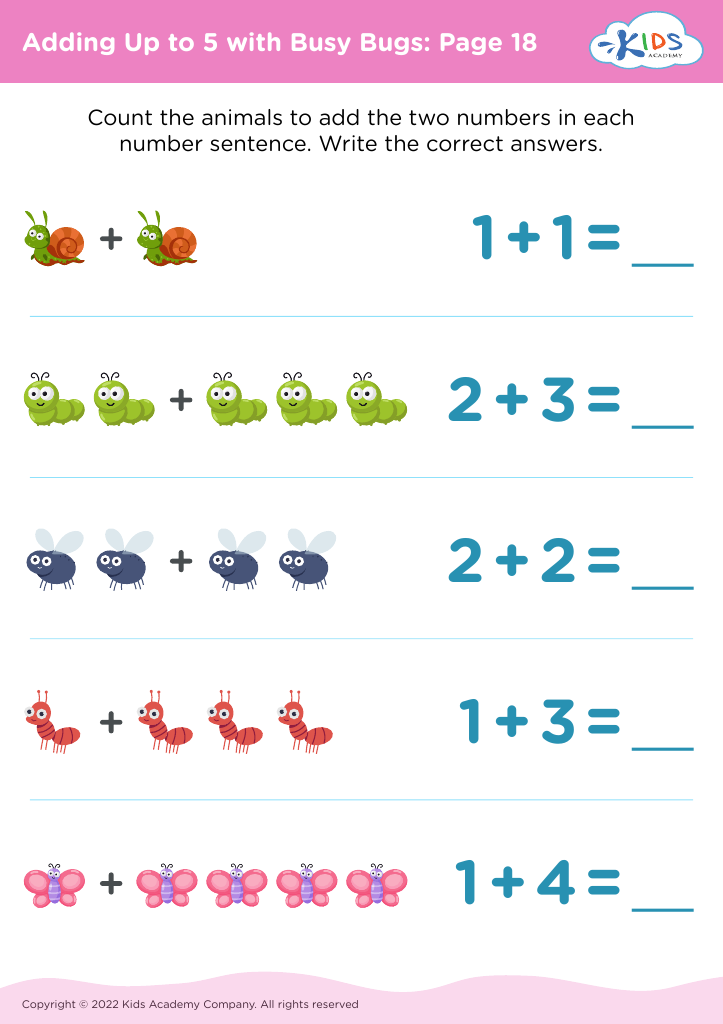
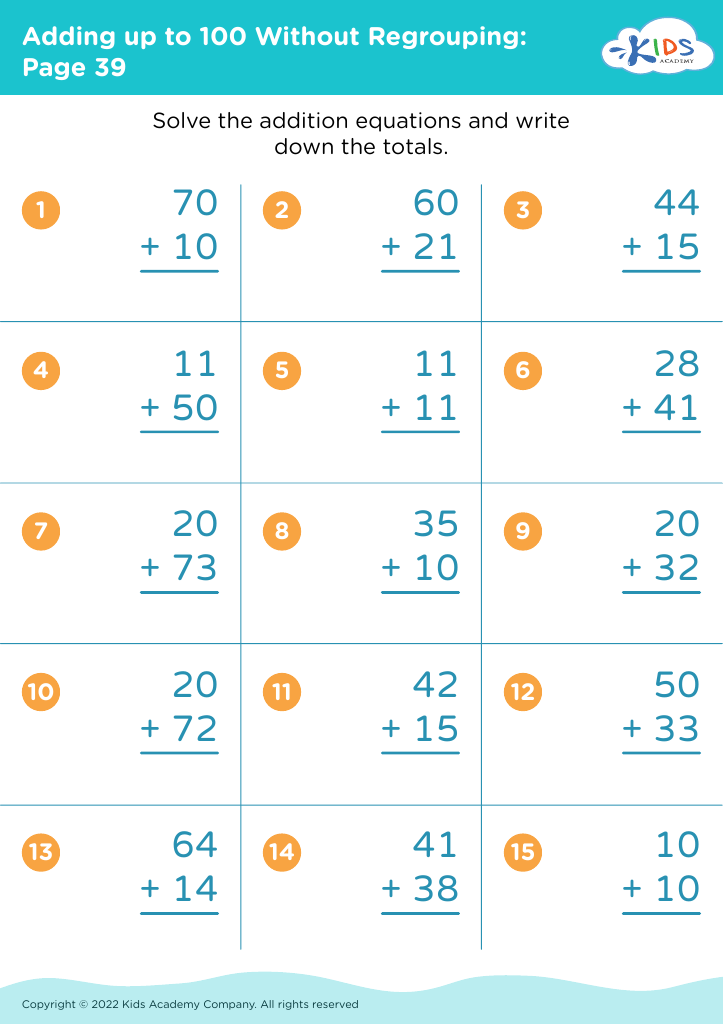
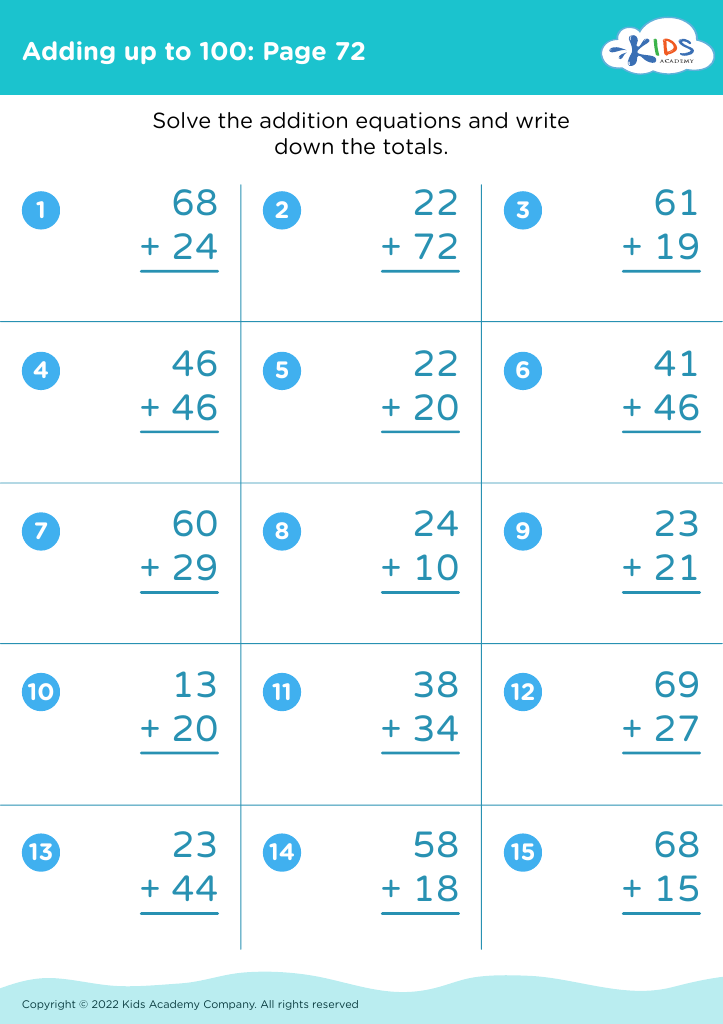








Enhancing fine motor skills in children aged 3-8 is vital for their overall development and academic success, especially in tasks like addition and subtraction. Fine motor skills involve the coordination of small muscles in the hands and fingers, which are essential for eye-hand coordination and precision in various activities, including writing and manipulating objects.
For young learners, strong fine motor skills lay the groundwork for mathematical concepts. When children can confidently handle tools like pencils, manipulatives, and counters, they are better equipped to engage in hands-on learning activities that reinforce addition and subtraction. Additionally, activities that promote fine motor skills—such as cutting, threading beads, or building with blocks—instill a sense of confidence and accomplishment in children, making them more willing to tackle mathematical challenges.
Moreover, fostering fine motor skills reflects a holistic approach to education. It integrates physical development with cognitive ability, encouraging critical thinking and problem-solving. Parents and teachers play a crucial role in providing opportunities and resources for children to practice these skills—ultimately preparing them for future academic pursuits while nurturing their self-esteem and independence. Investing in fine motor development today sets the foundation for stronger math abilities and lifelong learning.








