Unlock your child's potential with our "Enhance Number Recognition Addition & Subtraction Worksheets" for ages 3-8. Our expertly crafted worksheets combine engaging visuals and interactive activities to build foundational math skills. Perfect for young learners, each worksheet promotes number recognition while introducing basic addition and subtraction concepts. Designed to captivate and educate, our resources are ideal for both classroom and home learning environments. Support your child in developing critical thinking and problem-solving skills, setting the stage for future math success. Start your child's learning journey with exciting worksheets today and watch their confidence soar!
Check out this FREE Trial Lesson on Addition & Subtraction for age 3-8!

My Family

Favorites
With answer key
Interactive
  • 3-8
  • Enhance number recognition
  • Addition & Subtraction
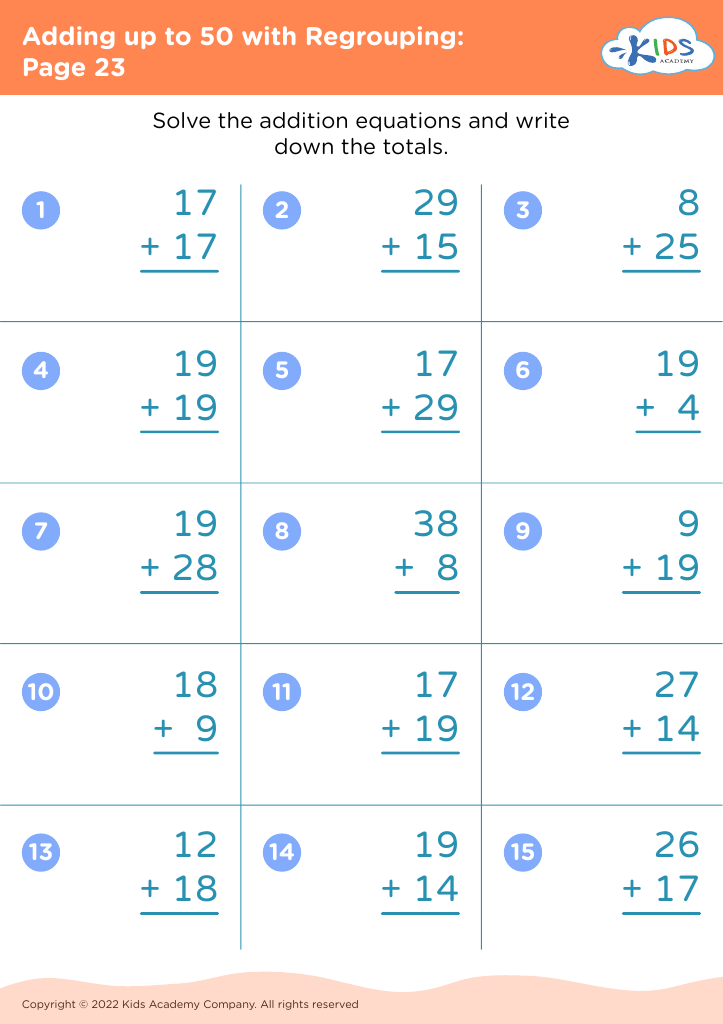
Adding up to 50 with Regrouping: Page 23
Worksheet
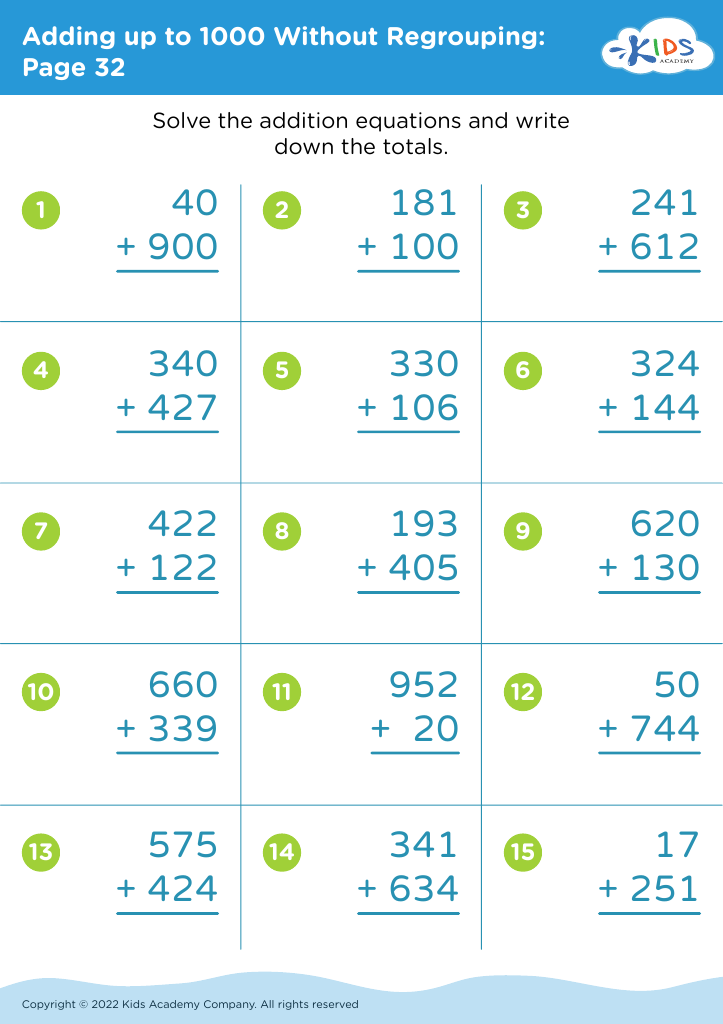
Adding up to 1000 Without Regrouping: Page 32
Worksheet
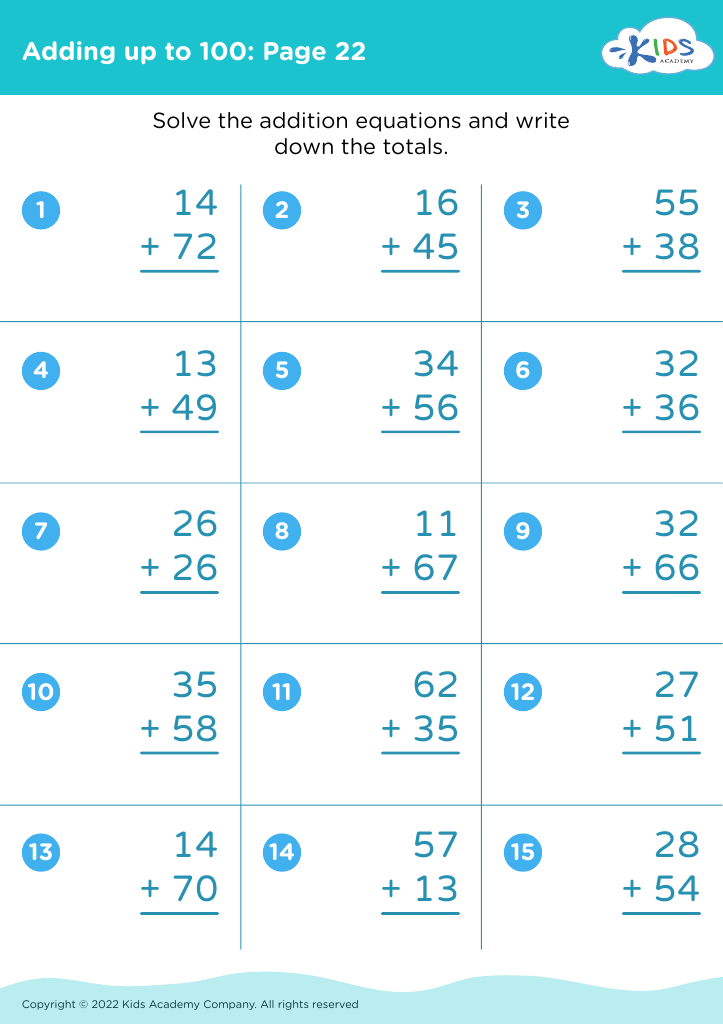
Adding up to 100: Page 22

Adding up to 100: Page 22

Adding up to 100: Page 22
Worksheet
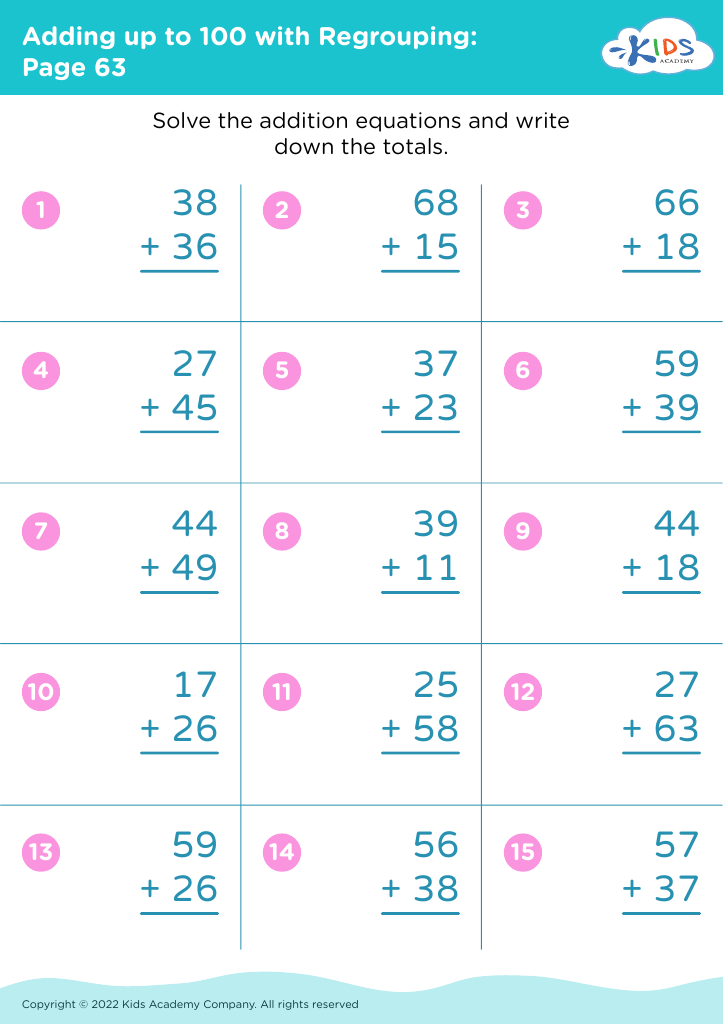
Adding up to 100 with Regrouping: Page 63
Worksheet
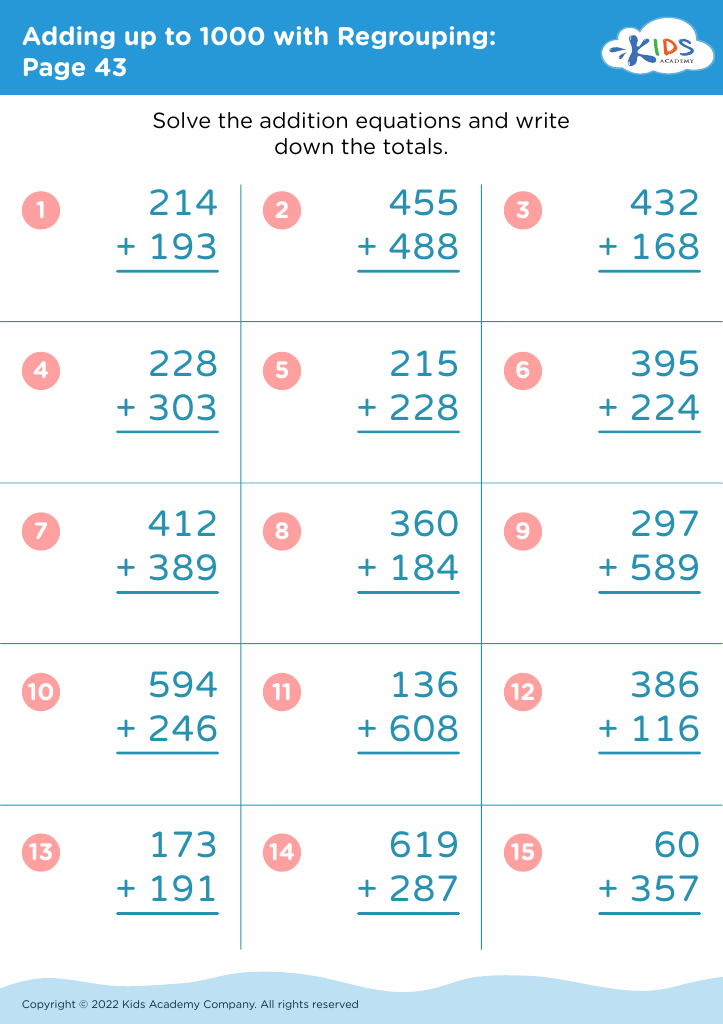
Adding up to 1000 with Regrouping: Page 43
Worksheet
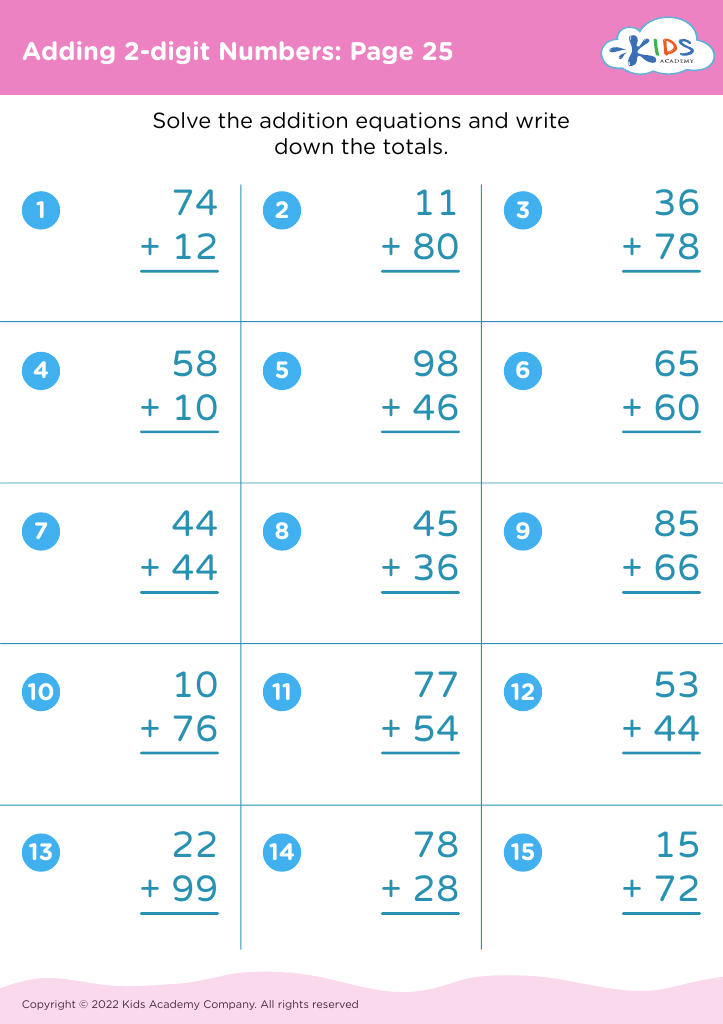
Adding 2-digit Numbers: Page 25

Adding 2-digit Numbers: Page 25

Adding 2-digit Numbers: Page 25
Worksheet
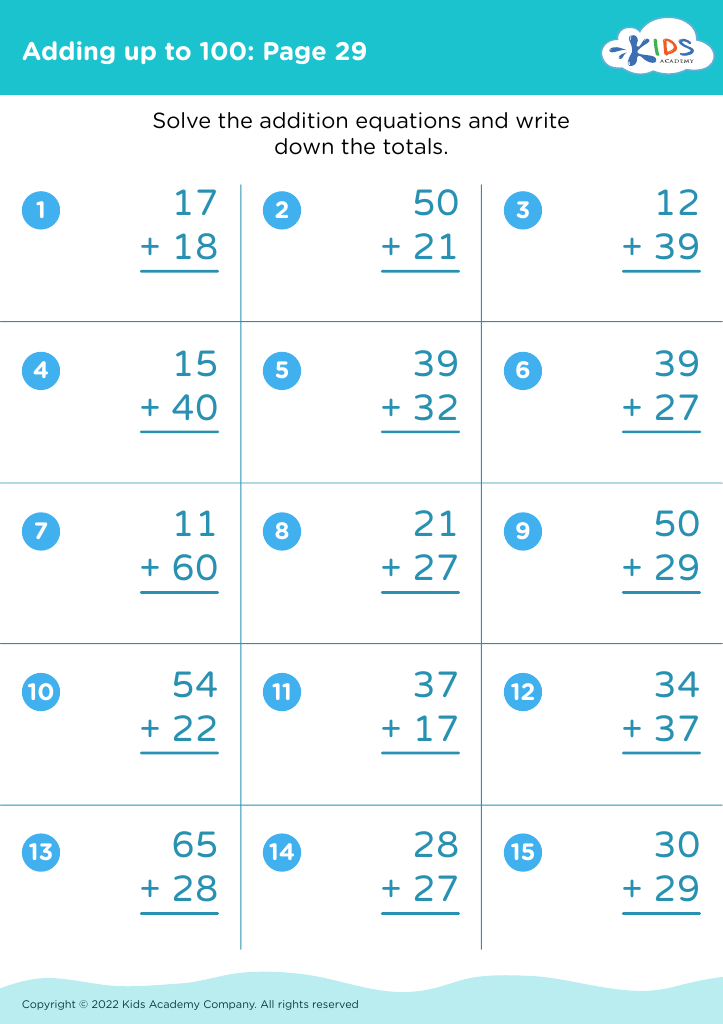
Adding up to 100: Page 29

Adding up to 100: Page 29

Adding up to 100: Page 29
Worksheet
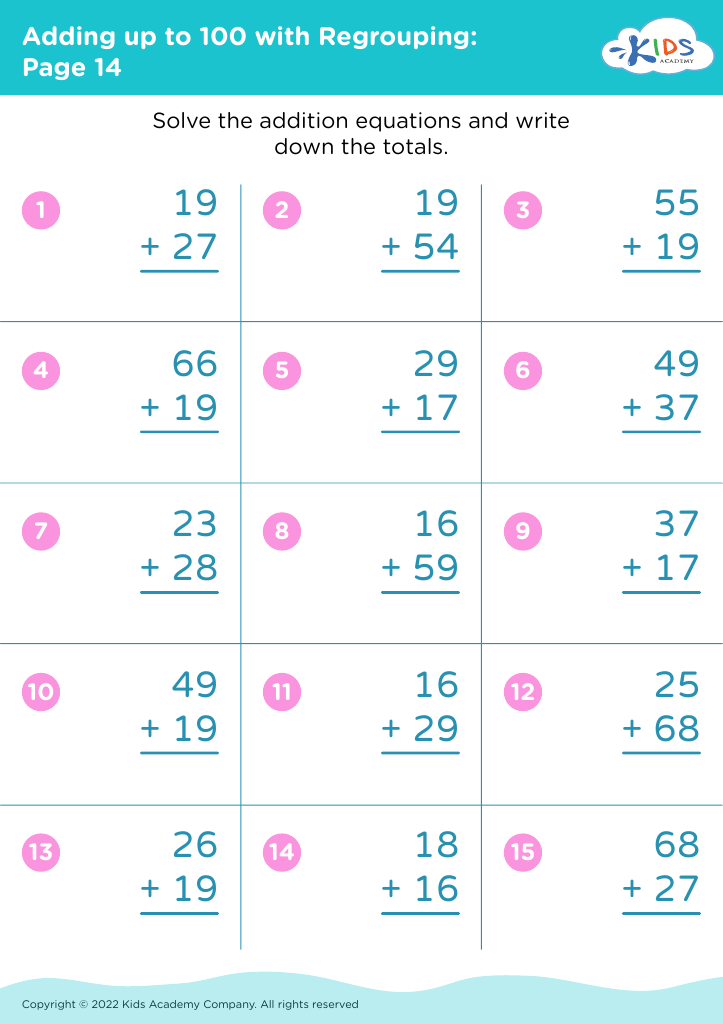
Adding up to 100 with Regrouping: Page 14
Worksheet
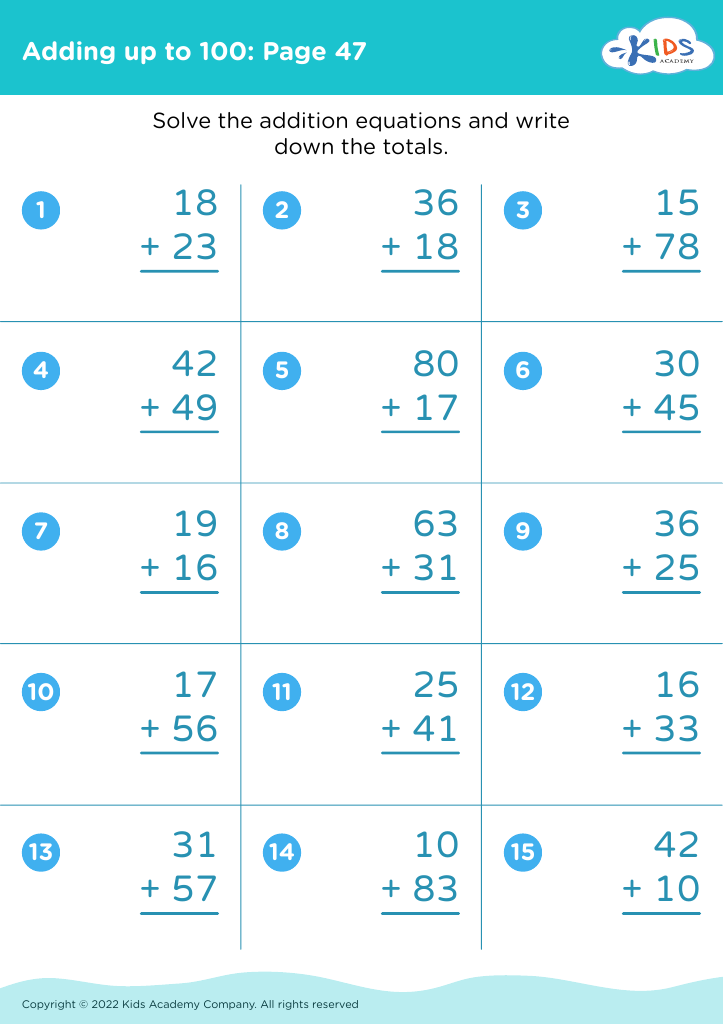
Adding up to 100: Page 47

Adding up to 100: Page 47

Adding up to 100: Page 47
Worksheet
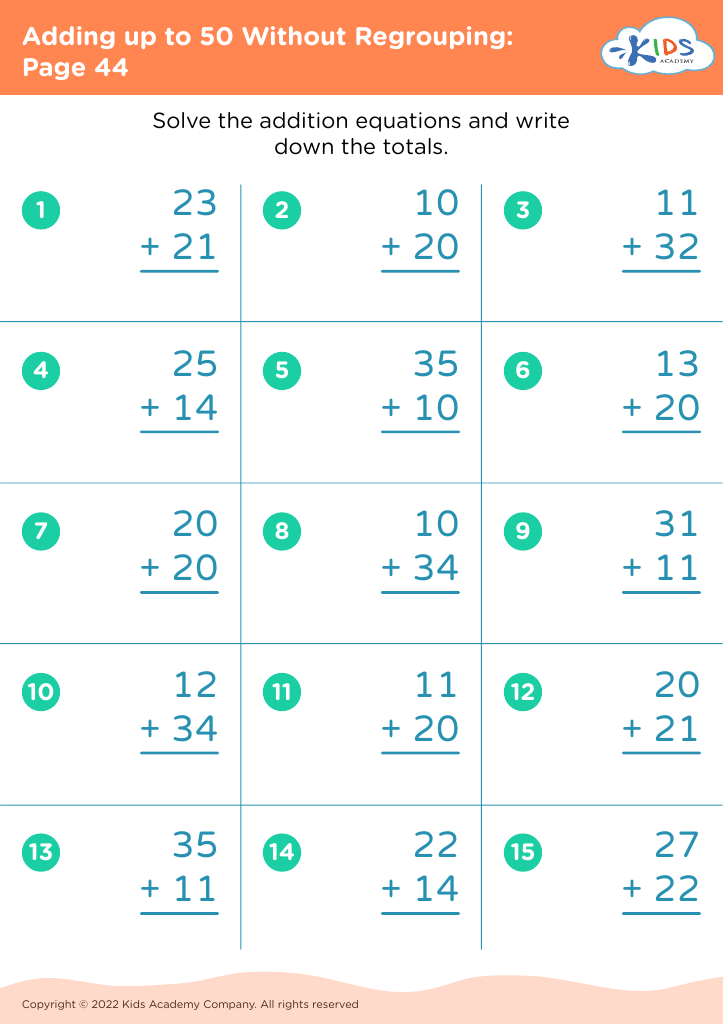
Adding up to 50 Without Regrouping: Page 44
Worksheet
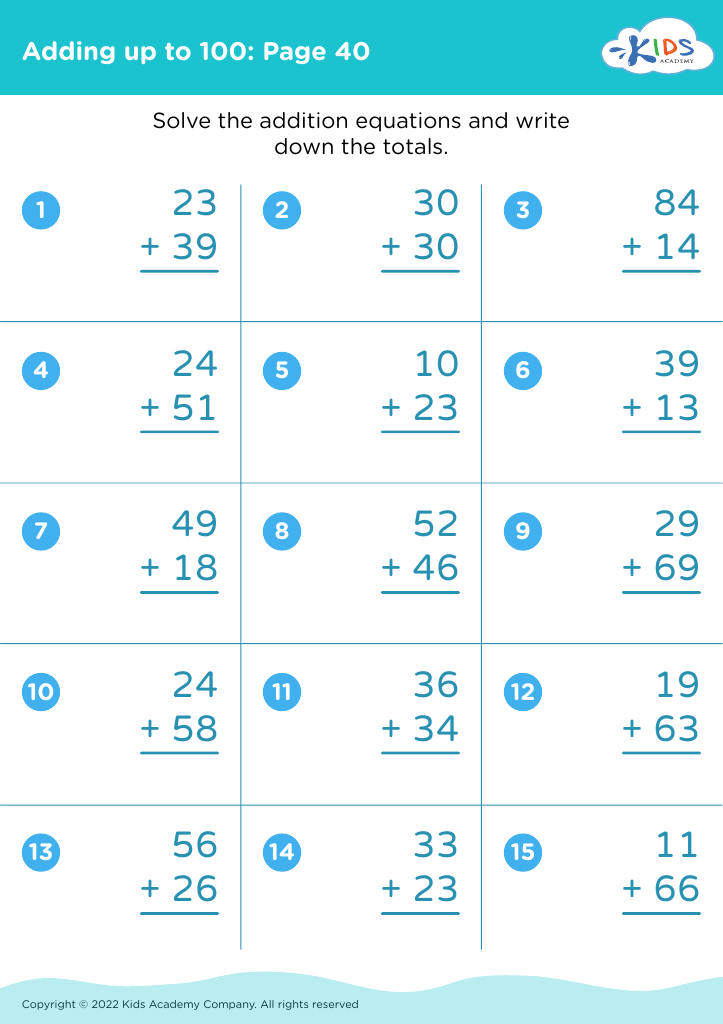
Adding up to 100: Page 40

Adding up to 100: Page 40

Adding up to 100: Page 40
Worksheet
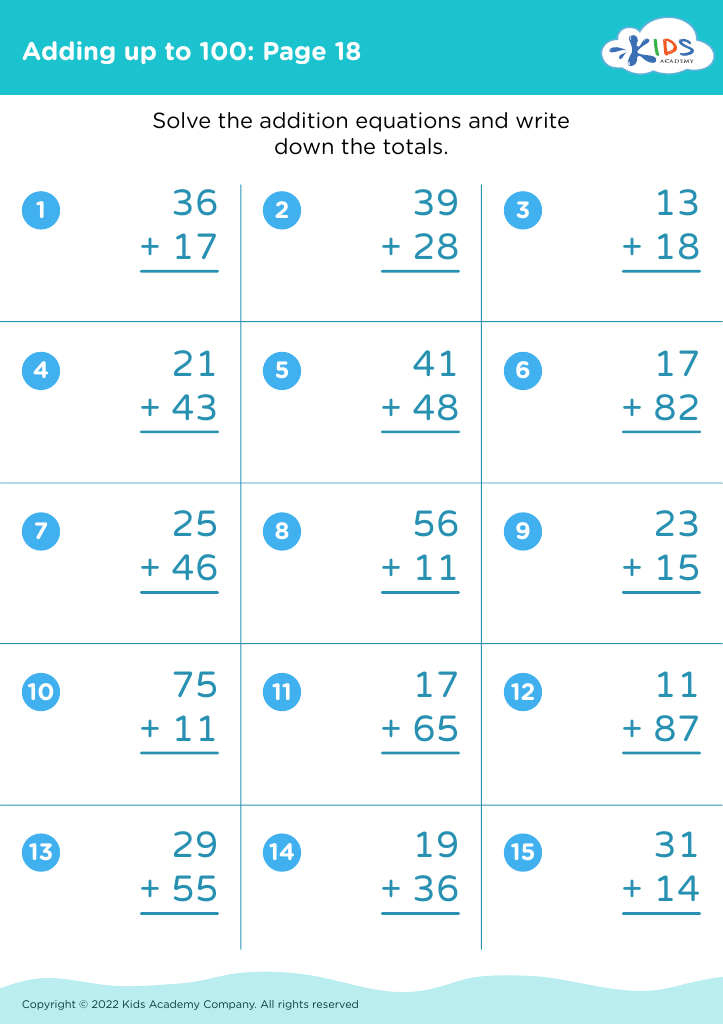
Adding up to 100: Page 18

Adding up to 100: Page 18

Adding up to 100: Page 18
Worksheet
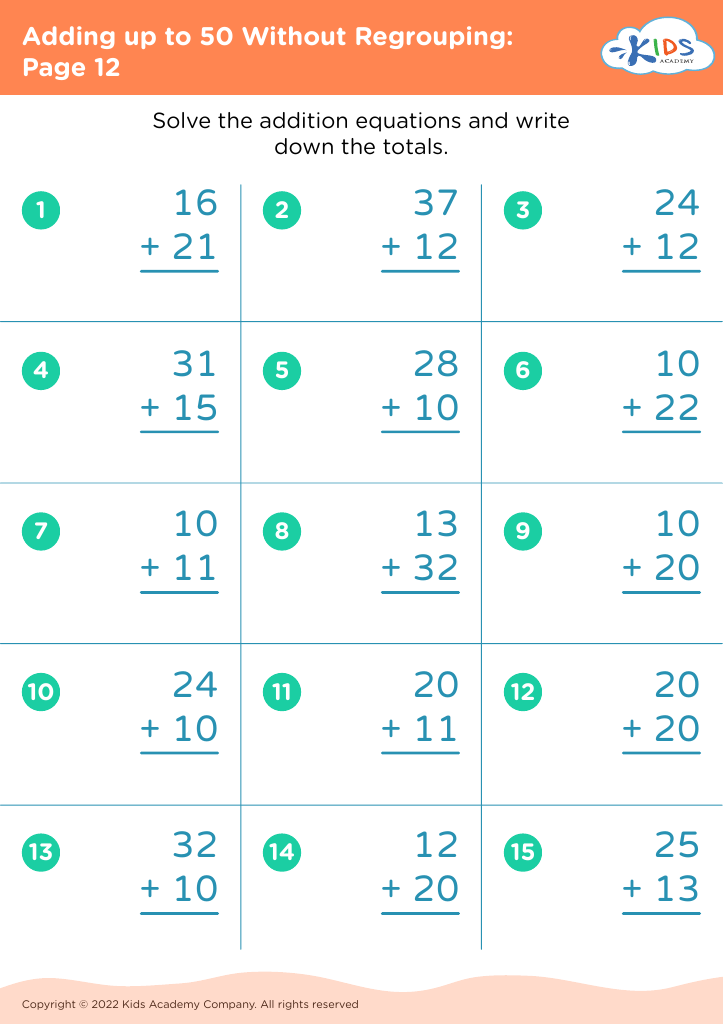
Adding up to 50 Without Regrouping: Page 12
Worksheet
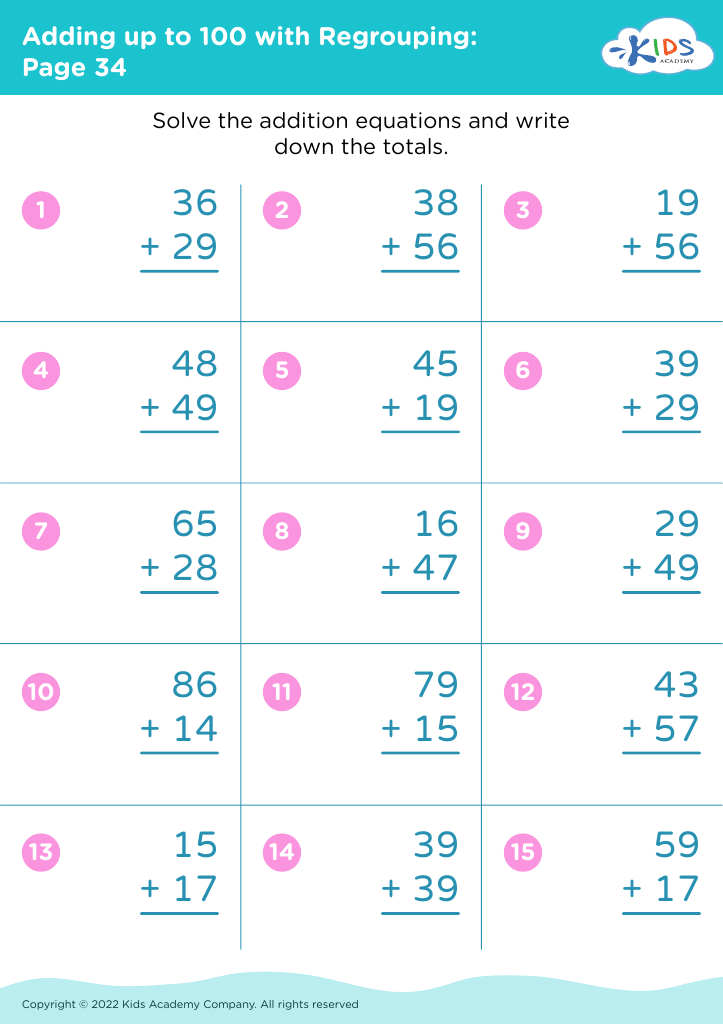
Adding up to 100 with Regrouping: Page 34
Worksheet
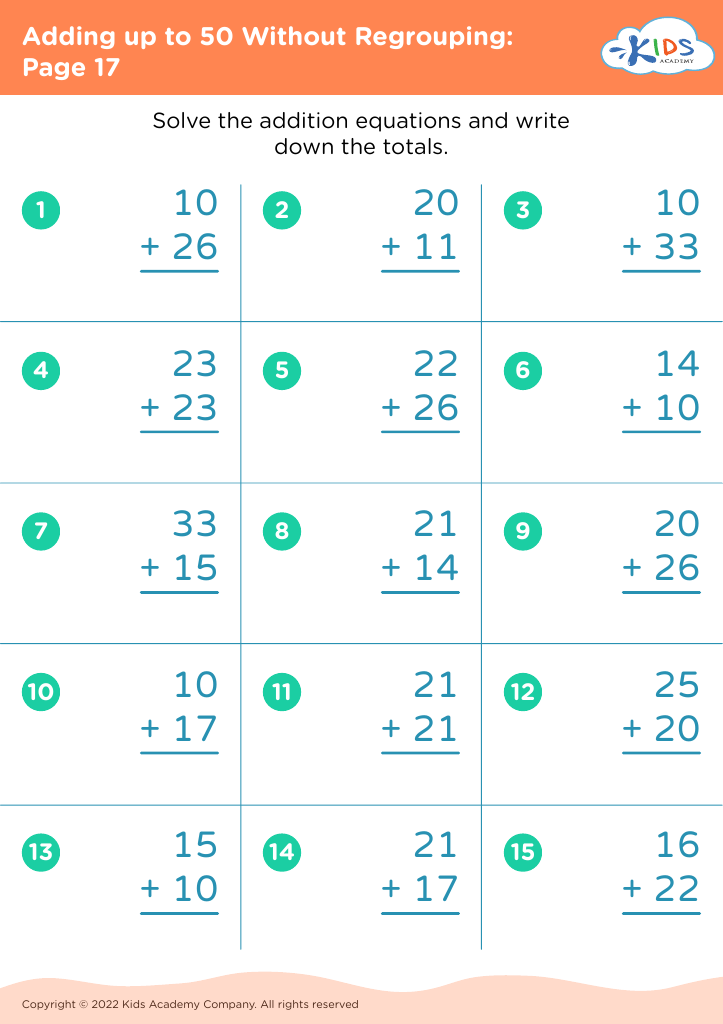
Adding up to 50 Without Regrouping: Page 17
Worksheet
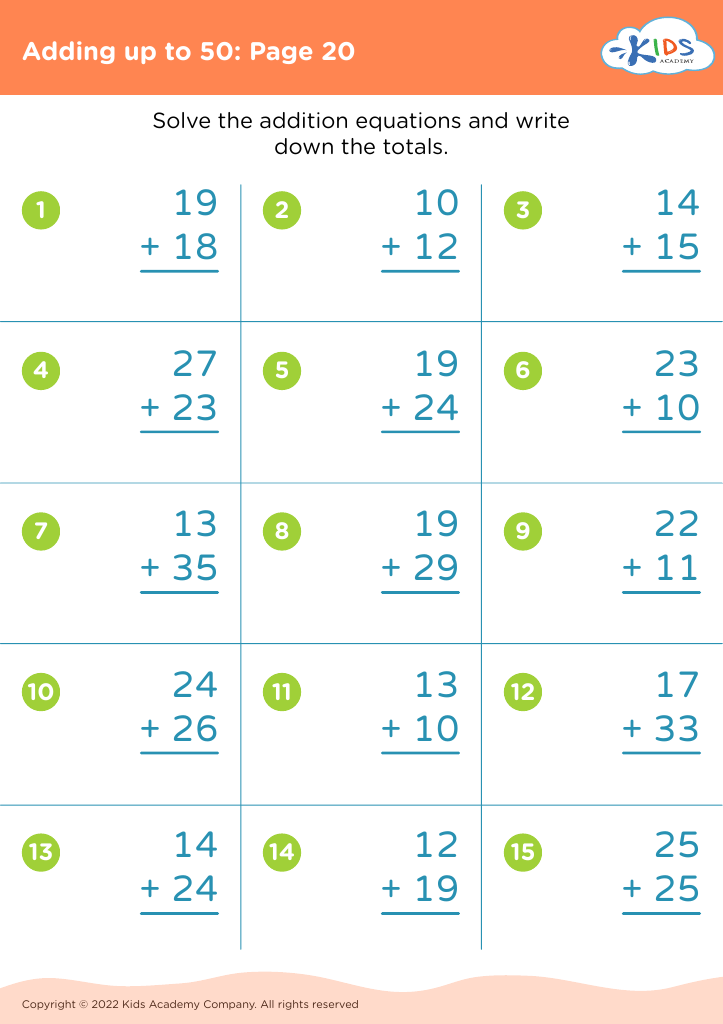
Adding up to 50: Page 20

Adding up to 50: Page 20

Adding up to 50: Page 20
Worksheet
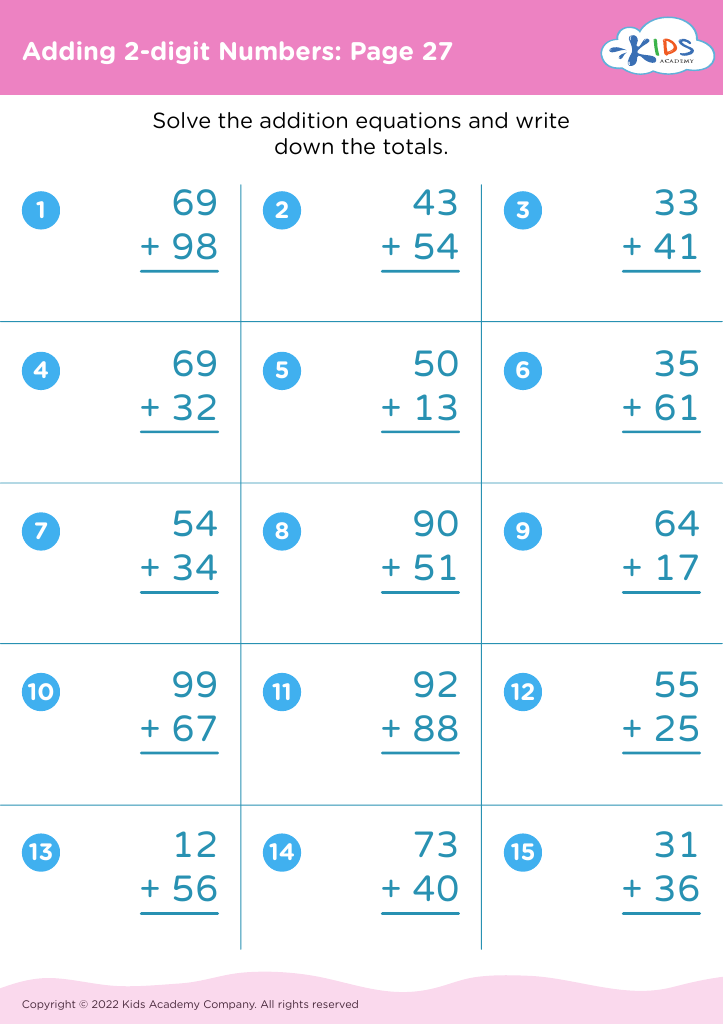
Adding 2-digit Numbers: Page 27

Adding 2-digit Numbers: Page 27

Adding 2-digit Numbers: Page 27
Worksheet


Enhancing number recognition, addition, and subtraction skills for children aged 3-8 is crucial for their cognitive and overall development. At this early stage, children are highly receptive to learning basic numeracy, which forms the foundation for more complex mathematical concepts they will encounter later. Number recognition helps children understand the value and relationship between numbers, sharpening their ability to count, compare, and sequence—a fundamental skill in daily life.

Masters of addition and subtraction, in turn, build on these number recognition skills and introduce children to problem-solving processes and logical reasoning. These basic arithmetic operations are not only vital for everyday tasks like shopping, cooking, and time management, but they are also essential for academic success in virtually all subjects. Early numeracy lays the groundwork for understanding patterns, shapes, measurement, and even more advanced math, creating a cumulative positive effect on academic performance in school.

Furthermore, mastering these skills boosts a child’s confidence and promotes a positive attitude towards learning, nurturing a mindset that mathematics is manageable and enjoyable. Thus, caring about and investing effort into enhancing these skills has long-term educational and practical benefits, making it indispensable for parents, and teachers to prioritize this aspect of early childhood education.