Identifying patterns Addition & Subtraction Worksheets for Ages 3-8
3 filtered results
-
From - To
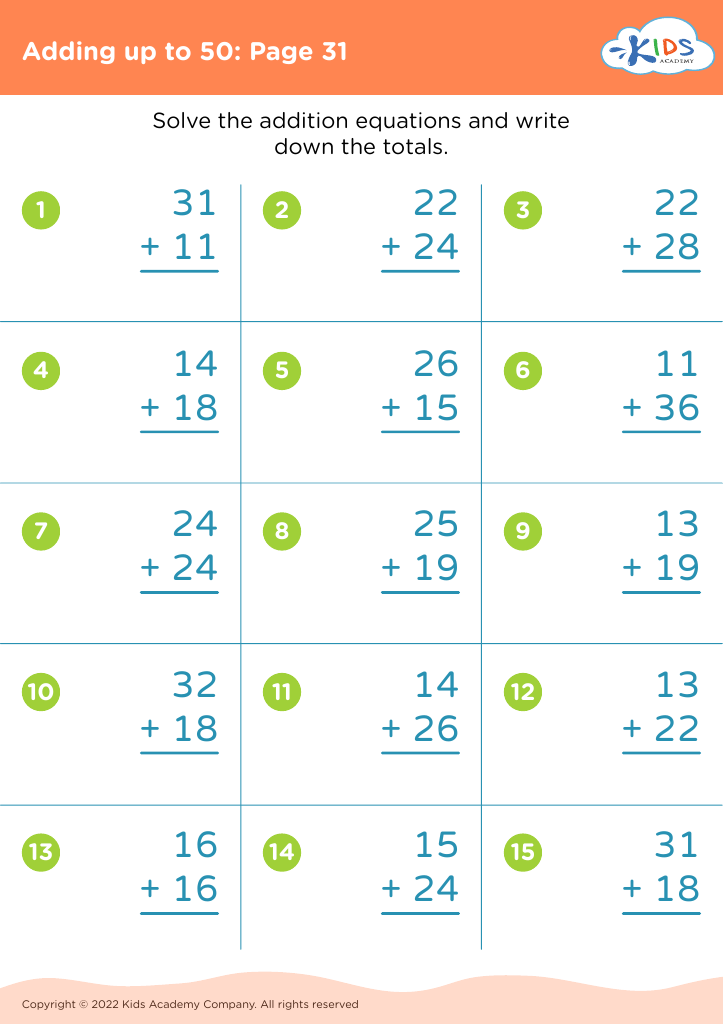
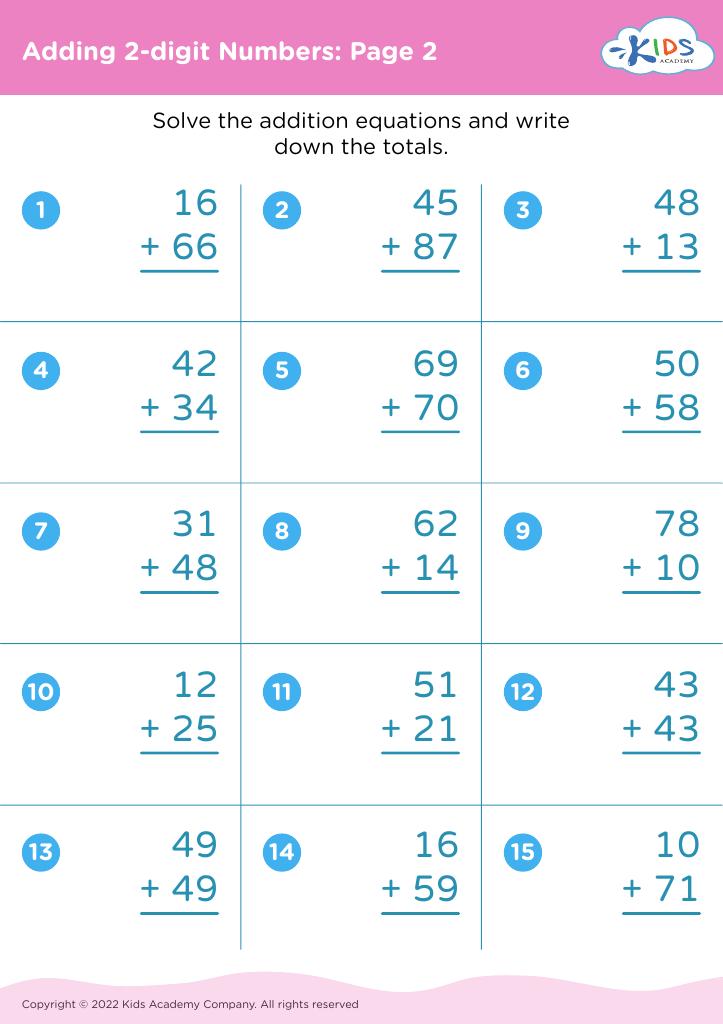
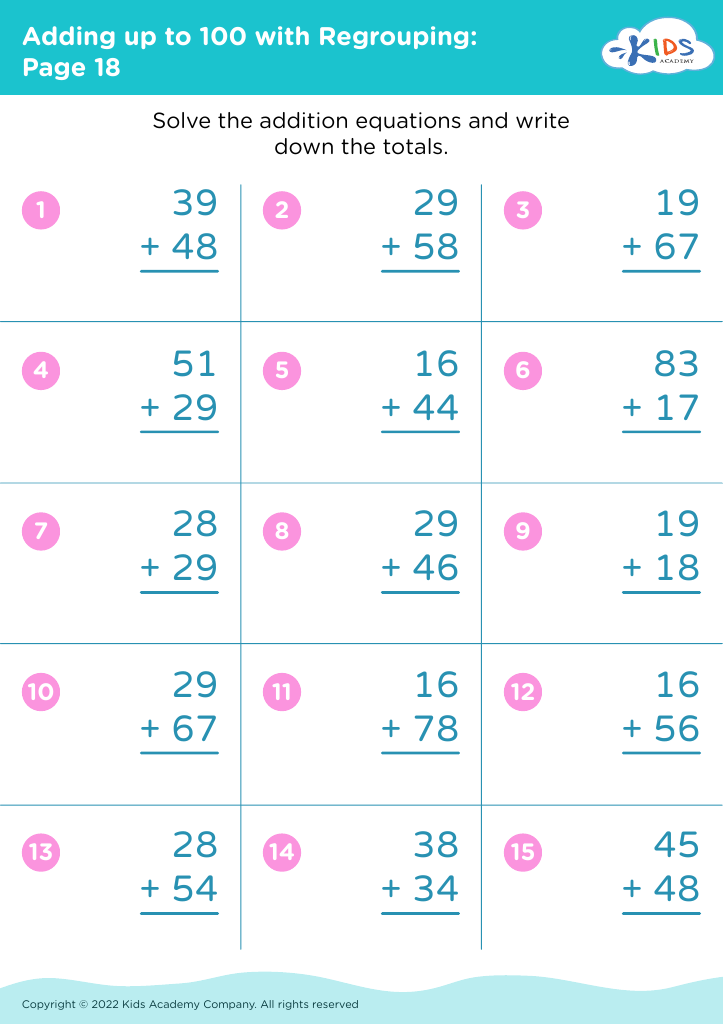
Discover our engaging "Identifying Patterns Addition & Subtraction Worksheets" designed for children aged 3-8. These worksheets foster essential early math skills by incorporating fun and interactive activities that help young learners recognize and understand patterns in addition and subtraction. Perfect for home or classroom use, our resources make math enjoyable and accessible, catering to individual learning paces. Each worksheet emphasizes critical thinking and problem-solving, setting a solid foundation for future math studies. Equip your child with the tools for academic success and watch their confidence grow as they explore patterns in numbers through colorful, thoughtfully crafted exercises.








Identifying patterns in addition and subtraction is crucial for young learners aged 3-8, as it forms the foundational building blocks of mathematical understanding. Developing the ability to recognize patterns enhances critical thinking and problem-solving skills, which are essential not only in mathematics but across all subjects.
For parents and teachers, caring about this aspect of math education means fostering a child's ability to see the relationships between numbers and operations. By recognizing patterns, children learn to predict outcomes, simplify problem-solving processes, and develop estimation skills. This mathematical fluency ultimately boosts their confidence and promotes a positive attitude toward learning mathematics.
Moreover, pattern recognition lays the groundwork for future mathematical concepts, such as multiplication and division. It also encourages logical reasoning, helping children to understand the 'why' behind mathematical operations rather than merely memorizing procedures. Furthermore, recognizing patterns is a skill that extends beyond numbers, enabling children to identify trends and concepts in everyday life, from nature to art.
In short, by prioritizing identification of patterns in addition and subtraction, parents and teachers are nurturing well-rounded, analytical thinkers who are equipped to succeed in various academic and real-world scenarios.








