Improve fine motor skills Addition & Subtraction Worksheets for Ages 3-8
3 filtered results
-
From - To
Enhance your child's fine motor skills with our engaging Addition & Subtraction Worksheets designed for ages 3-8! These fun, interactive worksheets combine early math learning with activities that promote dexterity and hand-eye coordination. Each worksheet is thoughtfully crafted to keep young learners engaged while they practice essential math concepts. As they solve problems, children also refine their pencil grip, scissor skills, and overall hand movement. Ideal for use at home or in the classroom, our printable resources make learning math enjoyable. Help your little ones develop a strong foundation in math while boosting their fine motor abilities today!
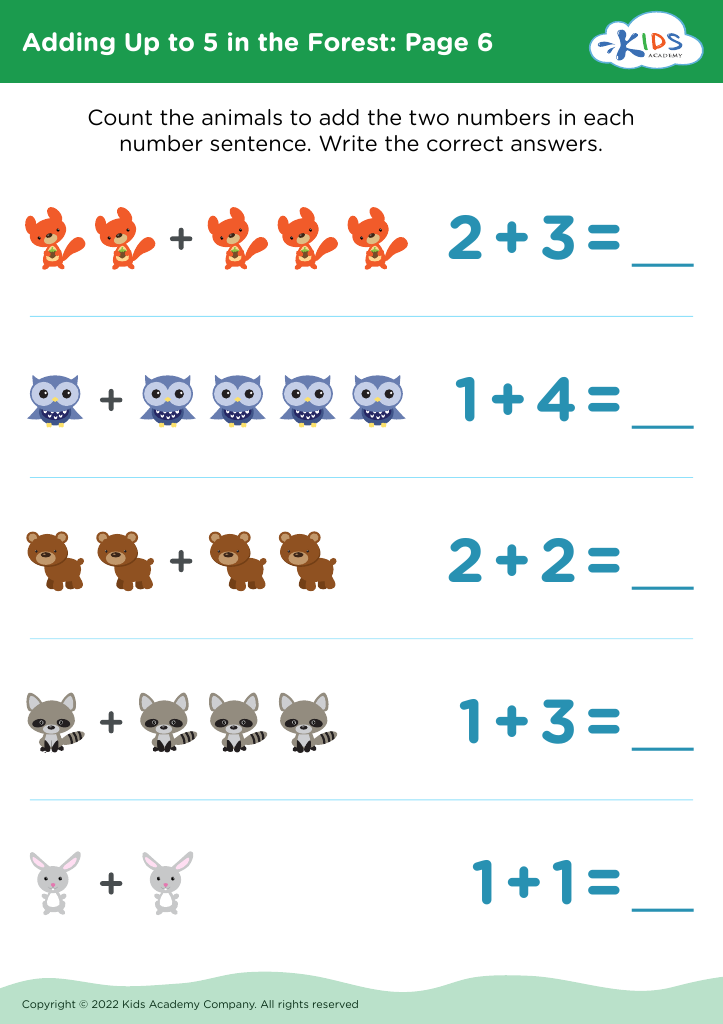
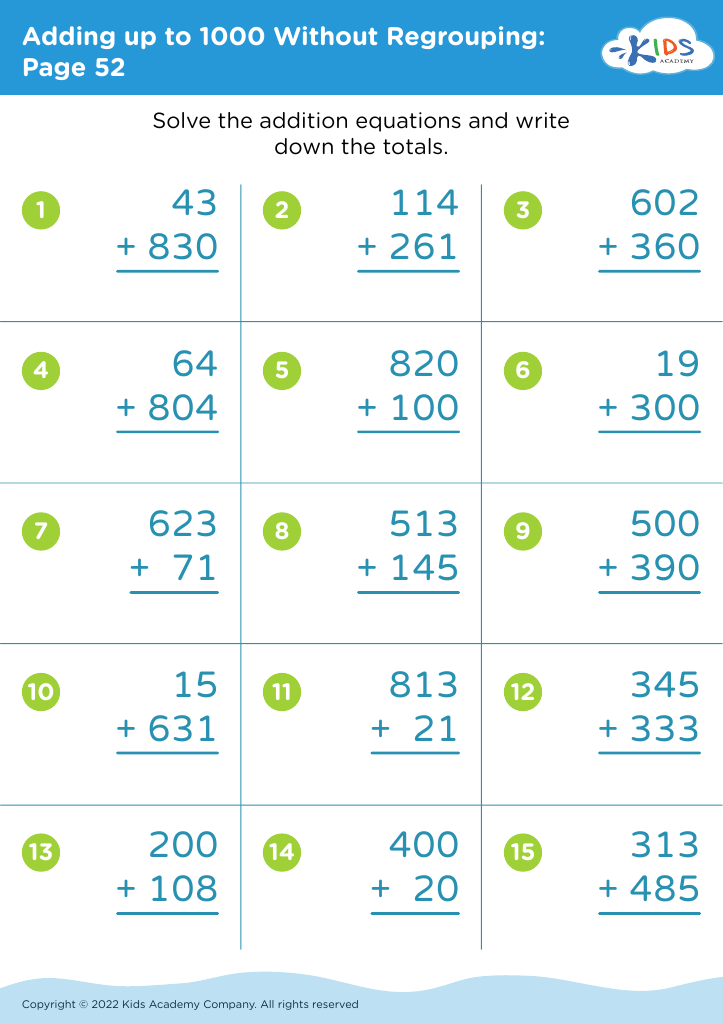
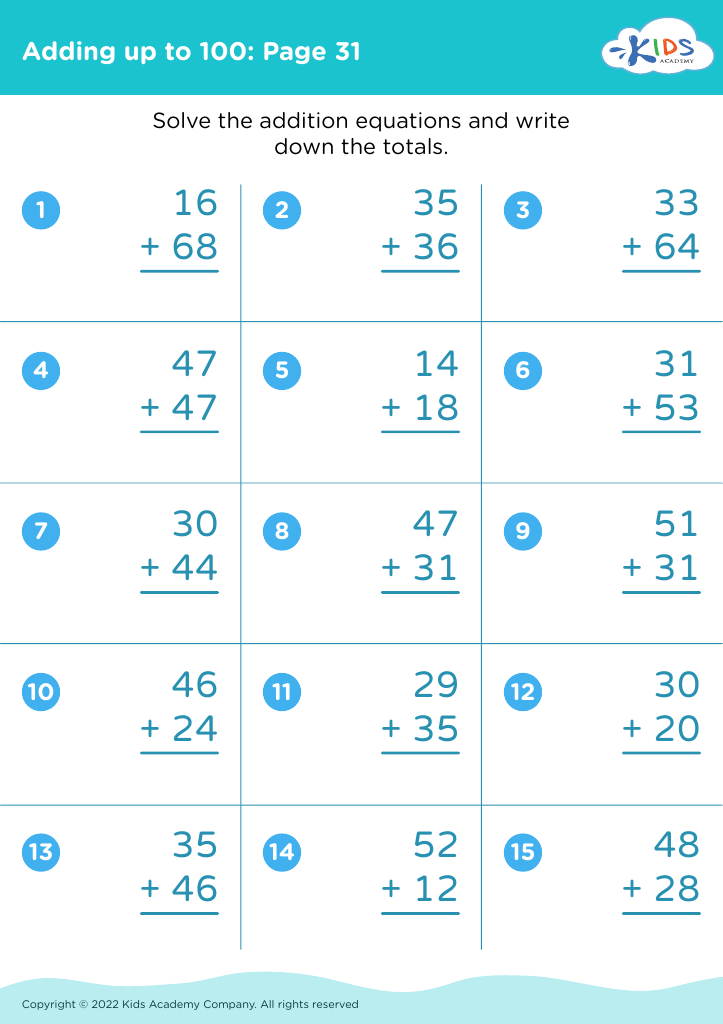








Fine motor skills are essential for young children's overall development and greatly impact their ability to learn academic skills, including addition and subtraction. For children ages 3-8, many foundational math concepts can be grounded in hands-on activities that require fine motor coordination, such as counting, sorting, and using tools like pencils or manipulatives.
When parents and teachers prioritize the improvement of fine motor skills, they are setting children up for success in both math and other everyday tasks. Activities like coloring, cutting, and building with blocks enhance dexterity, control, and hand-eye coordination, which directly support a child's ability to manipulate numbers and symbols during basic addition and subtraction.
Furthermore, fine motor skills are linked to cognitive development. As children engage in tasks that require precision, they strengthen their problem-solving abilities and cognitive reasoning skills. Improving these skills at an early age helps instill confidence and fosters a love for learning, making children more receptive to exploring mathematical concepts as they grow.
By focusing on fine motor development while teaching addition and subtraction, parents and teachers can create an enriching learning environment conducive to a child's mathematical and overall skill growth. Ultimately, this early intervention lays a strong foundation for future academic success.








