Math problem-solving skills Addition & Subtraction Worksheets for Ages 3-8
4 filtered results
-
From - To
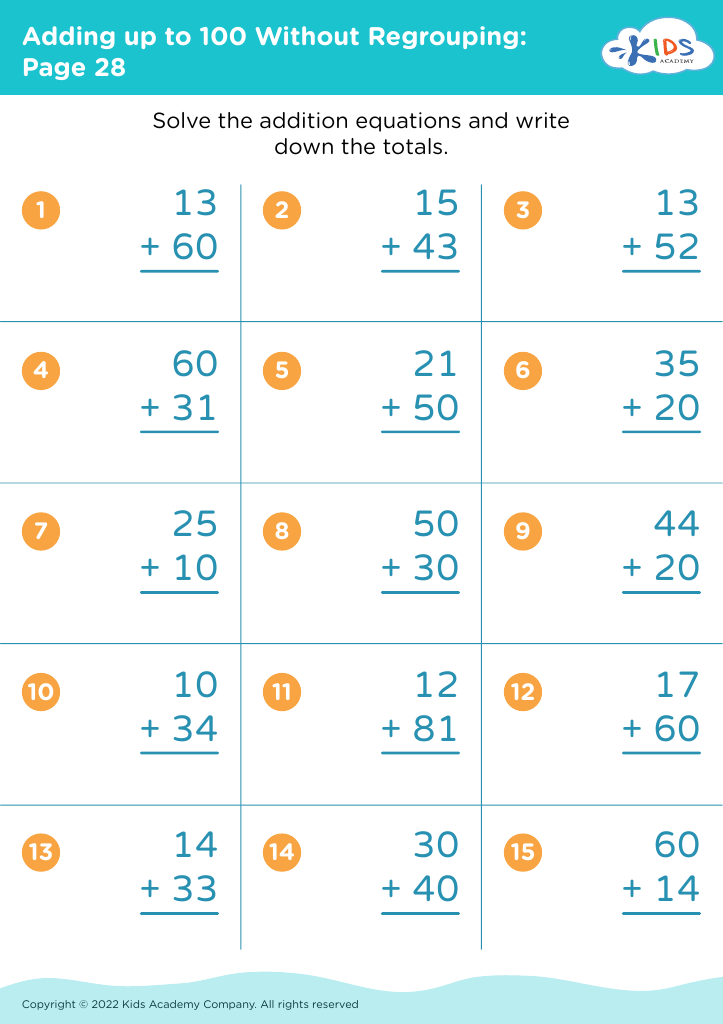
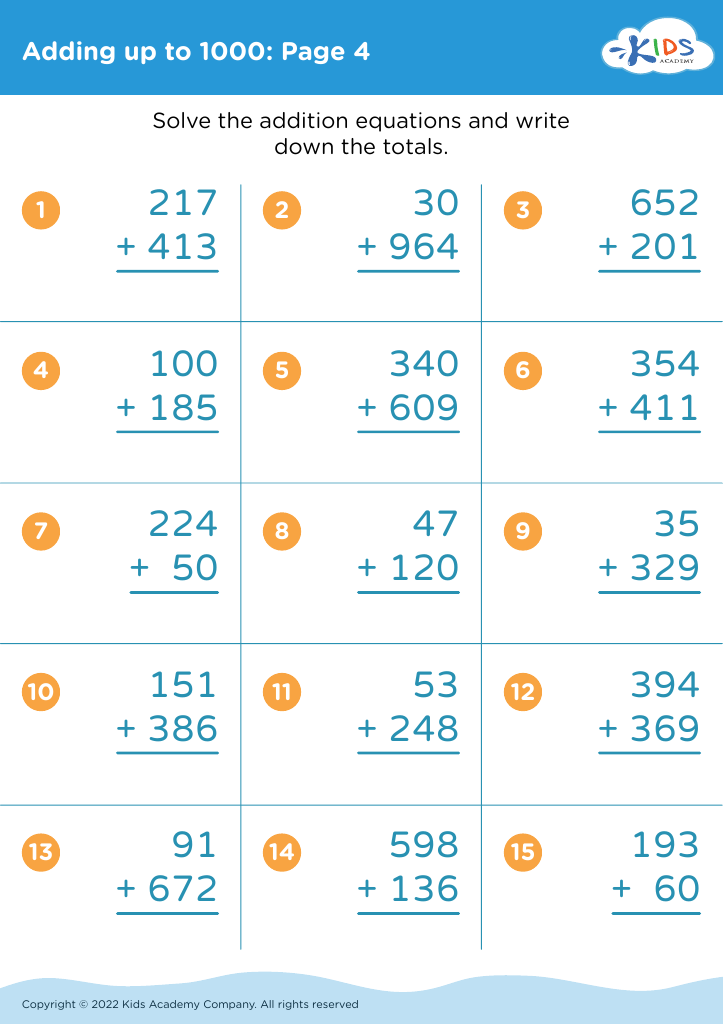
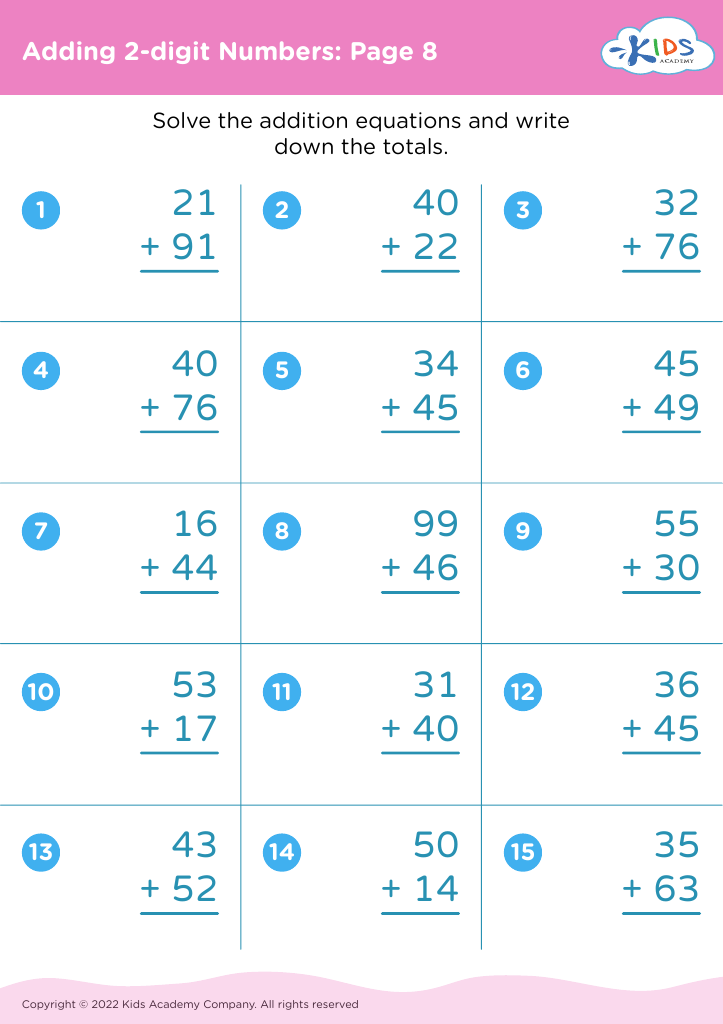
Enhance your child's math problem-solving abilities with our engaging Addition and Subtraction Worksheets, designed for ages 3-8. These worksheets provide a fun and interactive way for young learners to master foundational math skills. Featuring colorful illustrations and age-appropriate challenges, they encourage critical thinking and make learning enjoyable. Children will practice essential concepts while developing confidence in their abilities. Ideal for home or classroom use, these worksheets are easy to print and integrate into daily learning activities. Foster a love for math as your child progresses from basic counting to more complex problem-solving. Start their math journey today!
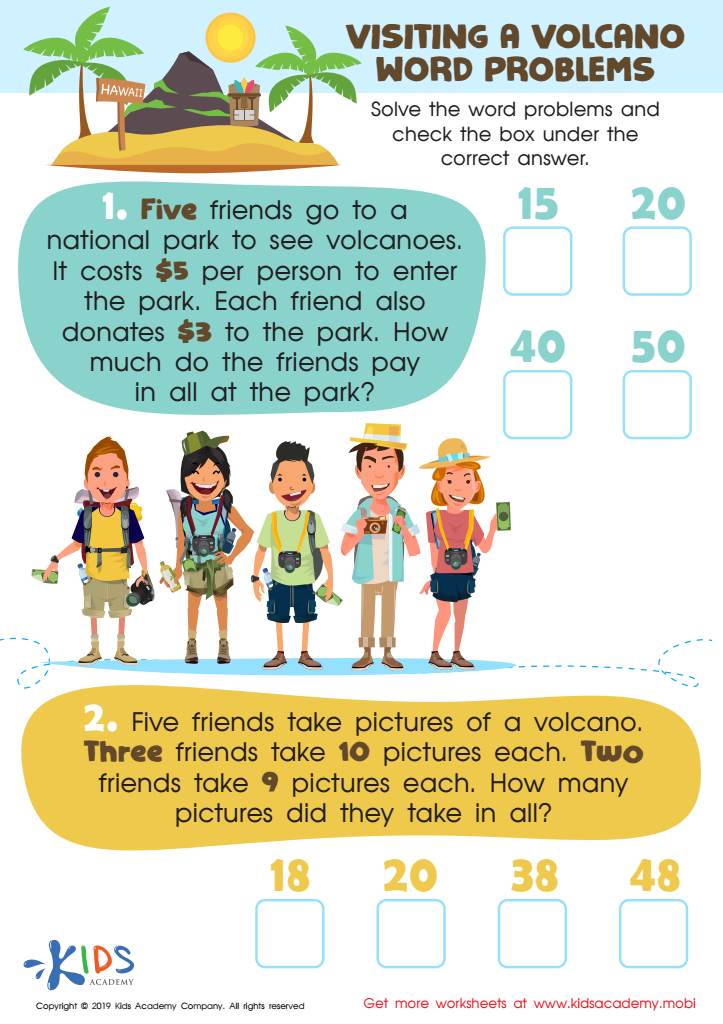
Visiting a Volcano Word Problems Worksheet
 Assign to My Students








Math problem-solving skills, particularly in addition and subtraction, are crucial for children aged 3-8, as they form the foundation for lifelong learning and critical thinking. During these formative years, children are naturally inquisitive, making it an ideal time to introduce and develop math skills. Mastering addition and subtraction enhances their logical reasoning and helps children make sense of the world around them.
Parents and teachers play a critical role in fostering these skills. Math understanding at an early age is linked to future academic success across subjects, not just math. When children regularly engage in problem-solving tasks, they learn to manipulate numbers and develop persistence when faced with challenges. This builds self-confidence, encourages exploration, and reinforces a growth mindset, which is essential for tackling future obstacles.
Moreover, strong addition and subtraction skills promote better everyday decision-making, from calculating expenses to understanding quantities in their environment. They also provide a framework for more complex mathematical concepts encountered later. Engaging children in dynamic, playful learning experiences can instill a love for math, demystifying the subject and laying a solid groundwork for a lifetime of educational and personal growth. Therefore, prioritizing these skills in early childhood deserves the attention of both parents and educators.








