
Mathematical skills Addition & Subtraction Worksheets for Ages 3-8
3 filtered results
Difficulty Level
Grade
Age
-
From - To
Subject
Activity
Standards
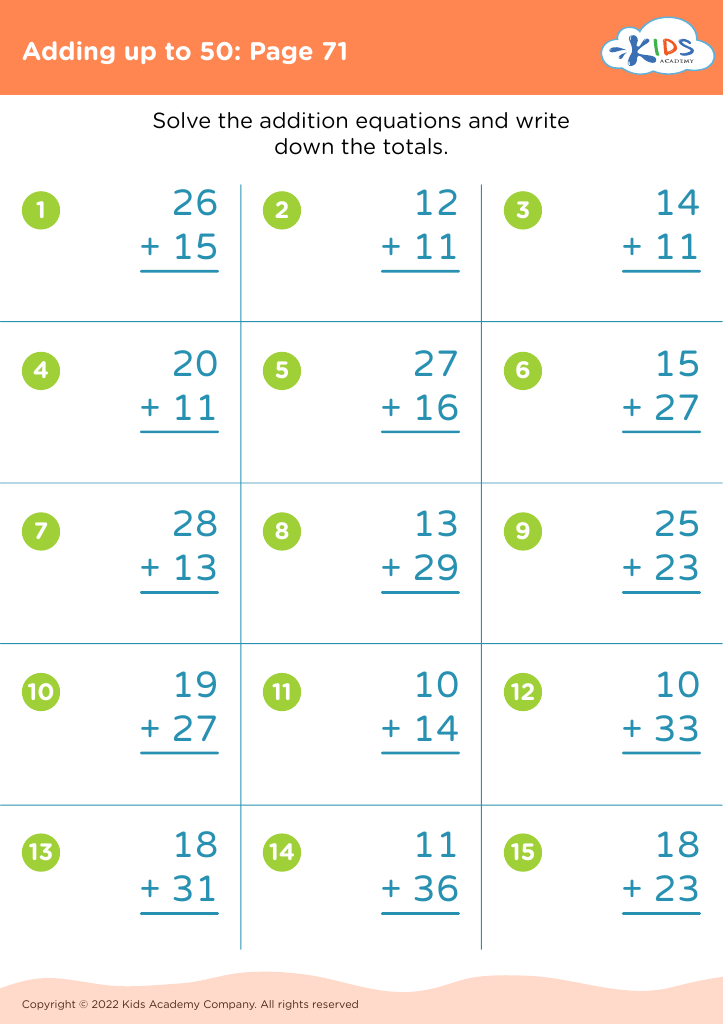
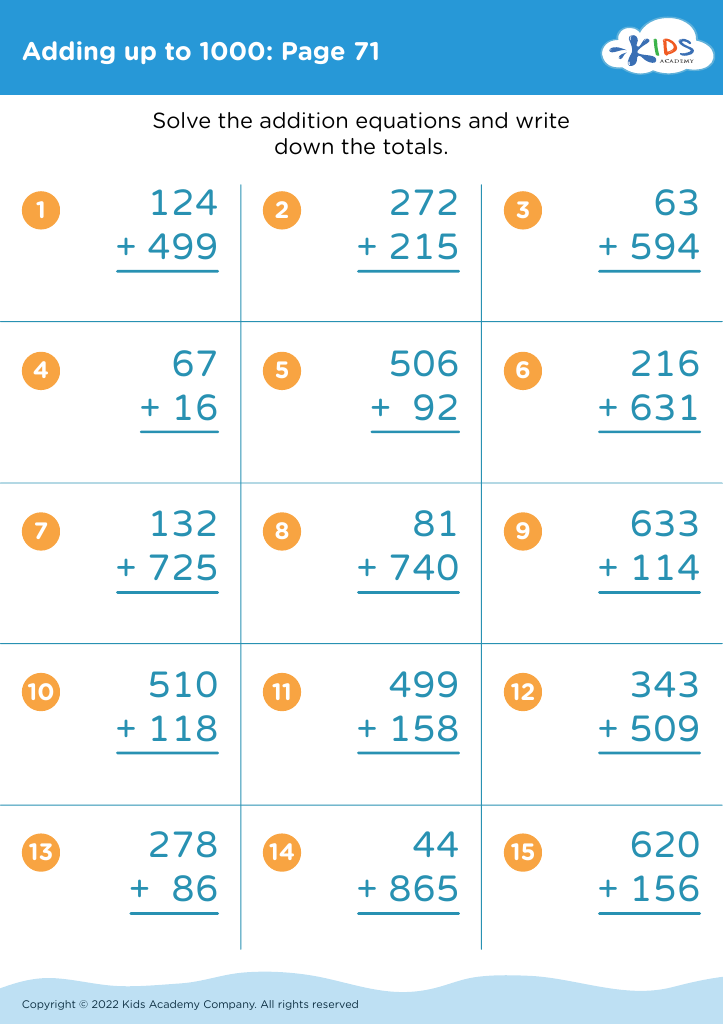
Discover our engaging Addition and Subtraction Worksheets designed specifically for children ages 3-8. These resources provide a fun and interactive way to build essential mathematical skills, helping young learners grasp the concepts of basic arithmetic with ease. Our worksheets feature colorful illustrations, guided exercises, and varied activities that cater to different learning styles. From simple counting exercises to more challenging problems, each worksheet fosters critical thinking and problem-solving abilities. Perfect for home or classroom use, these worksheets not only enhance math skills but also encourage a love for learning. Explore today and give your child the gift of confidence in math!
Favorites
With answer key
Interactive
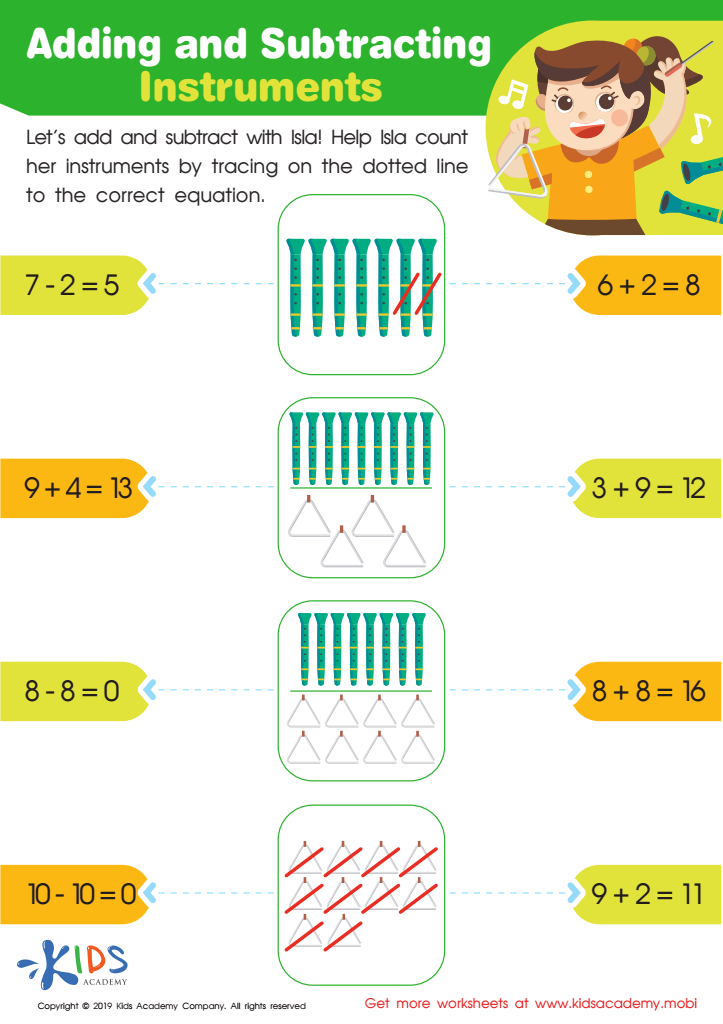
Adding and Subtracting: Instruments Worksheet
Children can help Isla count her musical instruments with this fun worksheet. The downloadable PDF gives them a chance to practice addition and subtraction by connecting pictures to equations. It's also a great way to learn the order of operations.
 Assign to My Students
Adding and Subtracting: Instruments Worksheet
Worksheet
Join Kids Academy for Free
Who is primarily going to use this learning content?








Mathematical skills, particularly addition and subtraction, are foundational for children aged 3-8 as they serve as the building blocks for future learning and everyday life. Early proficiency in these basic operations fosters critical thinking, problem-solving abilities, and logical reasoning, essential skills in both academic and real-world contexts.
For parents and teachers, nurturing these mathematical skills early on can significantly impact a child’s confidence and interest in math. Mastering addition and subtraction enables youngsters to tackle more complex concepts as they advance in their education, setting a solid groundwork for subjects like algebra, science, and even financial literacy in later life.
Moreover, engaging children with math through playful activities, like counting toys or baking with measurements, makes learning enjoyable. This positive association not only enhances their skills but also encourages a love for learning.
Additionally, in our technology-driven world, math proficiency is increasingly important for various professional paths. By cultivating strong addition and subtraction skills, educators and parents not only prepare children for academic success but also help develop essential life skills that will benefit them well into adulthood. Supporting early math education is investing in a child's holistic development and future opportunities.








