Numerical reasoning Addition & Subtraction Worksheets for Ages 3-8
3 filtered results
-
From - To
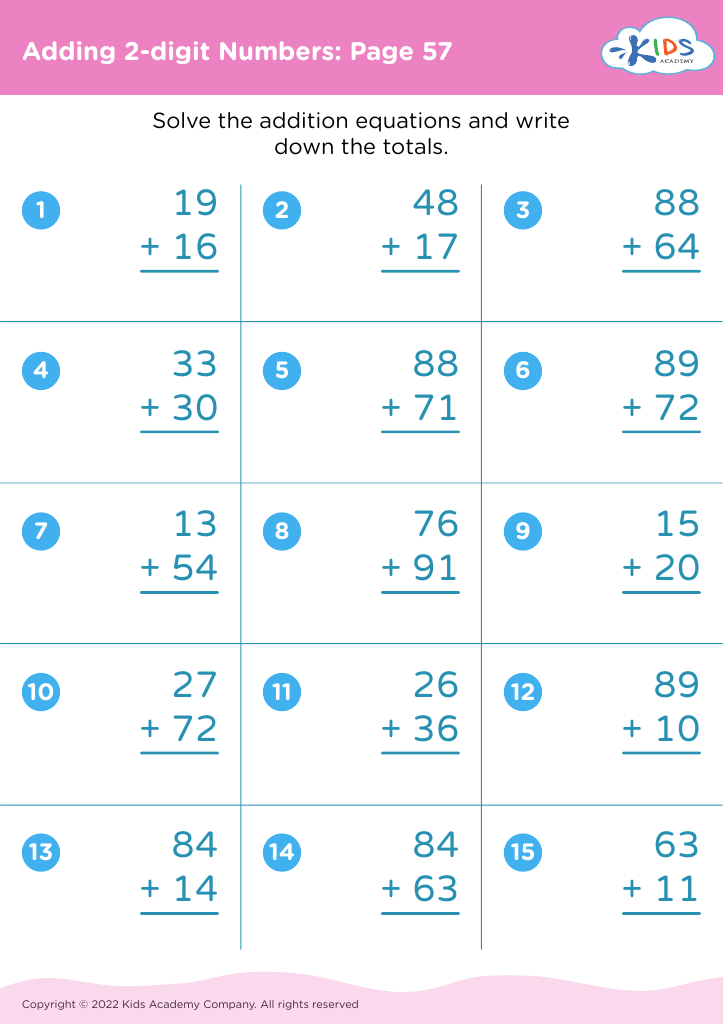
Help your child master essential math skills with our Numerical Reasoning Addition & Subtraction Worksheets for ages 3-8 at Kids Academy. These engaging, printable worksheets are designed to boost numerical reasoning, enhance problem-solving abilities, and build confidence. With age-appropriate activities, your child will learn to add and subtract through fun and interactive exercises tailored to their learning level. Perfect for both classroom and at-home practice, our worksheets cater to diverse learning needs and ensure a strong math foundation. Visit Kids Academy to access the best resources and set your child on the path to math success.
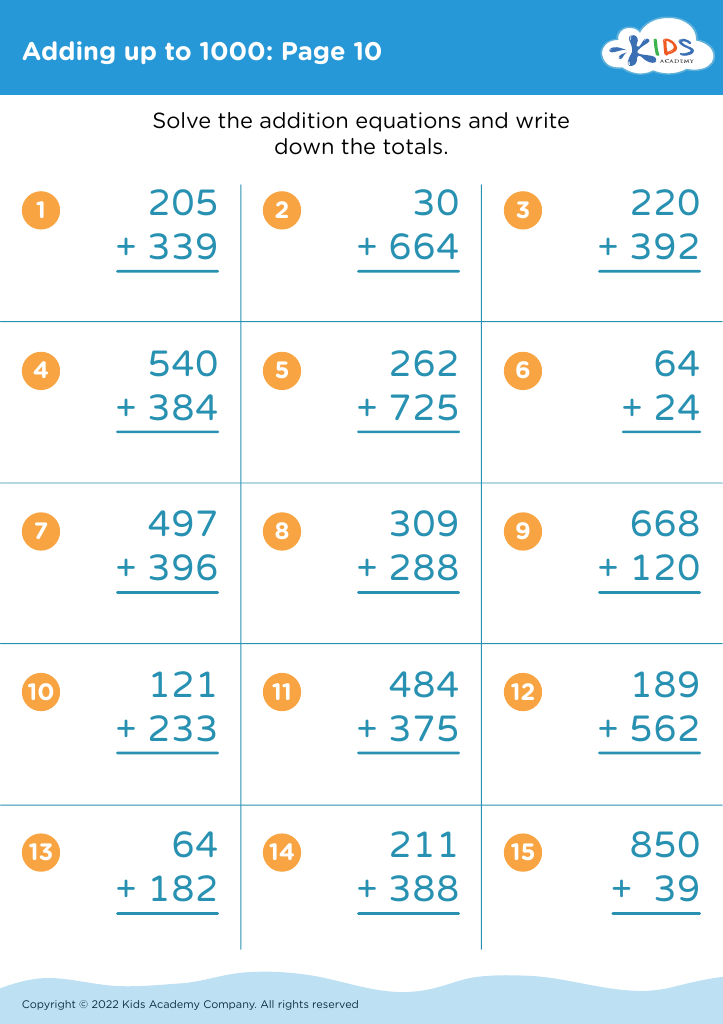
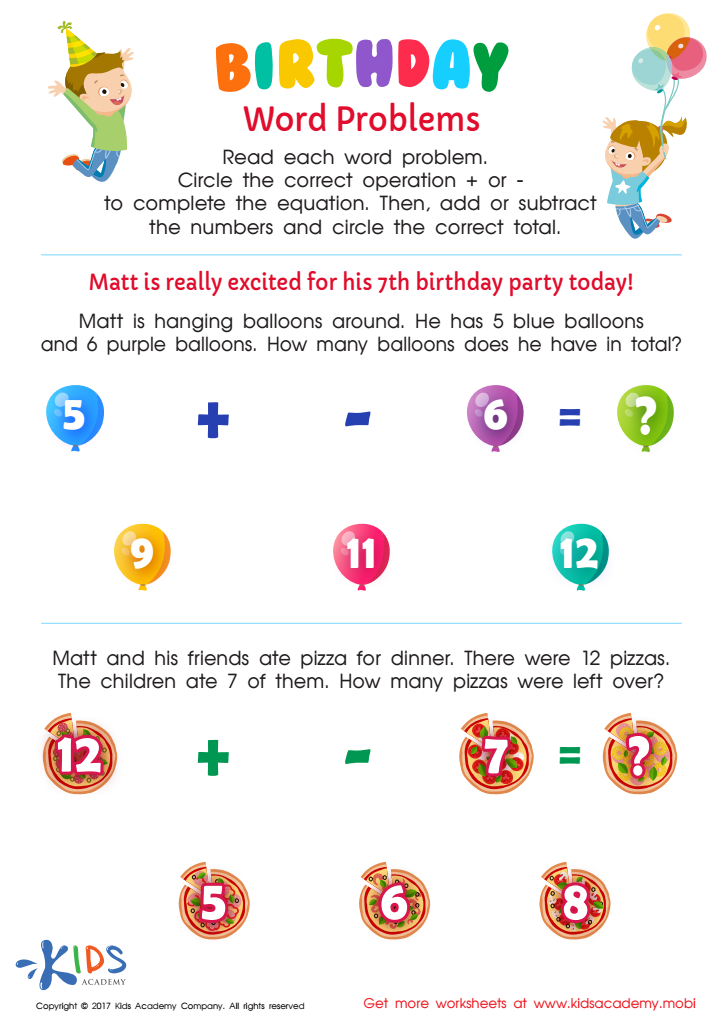
Birthday Word Problems Substraction Worksheet
 Assign to My Students








Understanding numerical reasoning and basic arithmetic—specifically addition and subtraction—is crucial for children aged 3-8, as these skills form the foundation of more complex mathematical concepts they will encounter later. During these formative years, children’s brains are highly receptive to learning and development. Introducing numerical reasoning at this stage fosters cognitive development, enhancing their problem-solving abilities and logical thinking.
For parents and teachers, it is important to recognize that numeric competency is not just about math; it also has broader implications for a child's overall academic success and confidence. Mastery of addition and subtraction helps in developing patterns of thought that are applicable across various subjects and everyday situations, such as understanding time, money, and measurement.
Additionally, early exposure to these concepts helps reduce math anxiety later in life. Playing games and engaging in activities that involve counting and simple arithmetic makes learning fun and can foster a positive attitude towards math. This positivity often translates into persistence and resilience in the face of academic challenges.
In summary, parents and teachers should prioritize numerical reasoning for young children as it builds a strong foundational skill set, fosters cognitive development, equips kids with practical life skills, and encourages a lasting, positive relationship with mathematics.








