Pattern recognition Addition & Subtraction Worksheets for Ages 3-8
9 filtered results
-
From - To
Discover engaging and educational Pattern Recognition Addition & Subtraction Worksheets for ages 3-8 at Kid’s Academy! Thoughtfully designed to enhance early math skills, these worksheets combine fun patterns with fundamental arithmetic exercises. Young learners identify and complete patterns, fostering critical thinking and problem-solving abilities. Ideal for both classroom and at-home learning, these worksheets make basic math concepts enjoyable and approachable. Perfect for nurturing a solid math foundation, improving attention to detail, and boosting confidence in early learners. Visit Kid’s Academy to download free, high-quality resources to support your child’s mathematical journey today!
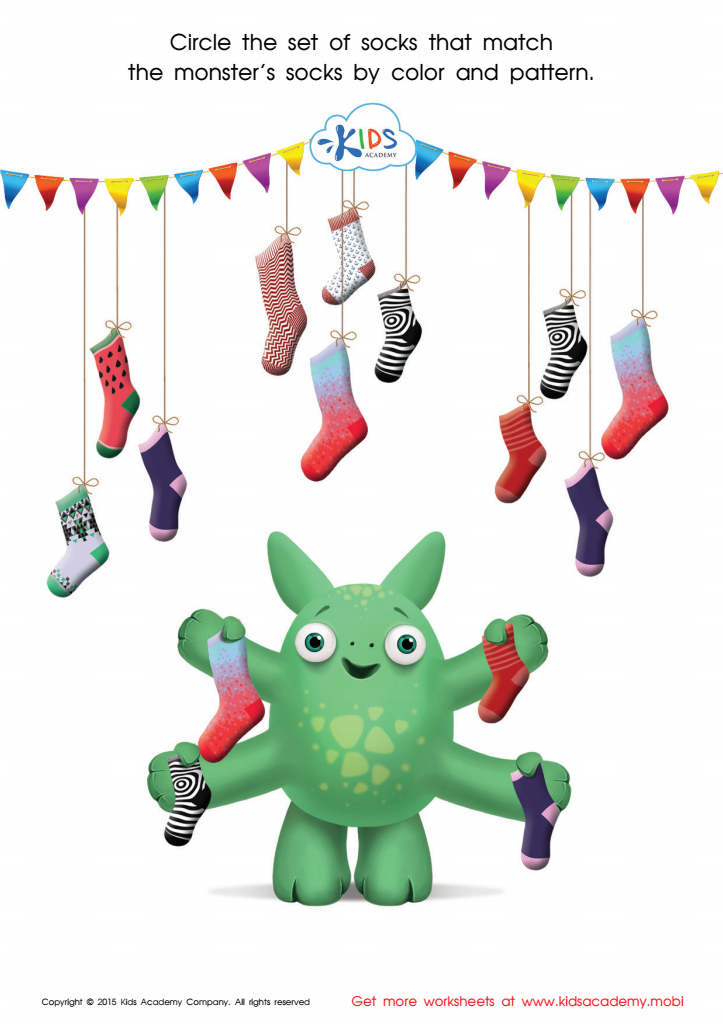
Sort the Monster's Socks Worksheet
 Assign to My Students
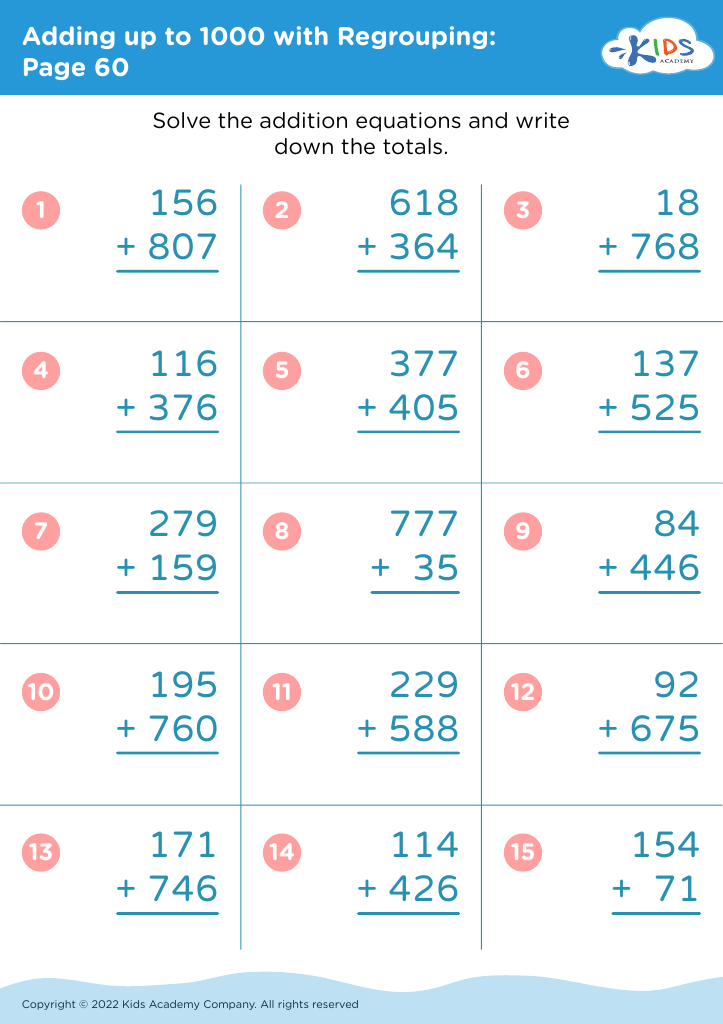
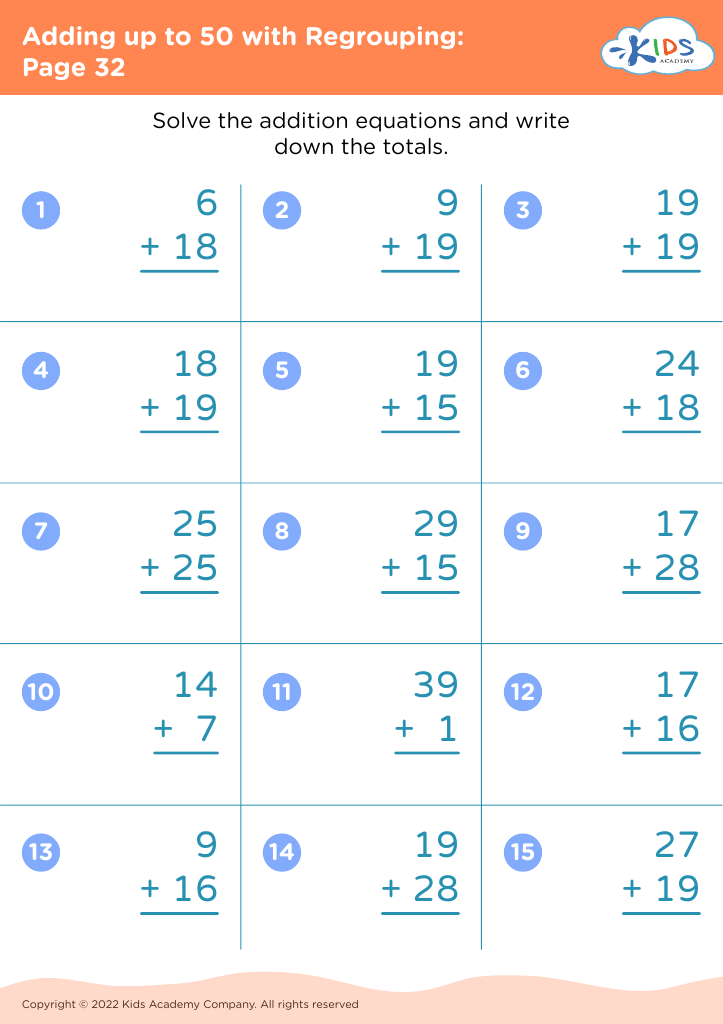
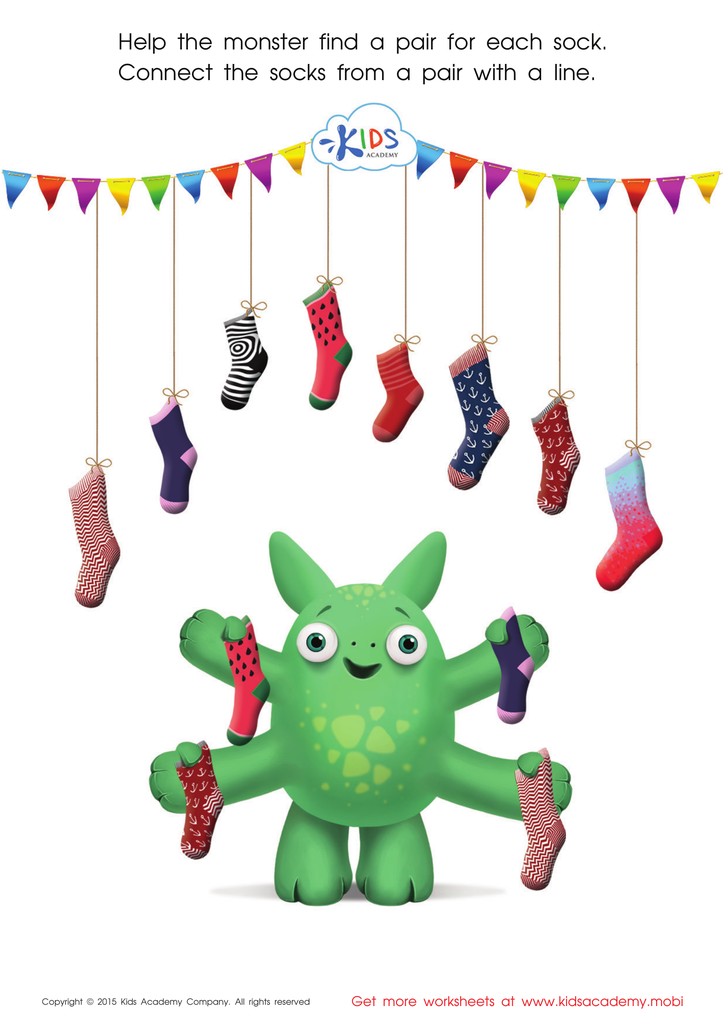
Math Matching Game: Monsterв's Socks Worksheet
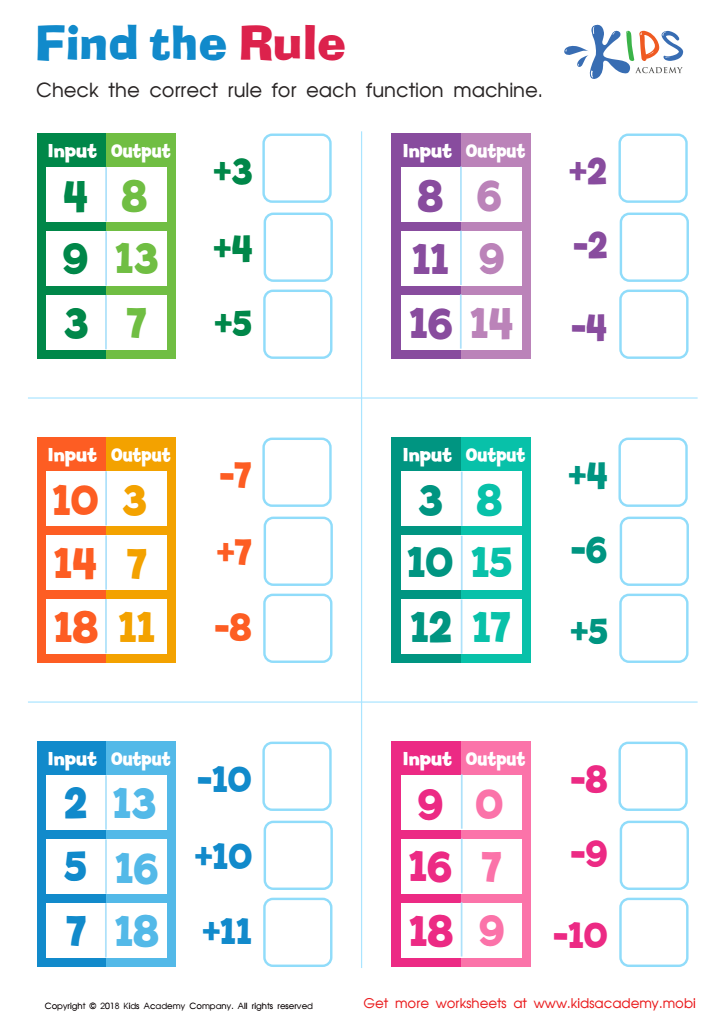
Find the Rule Worksheet
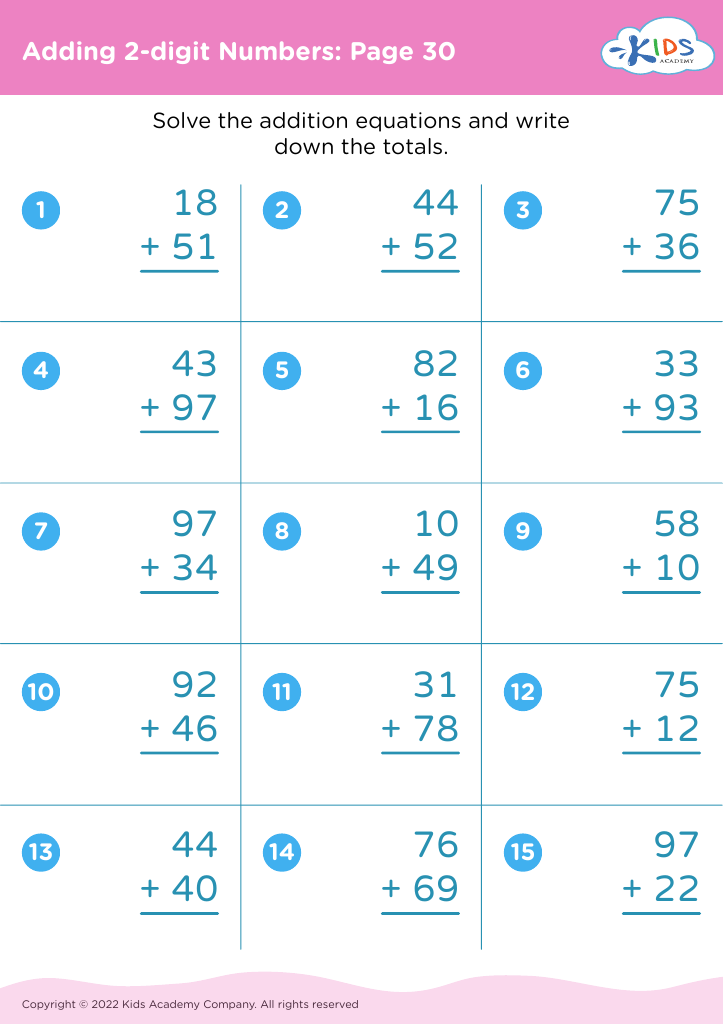
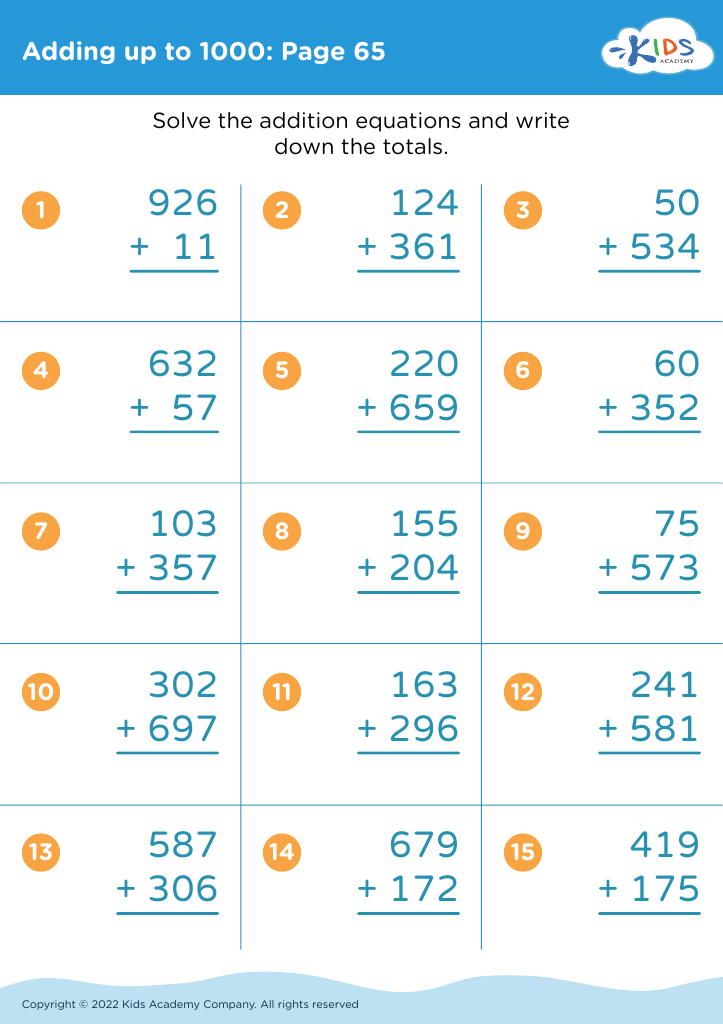
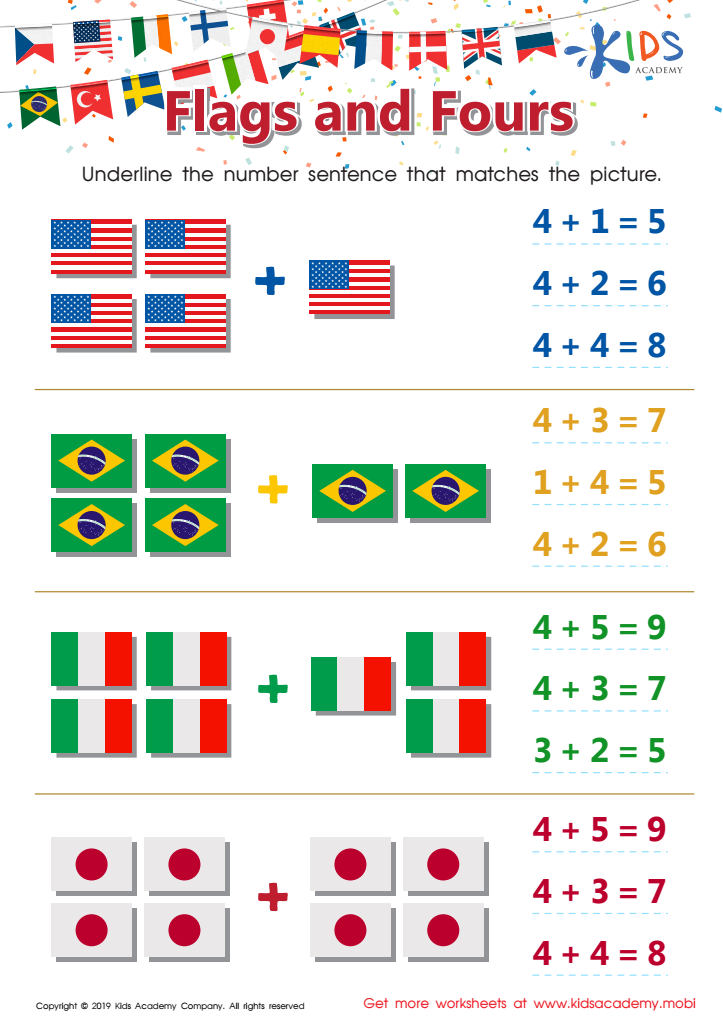
Flags and Fours Worksheet








Parents and teachers should prioritize pattern recognition, addition, and subtraction for children ages 3-8 because these skills form foundational elements of early mathematics that enhance cognitive development and prepare children for more complex problem-solving later in life. Pattern recognition helps children identify and predict regularities in their environment, fostering logical thinking and analytical skills. Engaging with patterns improves their ability to recognize sequences, which is essential not just in math, but also in daily life, such as understanding days of the week or routines.
Learning addition and subtraction at an early age builds arithmetic skills that are crucial for academic success. These fundamental operations lay the groundwork for more advanced mathematical concepts and operations. Practical application involves activities that blend into their everyday experiences, making learning more relatable and engaging. Both addition and subtraction are critical for developing a sense of number relationships and value.
Moreover, mastering these concepts contributes to improved confidence and academic performance, providing a solid base for future subjects like multiplication, division, and algebra. Early exposure through interactive and engaging methods helps sustain interest and nurture a lifelong love for learning. In essence, developing these skills equips children with the tools needed for both academic achievement and real-world tasks.








