Problem-solving development Addition & Subtraction Worksheets for Ages 3-8
3 filtered results
-
From - To
Enhance your child's mathematical journey with our engaging Problem-Solving Development Addition & Subtraction Worksheets for ages 3-8! Designed to build foundational skills in addition and subtraction, these worksheets encourage critical thinking and logical reasoning. Each activity is tailored to cultivate problem-solving abilities, allowing young learners to practice math in exciting, hands-on ways. With colorful illustrations and age-appropriate challenges, children will enjoy exploring numbers while developing essential skills they'll carry into later grades. Perfect for home or classroom use, these worksheets make math fun and effective. Explore our collection and empower your child to become a confident problem solver today!
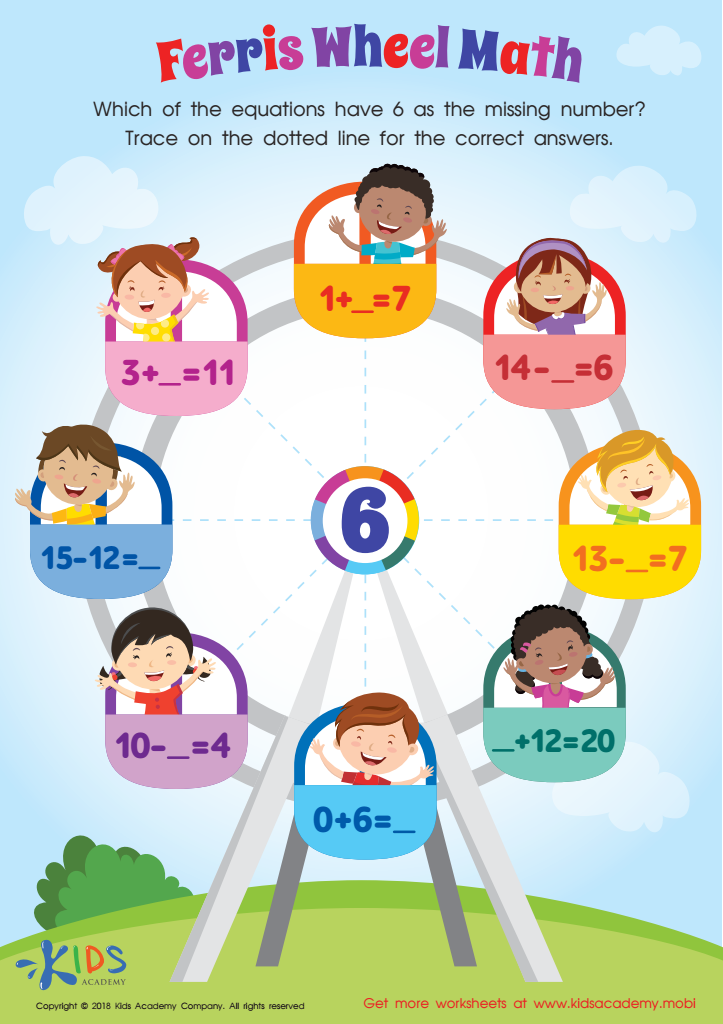
Missing Number: Ferris Wheel Math Worksheet
 Assign to My Students
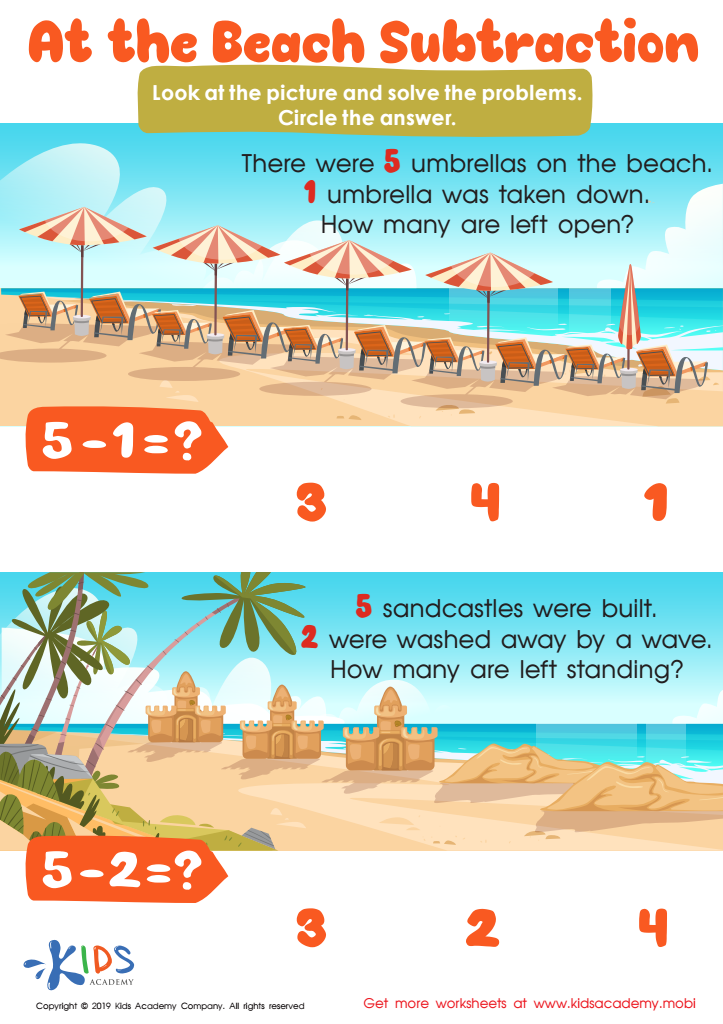
At the Beach Subtraction Worksheet
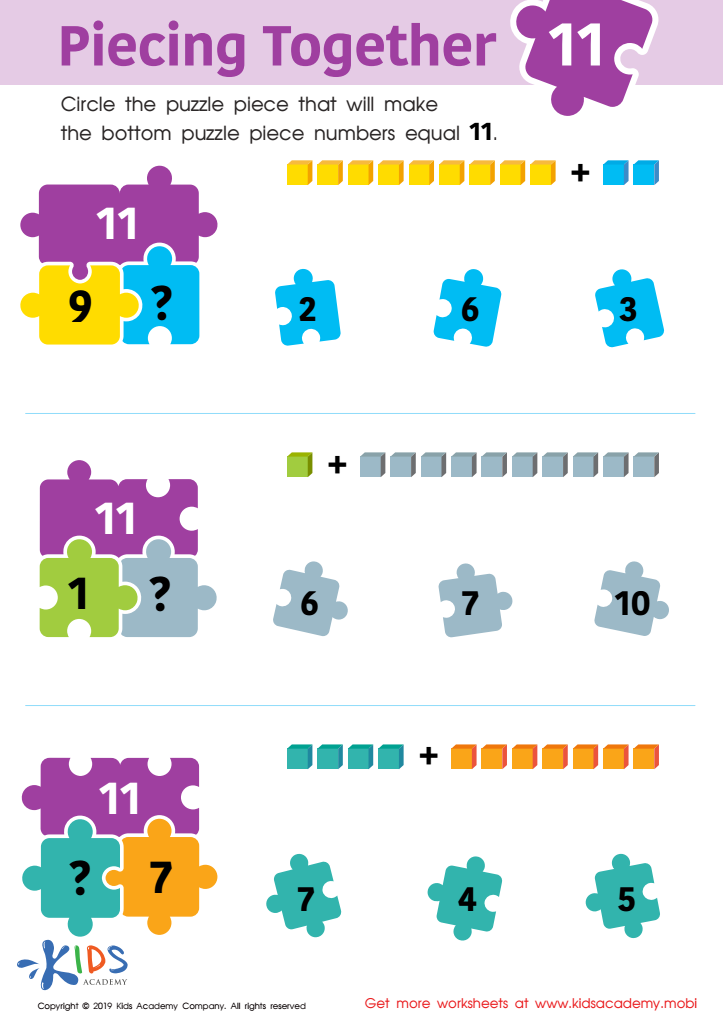
Piecing Together 11 Worksheet








Parents and teachers should prioritize the development of problem-solving skills in addition and subtraction for children aged 3-8, as these foundational mathematical concepts are critical to overall cognitive development. Early math skills foster logical reasoning, critical thinking, and a broader understanding of patterns and relationships in everyday life.
At this age, children learn not just to perform calculations but to approach challenges with a problem-solving mindset. Engaging children in addition and subtraction enables them to apply logical reasoning, helping them develop skills like estimation, comparing quantities, and understanding “how many.” This lays the groundwork for future math proficiency and higher-order thinking.
Moreover, strong problem-solving abilities enhance confidence and resilience. When children tackle math problems, they learn to approach challenges systematically and persist, skills that are applicable beyond academic settings. Moreover, successful engagement with math at an early age reduces math-related anxiety, paving the way for a more favorable attitude toward math throughout their educational journey.
Encouraging problem-solving through play, real-life scenarios, and interactive learning not only makes math fun but also connects learning to their everyday experiences. Ultimately, fostering these skills profoundly influences children's ability to think critically, adapt, and solve problems in varied contexts throughout their lives.








