Recognize patterns Addition & Subtraction Worksheets for Ages 3-8
11 filtered results
-
From - To
Welcome to our "Recognize Patterns Addition & Subtraction Worksheets" designed specifically for young learners aged 3-8! These engaging worksheets help children develop critical math skills by encouraging them to identify patterns in addition and subtraction problems. Through fun activities, kids will enhance their number recognition and critical thinking abilities while boosting their confidence in math. Tailored to meet developmental milestones, our worksheets promote interactive learning, making math enjoyable and accessible. Perfect for home or classroom use, these materials support early childhood education and lay a solid foundation for future math success. Explore our resources and foster a love for learning today!
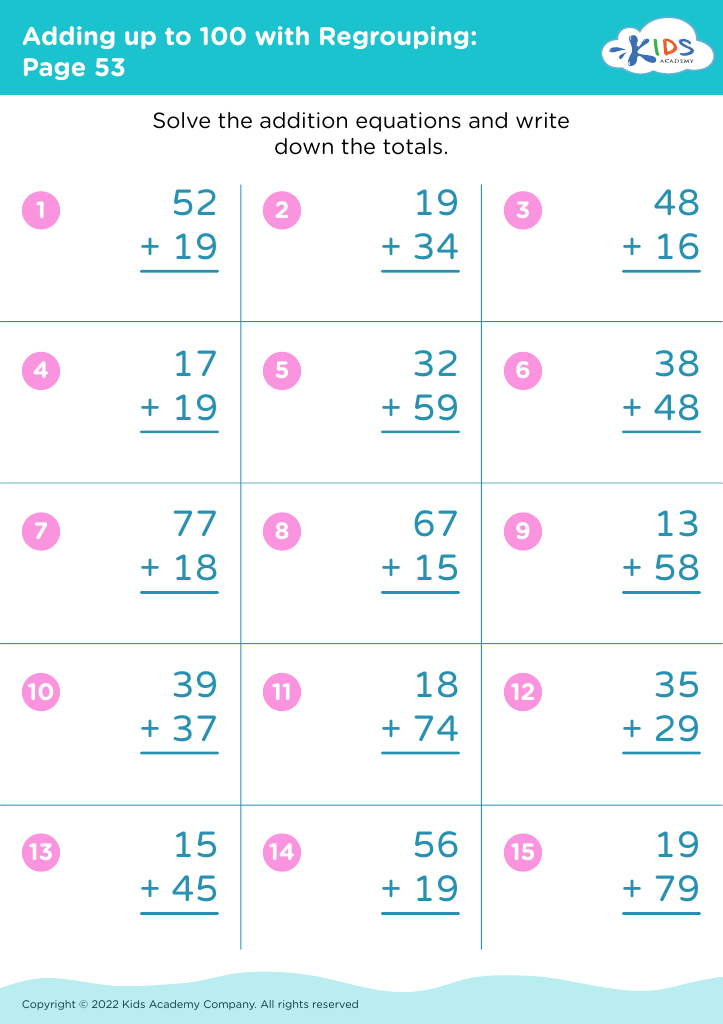
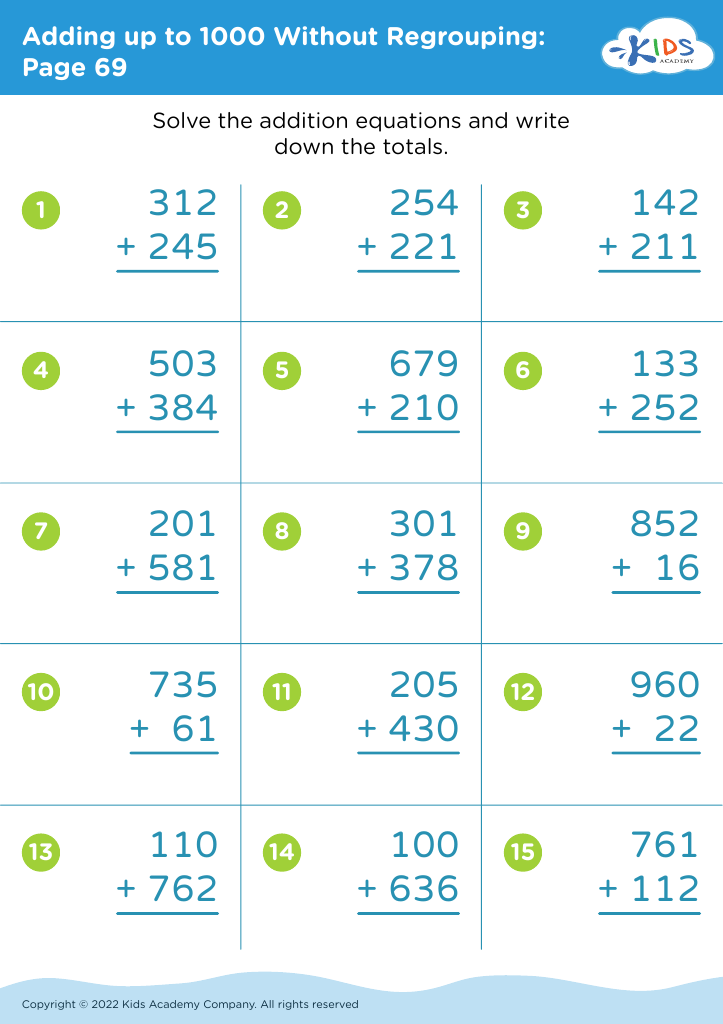
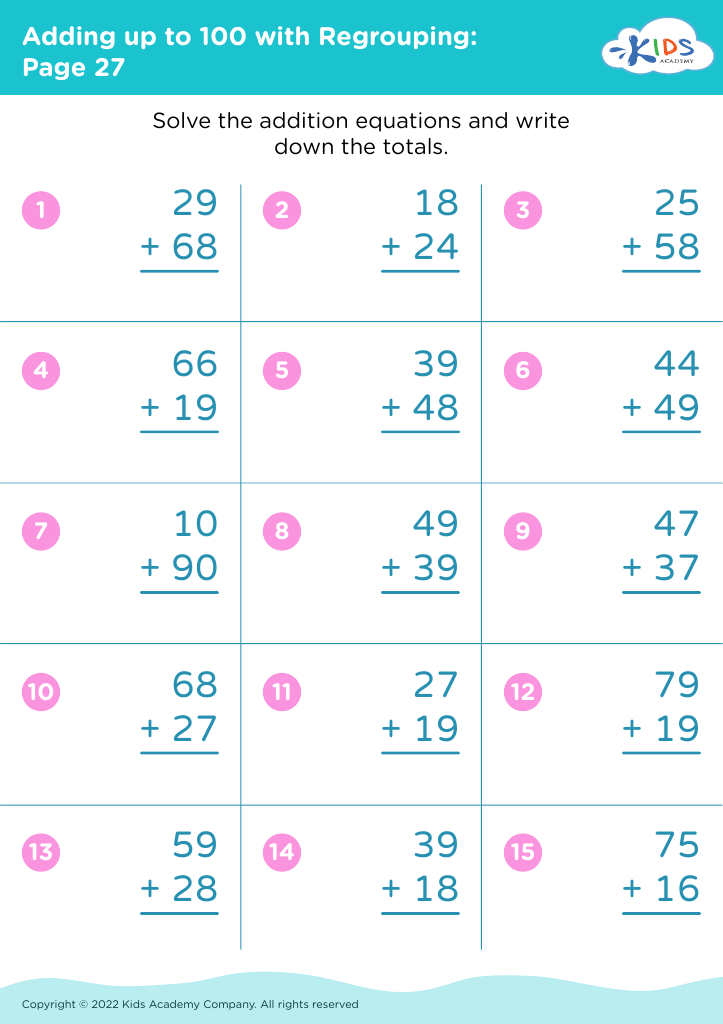
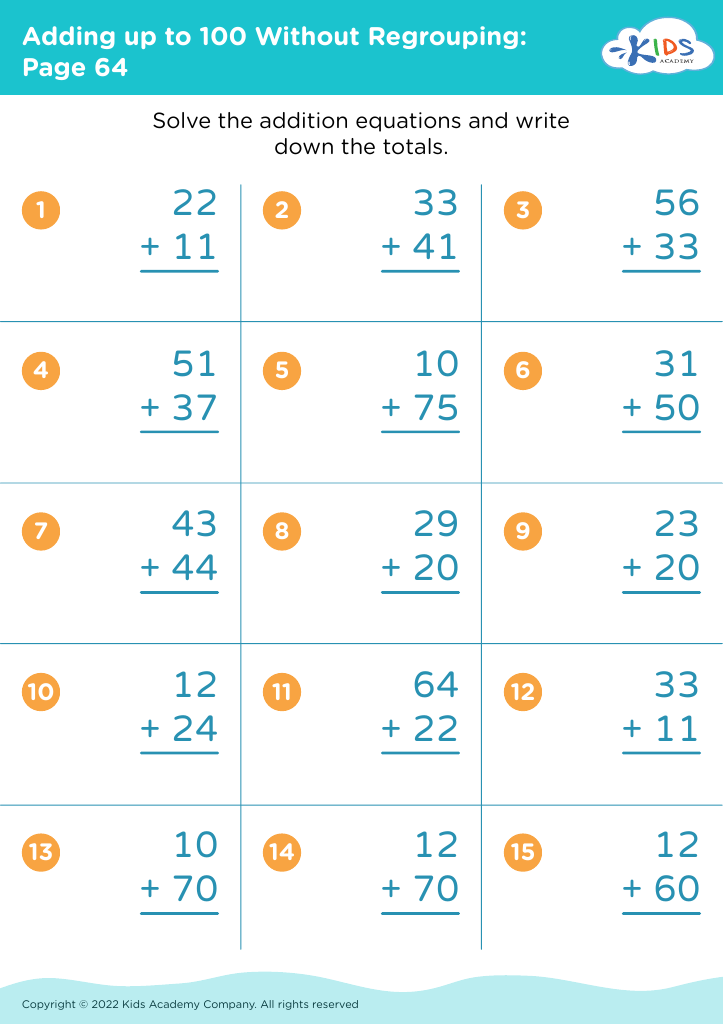
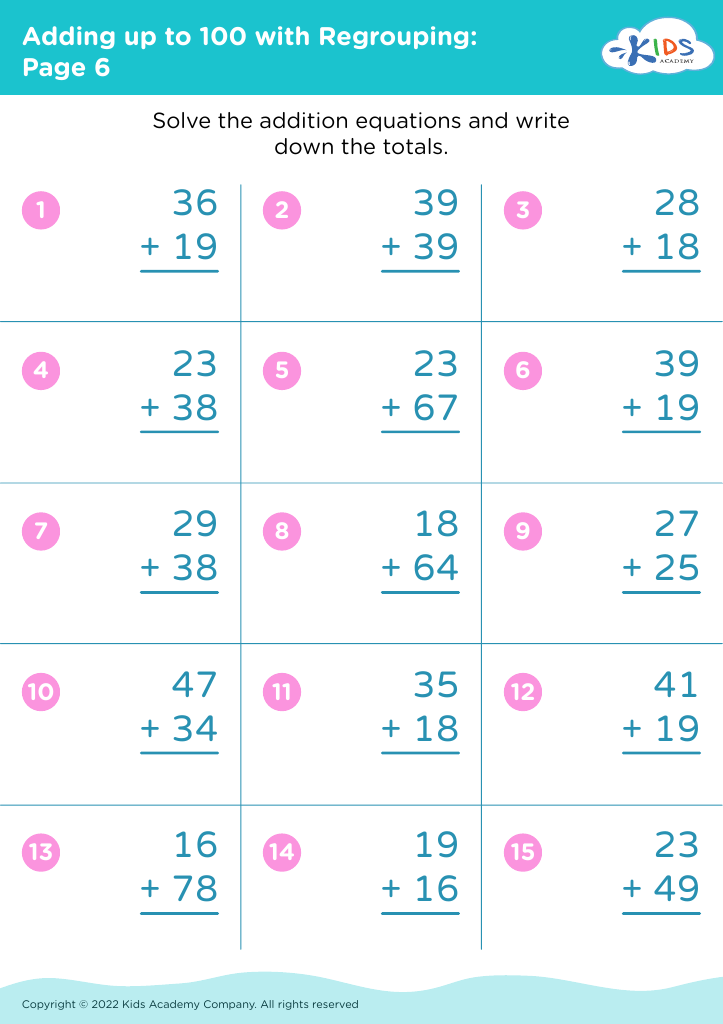
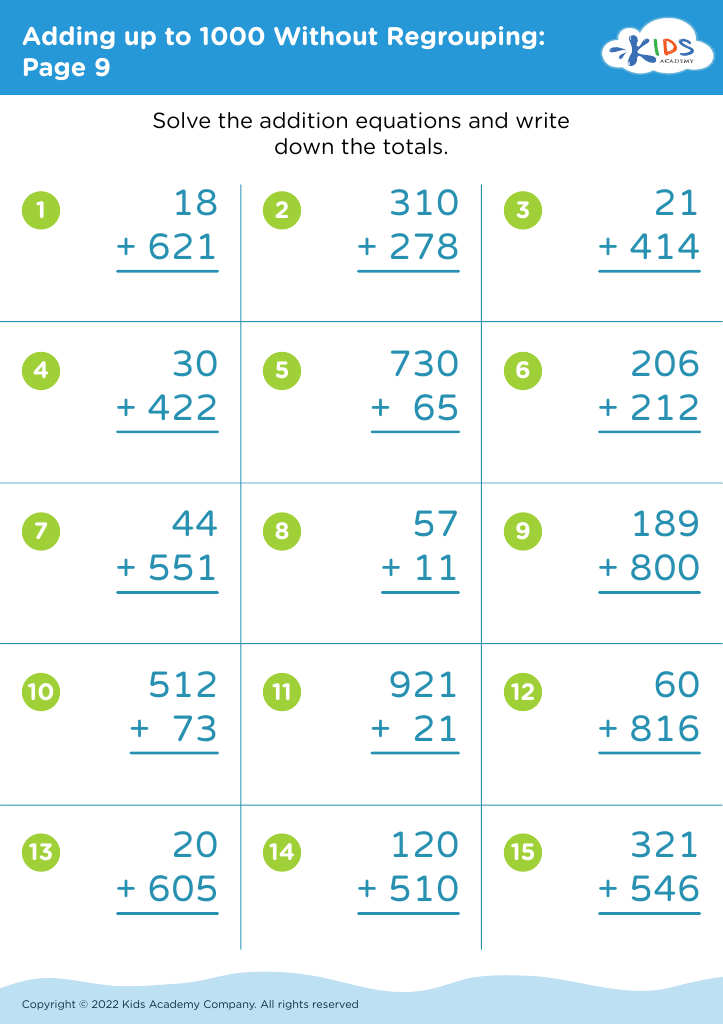
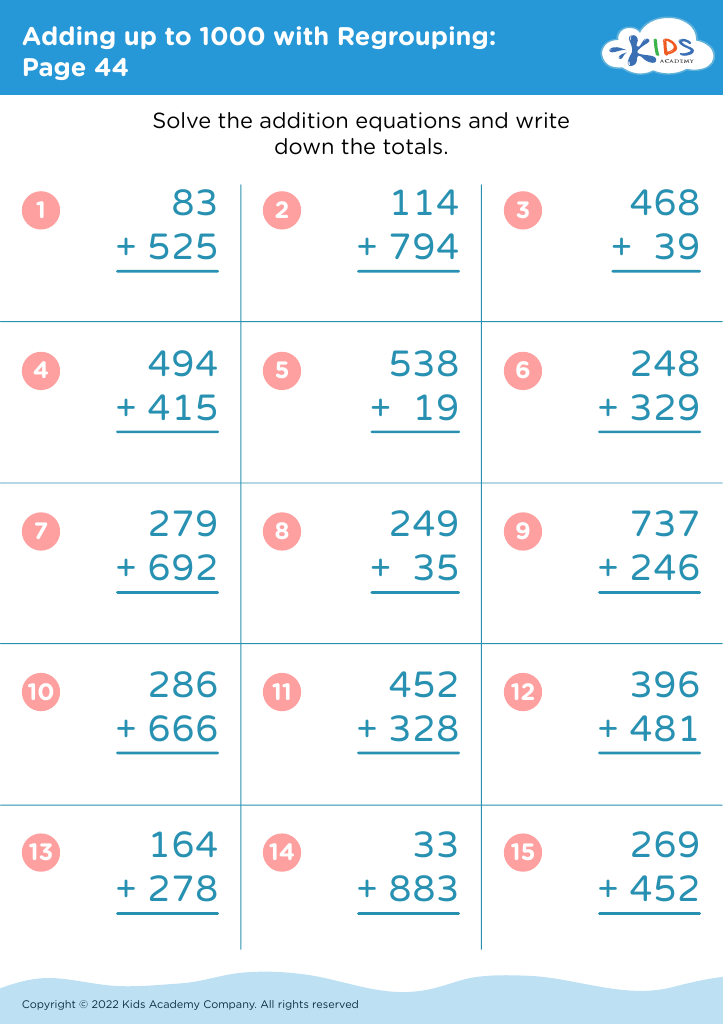








Recognizing patterns in addition and subtraction is a fundamental skill for children aged 3-8 that lays the groundwork for their future mathematical success. Understanding patterns helps children make connections between numbers and operations, allowing them to predict outcomes and solve problems more efficiently. For parents and teachers, fostering this understanding can lead to enhanced critical thinking and cognitive development in young learners.
By recognizing patterns, children can develop strategies that make addition and subtraction more manageable, improving their confidence and engagement with math. When they observe numerical patterns, they start to understand relationships between numbers, which promotes a deeper understanding of concepts like place value and arithmetic operations.
Additionally, mastering these foundational skills contributes to better performance in higher-level math as children progress in their education. Teaching pattern recognition also supports overall brain development, encouraging children to think abstractly and reason logically.
Furthermore, engaging children in interactive activities that focus on patterns makes learning enjoyable, fostering a positive attitude toward math from an early age. Therefore, parents and teachers play a crucial role in nurturing these skills, benefiting children's academic journeys and helping them become critically thinking individuals in society.








