Sea creatures identification Addition & Subtraction Worksheets for Ages 3-8
3 filtered results
-
From - To
Dive into learning with our "Sea Creatures Identification Addition & Subtraction Worksheets for Ages 3-8!" These engaging worksheets combine math practice with marine biology, capturing young learners’ imaginations while strengthening their addition and subtraction skills. Each activity features beautifully illustrated sea creatures, helping kids to recognize numbers, practice basic math operations, and develop a love for ocean wildlife. Ideal for home or classroom use, these printable worksheets support early education standards, making math fun and visually appealing. Download now to help your child excel in math while exploring the wonders of the sea!
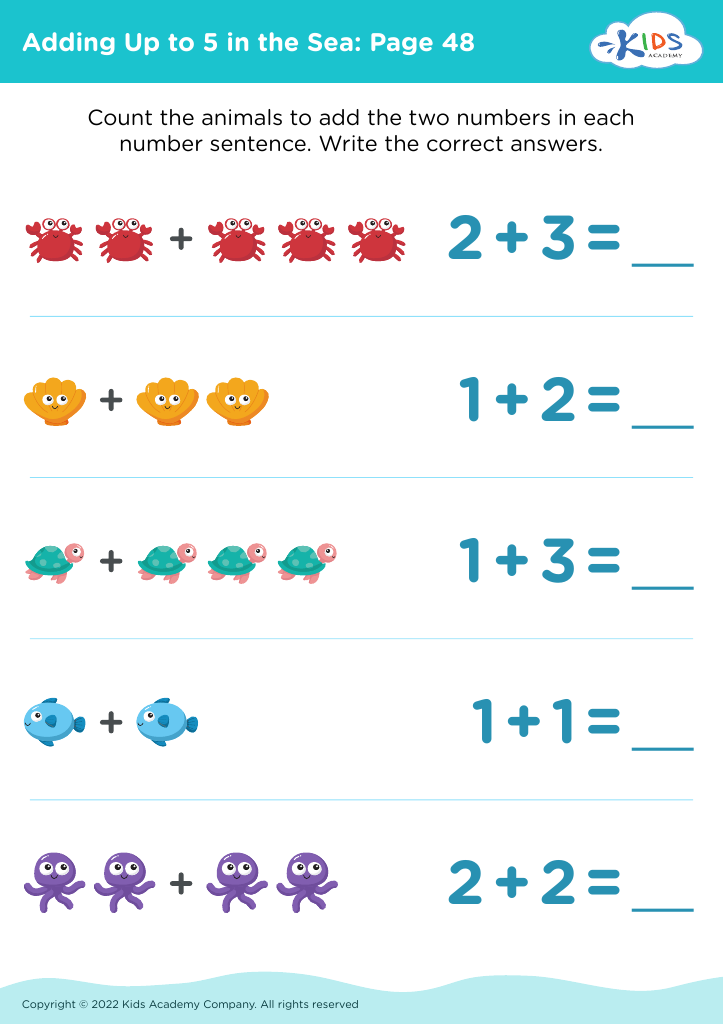
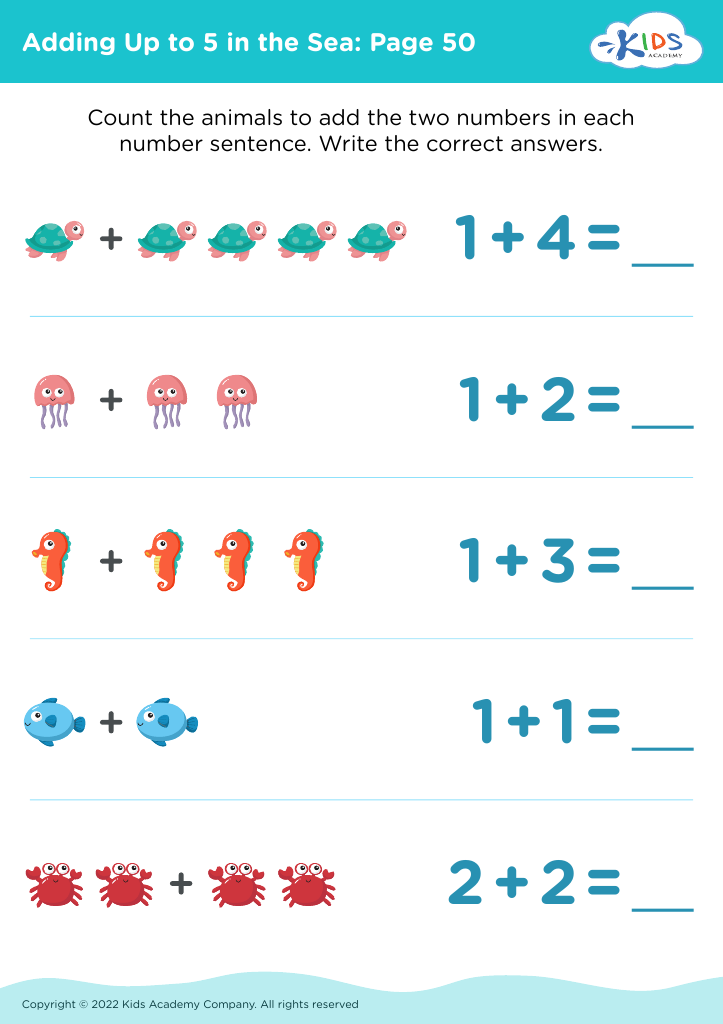
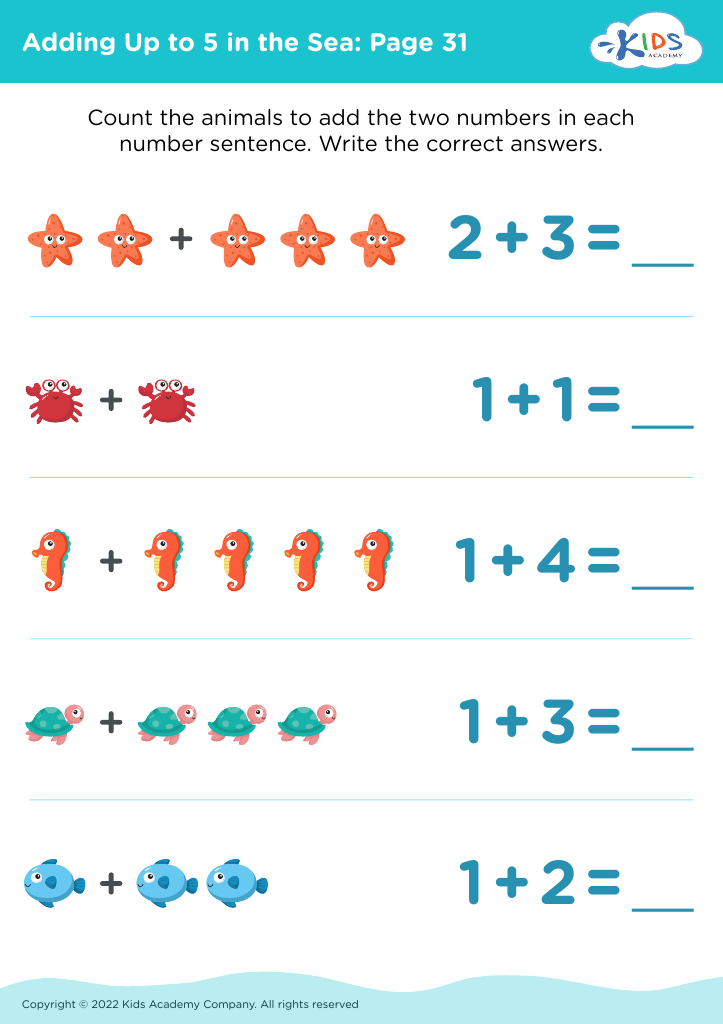








Parents and teachers should care about sea creatures identification addition and subtraction for children ages 3-8 because it provides a multi-faceted learning experience that combines environmental education with fundamental math skills. Firstly, familiarizing young children with sea creatures encourages curiosity and respect for marine life, fostering an early appreciation for nature and environmental conservation. Knowing about oceanic ecosystems and the fascinating creatures within them can spark a lifelong interest in the natural world and instill a sense of responsibility toward protecting the environment.
Additionally, incorporating sea creatures into math lessons makes learning addition and subtraction more engaging and relatable for young children. Educational tools that integrate fun themes like sea life capture children’s imaginations, turning abstract numbers into meaningful and memorable concepts. When counting and comparing sea creatures, children can better grasp numerical values and mathematical operations through a tangible and enjoyable context.
Moreover, combining theme-based identification with math practice helps develop cognitive skills such as critical thinking, problem-solving, and pattern recognition. It creates a holistic learning experience that simultaneously enhances environmental literacy and numeracy. Consequently, caring about sea creatures identification and related math activities supports both the intellectual and emotional development of young learners, providing a strong foundation for future academic endeavors.








