Telling time Addition & Subtraction Worksheets for Ages 3-8
3 filtered results
-
From - To
Our "Telling Time Addition & Subtraction Worksheets for Ages 3-8" are designed to make learning fun and engaging for young minds. These printable worksheets encompass essential math skills, focusing on the basics of telling time while employing addition and subtraction to reinforce understanding. Children will practice reading clocks, solving word problems, and performing simple arithmetic, all while enhancing their cognitive abilities. Perfect for home or classroom use, these worksheets promote critical thinking and improve kids’ mathematical confidence, providing a solid foundation in time-telling and basic math operations tailored to their developmental stage.
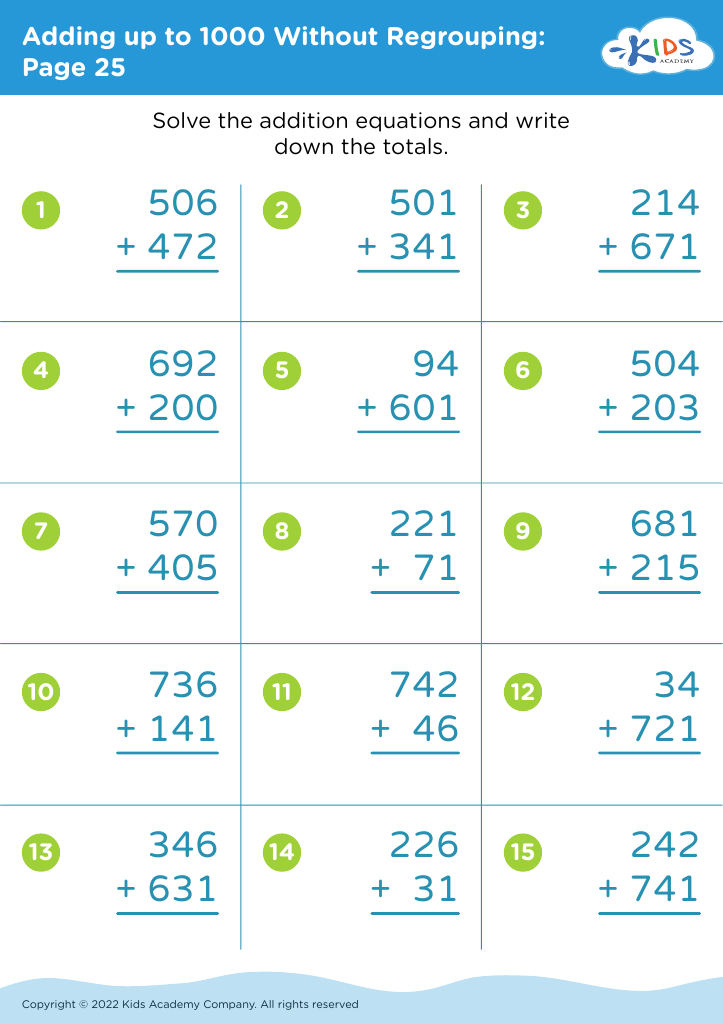
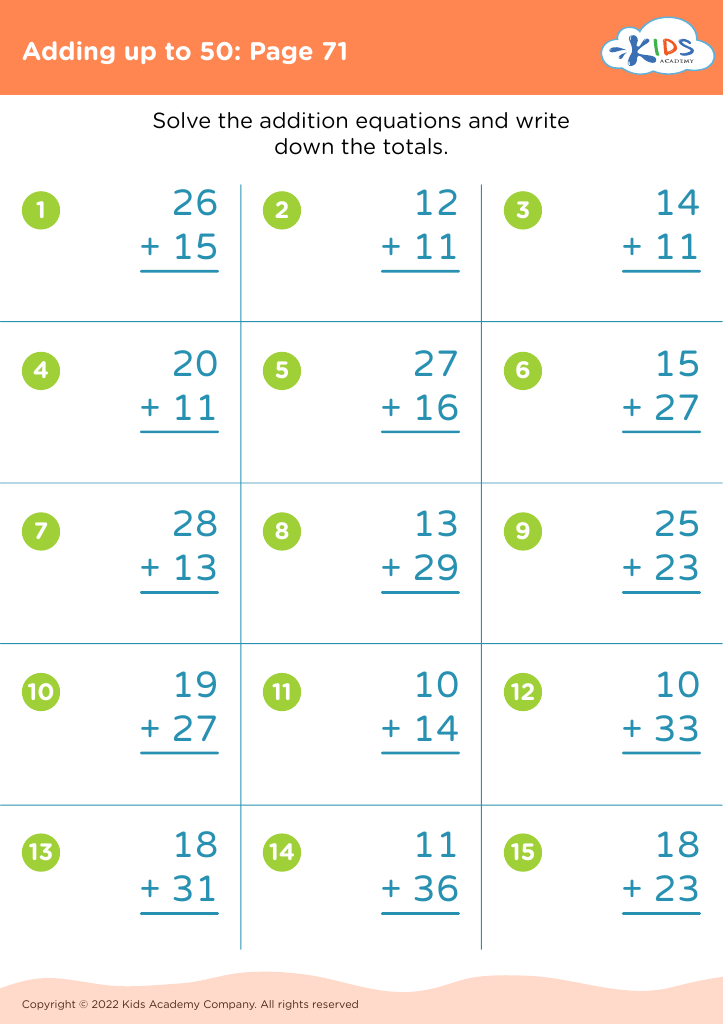
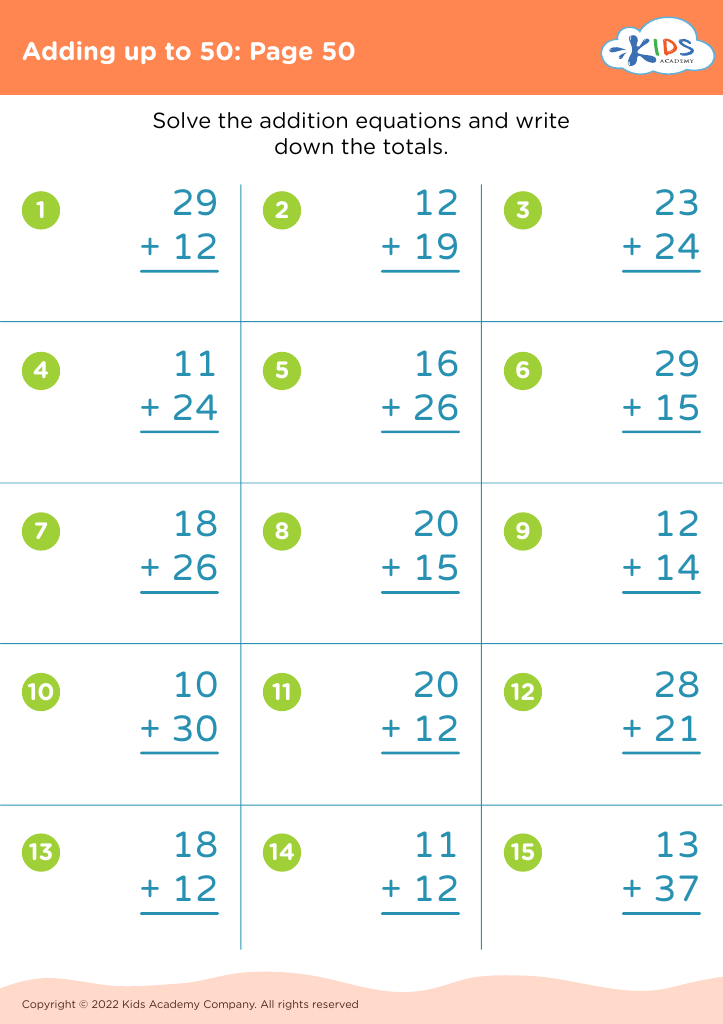








Teaching young children to tell time, add, and subtract is a pivotal part of their early education that sets a strong foundation for their academic and life skills. For ages 3-8, the concepts of telling time and basic arithmetic form the bedrock of cognitive development, critical thinking, and problem-solving abilities. Being adept at telling time enhances children's understanding of daily routines, time management, and the importance of punctuality, fostering a sense of responsibility and independence.
Learning addition and subtraction builds their mathematical intuition, enabling them to grasp more complex concepts as they progress in their education. These skills are practical and used in everyday activities, such as sharing toys, counting treats, or planning events, thus improving their real-world understanding.
Furthermore, mastering these abilities boosts children's confidence and enthusiasm for learning. Early proficiency in these areas can positively impact their performance in other subjects, leading to a more holistic development. When parents and teachers emphasize these foundational skills during early childhood, they are effectively equipping children with essential tools to navigate both academic challenges and daily life with increased competence and ease. By caring about these fundamental skills, we support children's overall growth and academic achievement.








