Understand number relationships Addition & Subtraction Worksheets for Ages 3-8
3 filtered results
-
From - To
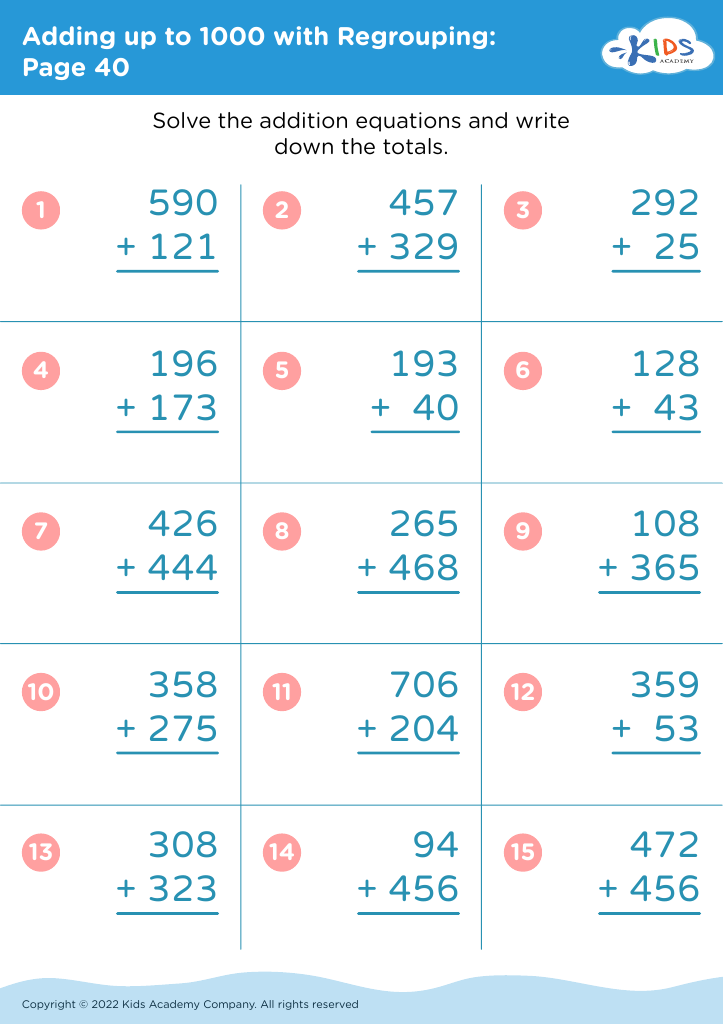
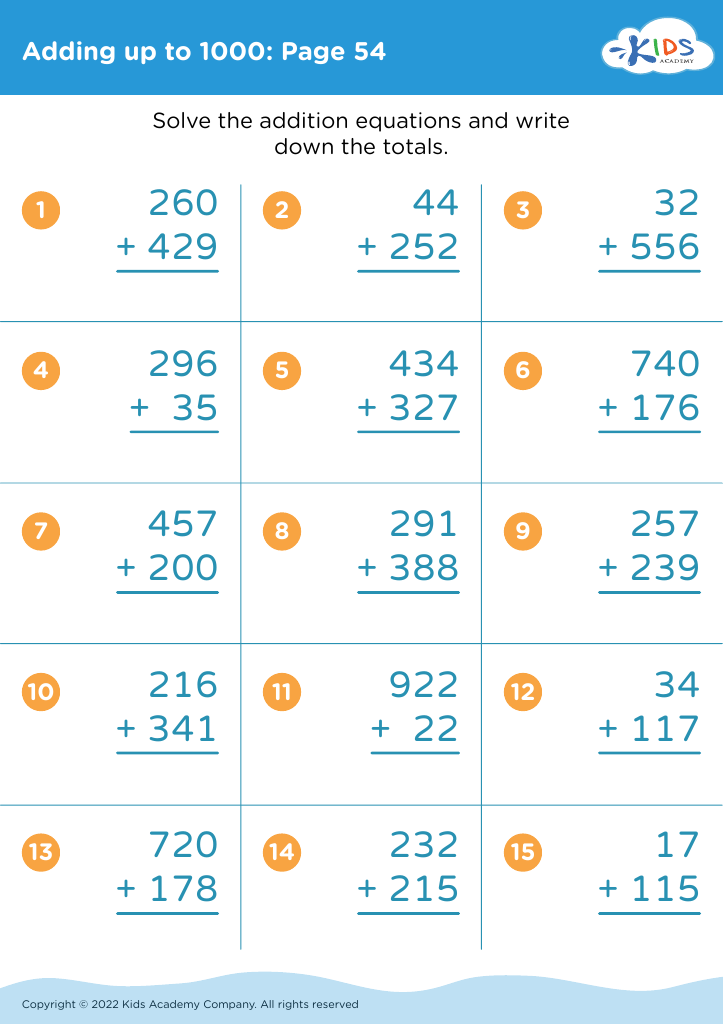
Explore our "Understand Number Relationships: Addition & Subtraction Worksheets" designed specifically for children aged 3-8. These engaging worksheets help young learners grasp fundamental math concepts by building a solid foundation in addition and subtraction. Each activity encourages critical thinking and fosters early numeracy skills, allowing kids to visually and mentally navigate number relationships. With colorful and interactive exercises, children will develop confidence while mastering essential math operations. Perfect for classroom use or at-home practice, our worksheets present a fun and effective way to enhance your child’s understanding of numbers and their connections. Start their math journey today!
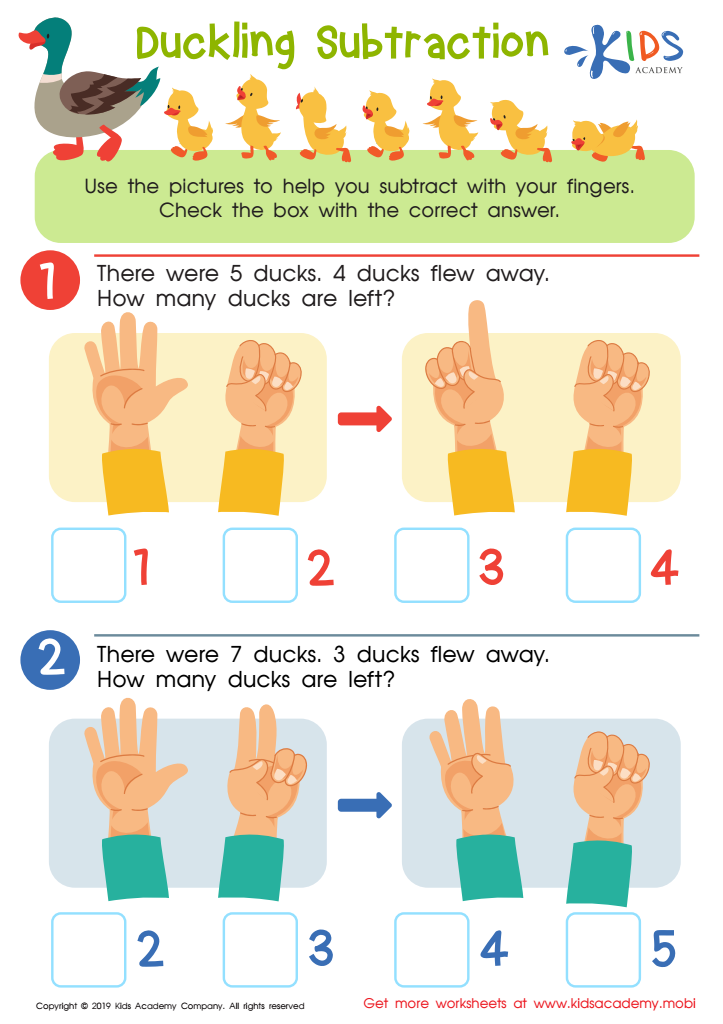
Duckling Subtraction Worksheet
 Assign to My Students








Understanding number relationships through addition and subtraction is crucial for children aged 3-8, as it lays the foundation for their mathematical development. At this early stage, children are not just learning to perform calculations; they are learning the concepts behind numbers and how they relate to one another. This understanding aids in the development of critical thinking and problem-solving skills, which can have a lasting impact on their academic journey.
When parents and teachers focus on number relationships, they help children grasp concepts like greater/less than, more/less, parts/whole, and how numbers interact. This foundation promotes confidence in math, reducing anxiety around the subject as they progress in school. Furthermore, when children understand addition and subtraction conceptually, they are better prepared to tackle more complex mathematical concepts later on, as well as applying math to real-life situations, such as sharing toys, counting money, or measuring ingredients for recipes.
Involving children in playful and engaging math experiences fosters a positive attitude towards learning, encouraging exploration and curiosity. Therefore, parents and teachers should see the significance of nurturing number relationships to support not just mathematical skills, but overall cognitive and emotional growth in young learners.








