
Understanding money Addition & Subtraction Worksheets for Ages 3-8
4 filtered results
Difficulty Level
Grade
Age
-
From - To
Subject
Activity
Standards
Discover our engaging Understanding Money Addition & Subtraction Worksheets for children ages 3-8! These interactive resources help young learners grasp essential math concepts while also introducing them to the exciting world of money. Designed with age-appropriate visuals and real-life scenarios, these worksheets boost mathematical skills through fun exercises that involve adding and subtracting various coins. Parents and educators will appreciate the clear instructions and structured approach, making it easy to integrate math learning into daily activities. Foster your child’s confidence in handling money and mathematical operations today with our thoughtfully curated worksheets, preparing them for a bright financial future!
Favorites
With answer key
Interactive
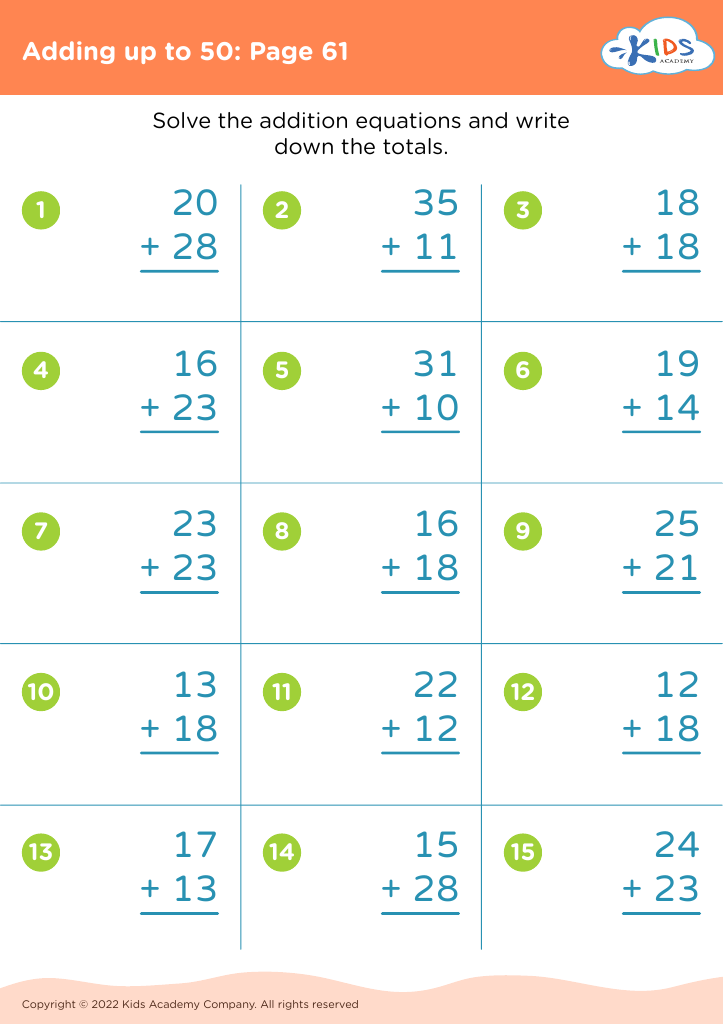
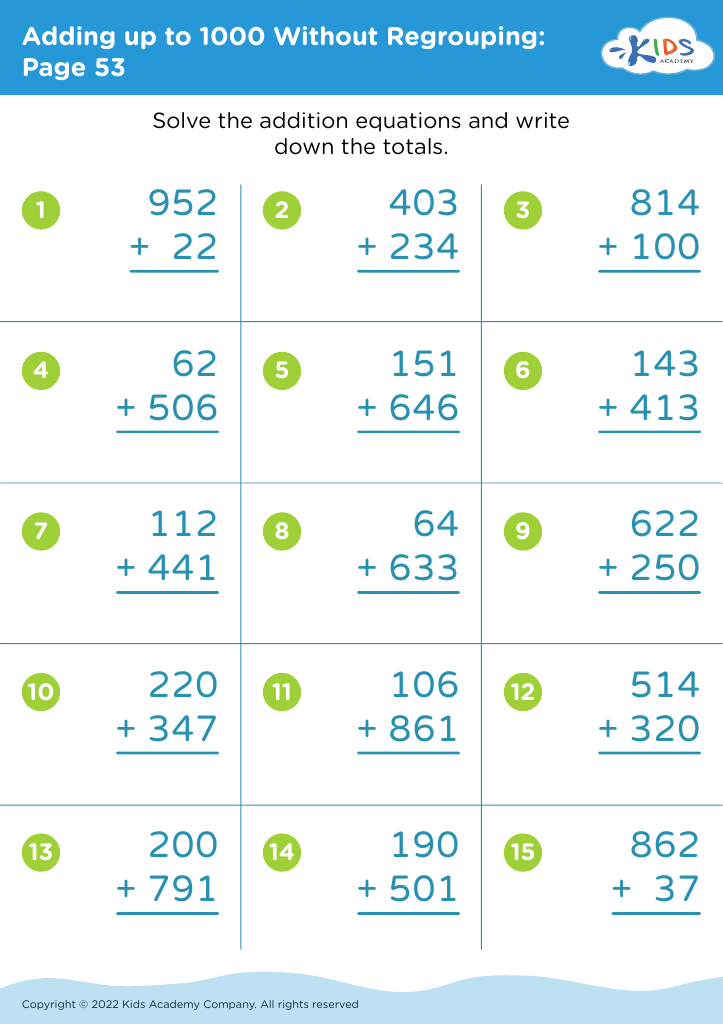
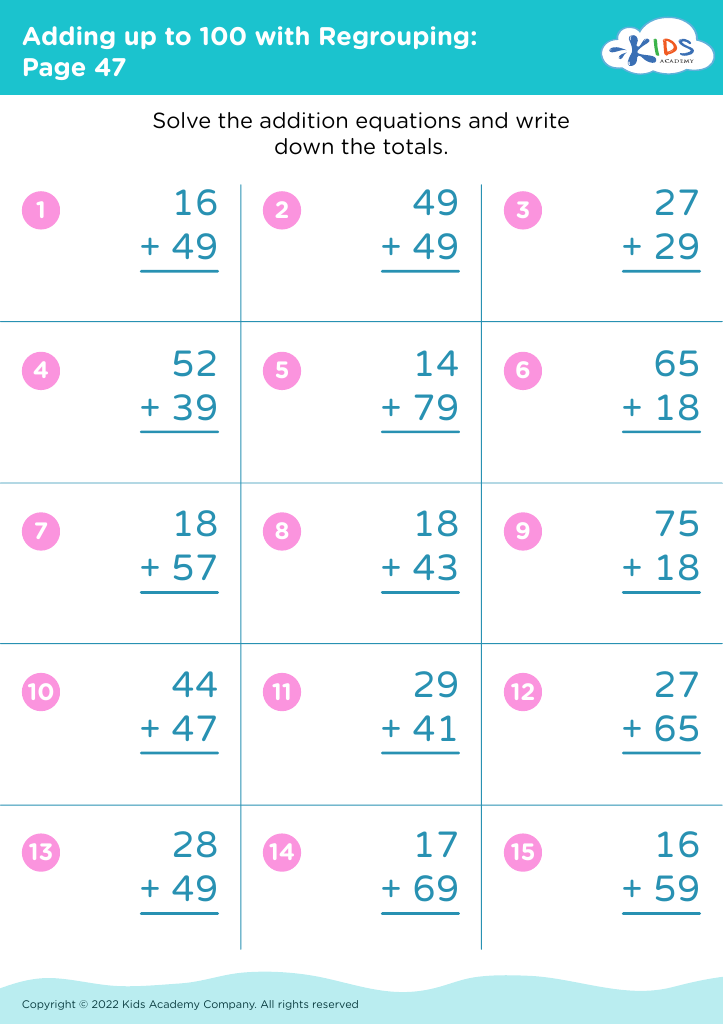
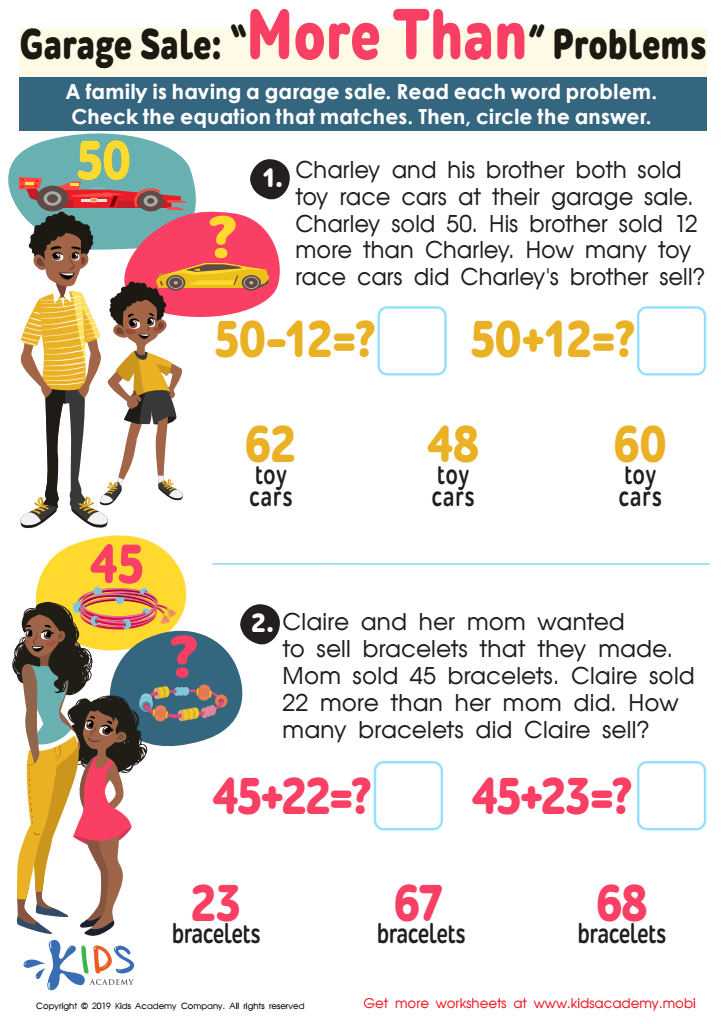
Garage Sale - More yhan Worksheet
The whole family can join in on the fun with this free worksheet! It helps kids practice math word problems while assisting their friends with a garage sale. Kids learn to identify "More Than" key words and pick the right equation, improving their order of operations skills. Download the PDF and get started!
 Assign to My Students
Garage Sale - More yhan Worksheet
Worksheet
Join Kids Academy for Free
Who is primarily going to use this learning content?








Understanding money, along with basic addition and subtraction, is crucial for children aged 3-8 as it lays the foundation for financial literacy and mathematical skills. At this age, children are naturally curious and eager to learn, making it an ideal time to introduce concepts related to money management and arithmetic.
Teaching young children about money not only helps them understand its value—how to save, spend, and share—but also promotes essential life skills. As they practice addition and subtraction with coins, they develop a practical understanding of mathematical concepts through real-world applications. These skills are vital for everyday situations, such as shopping, budgeting, and making decisions about expenditures.
Moreover, engaging children in money-related activities fosters critical thinking and problem-solving skills. By incorporating fun games and activities, teachers and parents can make learning enjoyable and memorable. This, in turn, helps instill a positive attitude toward math, potentially reducing math anxiety as they grow older.
Additionally, equipping children with these foundational skills empowers them to feel confident as they progress in their education, ensuring they are well-prepared for more complex financial concepts in the future. Overall, focusing on money, addition, and subtraction is integral to fostering both cognitive and practical life skills in young learners.








