Understanding sequencing Addition & Subtraction Worksheets for Ages 3-8
7 filtered results
-
From - To
Discover our Sequencing Addition & Subtraction Worksheets designed specifically for ages 3-8! These engaging exercises help young learners grasp the essential concepts of addition and subtraction through fun and interactive activities. Our worksheets support early math skills, fostering an understanding of numerical order and operations, while simultaneously boosting confidence and problem-solving abilities. Tailored to support your child's development at every step, our resources make learning both exciting and effective. Ideal for use at home or in the classroom, start building a strong math foundation today with our extensive collection of expertly crafted worksheets!
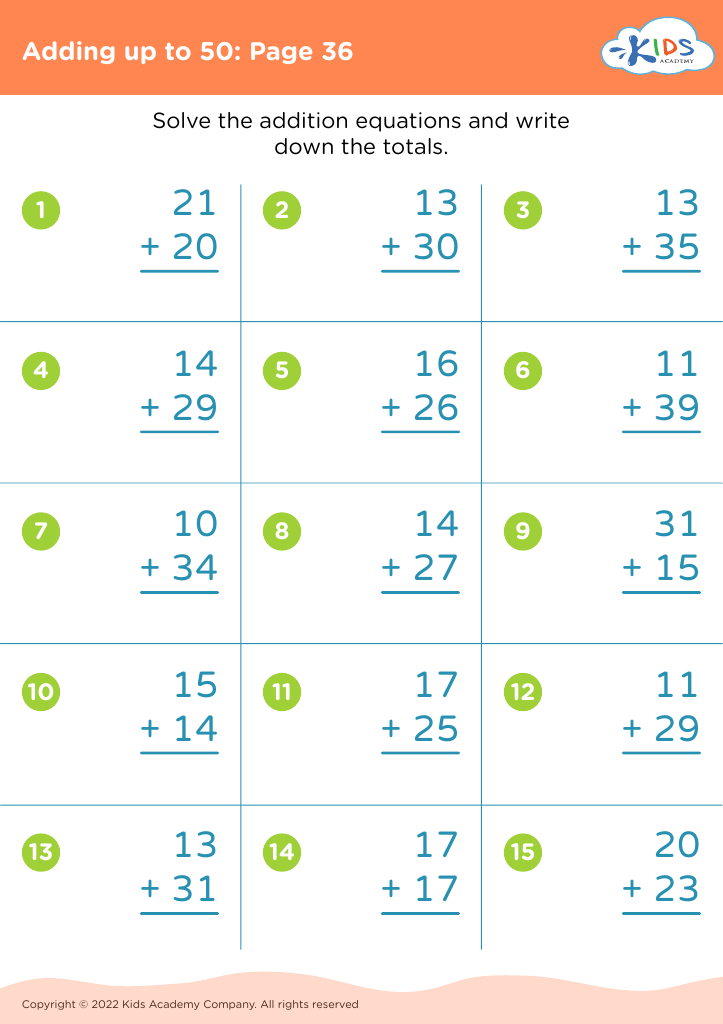
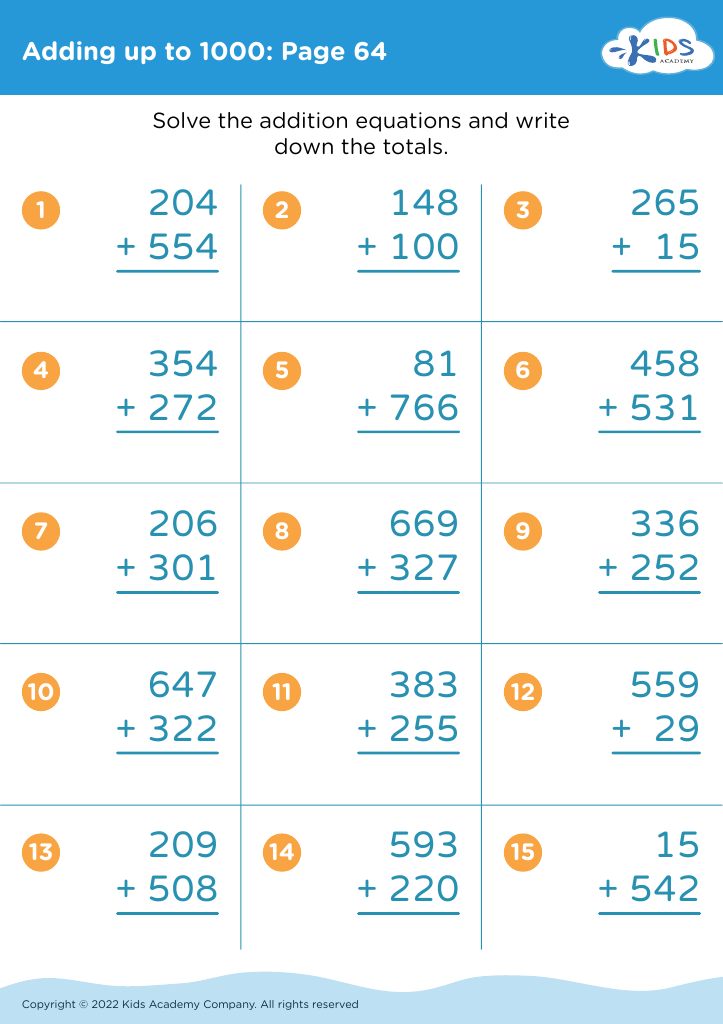
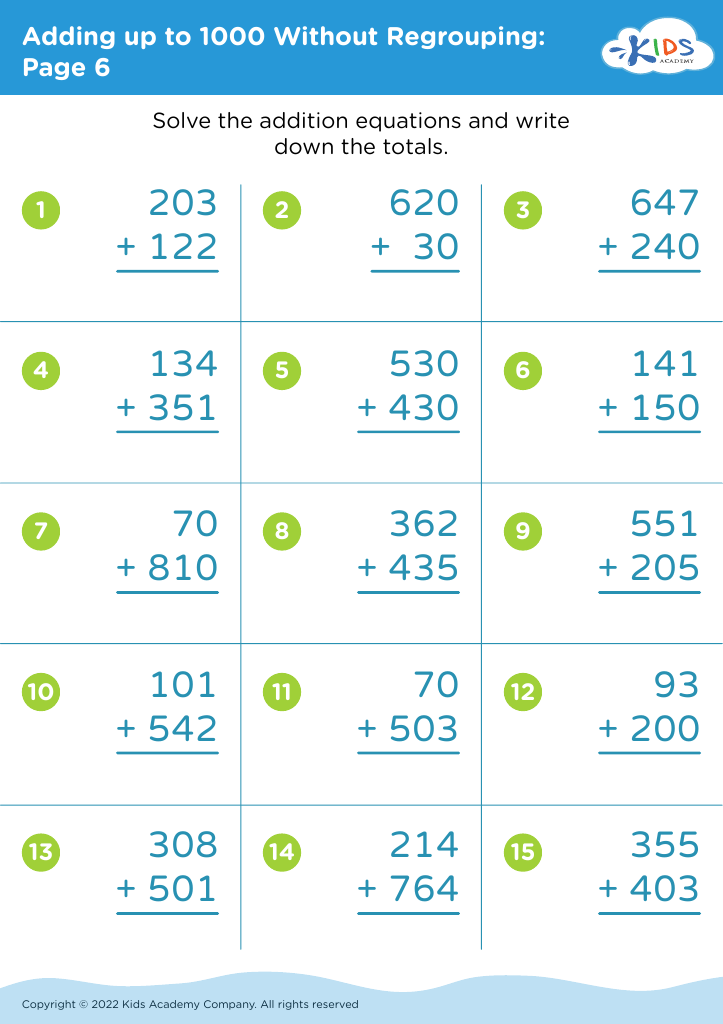
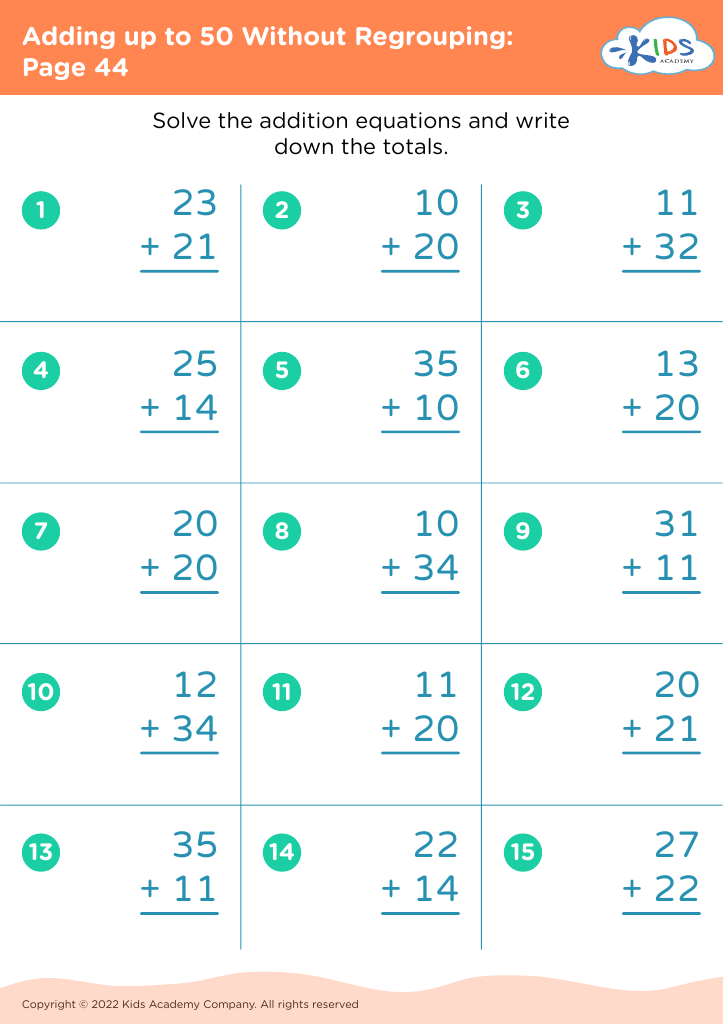








Understanding sequencing in addition and subtraction for ages 3-8 is crucial for foundational math skills. At this developmental stage, children's brains are highly receptive to new concepts. Introducing them to the sequence of operations helps them grasp the step-by-step processes required to solve problems, paving the way for more advanced math skills later on.
Firstly, mastering the sequence in addition and subtraction fosters logical thinking. Children learn that starting with the largest number and adding or subtracting smaller numbers step-by-step yields the correct result. This ordered approach reduces cognitive load, making it easier for young minds to navigate more complex mathematical tasks.
Secondly, understanding this sequencing enhances problem-solving skills. When kids know the correct steps, they're less likely to feel overwhelmed and more likely to develop confidence in their abilities. This confidence can translate to greater enthusiasm for learning.
Furthermore, sequencing is fundamental for daily life situations, such as understanding that adding or subtracting ingredients in cooking must follow certain steps. It lays the groundwork for organizing tasks and developing time management skills later in life.
For parents and teachers, focusing on these sequencing skills ensures that children build a solid mathematical foundation. By nurturing these skills early, we foster not only better academic performance but also essential life skills that support holistic development.








