Filters

18 filtered results

Clear all filters
Favorites
With answer key
Interactive

18 filtered results

Difficulty Level

Grade


Introduce your young learners to the world of numbers with our "Basic Addition Practice" worksheets, designed specifically for ages 3-8. Our engaging and fun worksheets help children grasp fundamental addition concepts, fostering essential math skills. Whether your child is just starting to count or ready to take on simple sums, these interactive activities support learning through play. Each worksheet is tailored to ensure age-appropriate challenges, promoting confidence and mastery in addition. Experience an exciting way of learning math that sparks curiosity and joy in young minds. Make math practice an adventure with our expertly crafted addition worksheets.
Check out this FREE Trial Lesson on Addition for age 3-8!

P

Favorites
With answer key
Interactive
  • 3-8
  • Basic addition practice
  • Addition
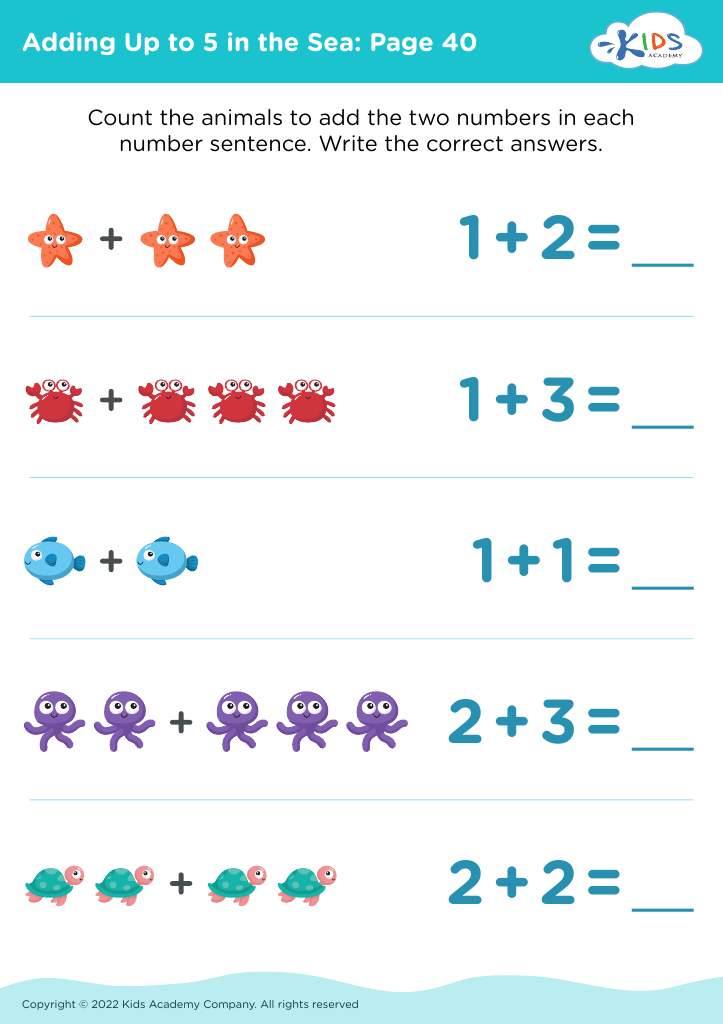
Adding Up to 5 in the Sea: Page 40
Worksheet
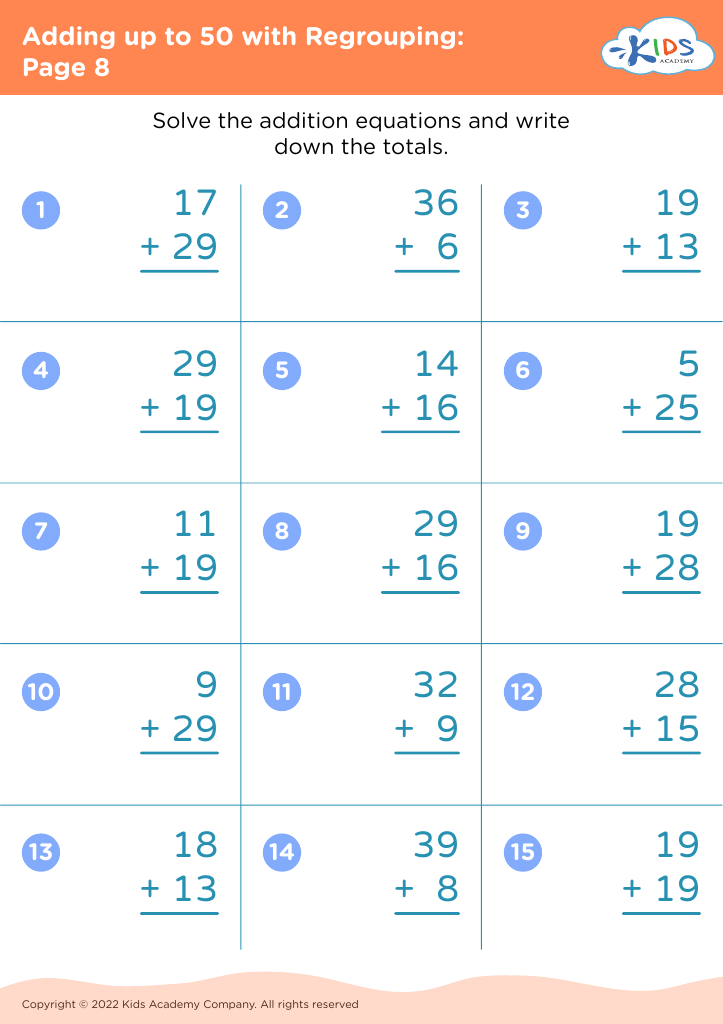
Adding up to 50 with Regrouping: Page 8
Worksheet
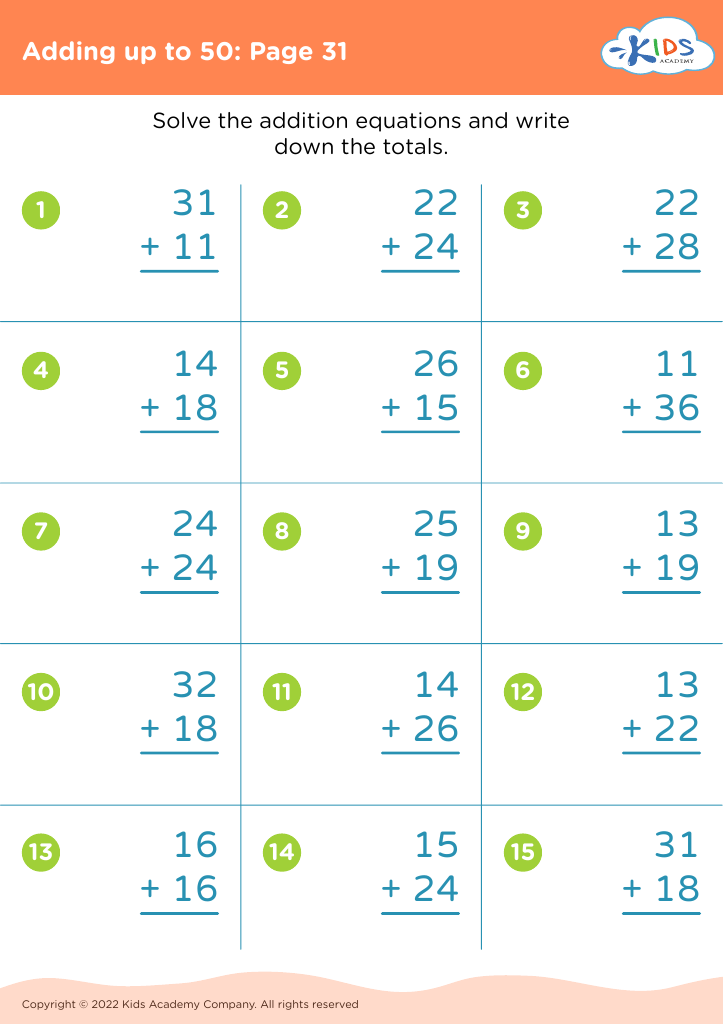
Adding up to 50: Page 31

Adding up to 50: Page 31

Adding up to 50: Page 31
Worksheet
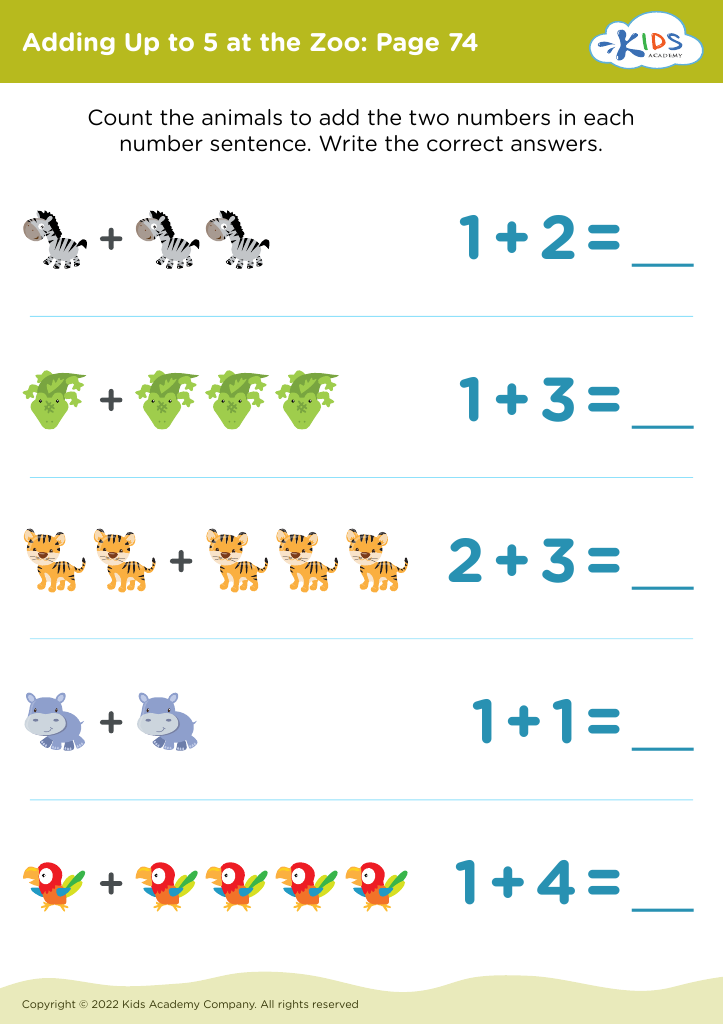
Adding Up to 5 at the Zoo: Page 74
Worksheet
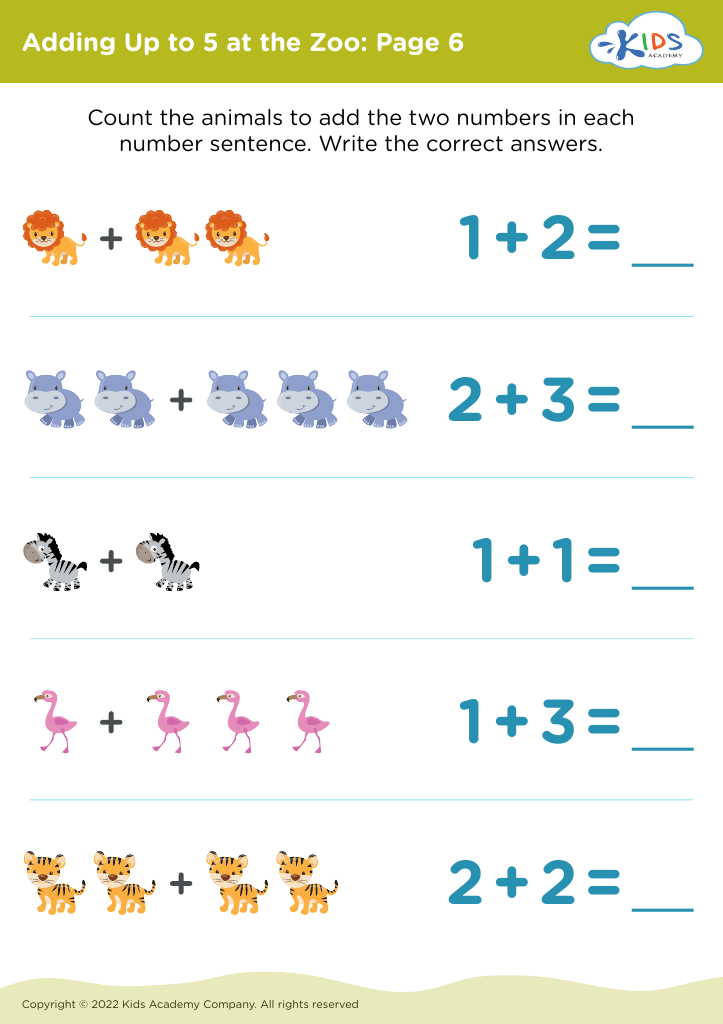
Adding Up to 5 at the Zoo: Page 6

Adding Up to 5 at the Zoo: Page 6

Adding Up to 5 at the Zoo: Page 6
Worksheet
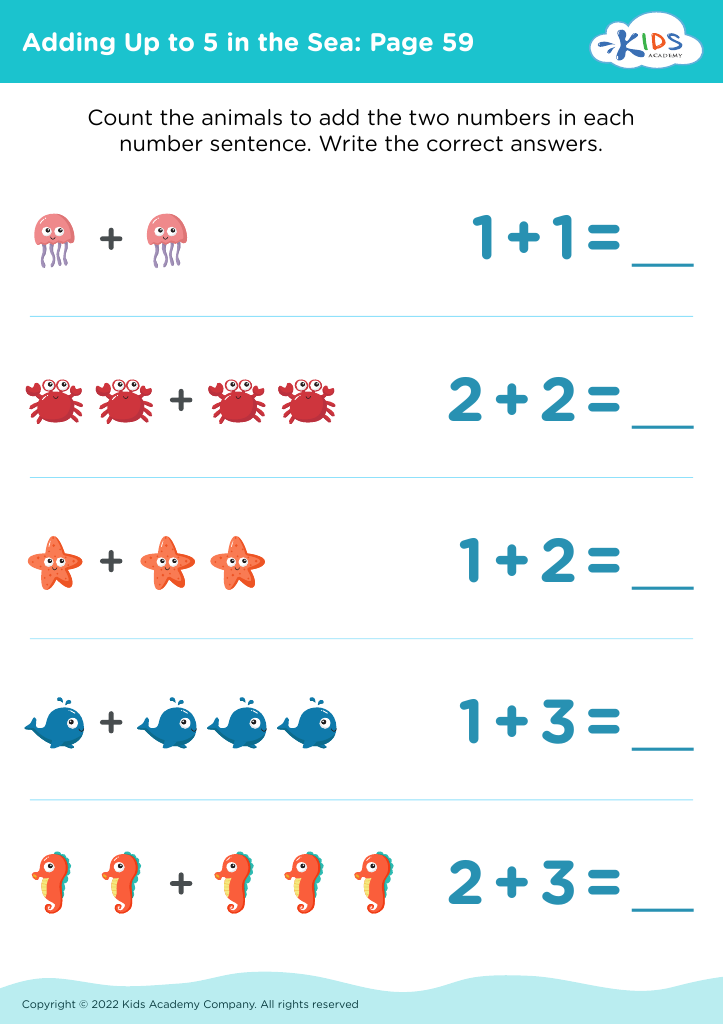
Adding Up to 5 in the Sea: Page 59
Worksheet
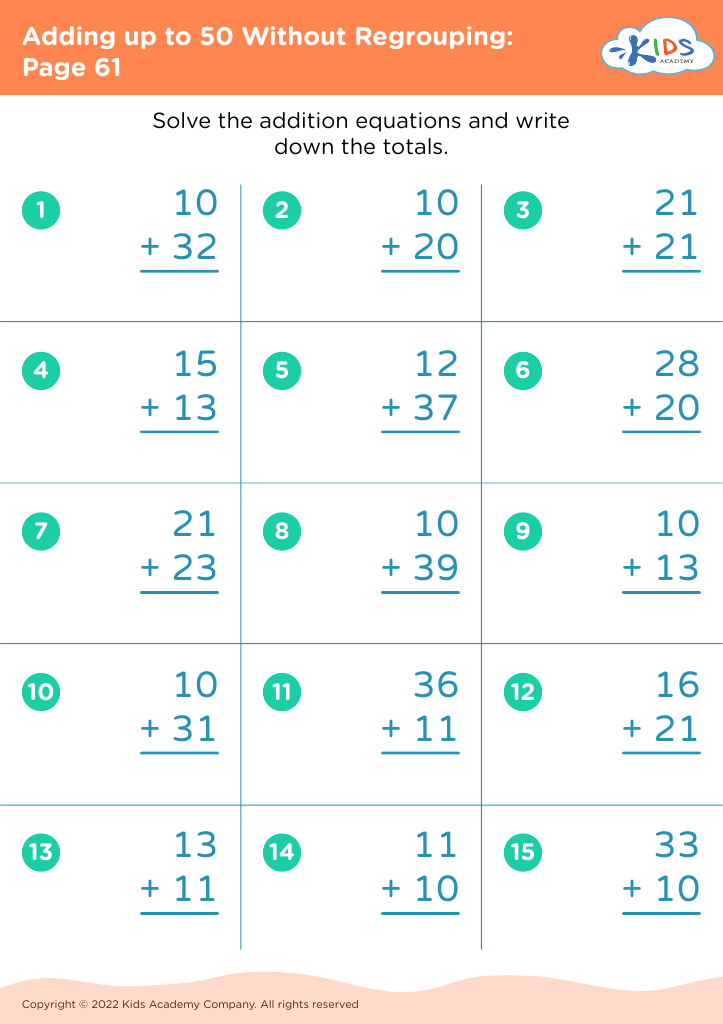
Adding up to 50 Without Regrouping: Page 61
Worksheet
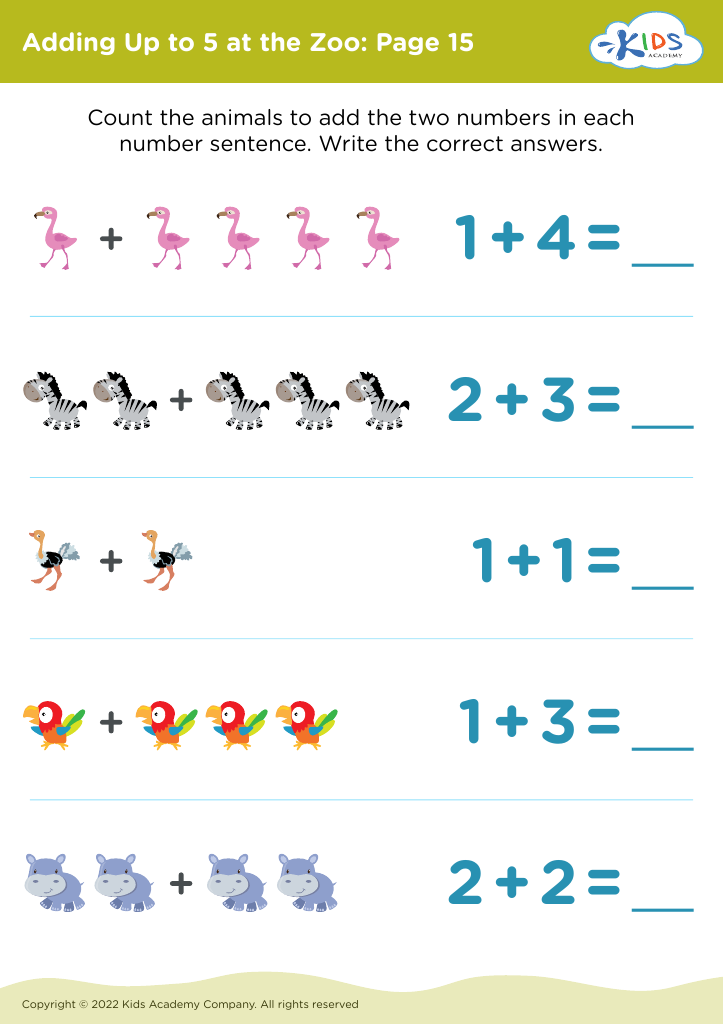
Adding Up to 5 at the Zoo: Page 15
Worksheet
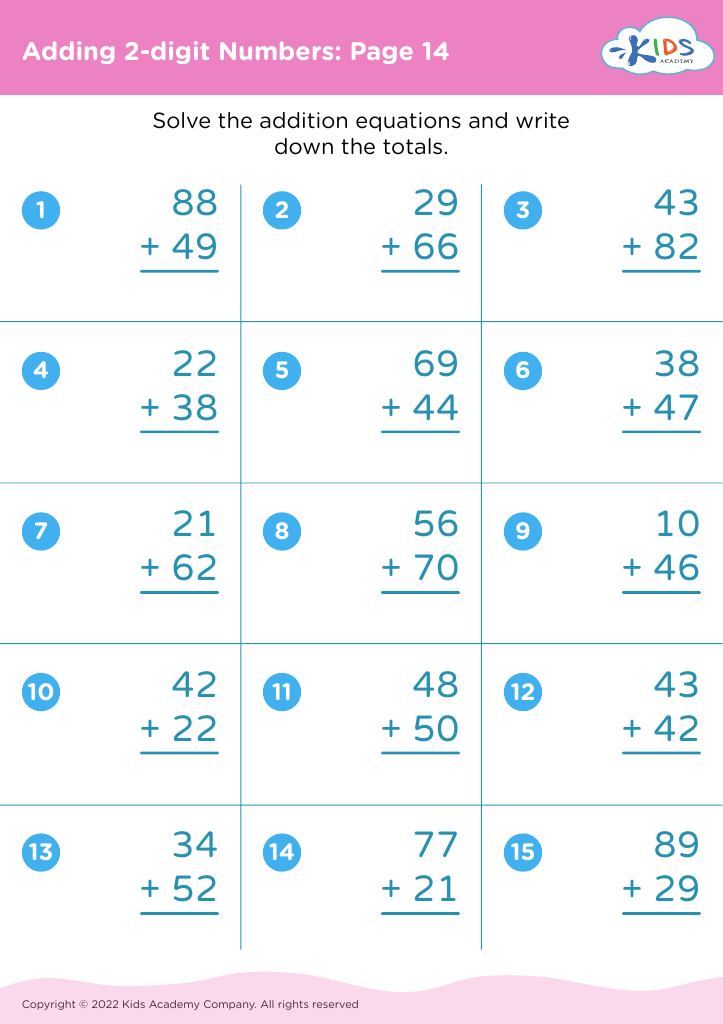
Adding 2-digit Numbers: Page 14

Adding 2-digit Numbers: Page 14

Adding 2-digit Numbers: Page 14
Worksheet
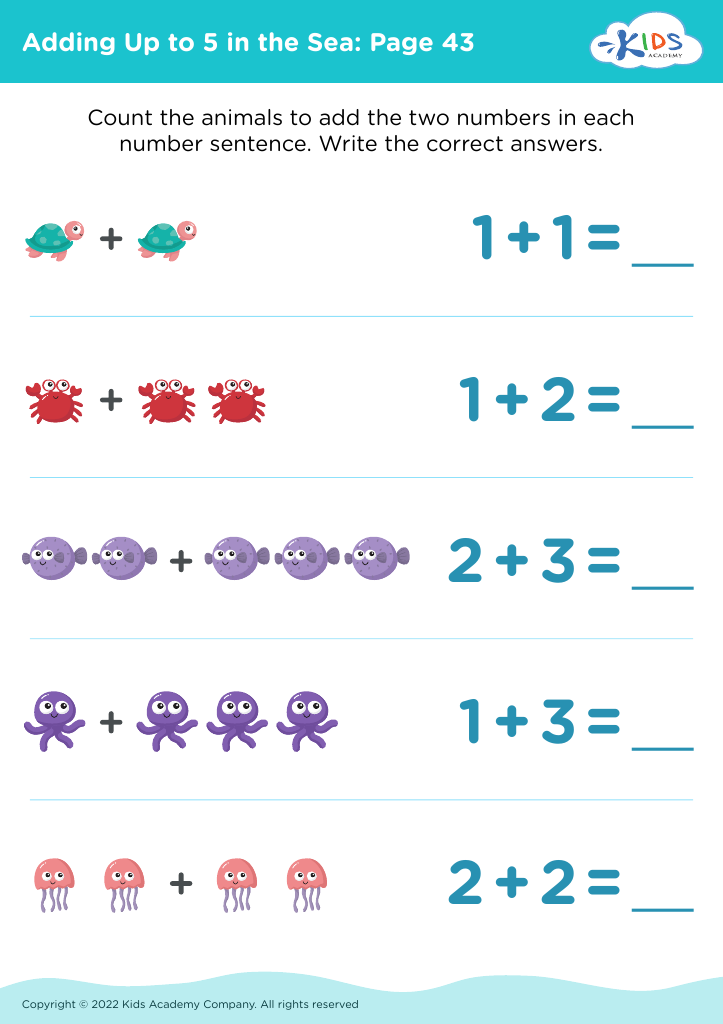
Adding Up to 5 in the Sea: Page 43
Worksheet
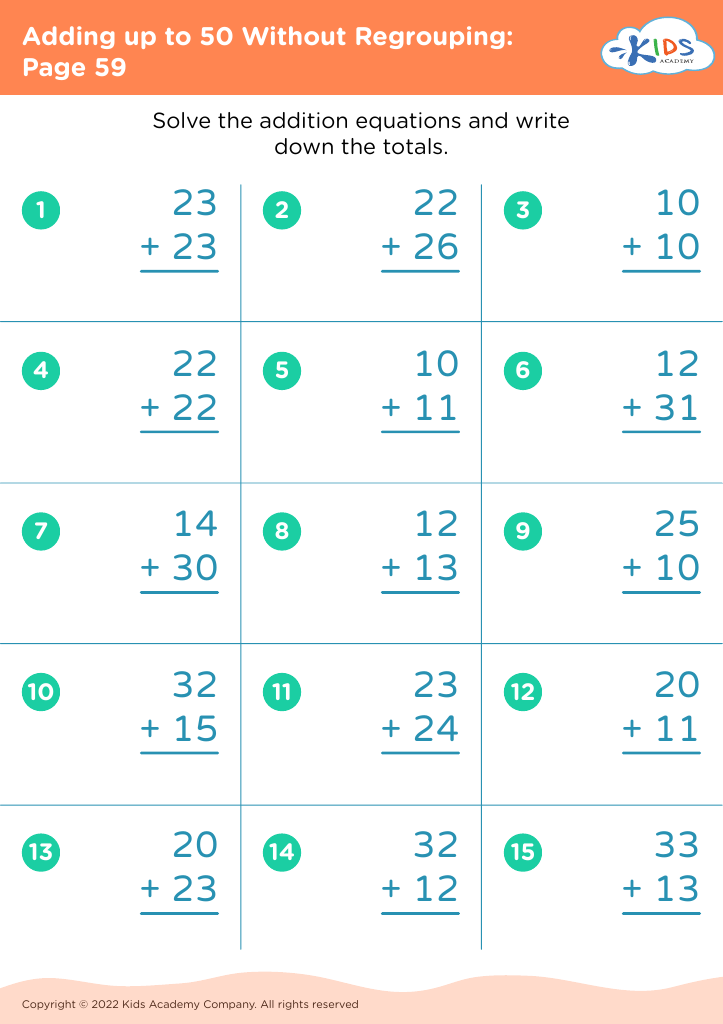
Adding up to 50 Without Regrouping: Page 59
Worksheet
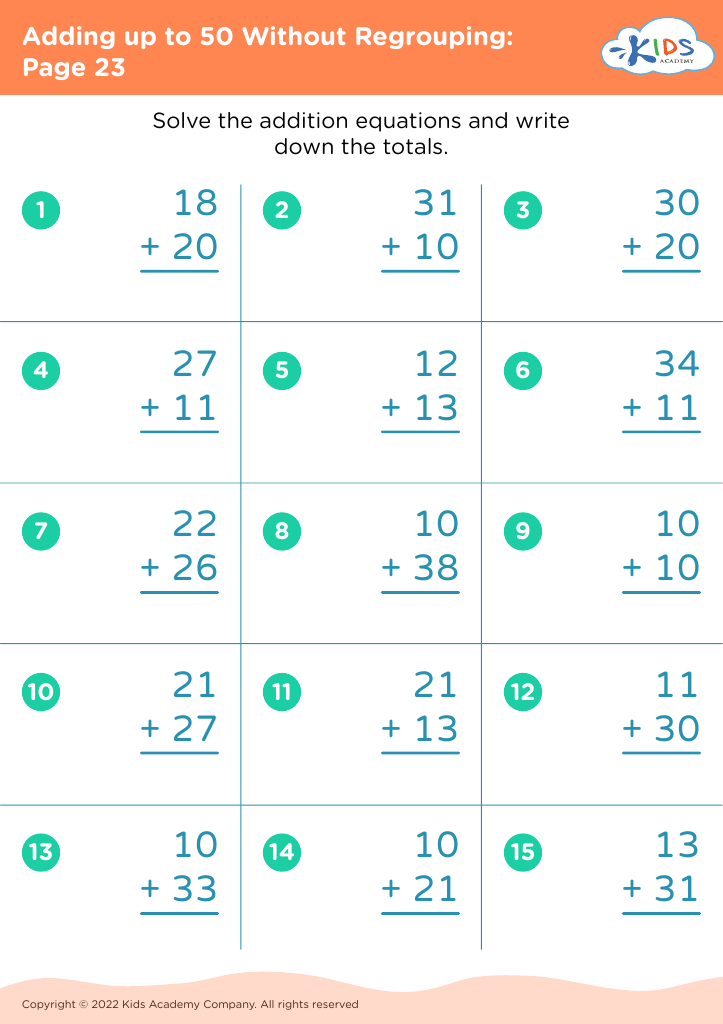
Adding up to 50 Without Regrouping: Page 23
Worksheet
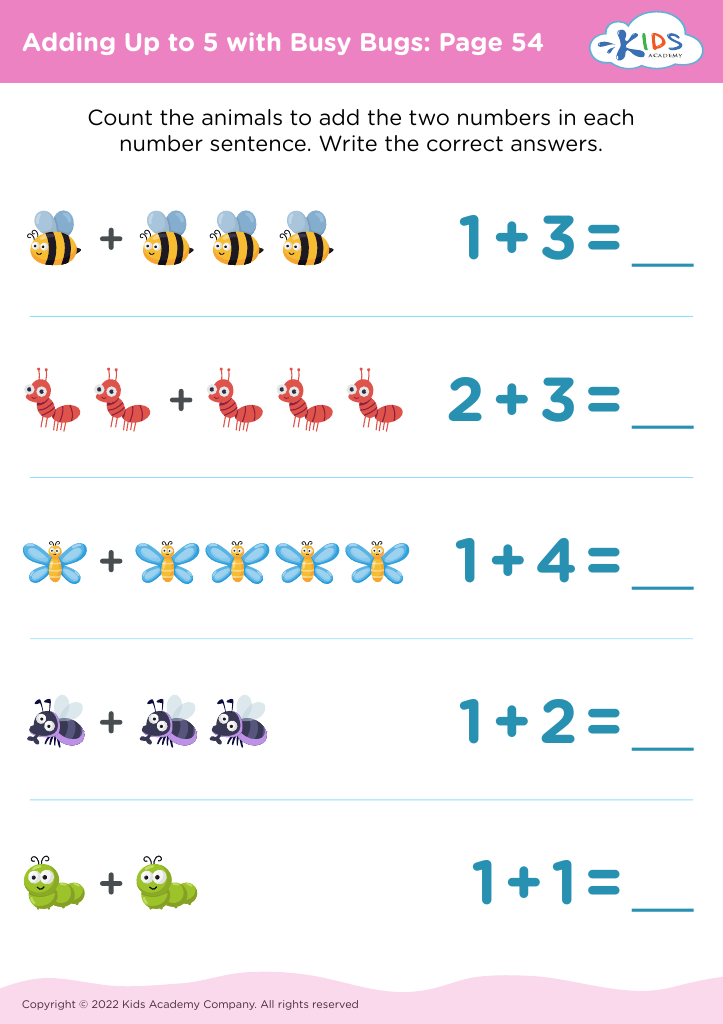
Adding Up to 5 with Busy Bugs: Page 54
Worksheet
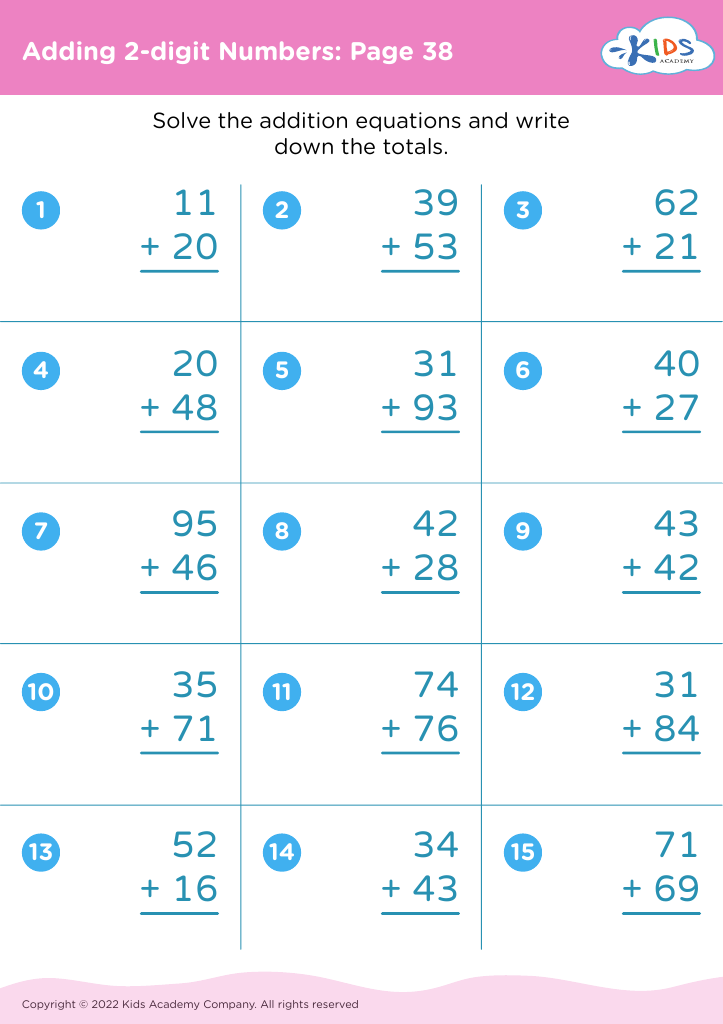
Adding 2-digit Numbers: Page 38

Adding 2-digit Numbers: Page 38

Adding 2-digit Numbers: Page 38
Worksheet
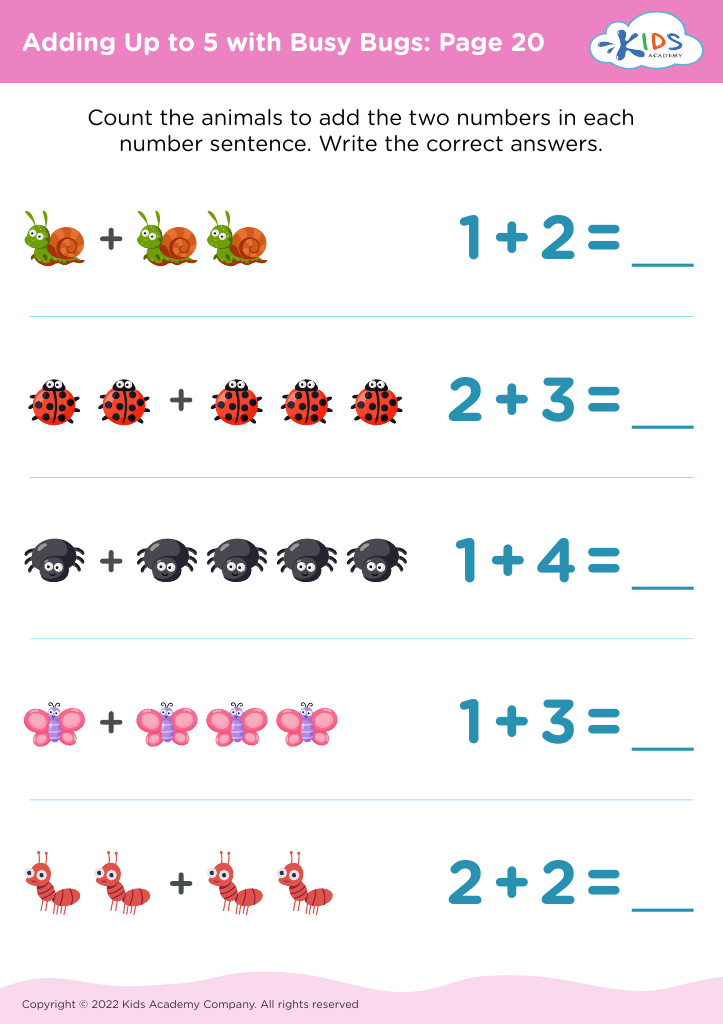
Adding Up to 5 with Busy Bugs: Page 20
Worksheet
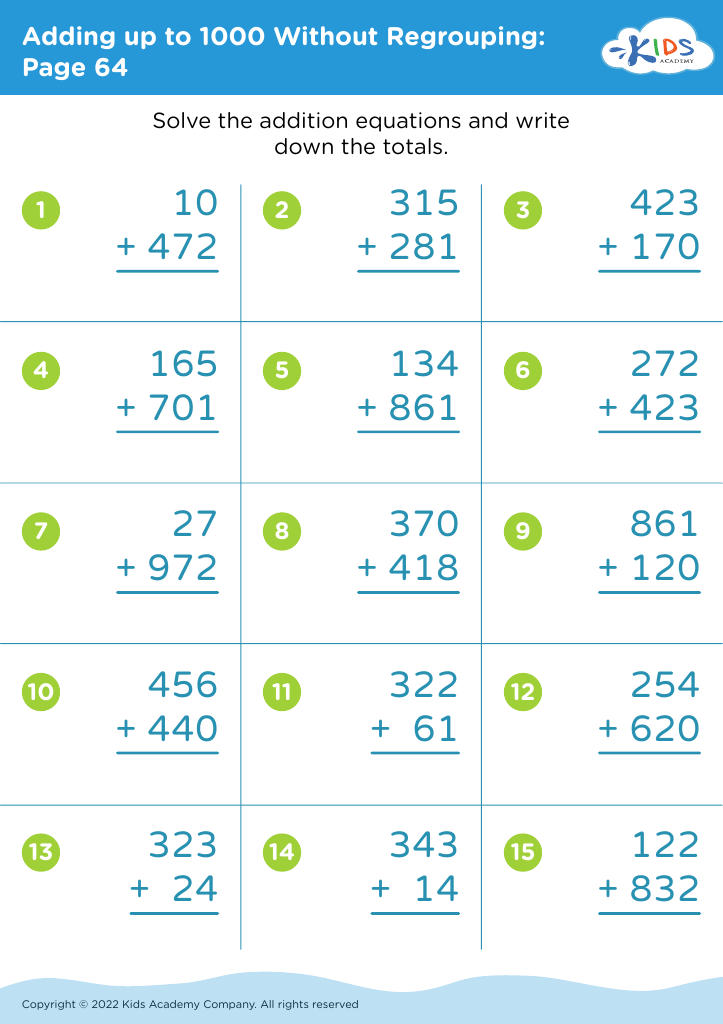
Adding up to 1000 Without Regrouping: Page 64
Worksheet
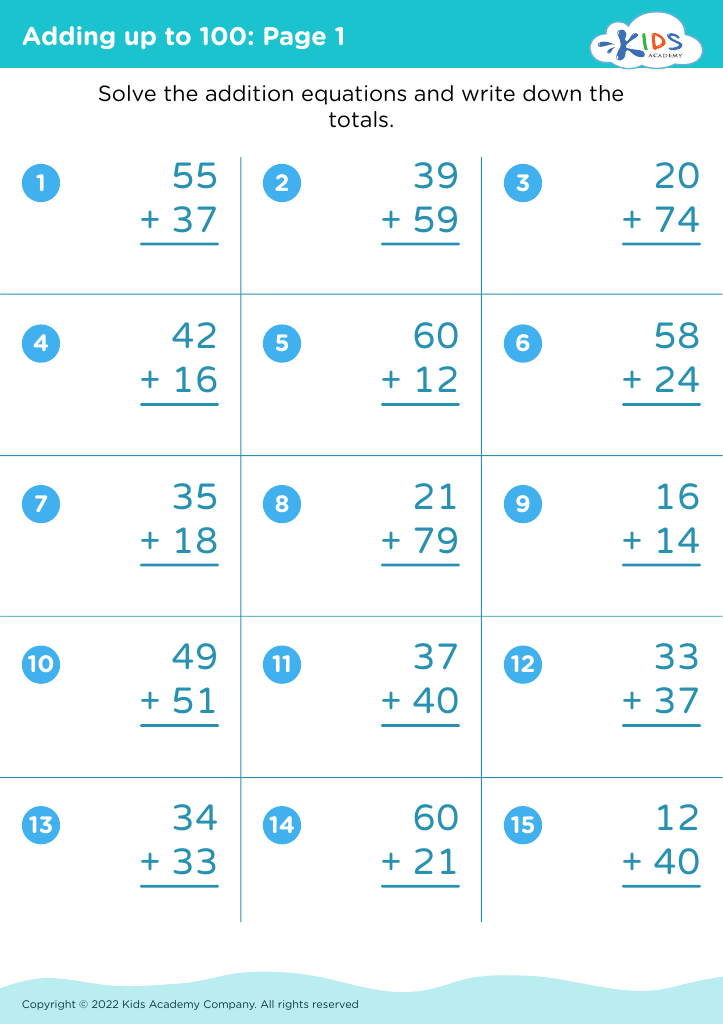
Adding up to 100: Page 1

Adding up to 100: Page 1

Adding up to 100: Page 1
Worksheet
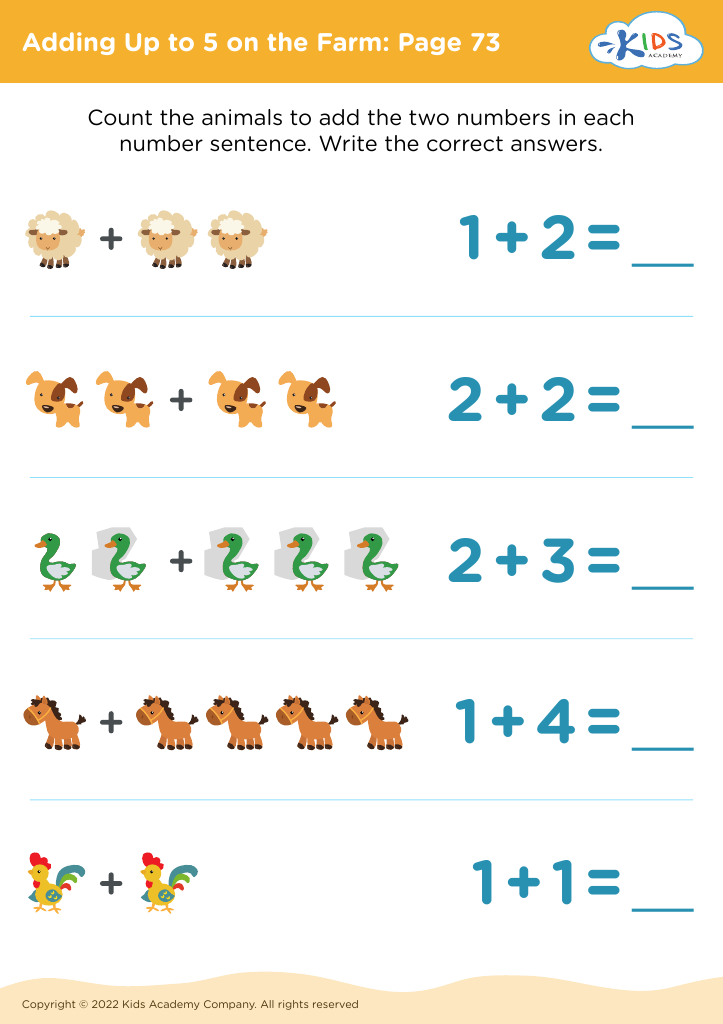
Adding Up to 5 on the Farm: Page 73
Worksheet


Parents and teachers should care about basic addition practice for children aged 3-8 because it lays a crucial foundation for mathematical understanding and academic success. In these formative years, young brains are highly receptive and capable of absorbing new concepts rapidly. Introducing basic addition helps develop a child's number sense, an essential competency for more complex mathematical operations in later grades.

Practicing addition also enhances cognitive skills such as problem-solving, critical thinking, and logical reasoning. These are not only vital for mathematics but beneficial for a child’s overall intellectual development. Basic addition activities often involve engaging, hands-on exercises that keep young learners motivated and interested, fostering a love for learning early on.

Furthermore, mastering simple addition builds confidence, reinforcing the idea that they can overcome challenges and achieve goals. This positive academic experience can translate to a child having a more optimistic attitude toward school in general.

Lastly, early proficiency in addition is connected to real-life skills such as telling time and handling money. For these reasons, both parents and teachers should prioritize basic addition practice, ensuring that children have a strong start in their educational journey.