Basic arithmetic practice Addition Worksheets for Ages 3-8
12 filtered results
-
From - To
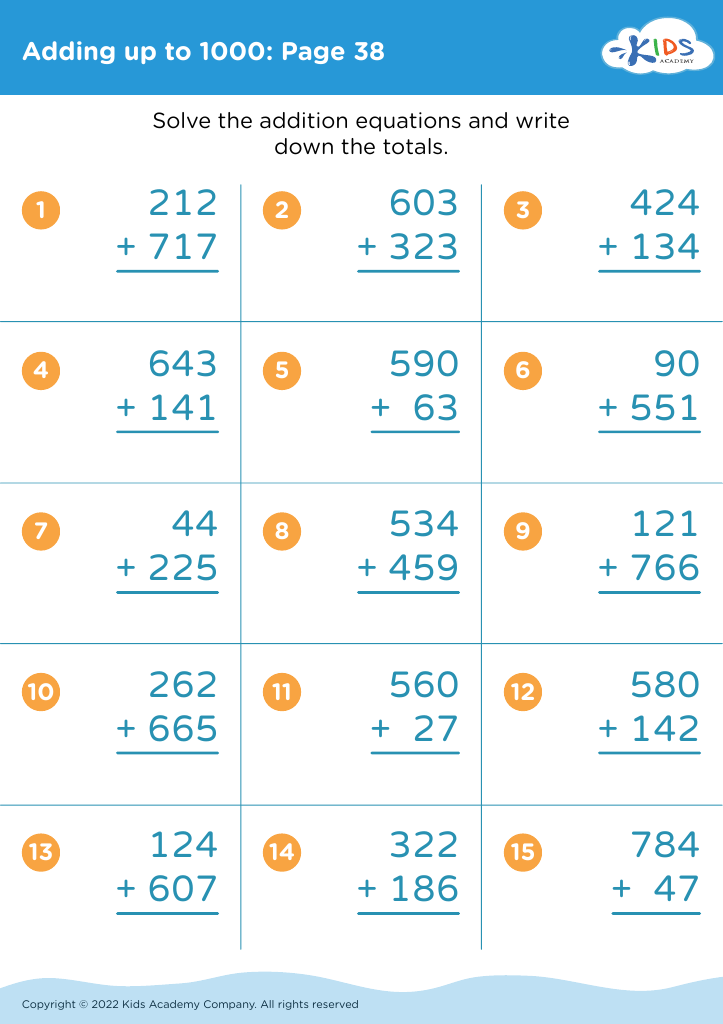
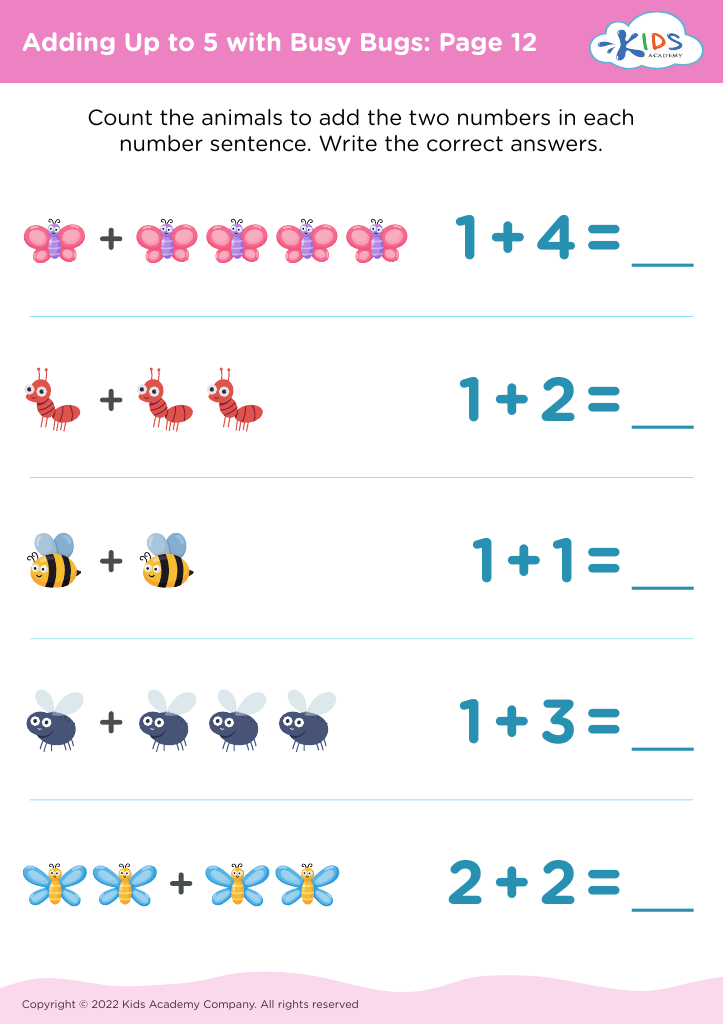
Introduce your little learners to the world of mathematics with our Basic Arithmetic Practice Addition Worksheets designed for children ages 3-8. These engaging and colorful worksheets simplify the learning process, making addition fun and interactive. Each worksheet features varied exercises, from simple single-digit problems to foundational concepts, ensuring your child builds confidence and essential skills. Perfect for home or classroom use, these resources cater to diverse learning styles and help reinforce mathematical understanding through repetition and practice. Start your child's adventure in arithmetic today with our thoughtfully crafted addition worksheets that foster curiosity and a love for learning!
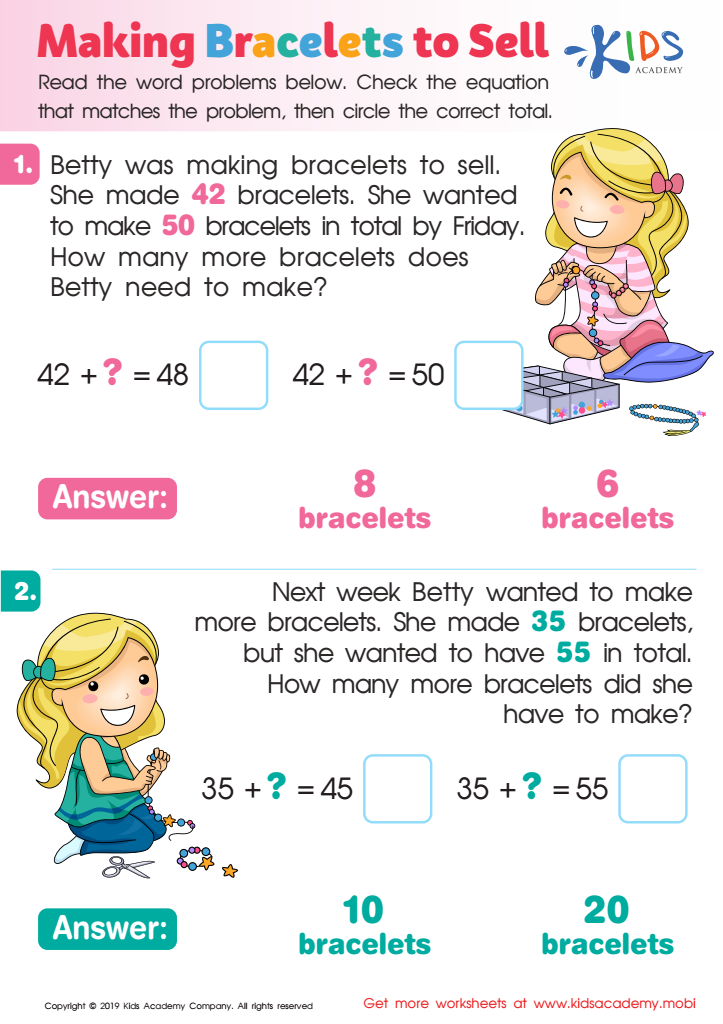
Making Bracelets to Sell Worksheet
 Assign to My Students
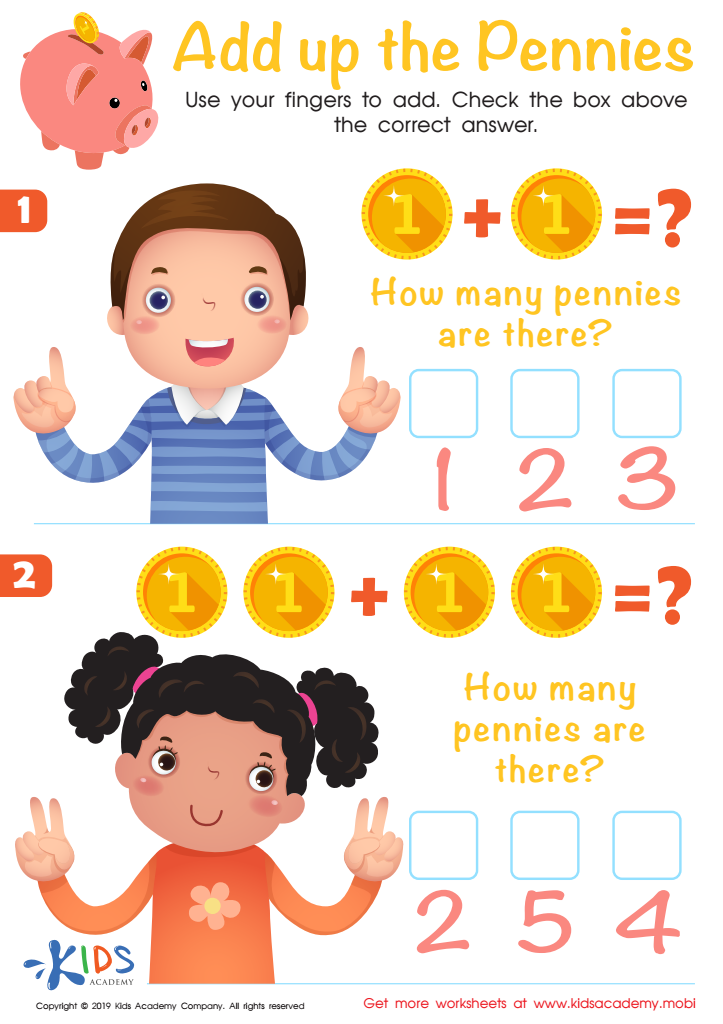
Add up the Pennies Worksheet
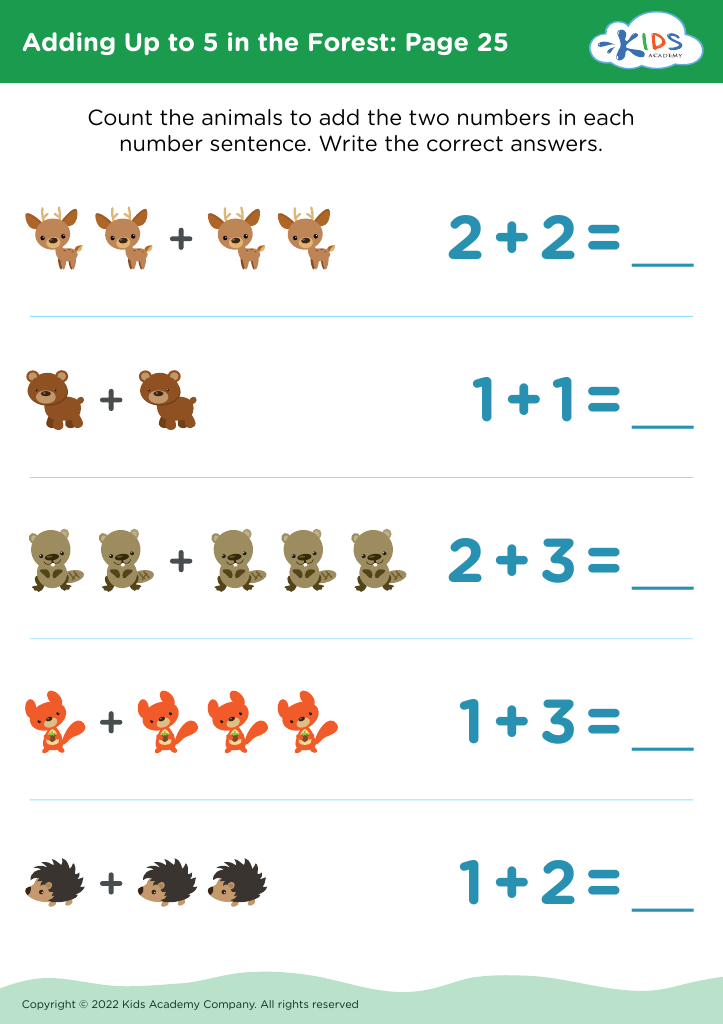
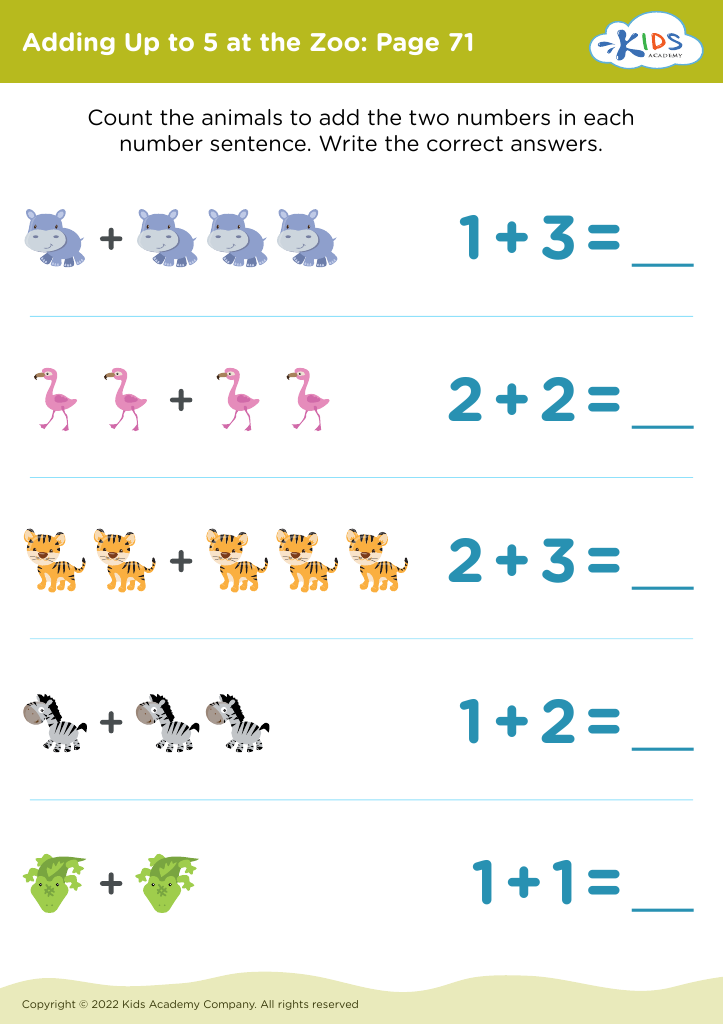
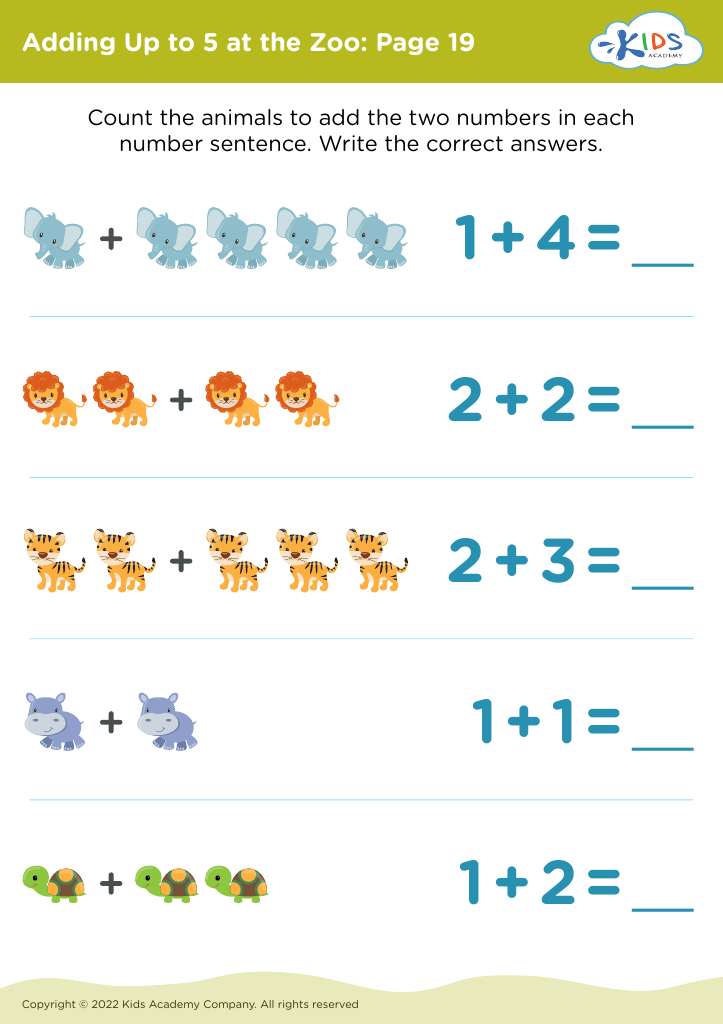
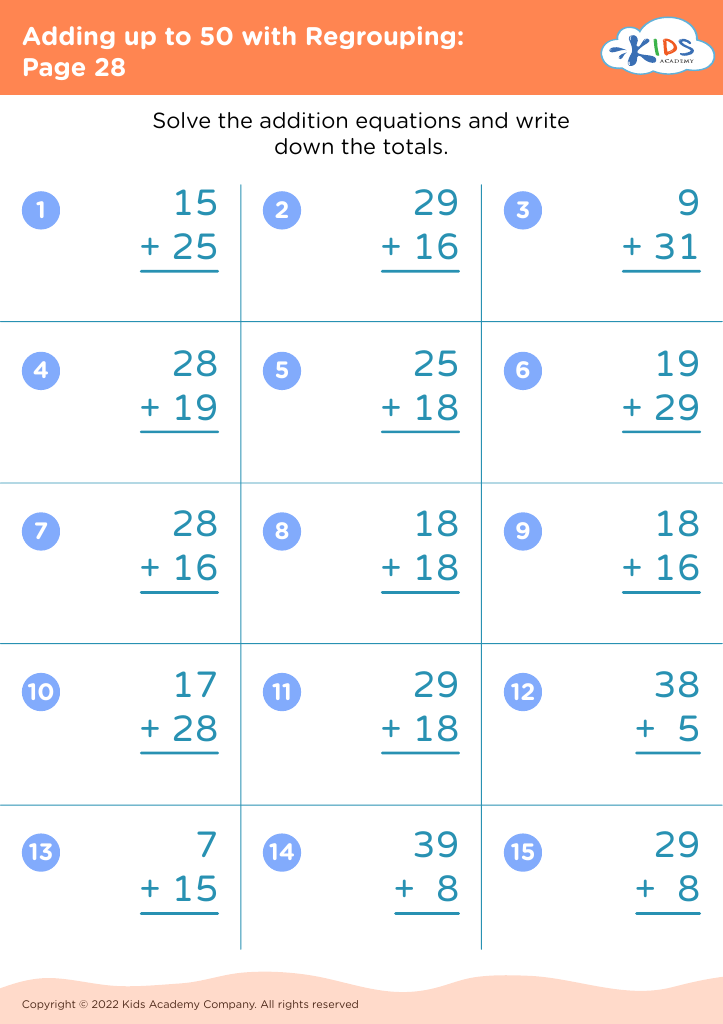
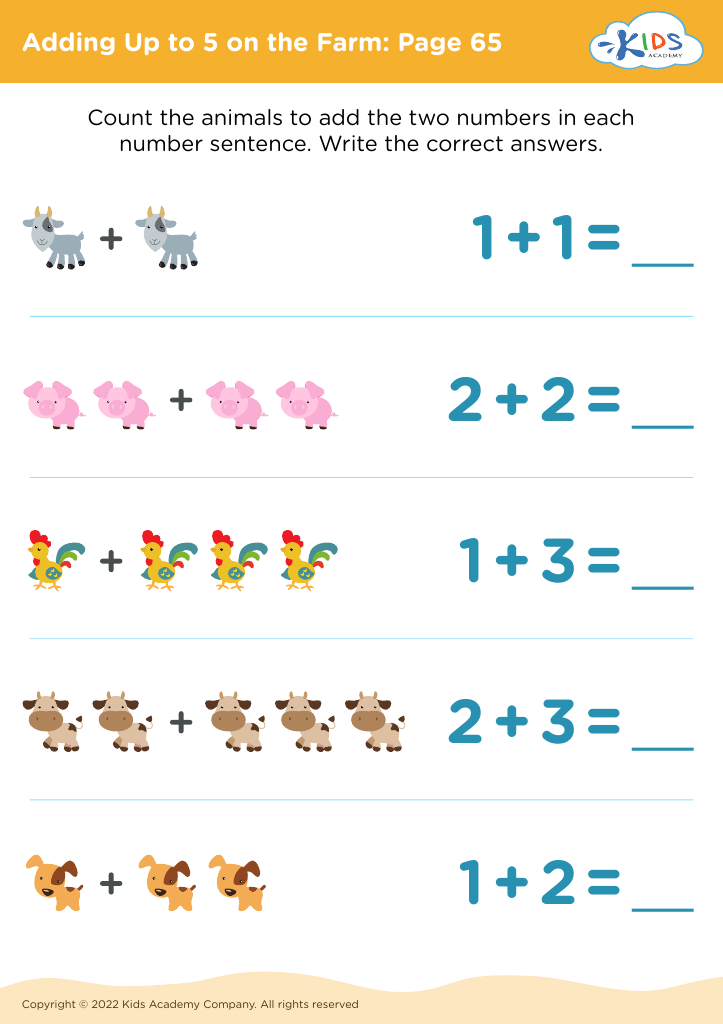
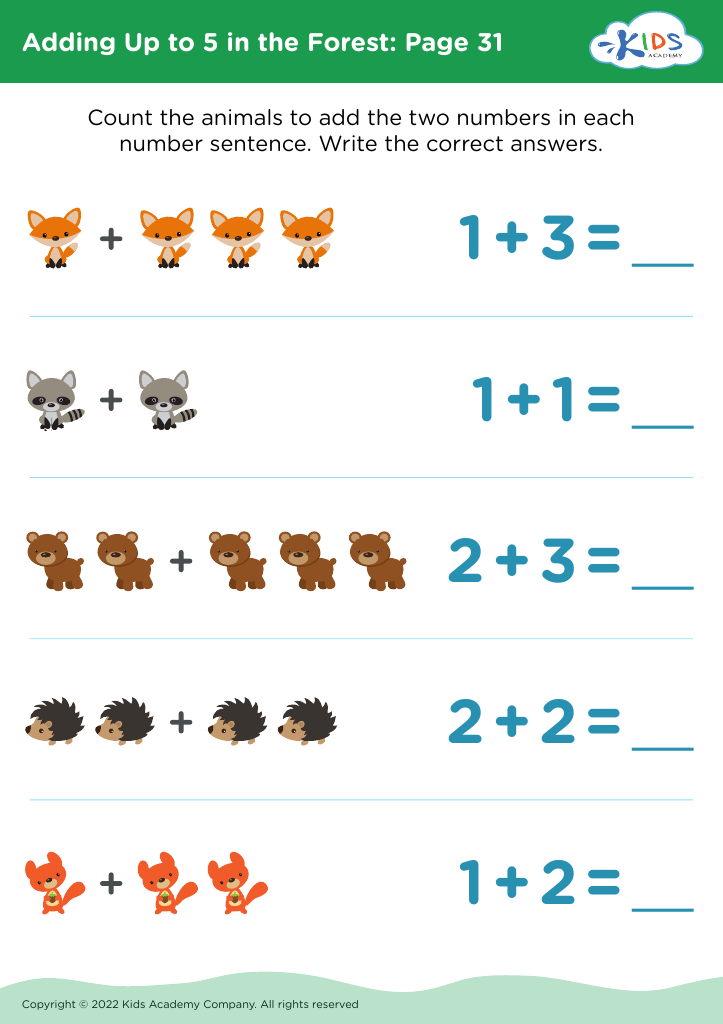
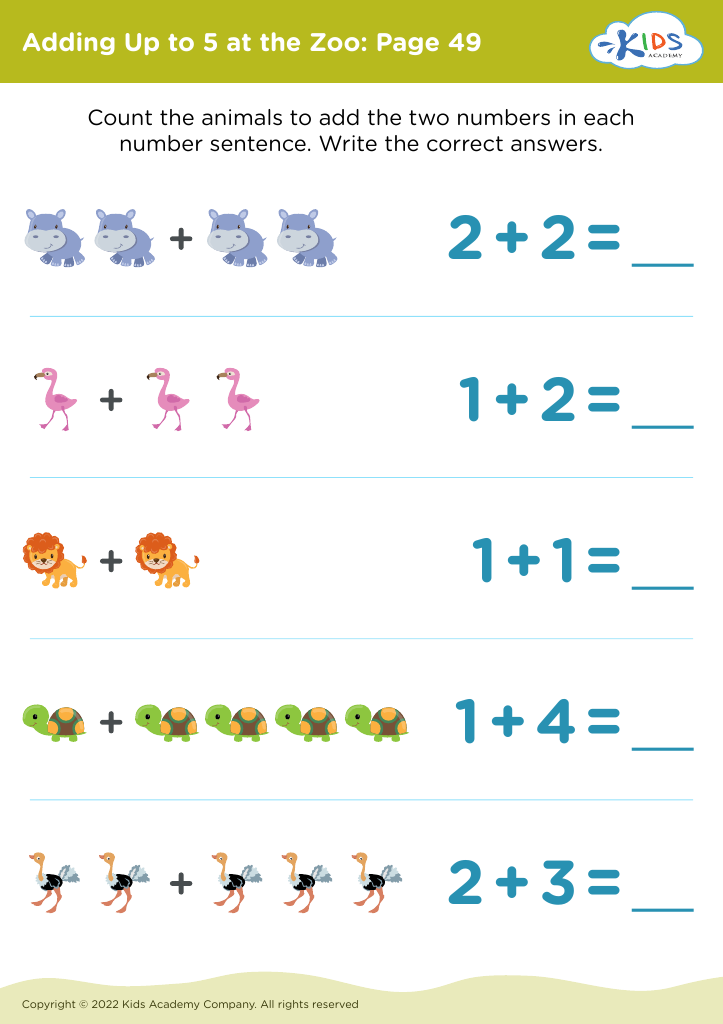
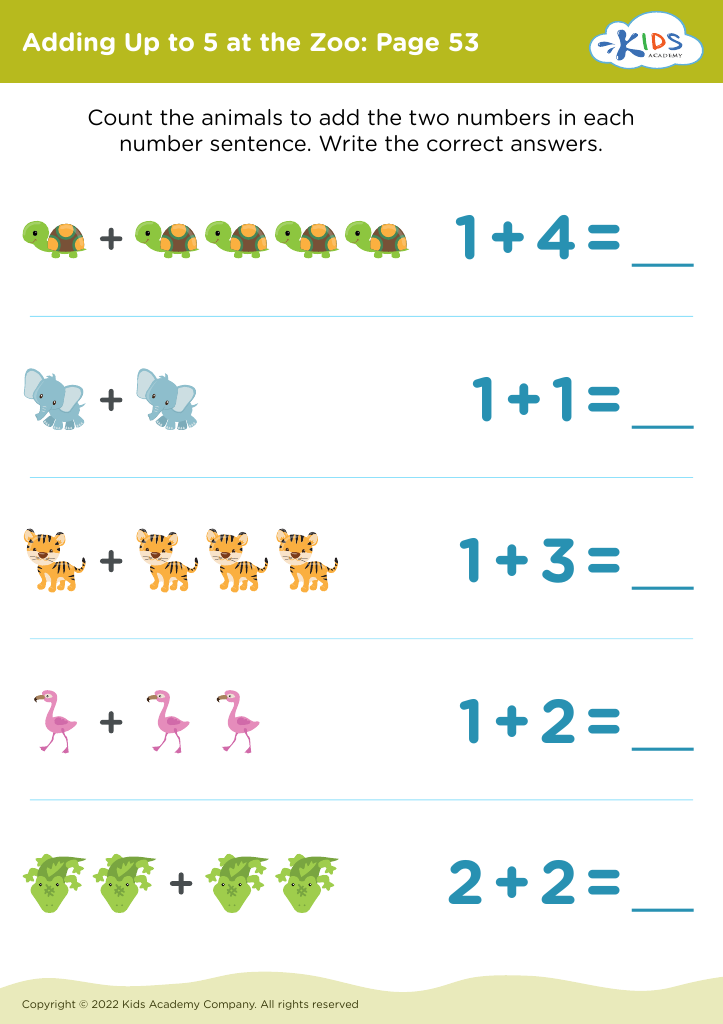








Basic arithmetic practice, especially addition, is crucial for children aged 3-8 as it forms the foundation of their mathematical understanding and problem-solving skills. Early exposure to addition helps develop number sense, which is the ability to understand and work with numbers meaningfully. By engaging young learners in simple addition activities, parents and teachers foster cognitive development, enhancing critical thinking capabilities essential throughout their educational journey.
Additionally, practicing addition in these formative years promotes confidence in approaching math-related tasks. Children become familiar with numerical relationships and patterns, which can reduce anxiety towards more complex math concepts later on. Consistent practice also improves fine motor skills and encourages cooperative play when done in groups or with family, strengthening social interactions.
Moreover, addition goes beyond numbers; it nurtures essential life skills such as perseverance, patience, and teamwork. Parents and teachers should incorporate engaging, playful methodologies to make learning enjoyable, as this positive experience significantly influences a child's attitude toward learning. Lastly, early math competency has been linked to future academic success, making it vital for caregivers to prioritize basic arithmetic practices. Investing time in addition practice can yield significant benefits in a child’s overall educational trajectory.








