Basic math concepts Addition Worksheets for Ages 3-8
12 filtered results
-
From - To
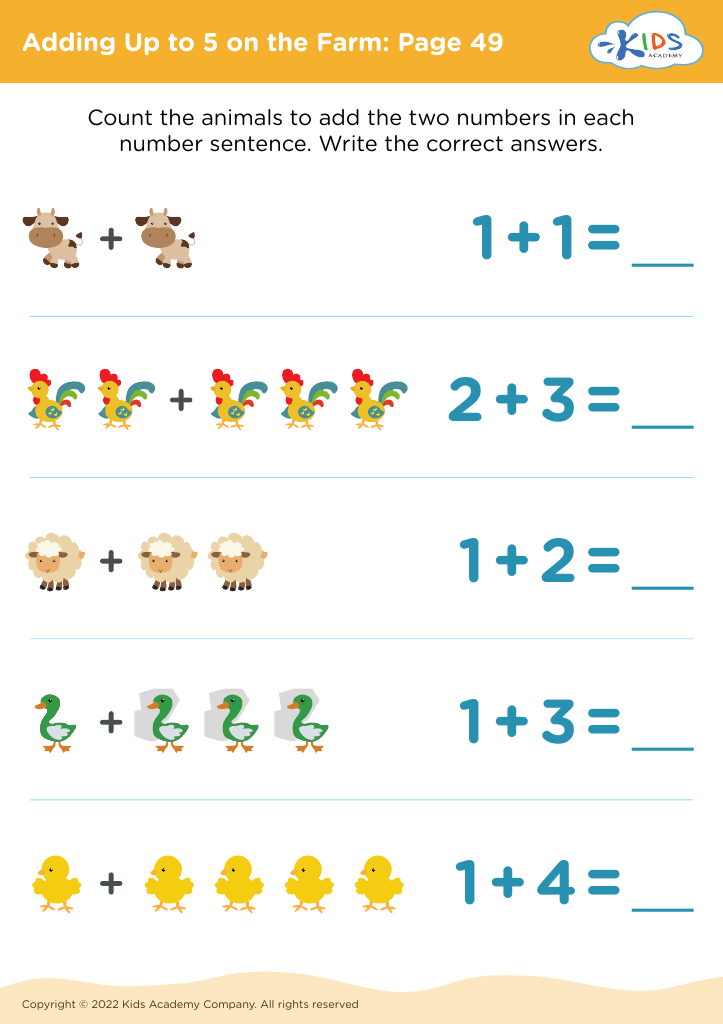
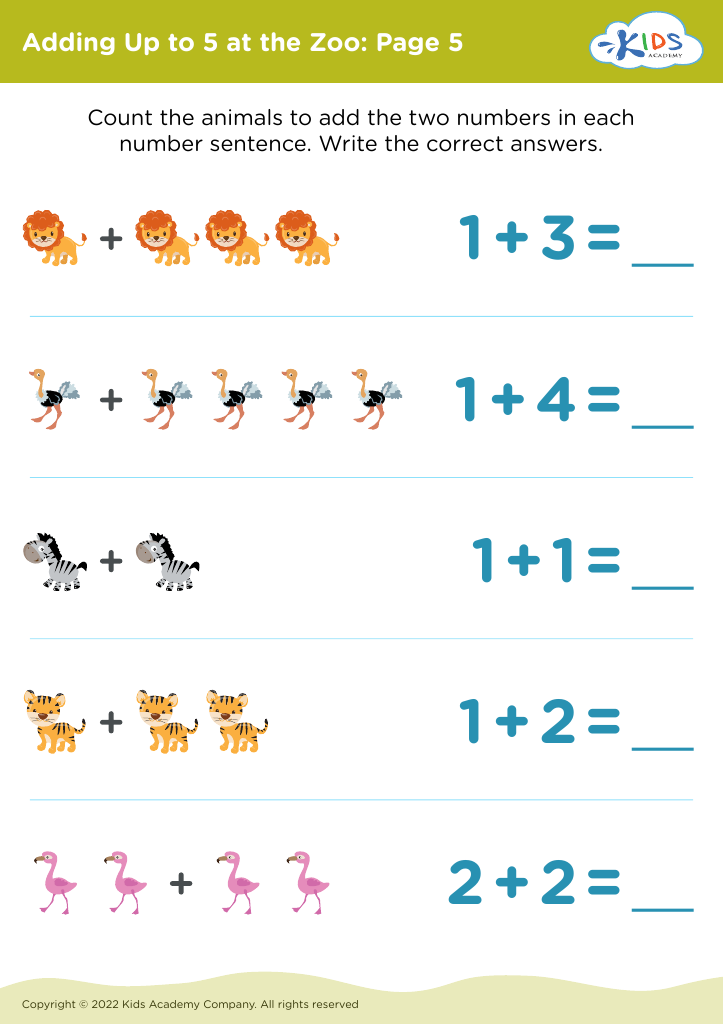
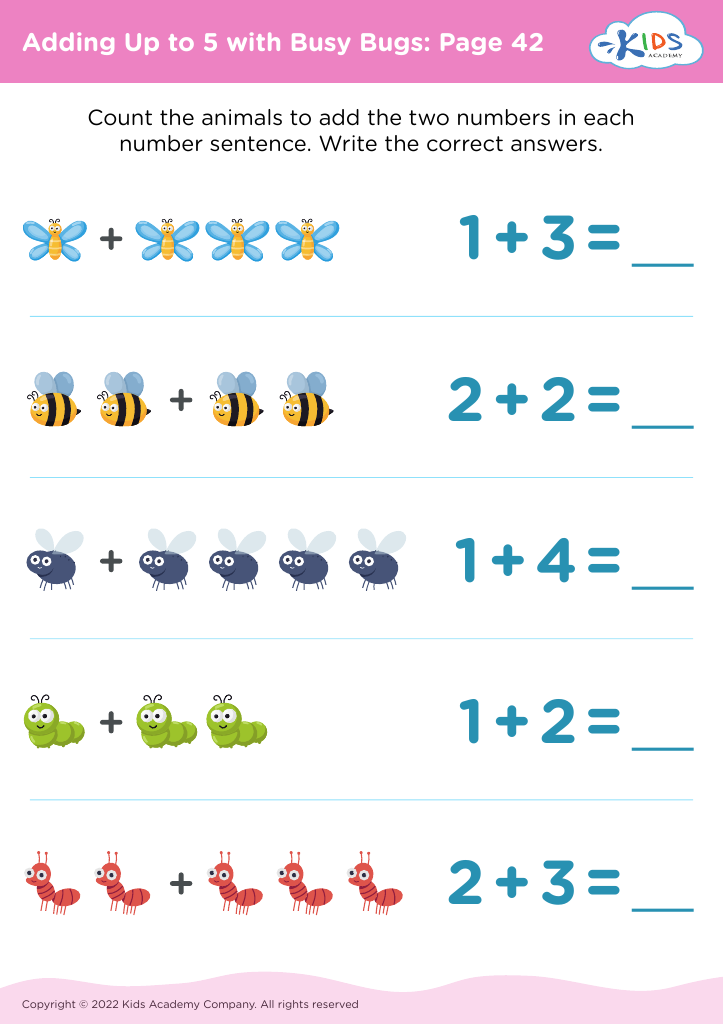
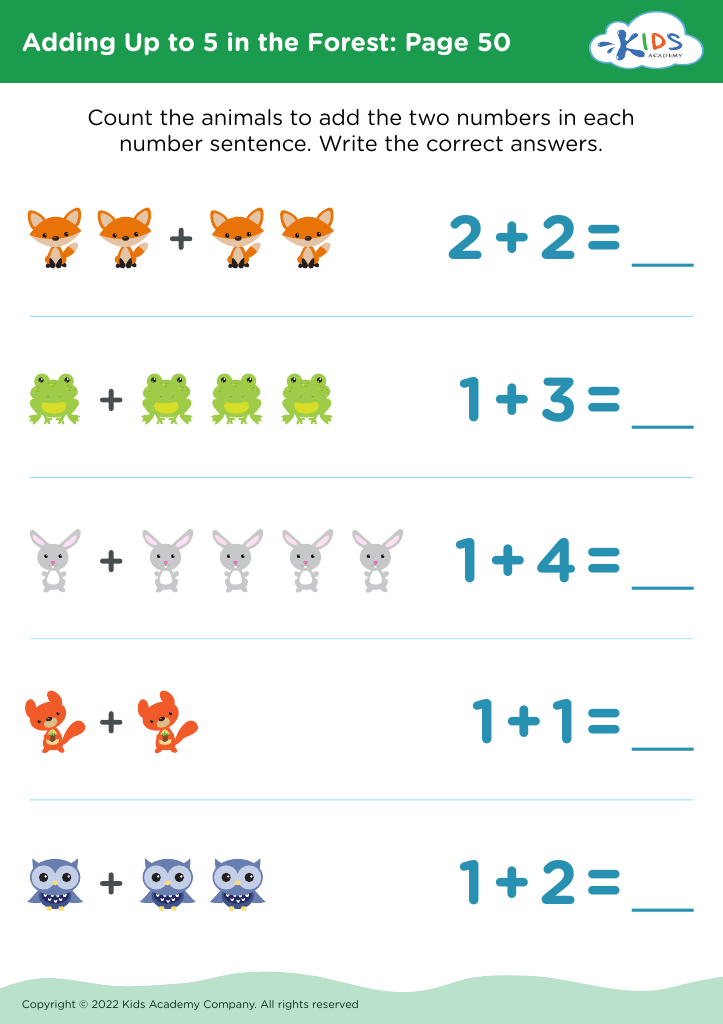
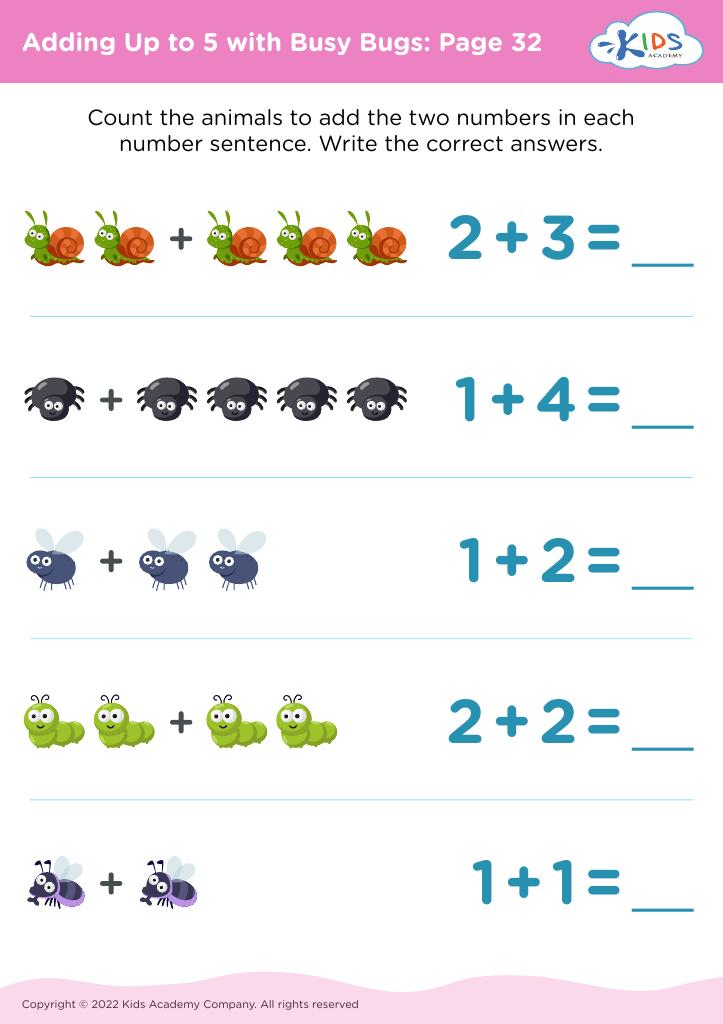
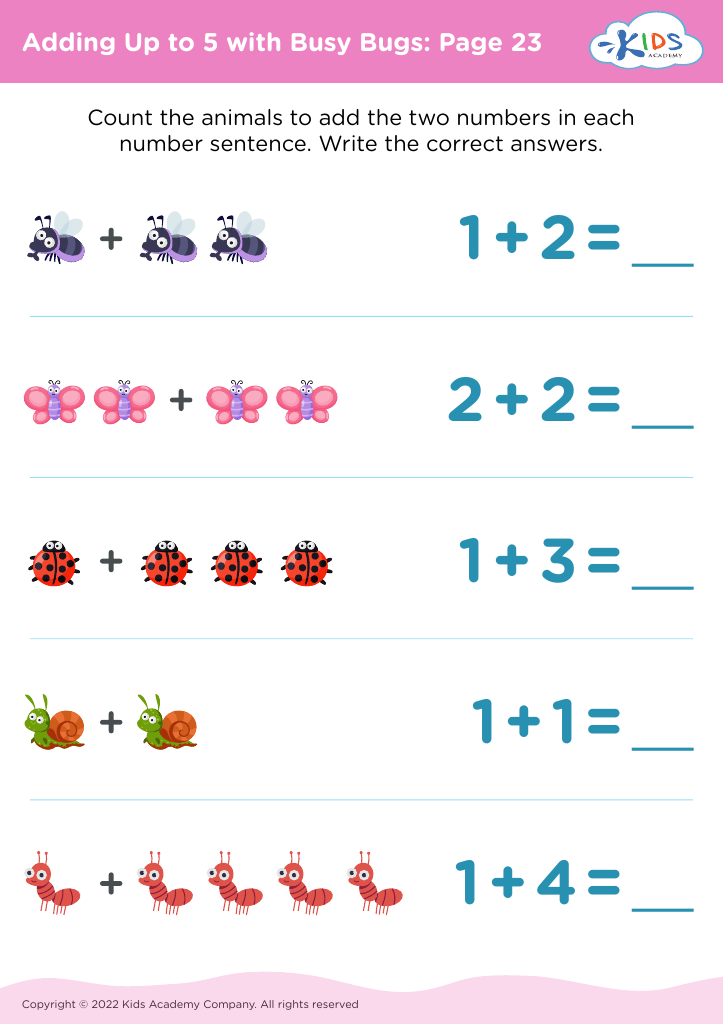
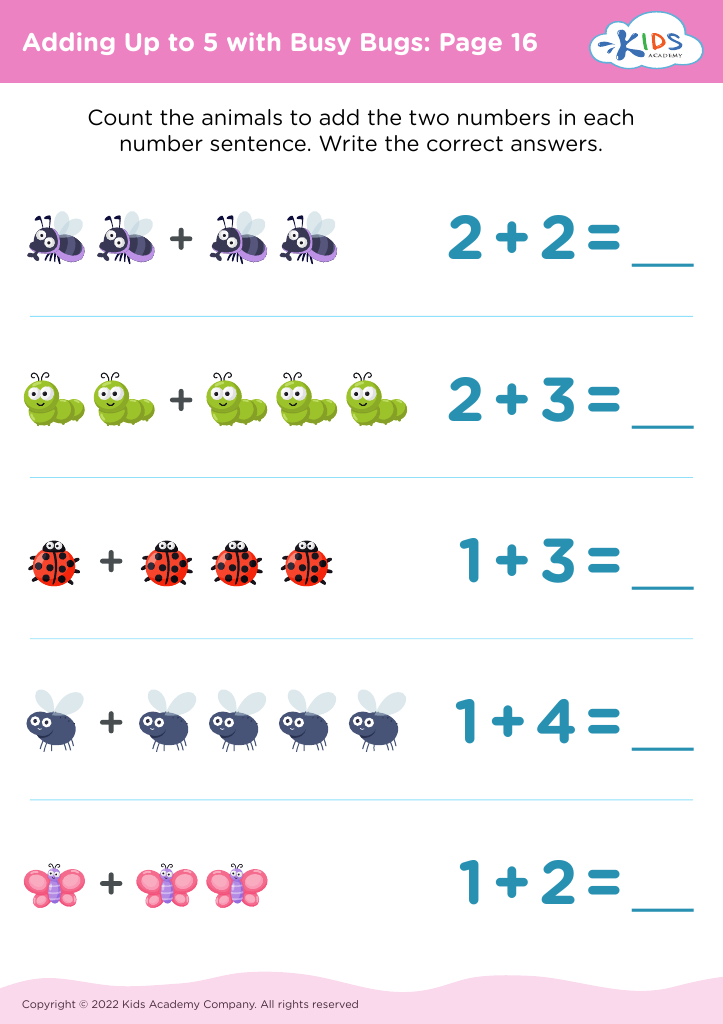
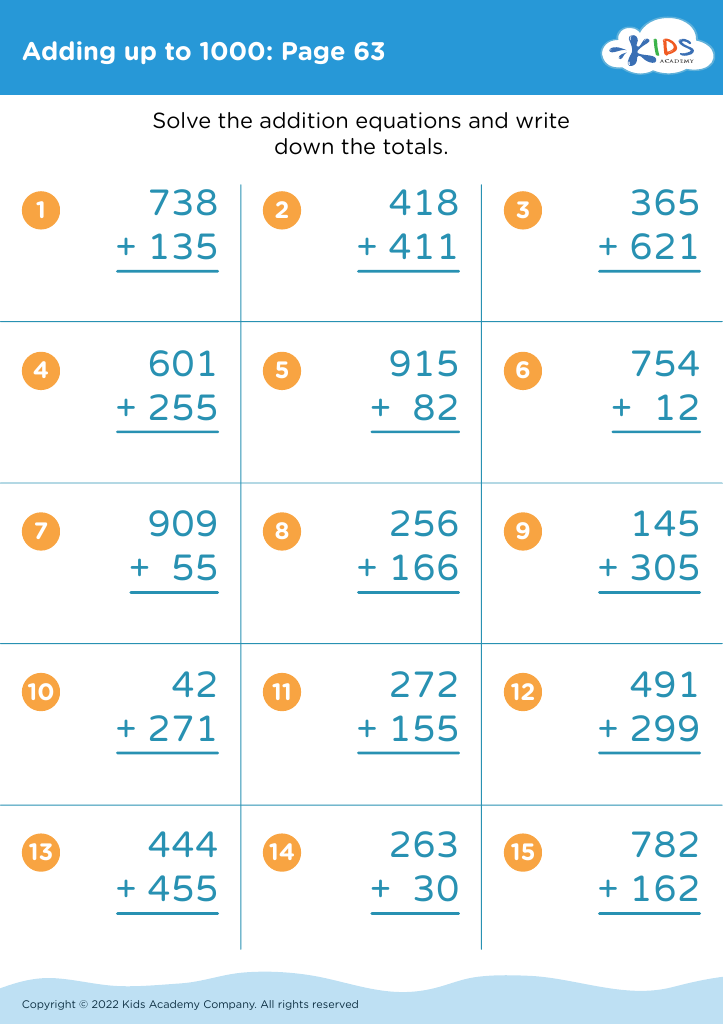
Our Basic Math Concepts Addition Worksheets for Ages 3-8 provide a fun and engaging way for young learners to master foundational math skills. Designed by education experts, these printable worksheets use vivid illustrations and interactive activities to teach children how to add numbers effectively. Each worksheet builds on previous lessons, ensuring a solid understanding of addition concepts. Perfect for both classroom and home use, these resources help kids develop critical thinking and problem-solving skills while nurturing a love for math. Start your child's mathematics journey with our kid-friendly, educational worksheets at Kids Academy.
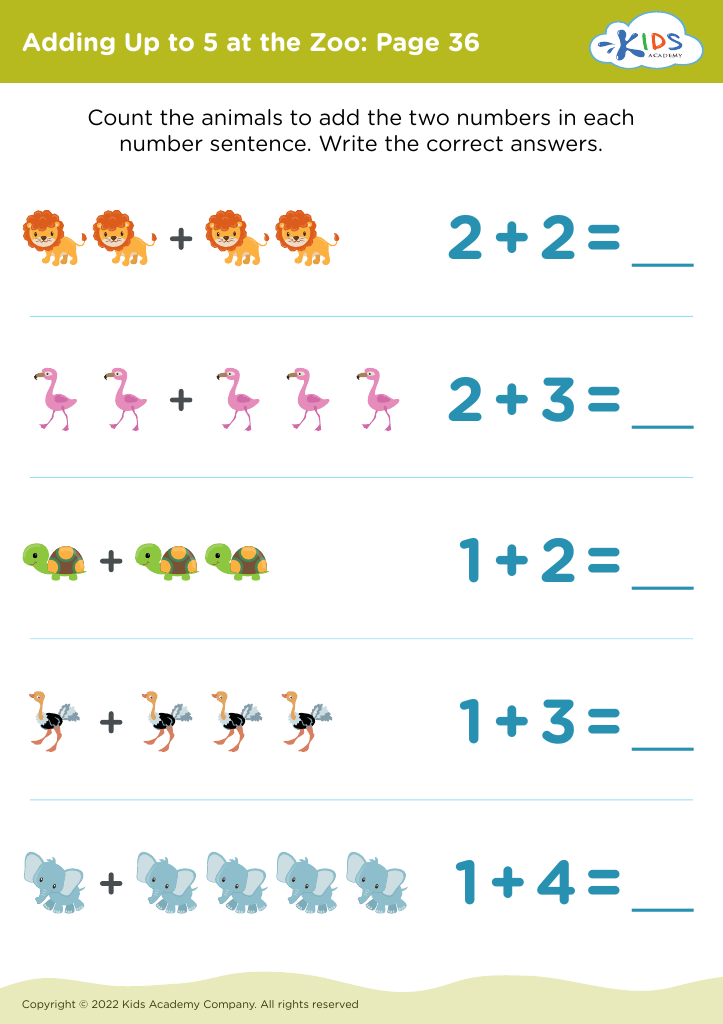
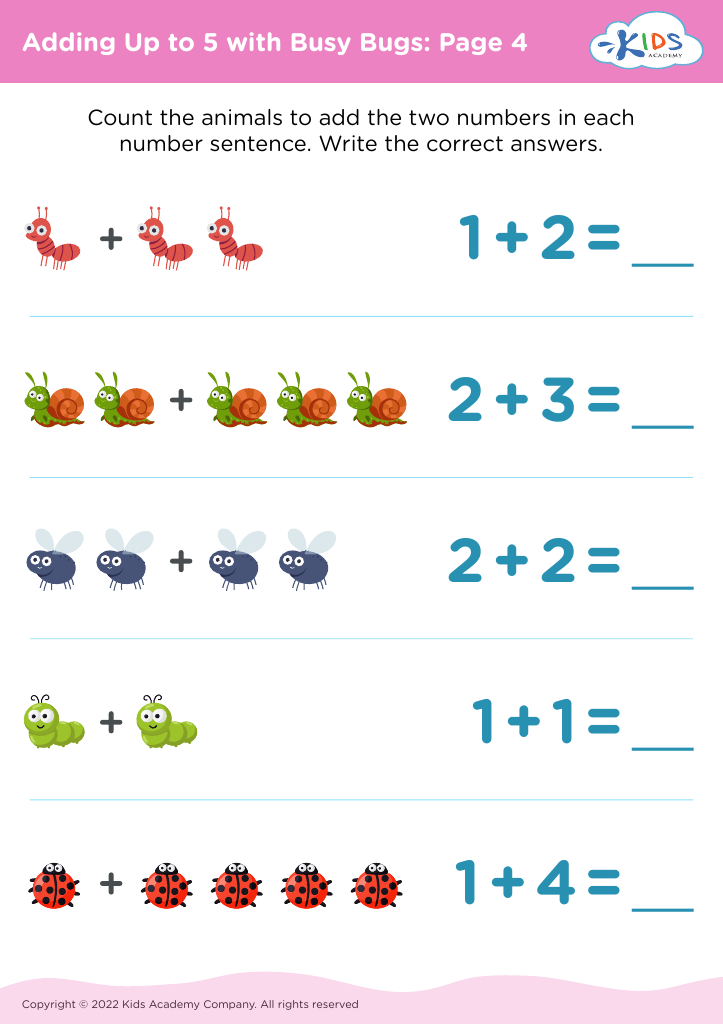
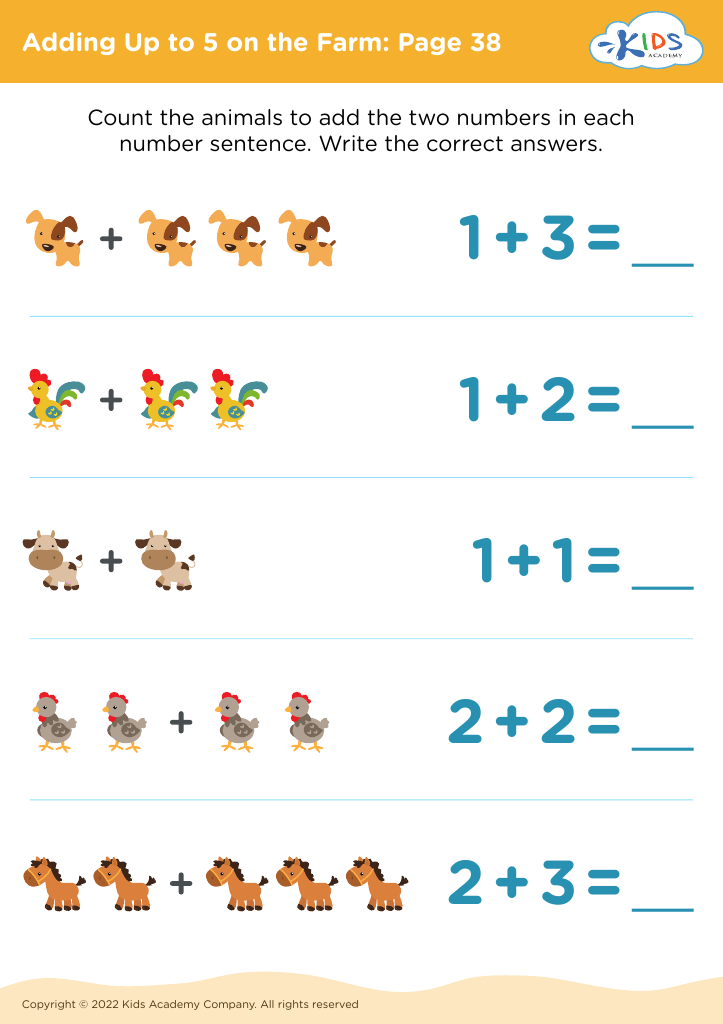
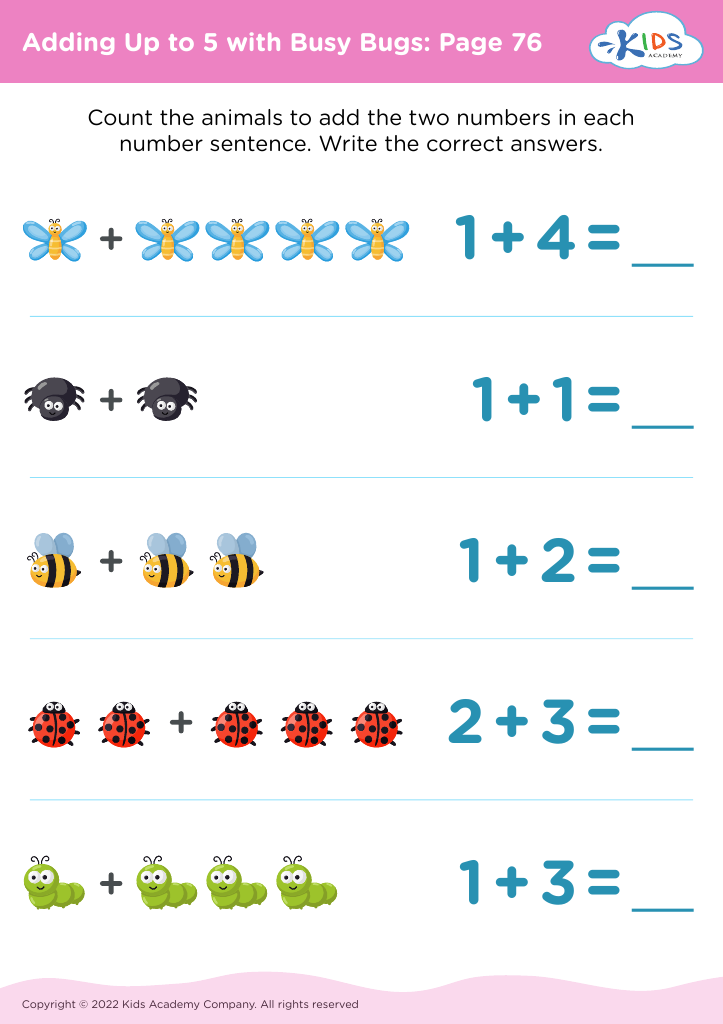



.jpg)




Basic math concepts, such as addition, are fundamental for children aged 3-8 because they lay the groundwork for future mathematical learning and overall cognitive development. Introducing addition at an early age helps build numeracy skills, which are essential for everyday activities like counting money, measuring ingredients in a recipe, or even time management. Such skills become crucial for academic success as math forms a significant part of the school curriculum.
Incorporating addition into a child's daily routine also enhances their problem-solving abilities and critical thinking. These skills aren't just limited to math but apply across subjects and real-life scenarios, making children better equipped to tackle challenges as they grow. Furthermore, mastering addition boosts confidence. When children successfully add numbers, they feel a sense of accomplishment, which fosters a positive attitude towards learning and education in general.
From a developmental perspective, early engagement with addition improves memory and concentration. Activities centered around addition create an interactive and stimulating environment that encourages curiosity and exploration, keeping children engaged and interested. Hence, focusing on basic math concepts like addition in early years isn't just about learning numbers; it's about building a strong intellectual and emotional foundation for lifelong learning.








