Compare fractions Addition Worksheets for Ages 3-8
6 filtered results
-
From - To
Explore our engaging "Compare Fractions Addition Worksheets" designed specifically for children ages 3-8. These worksheets provide fun and interactive activities that help young learners develop their understanding of fractions through addition. With colorful visuals and age-appropriate problems, kids can easily grasp concepts of greater than, less than, and equal fractions while honing their math skills. Perfect for classroom use or at-home learning, these printable resources promote critical thinking and boost confidence in mathematical abilities. Make learning an enjoyable adventure as your child begins to master comparison of fractions and improve their overall proficiency in math. Download now and empower young minds!
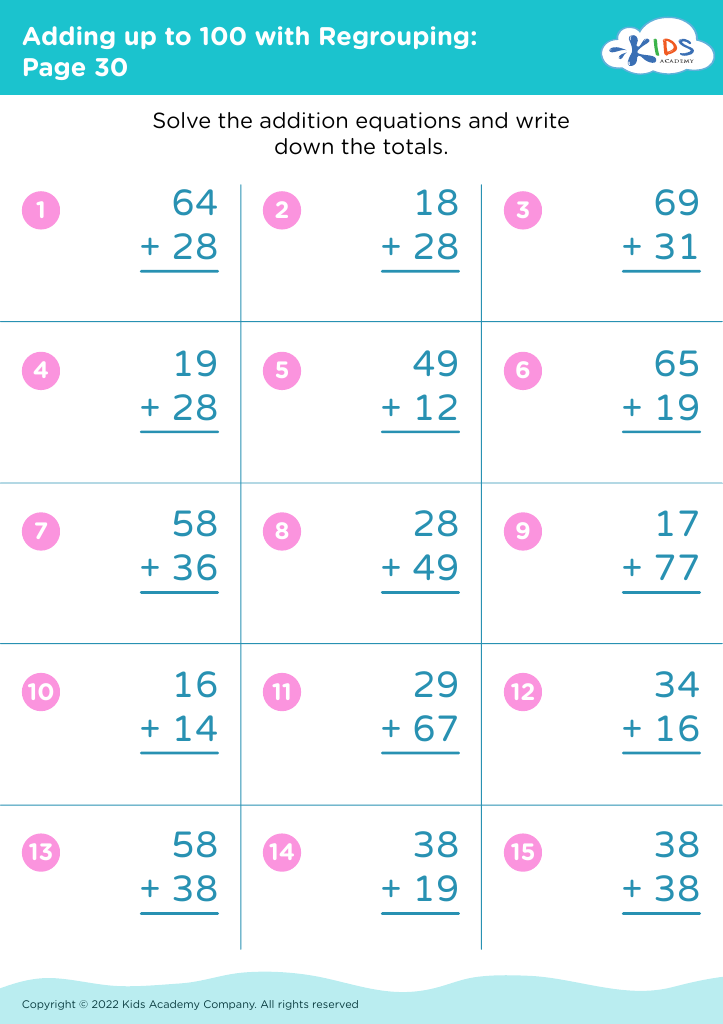
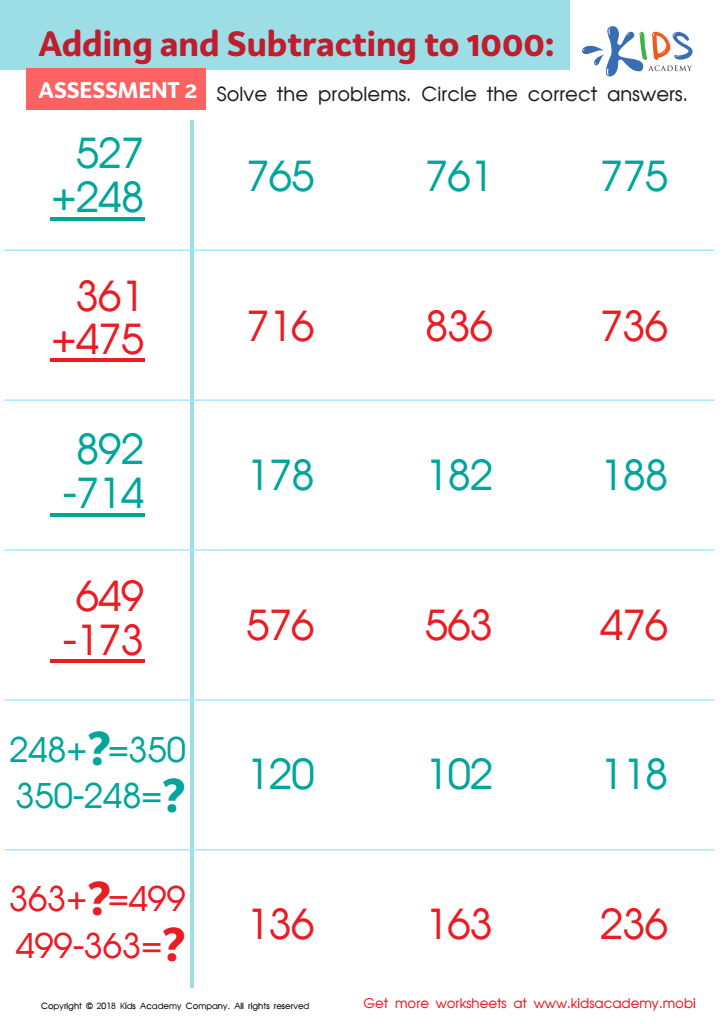
Adding and Subtracting to 1 Worksheet: Assessment 2
 Assign to My Students








Understanding and comparing fractions is a foundational skill that plays a crucial role in the mathematical development of children aged 3-8. As young learners engage with fractions, they cultivate essential critical thinking and problem-solving skills. Comparing fractions helps them grasp the concept of parts relative to a whole, a fundamental idea that extends beyond math into everyday life.
For parents and teachers, focusing on fraction addition serves several important purposes. First, it aligns with early childhood learning standards, setting up a strong mathematical foundation. Young children exposed to concepts like equivalent fractions and simple addition will face mathematical challenges with greater confidence in later years.
Moreover, incorporating engaging, hands-on activities can make learning fun and interactive. This not only supports cognitive skills but also fosters a love for math. Teaching fractions can spark curiosity about measurements in cooking, sharing snacks, or dividing toys, thereby reinforcing real-world connections.
Finally, nurturing early math skills helps identify and address learning gaps early on, ensuring that children build strong numeracy skills as they progress through school. This comprehensive approach ultimately supports their overall academic success and lifelong learning in mathematics and beyond.








