Develop critical thinking Addition Worksheets for Ages 3-8
11 filtered results
-
From - To
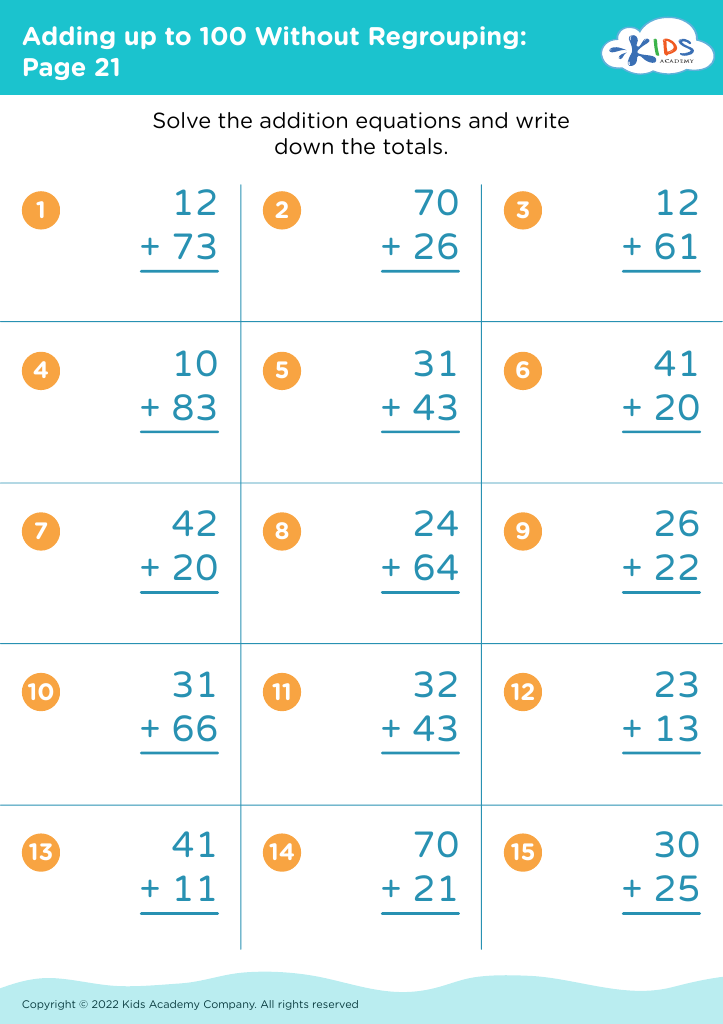
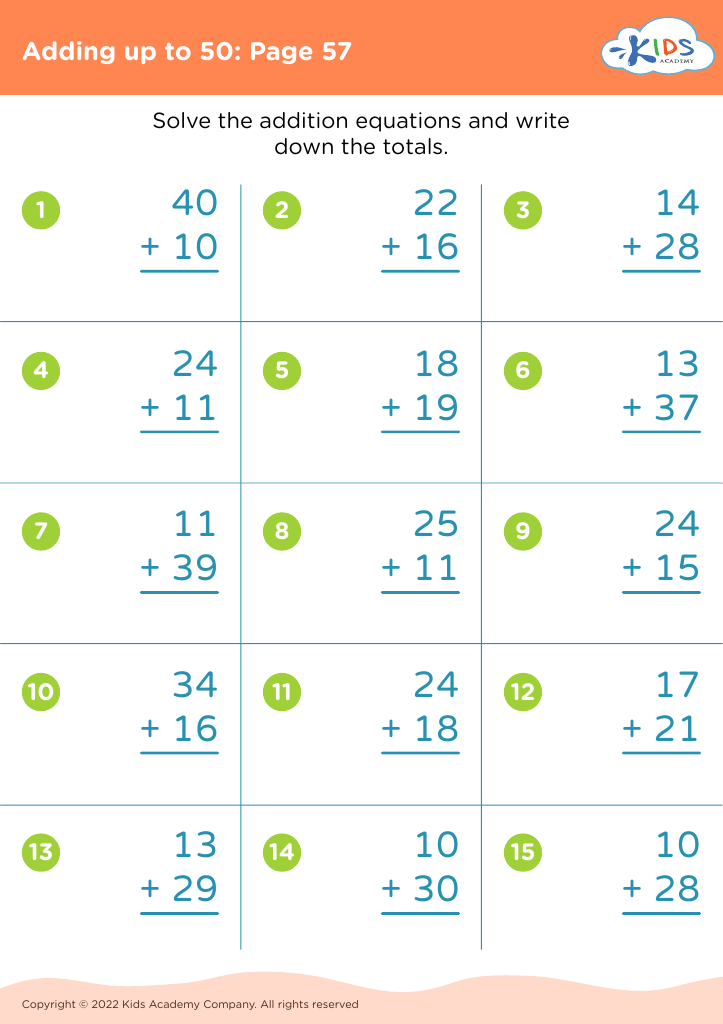
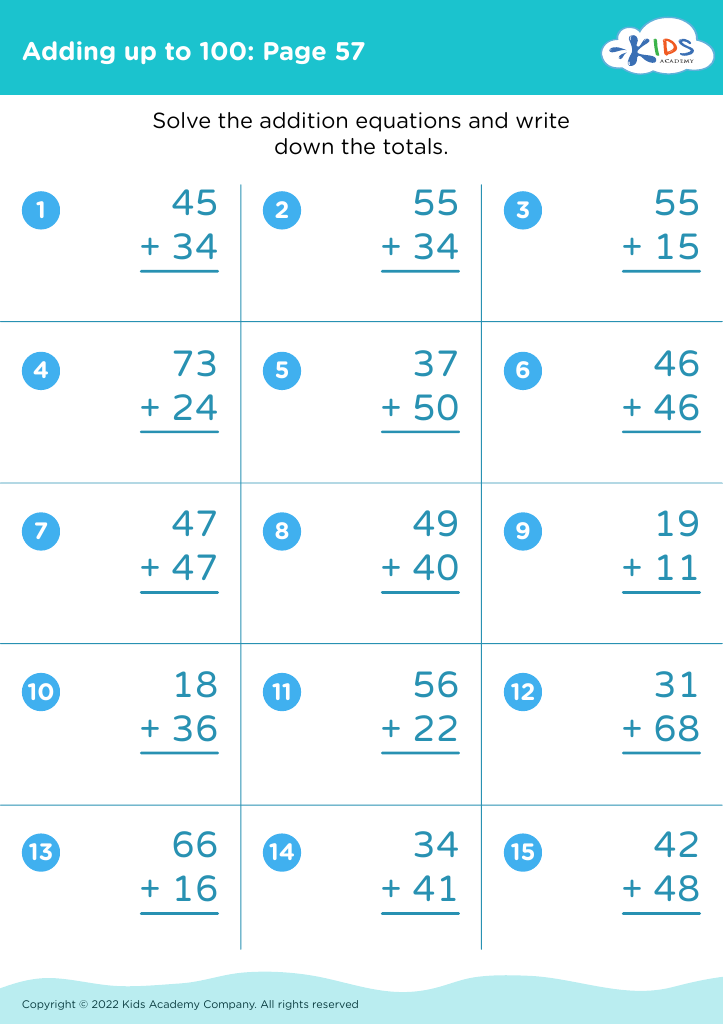
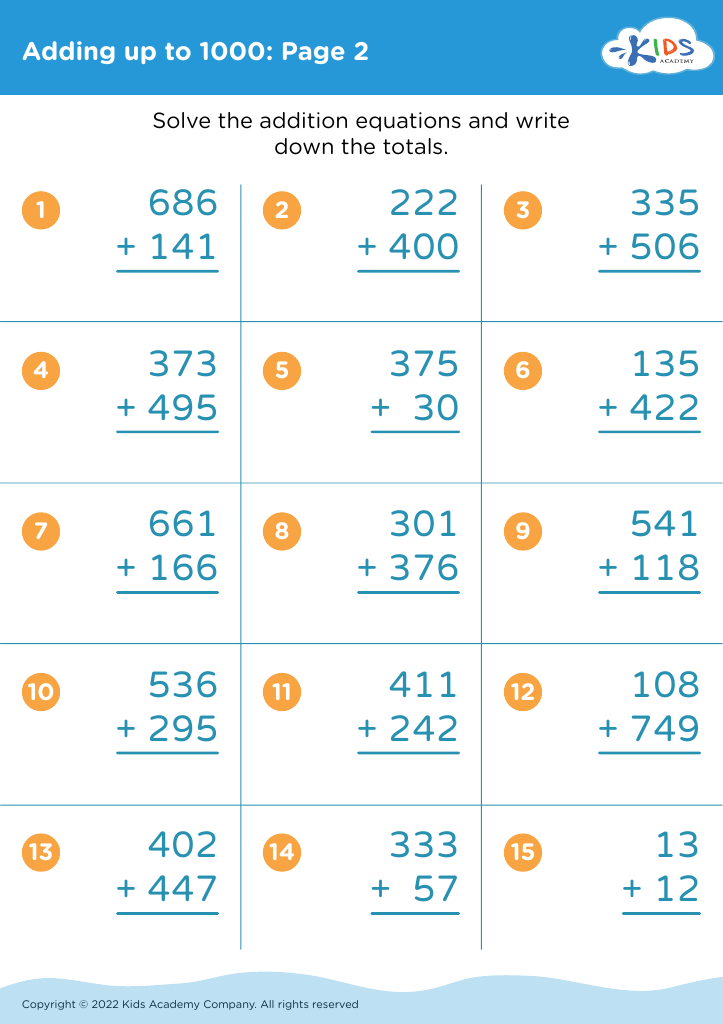
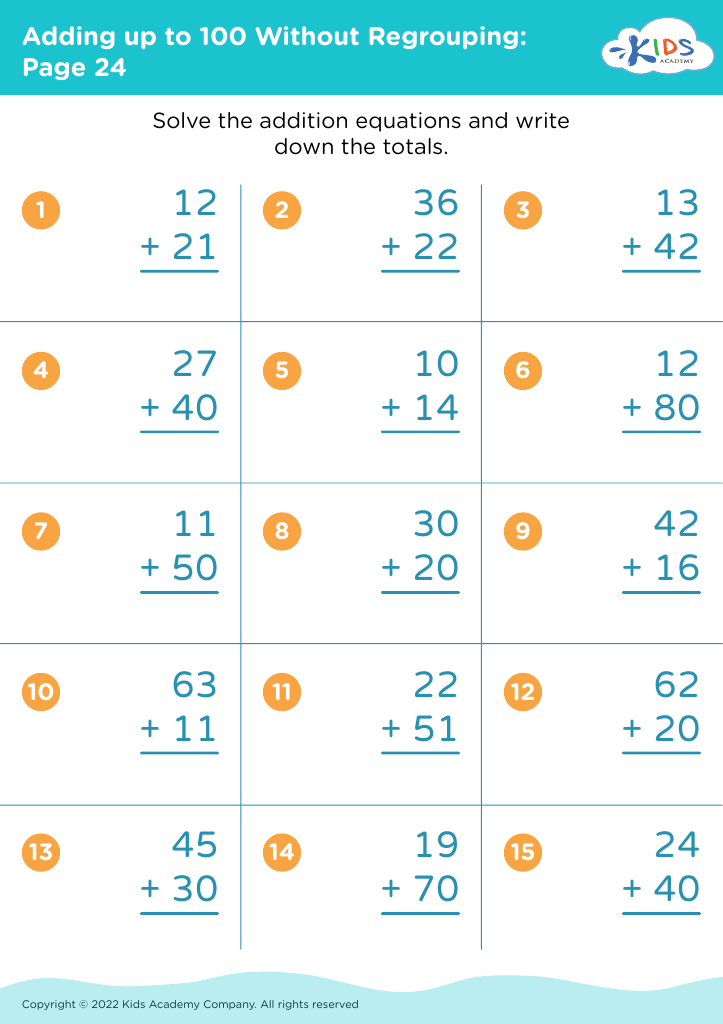
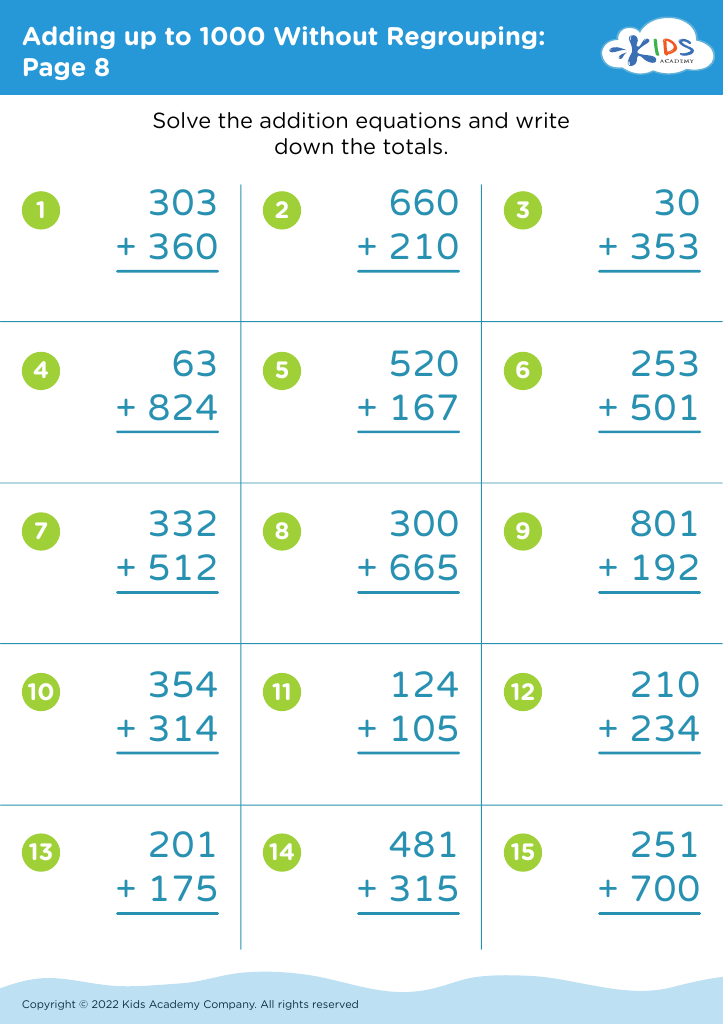
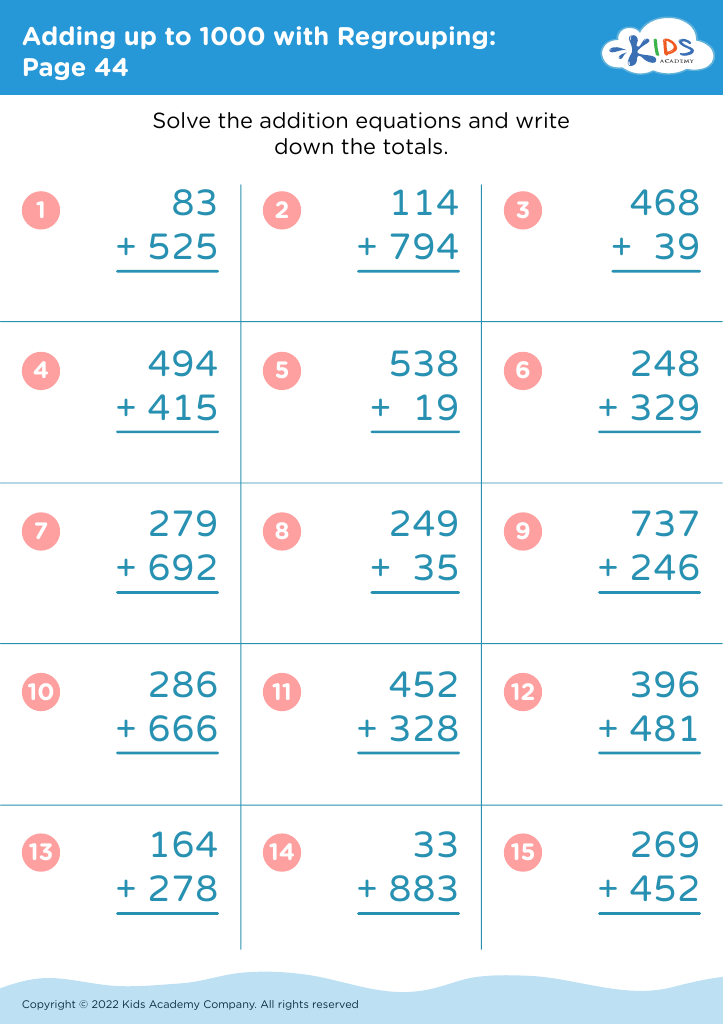
Enhance your child's math skills with our "Develop Critical Thinking Addition Worksheets" designed for ages 3-8! These engaging worksheets focus on fostering critical thinking through fun addition exercises. With colorful illustrations and age-appropriate challenges, children will not only practice their addition skills but also develop problem-solving abilities, logical reasoning, and cognitive skills. Our resources are perfect for both classroom settings and at-home learning. Get started on a journey where your little ones gain confidence in math while enjoying interactive and educational activities. Explore our collection today and watch your child's critical thinking and addition skills flourish!
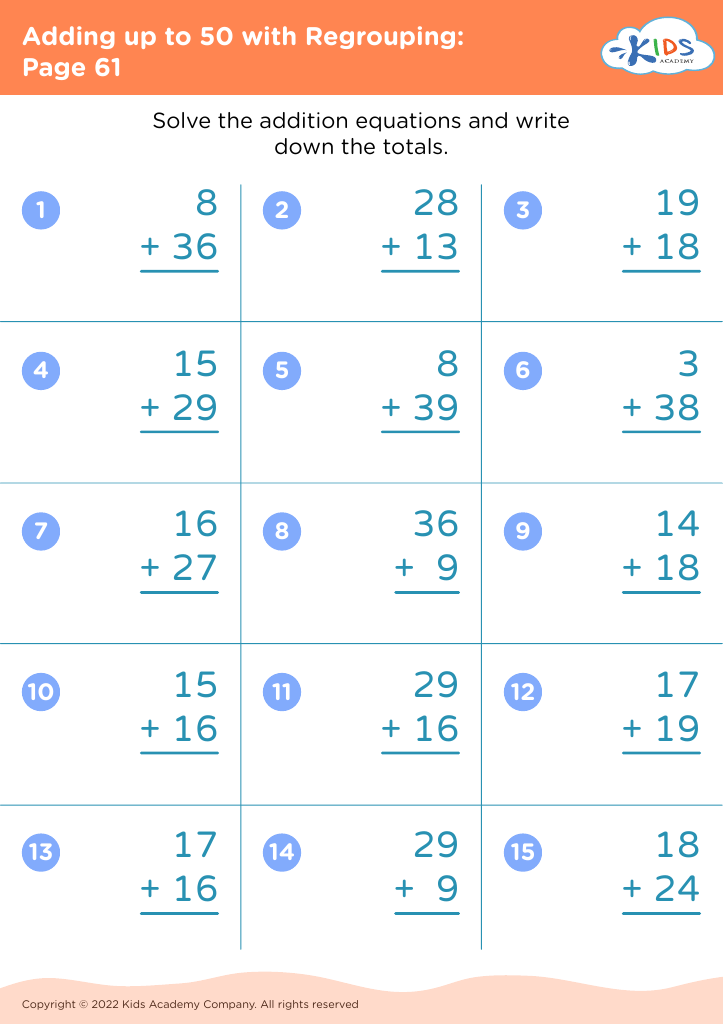
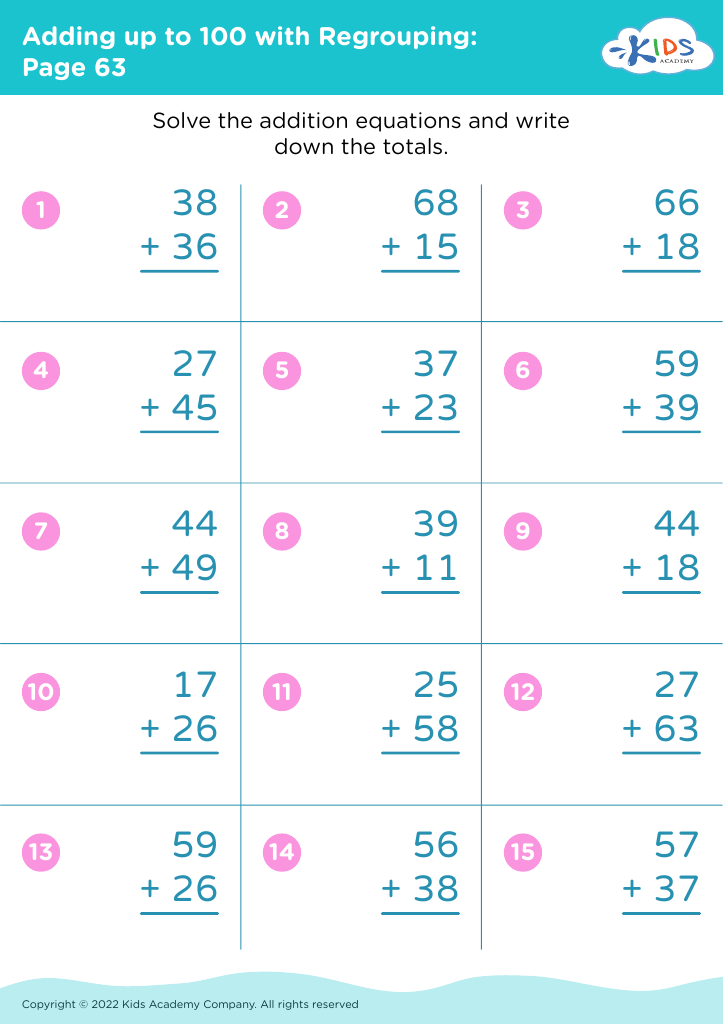
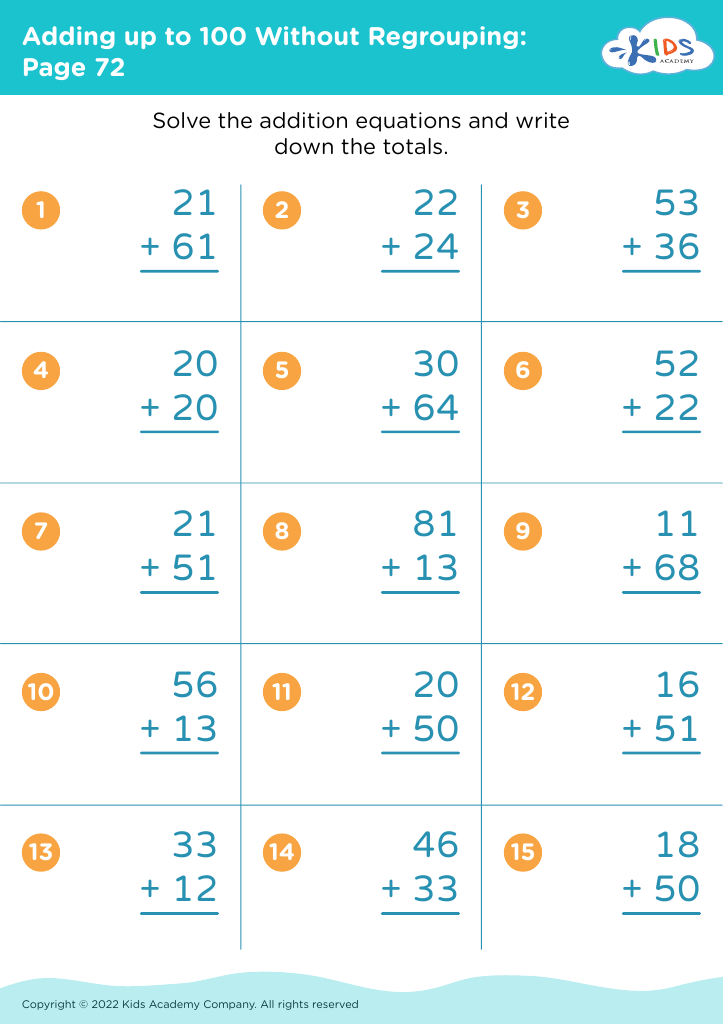
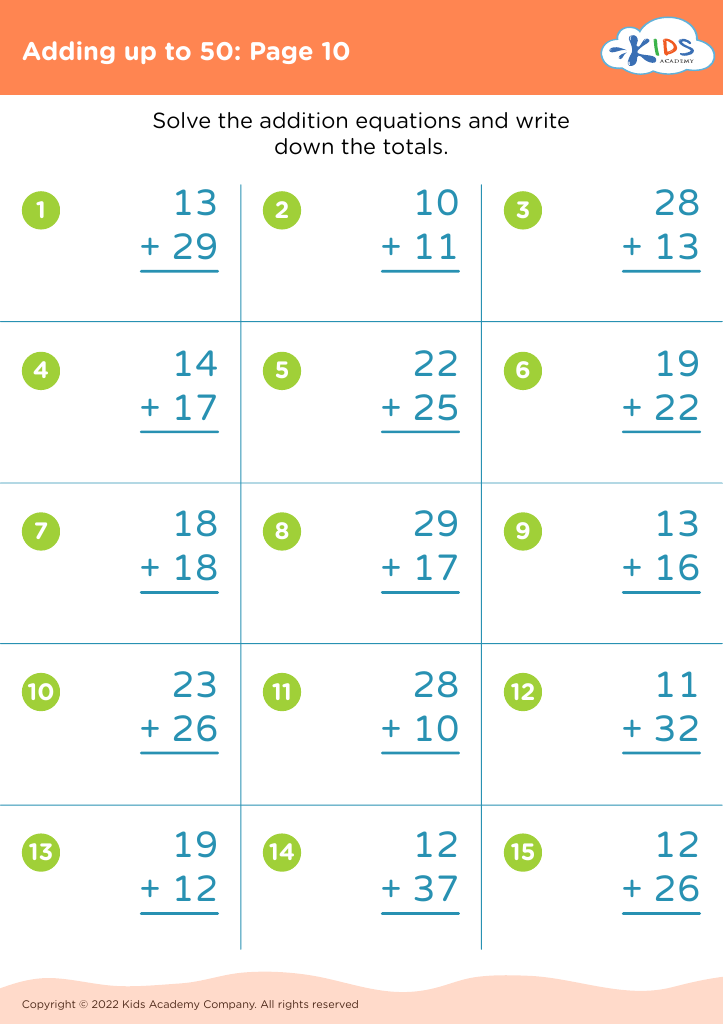








Developing critical thinking skills in young children, particularly in the context of addition, is essential for several reasons. First, critical thinking fosters a child’s ability to analyze problems, reason logically, and make connections between different concepts, which reinforces their overall cognitive development. For instance, when children learn addition through various methods—such as using objects, visual aids, or storytelling—they are encouraged to evaluate different strategies and solutions, leading to deeper understanding.
Second, critical thinking nurtures creativity and innovation. Early exposure to problem-solving activities can spark a child's curiosity, encouraging them to explore numerical relationships and patterns. This foundational skill not only aids in mastering basic mathematical concepts but also equips children with a toolkit for future learning in diverse subjects.
Furthermore, when parents and teachers emphasize critical thinking while teaching addition, they create an engaging learning environment. This promotes a love for learning and helps children build self-confidence, as they learn to tackle challenges independently. Investing in these skills during the formative years sets the stage for future academic success. Ultimately, promoting critical thinking in early math education fosters well-rounded individuals who are prepared to navigate the complexities of the world around them.








