Develop fine motor skills Addition Worksheets for Ages 3-8
9 filtered results
-
From - To
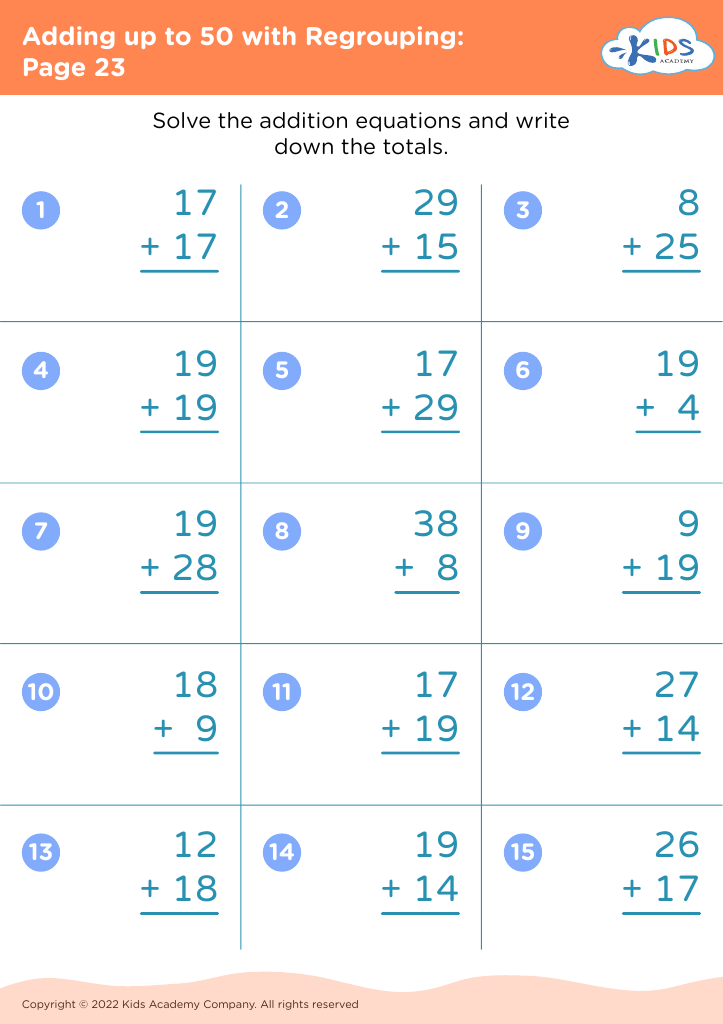
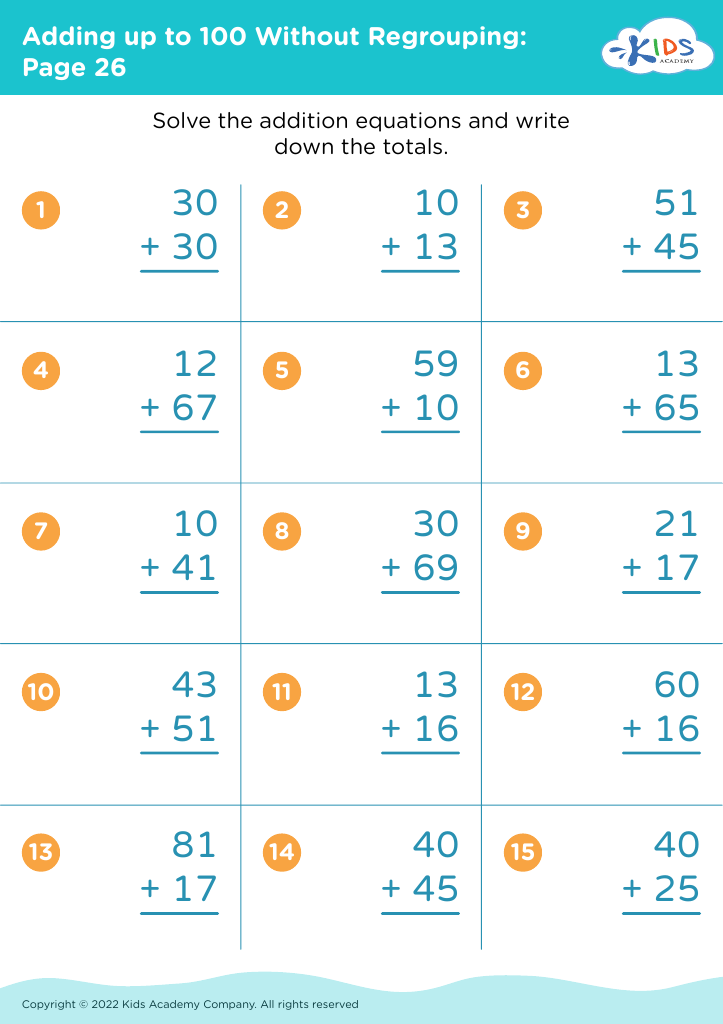
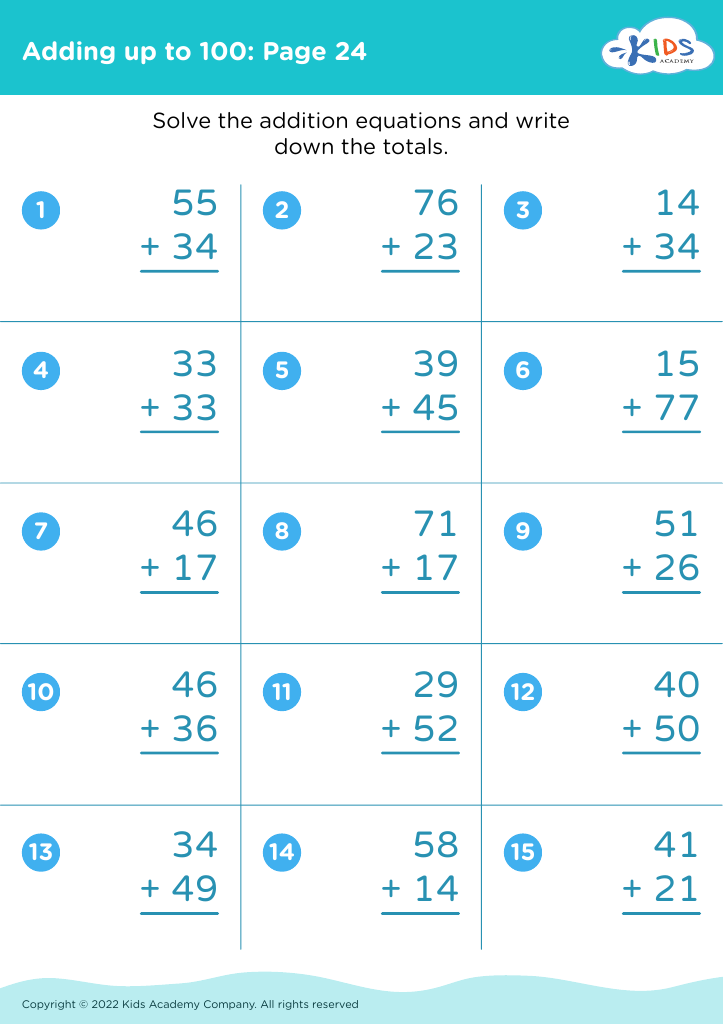
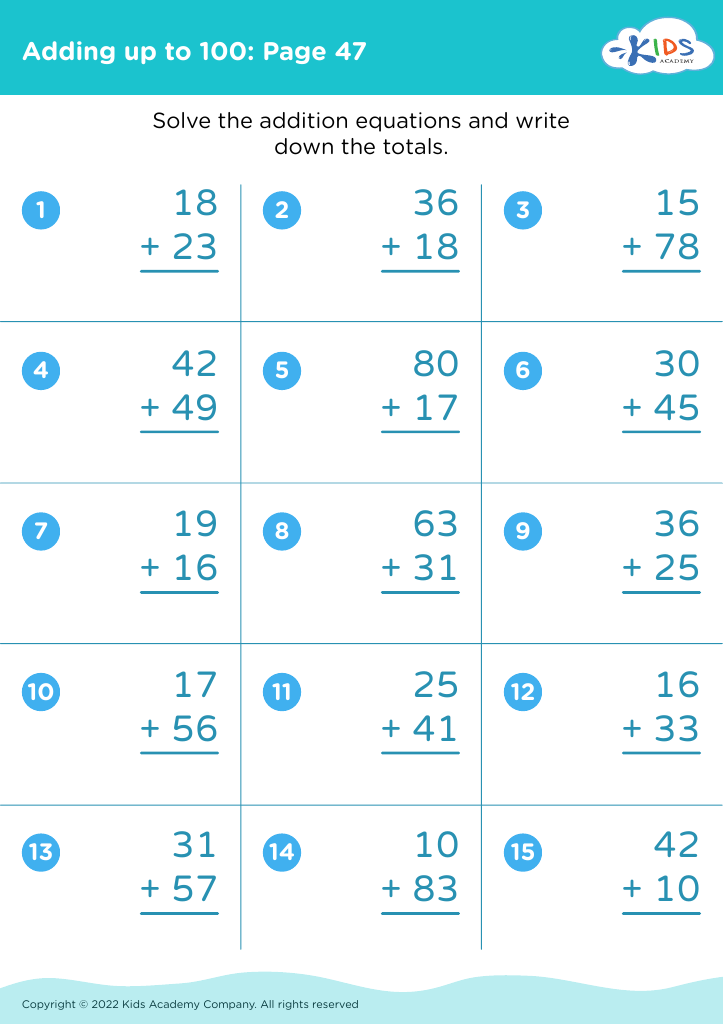
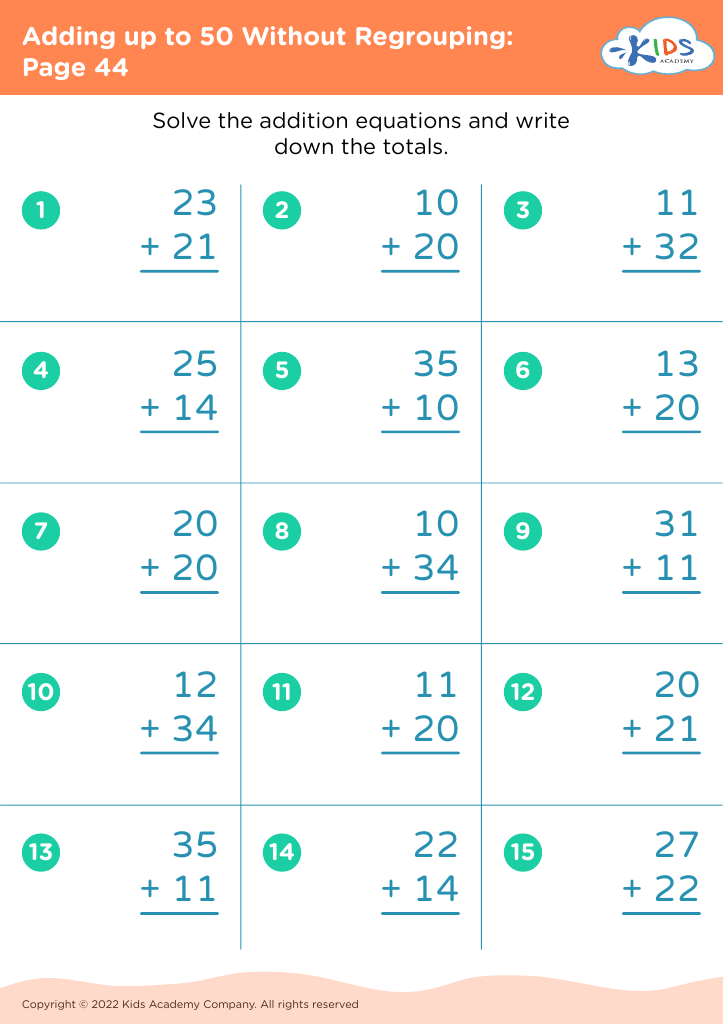
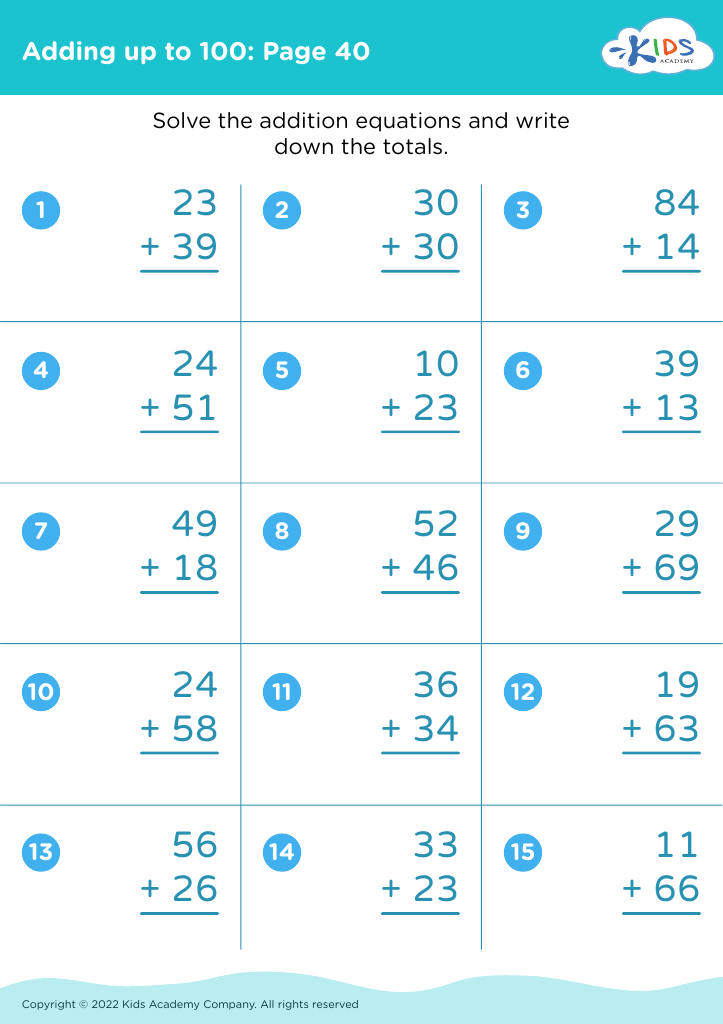
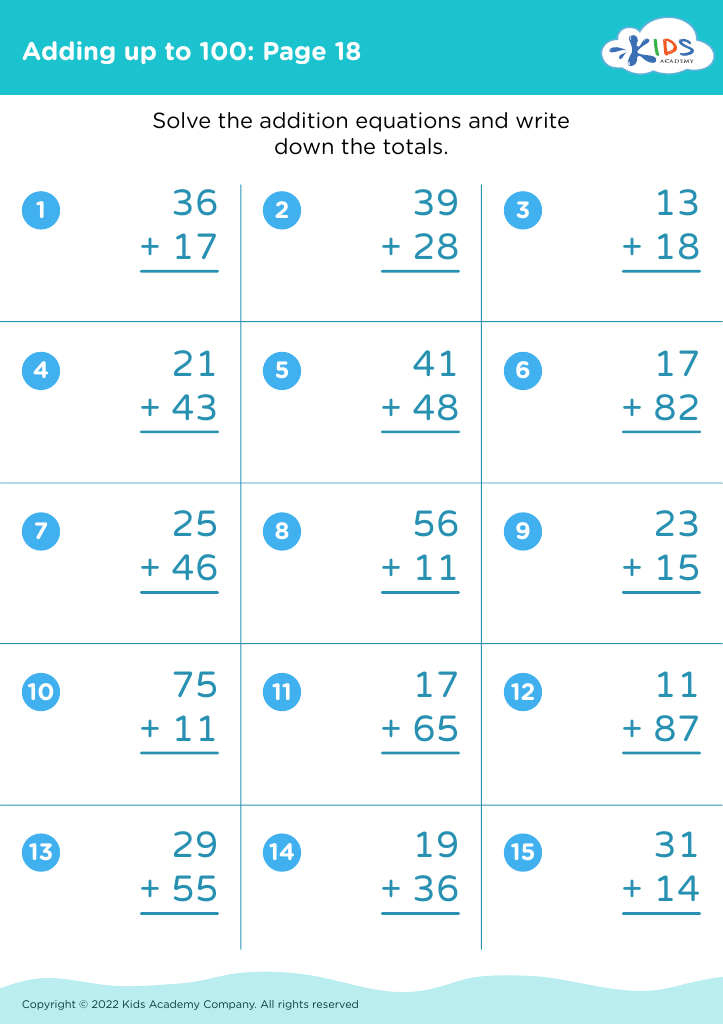
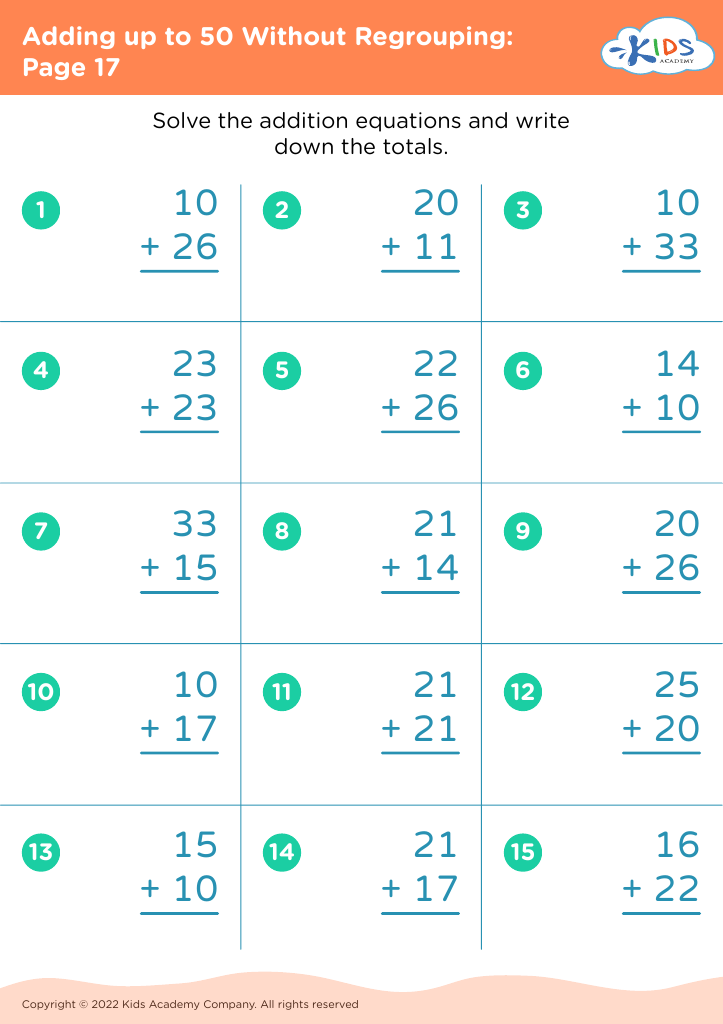
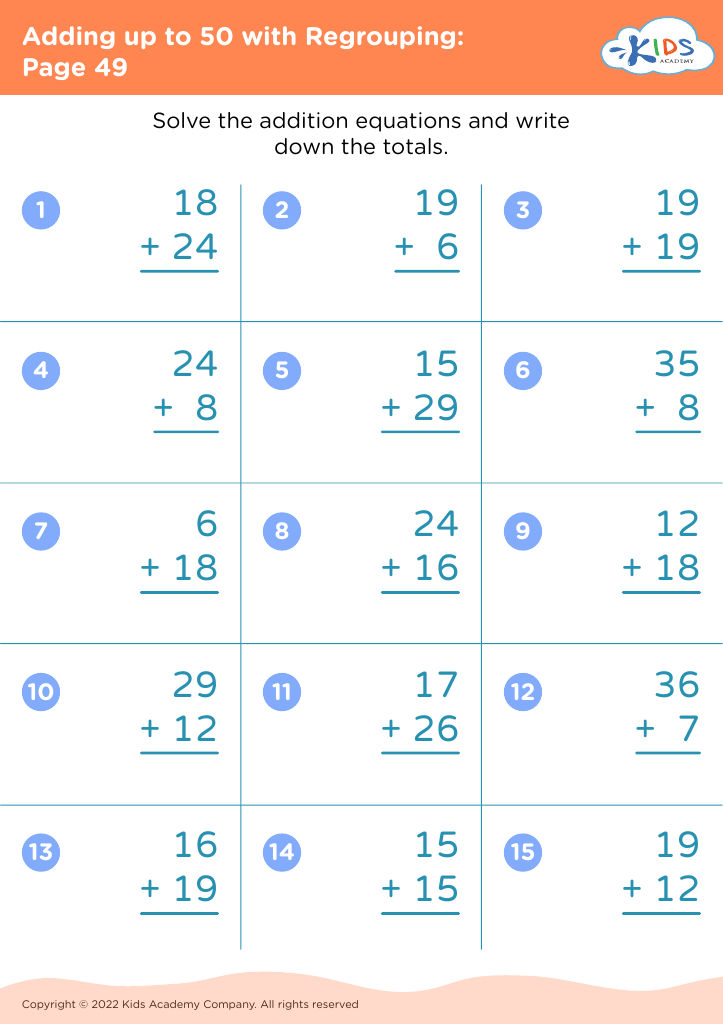
Welcome to our "Develop Fine Motor Skills Addition Worksheets" designed for children aged 3-8! These engaging worksheets seamlessly combine the practice of basic addition skills with fun, fine motor activities. Each worksheet encourages young learners to use scissors, pencils, and other tools, enhancing their hand-eye coordination and dexterity while they solve math problems. Easy to navigate and engaging, our materials foster not only mathematical understanding but also essential motor skills development. Perfect for both classroom and home learning, these worksheets provide a balanced approach to early education, ensuring children build a strong foundation for future success. Start exploring today!








Fine motor skills are crucial for children aged 3-8 as they lay the foundation for many essential tasks and overall development. Parents and teachers should care about developing these skills because they directly impact a child's ability to perform everyday activities, such as writing, buttoning clothes, and using utensils.
Engaging in activities that enhance fine motor skills also supports cognitive development. For example, when children manipulate small objects or engage in arts and crafts, they improve hand-eye coordination, dexterity, and spatial awareness. These skills are vital for academic success, especially in literacy and math, where tasks like tracing letters or manipulating counting blocks come into play.
Furthermore, fine motor development contributes to a child's self-esteem and independence. As children master these skills, they gain confidence and feel empowered in their abilities, fostering a positive attitude toward learning.
Socially, activities that nurture fine motor skills often involve collaboration, helping children develop communication and teamwork abilities, which are crucial for their future interactions. Overall, investing time and resources into fine motor skill development during early childhood benefits not just individual growth but lays the groundwork for a lifetime of personal and academic success.








