Enhances number recognition Addition Worksheets for Ages 3-8
4 filtered results
-
From - To
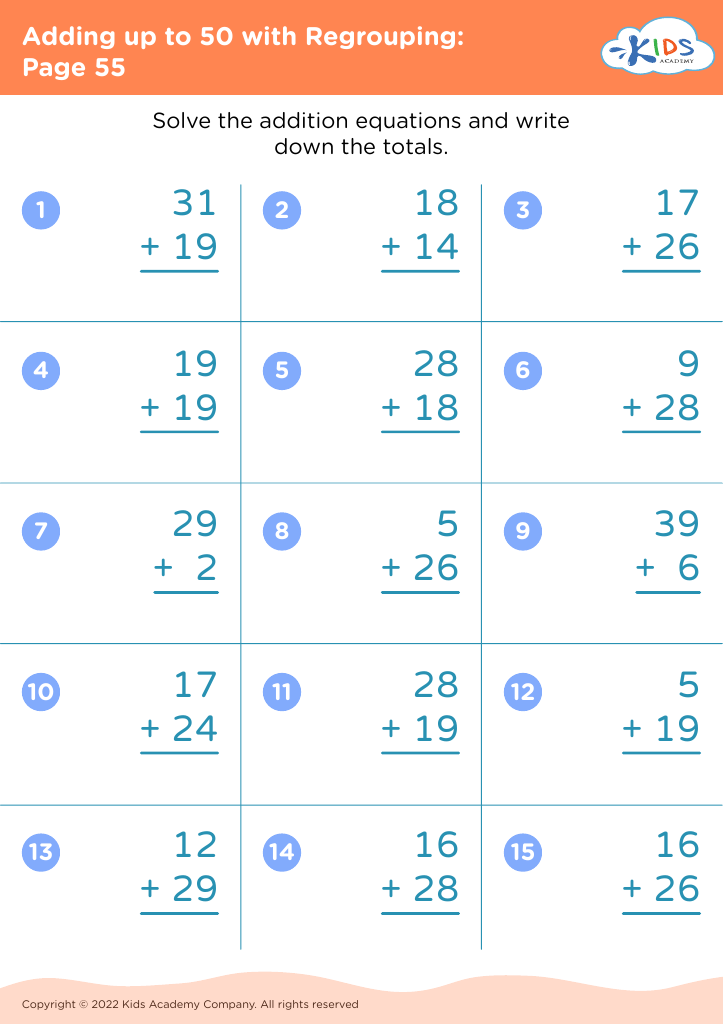
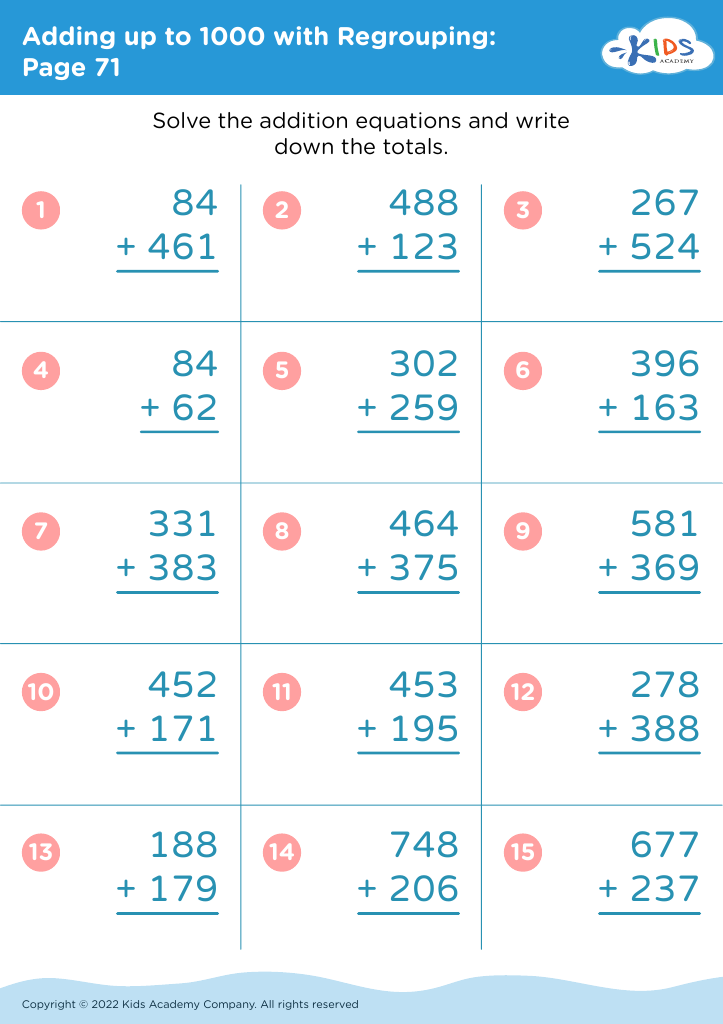
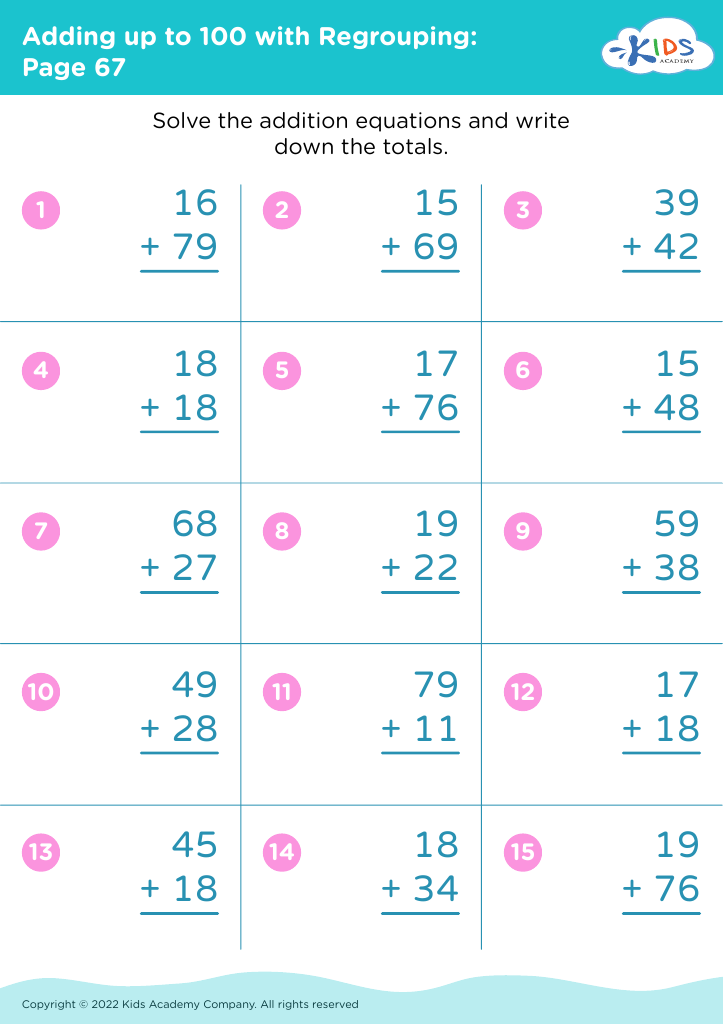
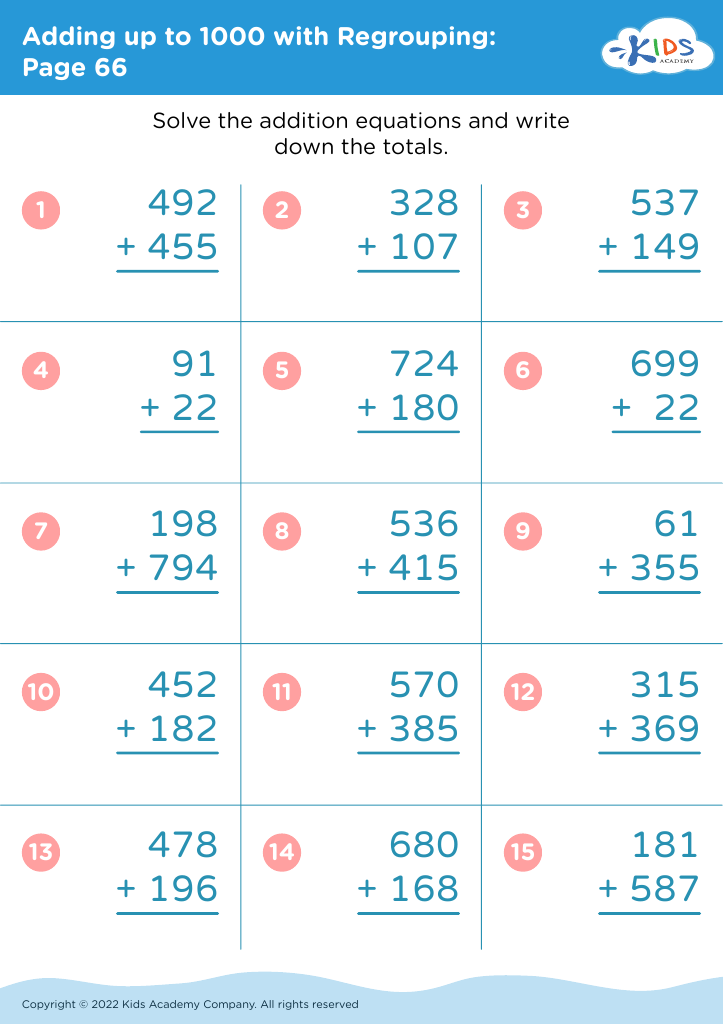
Elevate your child’s math skills with our engaging Addition Worksheets for ages 3-8! Designed to enhance number recognition and basic addition skills, our fun and educational worksheets help young learners build a solid foundation in math. With colorful visuals and interactive exercises, children can practice adding numbers while familiarizing themselves with number patterns and sequences. Perfect for home or classroom use, these worksheets are crafted to make learning enjoyable and effective. Make math a breeze and watch your child’s confidence grow with our expertly designed addition resources! Expand their learning journey with Kids Academy today.








Fostering number recognition and basic addition skills in children aged 3-8 is crucial for several reasons. First and foremost, early math skills serve as the foundation for all future mathematical learning. Recognizing numbers is an essential building block that supports understanding more complex concepts, such as arithmetic operations, measurements, and data analysis.
For young children, the ability to recognize numbers helps in developing cognitive skills, including logical thinking and problem-solving abilities. When they are introduced to addition early, it cultivates a sense of curiosity and confidence about mathematics, which is essential for academic success. Early proficiency in math has been linked to better performance not only in later mathematics-related subjects but also in reading and other skills, owing to the development of their analytical and critical thinking.
Parents and teachers play a pivotal role in shaping a child's attitude toward learning. By prioritizing number recognition and simple addition, they help remove potential fear or anxiety associated with math. Engaging children with playful, age-appropriate activities that include counting games and interactive puzzles makes learning enjoyable, planting the seed for a lifelong love of numbers. Most importantly, it enables children to explore their environment more meaningfully, counting objects, understanding time, and dealing with money—the essential skills they will use every day.








