Fine Motor Skills (coloring) Addition Worksheets for Ages 3-8
6 filtered results
-
From - To
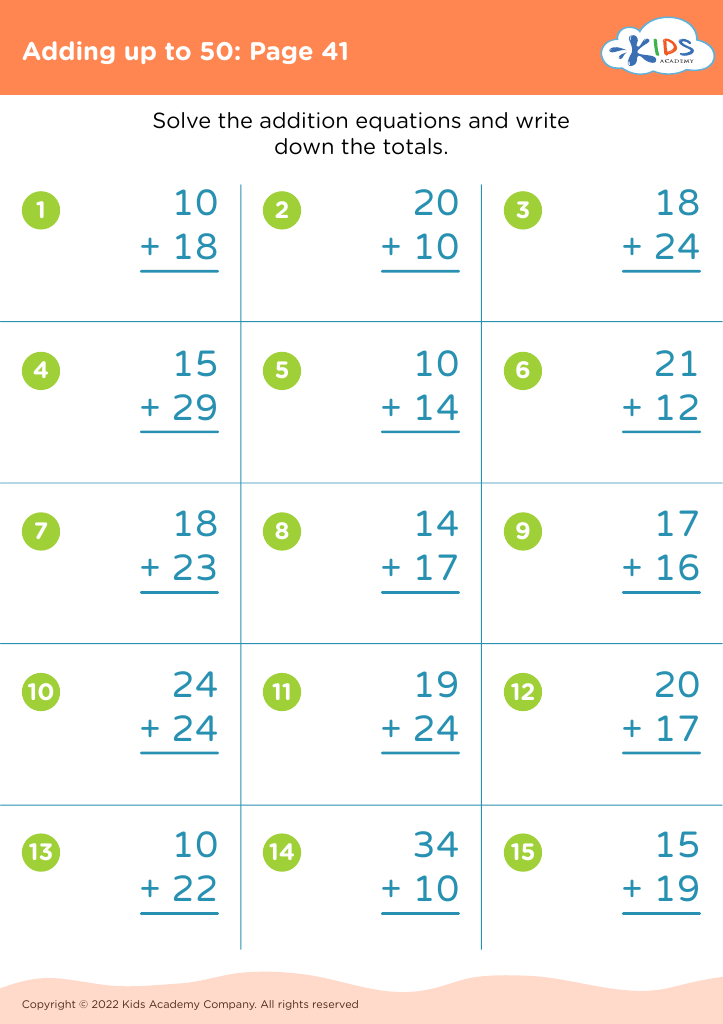
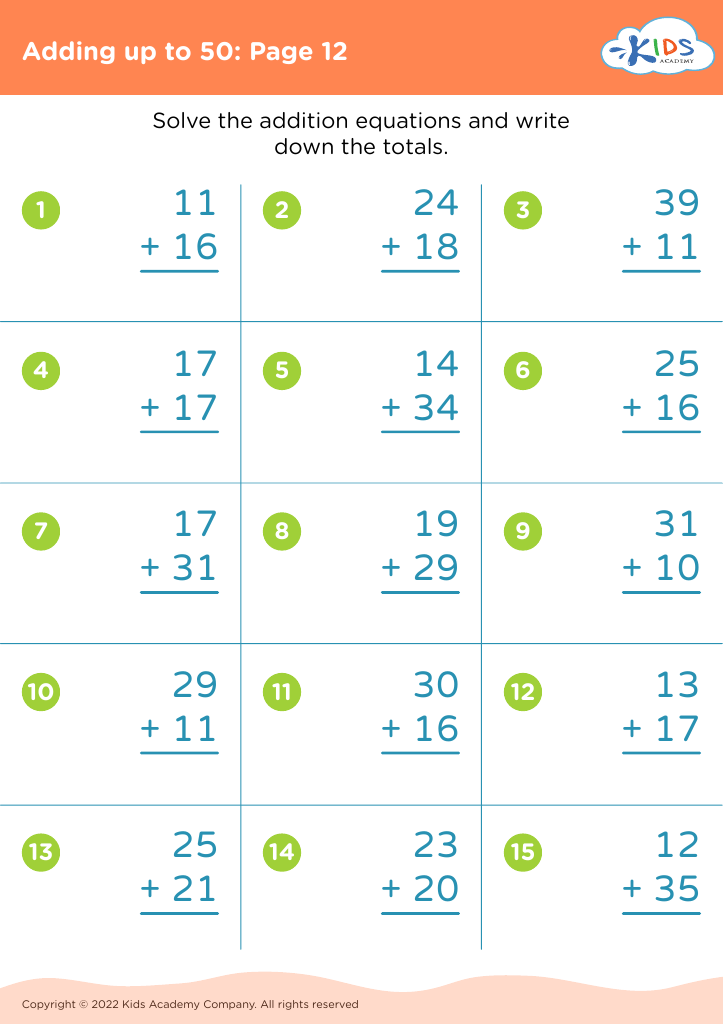
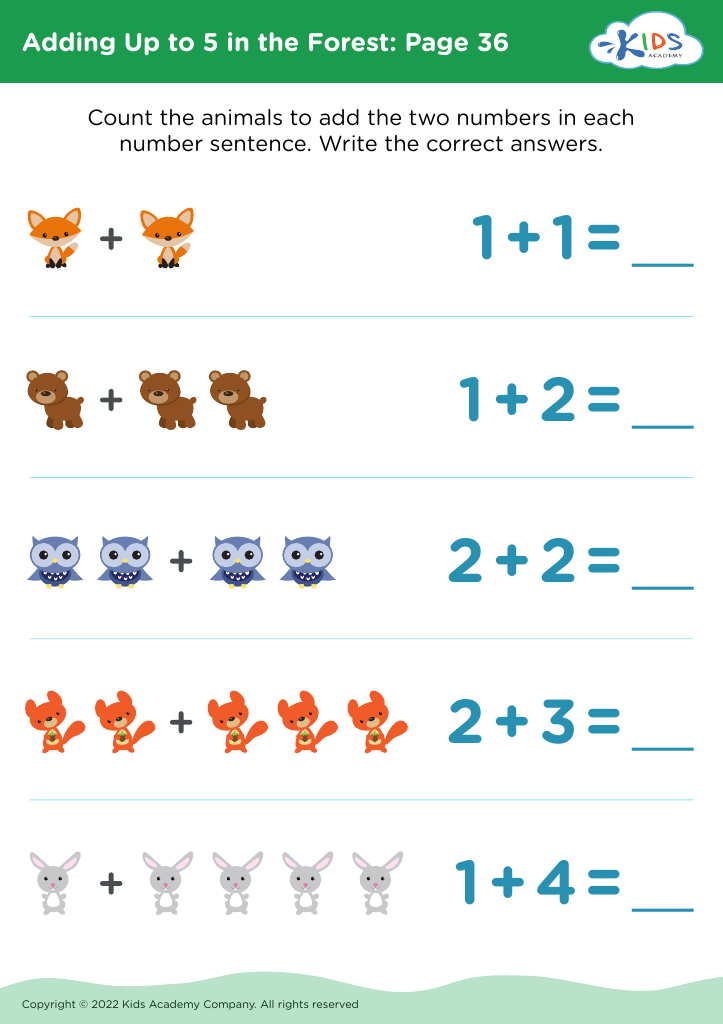
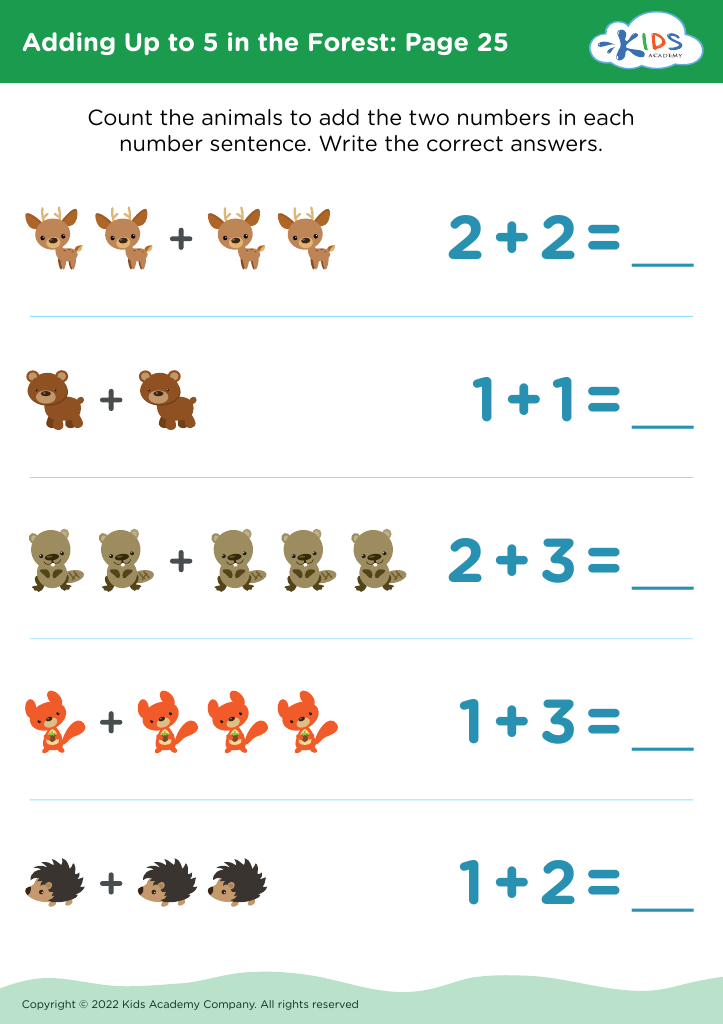
Enhance your child's fine motor skills while making learning enjoyable with our Fine Motor Skills (Coloring) Addition Worksheets for Ages 3-8! These engaging worksheets combine the fundamentals of math with creative coloring activities, designed to captivate young learners. As children solve addition problems, they'll practice their pencil grip, hand-eye coordination, and artistic expression through fun illustrations. Perfect for home or classroom use, these worksheets provide a valuable opportunity for skill development while fostering a love for learning. Download our printable worksheets today to help your child master essential math concepts while having a blast with colors!
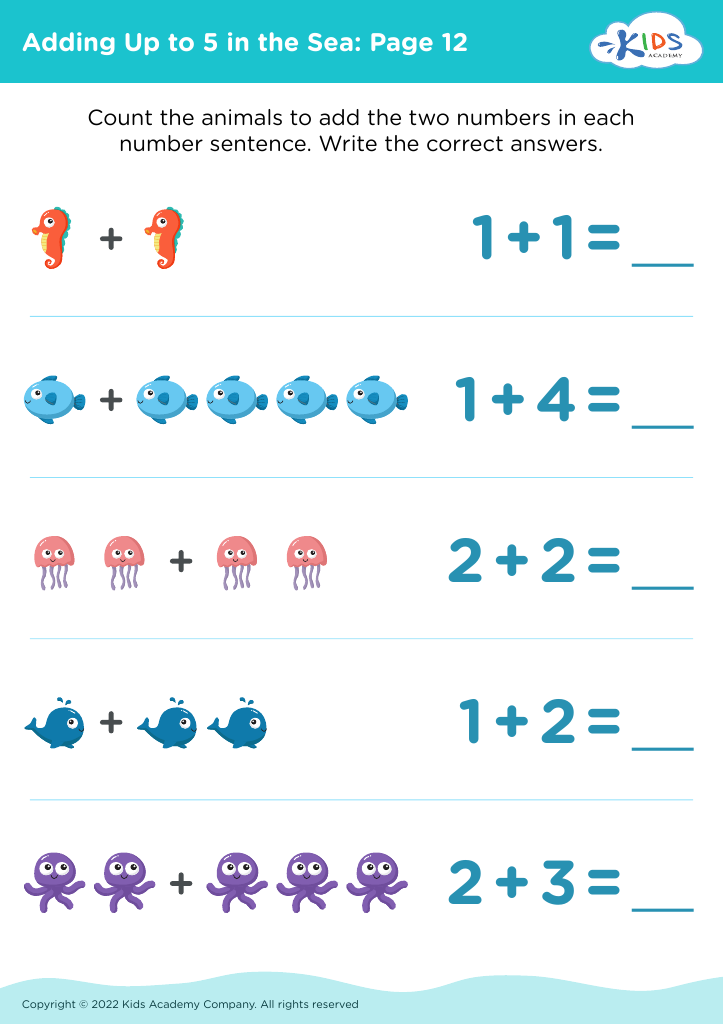
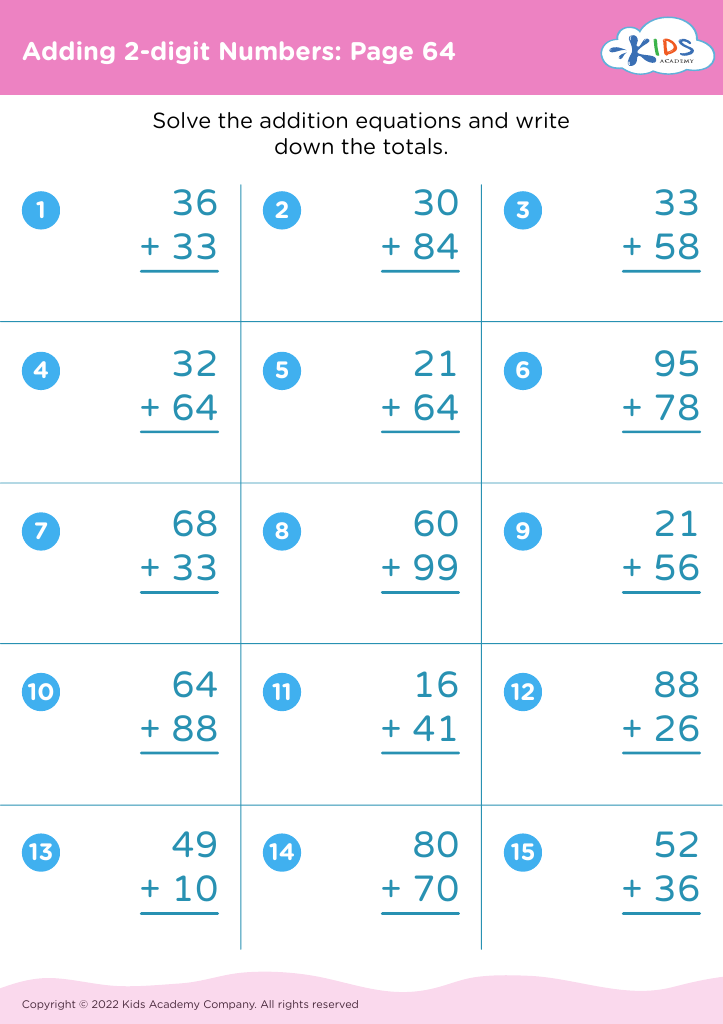








Parents and teachers should care about fine motor skills development in children aged 3-8 because these skills are foundational for a range of everyday tasks and academic activities. One prominent way to enhance fine motor skills is through activities like coloring. Coloring helps children practice grasping and using tools, such as crayons or markers, which improves hand strength and coordination. This is crucial for later tasks like writing, typing, and performing self-care tasks independently.
Additionally, fine motor skills are linked to cognitive development. Engaging in coloring activities promotes focus, control, and mechanism of hand-eye coordination, which directly impacts a child’s ability to learn new concepts and solve problems. Color recognition and varying within lines encourage creative expression and the understanding of spatial relationships.
Moreover, these activities also help build patience and perseverance, qualities essential for lifelong learning.
Fostering fine motor skills through enjoyable activities like coloring not only sets a solid foundation for writing and other technical skills but also enhances a child's confidence and self-esteem as they see their progress. Ultimately, focusing on fine motor development can lay the groundwork for academic readiness and overall well-being.








