
Improve counting Addition Worksheets for Ages 3-8
3 filtered results
Difficulty Level
Grade
Age
-
From - To
Subject
Activity
Standards
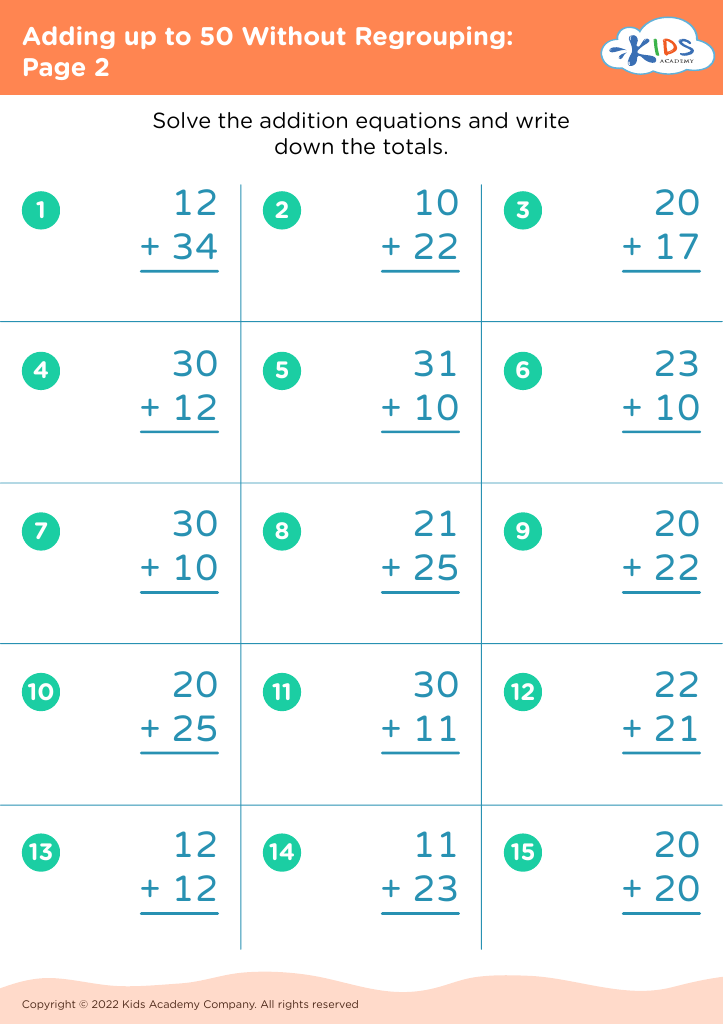
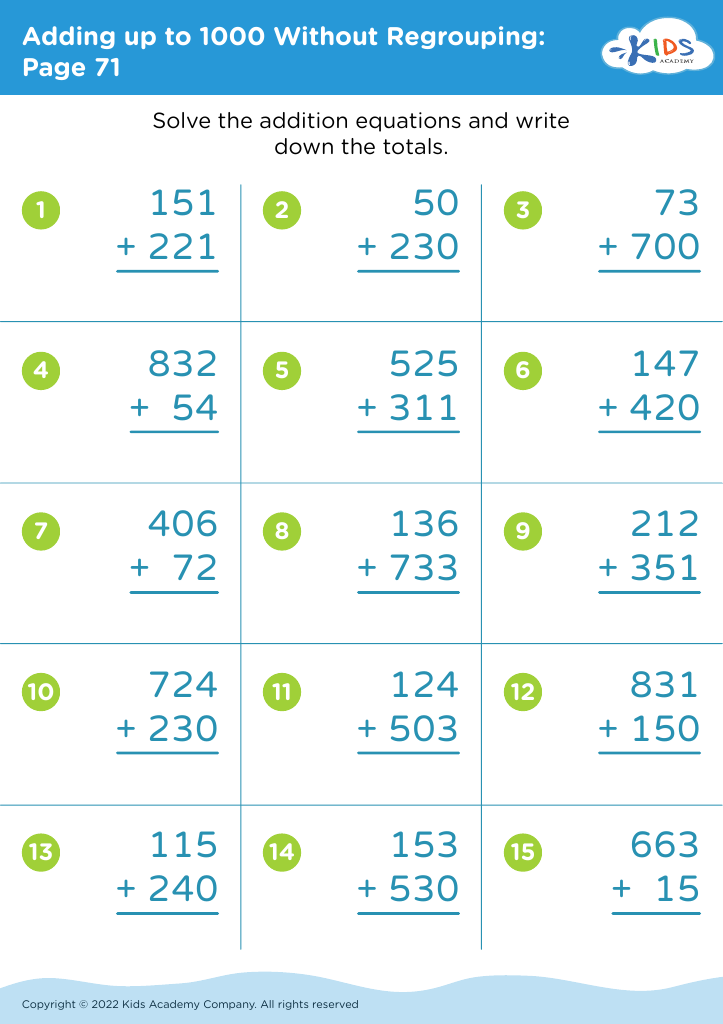
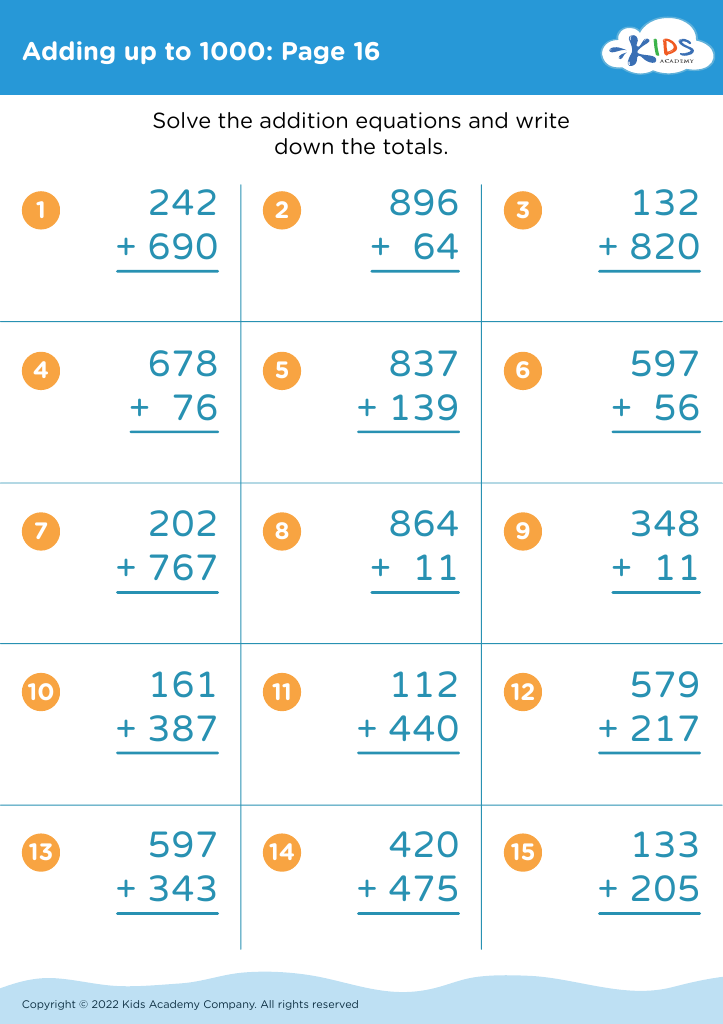
Enhance your child's counting and math skills with our engaging and educational Addition Worksheets, perfect for ages 3-8! Designed to make learning fun and effective, these high-quality printables focus on foundational math skills through colorful and interactive activities. Whether they are just starting to count or beginning to tackle more challenging additions, these worksheets cater to varying skill levels, ensuring a progressive learning experience. Boost your child’s confidence and proficiency in math with vibrant exercises that transform learning into an enjoyable adventure. Discover how our tailored worksheets can pave the way for math success today!
Favorites
With answer key
Interactive
Join Kids Academy for Free
Who is primarily going to use this learning content?








Parents and teachers should prioritize improving counting and addition skills for children aged 3-8 because these early numeracy skills form the foundation for future mathematical understanding and academic success. At this young age, children are in a critical developmental stage where their brains are highly receptive to learning new concepts. Mastery of counting and basic addition boosts cognitive development by enhancing memory, attention, and problem-solving skills.
Counting teaches children the concept of number sequencing, quantity, and the relationship between numbers. Addition builds on this foundation, allowing children to start understanding more complex mathematical operations. These skills have broad applications, from measuring ingredients while cooking to managing money—enabling better real-world decision-making.
Moreover, proficiency in early math skills is linked to higher self-esteem and confidence in academia. This can promote a positive attitude toward learning, encourage curiosity, and establish fruitful habits that benefit all areas of study, not just math. Providing strong foundational math skills minimizes the risk of developing math anxiety, which can hinder academic progress and limit career opportunities.
Engaging children in fun, age-appropriate counting and addition activities fosters a love for learning and can make math feel accessible and enjoyable. Establishing a strong math foundation is not merely about academic success; it's also about equipping children with essential life skills and preparing them for future challenges.








