Improves number recognition Addition Worksheets for Ages 3-8
3 filtered results
-
From - To
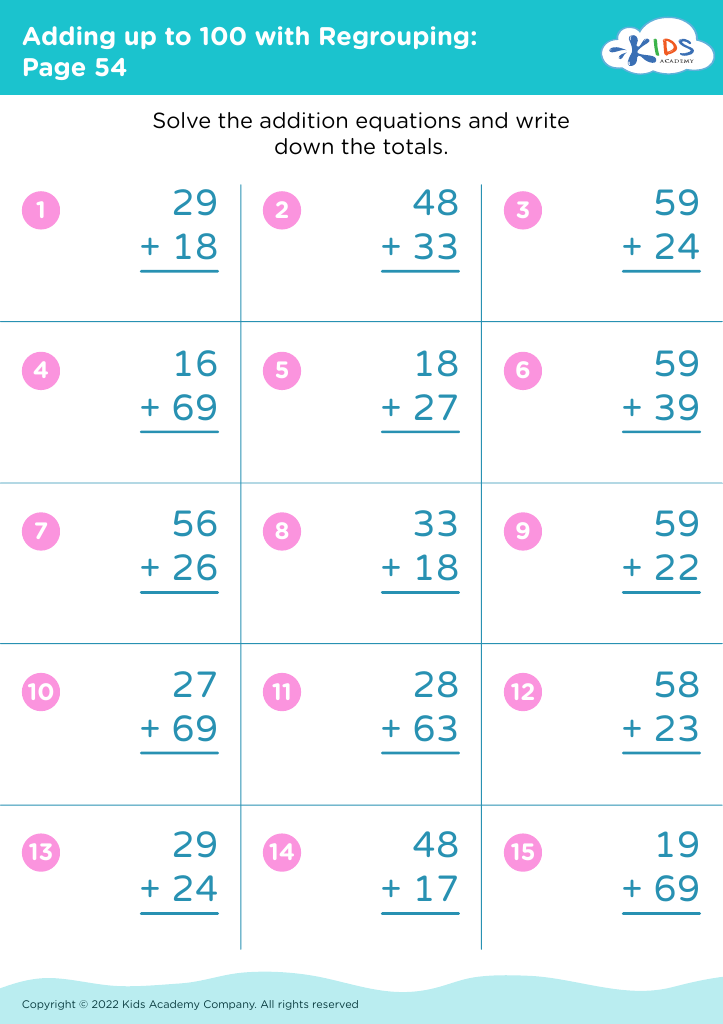
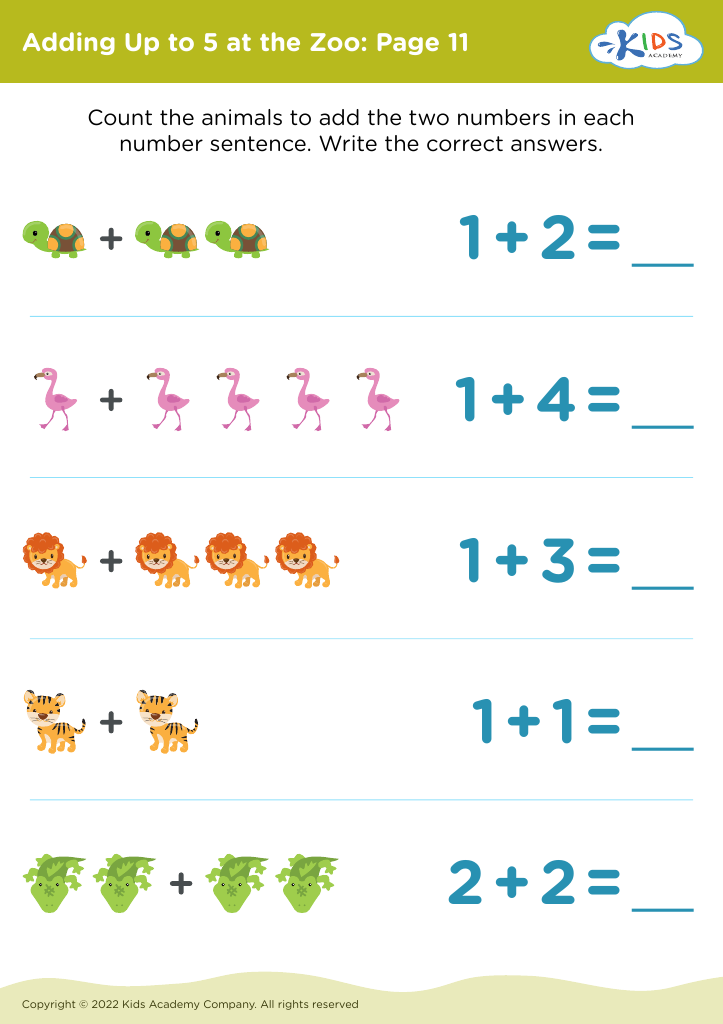
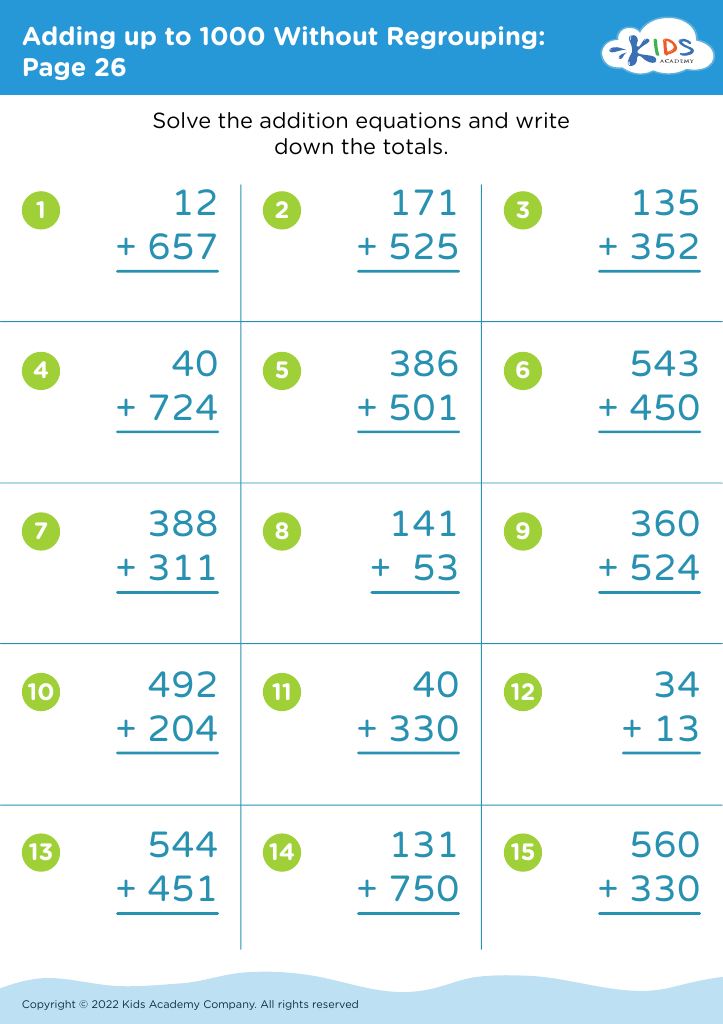
Discover our engaging "Improves Number Recognition Addition Worksheets" designed for children aged 3-8. These worksheets provide a fun and interactive way for young learners to enhance their number recognition skills while also practicing basic addition. Each activity is tailored to encourage critical thinking and allow for hands-on learning, ensuring that children build a solid foundation in math concepts. Featuring colorful visuals and age-appropriate exercises, our worksheets make learning enjoyable and effective. Empower your child’s math journey and watch them gain confidence as they master numbers and addition with these specially crafted resources. Print, engage, and inspire a love for learning today!






.jpg)

Improving number recognition and addition skills for children aged 3-8 is critical for several reasons. First, strong foundational math skills enhance cognitive development, allowing children to make connections between numbers and real-life applications. At this age, children are naturally curious and eager to learn; fostering these skills provides them with tools to understand their environment better.
Parents and teachers play vital roles in supporting this early math learning through engaging activities that make numbers relatable and fun. Introducing concepts of number recognition and addition through games, songs, and everyday situations creates a positive learning atmosphere. This early intervention helps prevent future struggles with more complex math topics by establishing a solid base.
Moreover, children who develop these skills early gain confidence, which translates to greater participation in classroom settings. Individual attention from parents and teachers can identify and reinforce unique learning styles, ensuring that every child progresses at their own pace.
Finally, strong early numeracy skills are linked to higher academic achievement overall. By prioritizing number recognition and addition during the formative years, parents and teachers are investing in children's long-term success, both in math and other subjects, ultimately preparing them for a bright educational future.








