Learn addition Addition Worksheets for Ages 3-8
3 filtered results
-
From - To
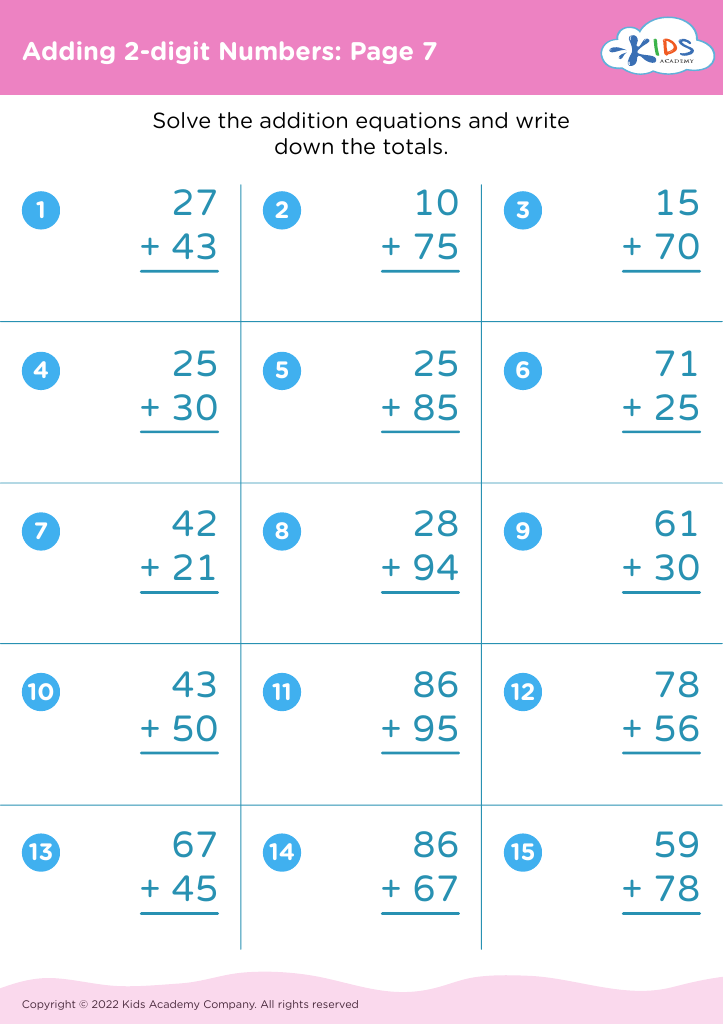
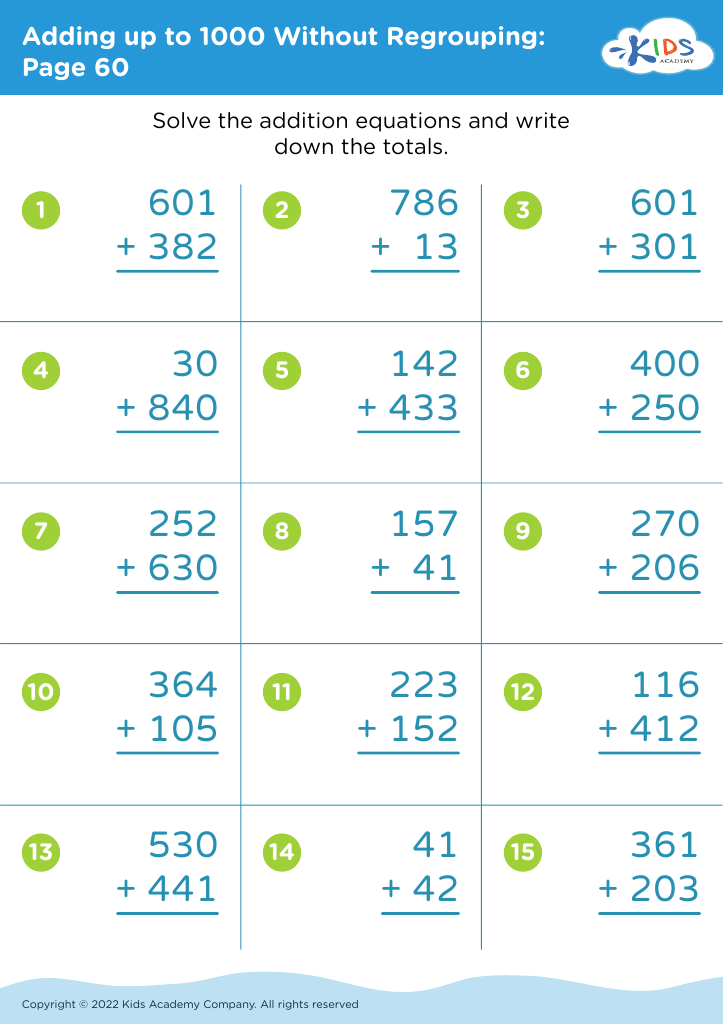
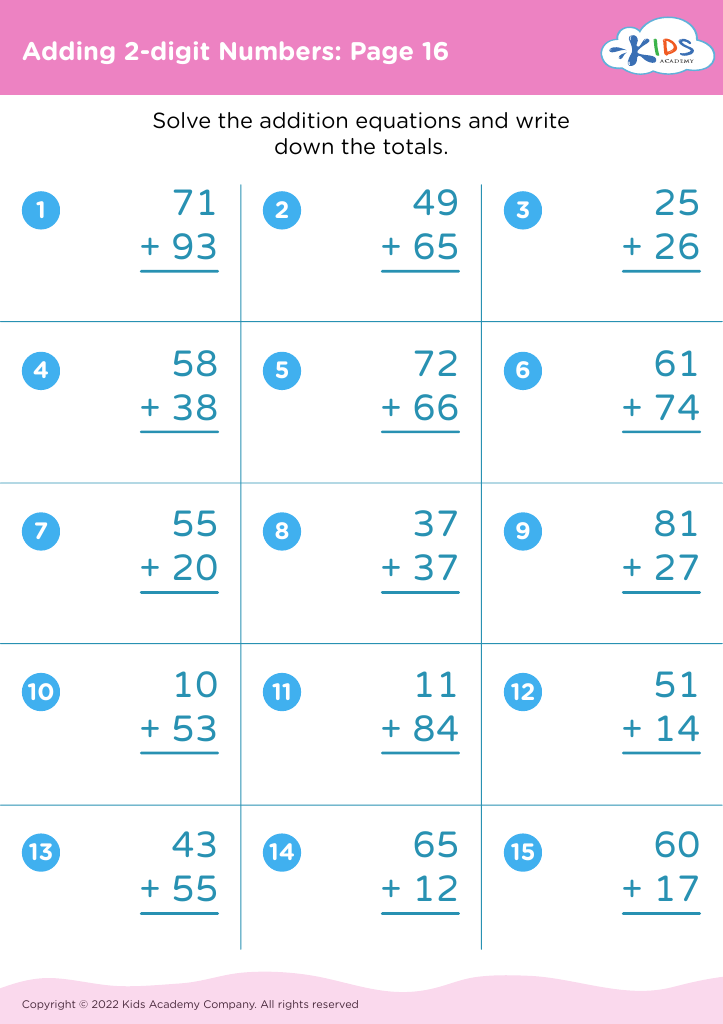
Discover the joy of learning with our engaging "Learn Addition Worksheets for Ages 3-8" at Kids Academy! Designed to make math fun and accessible, our worksheets guide young learners through the basics of addition with colorful illustrations and interactive activities. Perfect for preschool to early elementary students, these resources help develop essential math skills, enhance problem-solving abilities, and build a strong foundation for future learning. Tailored to support teachers and parents, our addition worksheets ensure that every child can learn at their own pace in an enjoyable and motivating way. Visit Kids Academy today and make math magical!








Parents and teachers should care about teaching addition to children aged 3-8 because it lays the essential foundation for all future mathematical learning. At a young age, kids are in a critical developmental stage, where they absorb new concepts with greater ease. Learning basic addition helps develop logical thinking and problem-solving skills, which are crucial not only in mathematics but in everyday life.
Early math skills predict later academic success, even in subjects beyond math because they enhance cognitive development and ability to follow instructions. Addition concepts also teach children about numbers and quantities, often using tangible objects, which strengthens their number sense and makes abstract concepts more concrete.
Moreover, introducing addition in engaging and fun ways can spark a love for learning and reduce the anxiety some children feel about mathematics. Activities like counting games, or simple puzzles make learning enjoyable and memorable.
Parents and teachers play pivotal roles in nurturing these early skills. Encouraging consistent practice at home and in the classroom builds confidence and competence, providing children with the tools to tackle more complex mathematical concepts later. Overall, mastery of early addition aids in developing a well-rounded, confident, and capable learner.








