Practice subtraction Addition Worksheets for Ages 3-8
5 filtered results
-
From - To
Welcome to our engaging "Practice Subtraction and Addition Worksheets" for children ages 3-8! Designed to enhance early math skills, these worksheets provide fun, interactive exercises that promote number recognition, basic addition, and subtraction proficiency. Perfect for home or classroom use, they cater to various learning levels with colorful illustrations and easy-to-follow instructions. Watch as your little learners build confidence in their math abilities while mastering essential concepts. With a variety of activities that incorporate games and puzzles, our worksheets make learning subtraction and addition enjoyable. Dive into our collection and give your child the tools they need for math success!
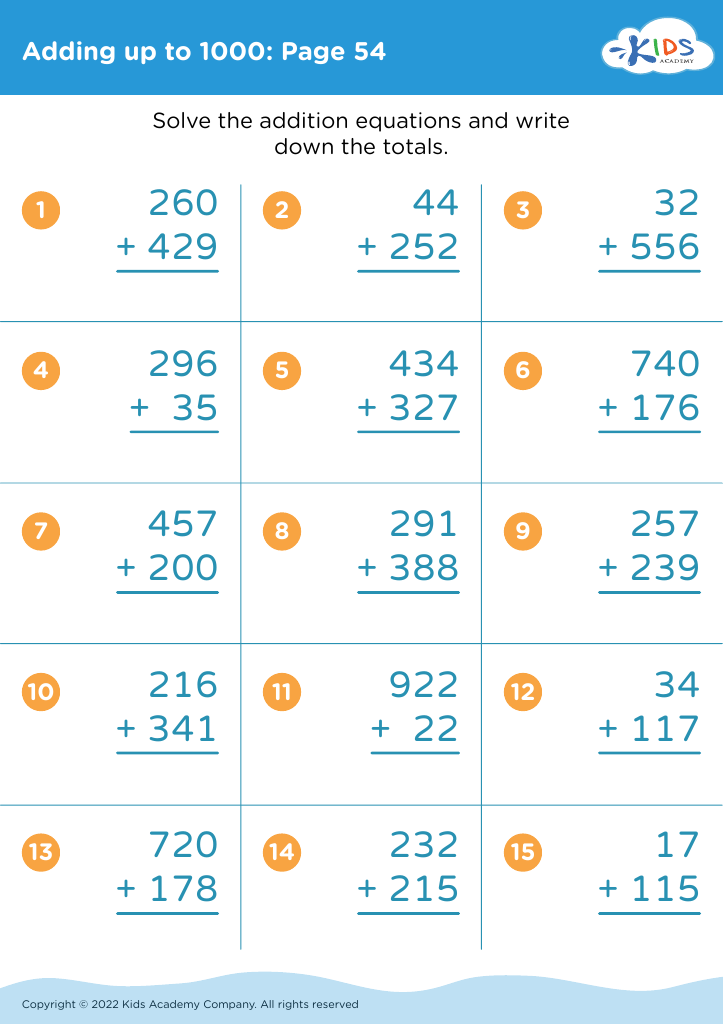
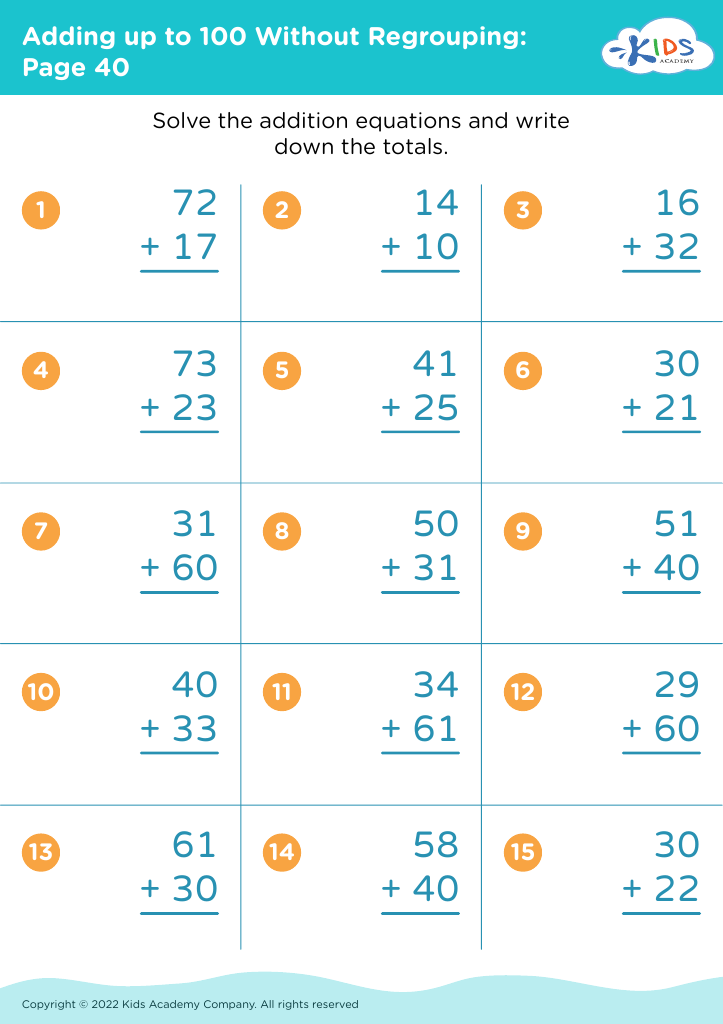
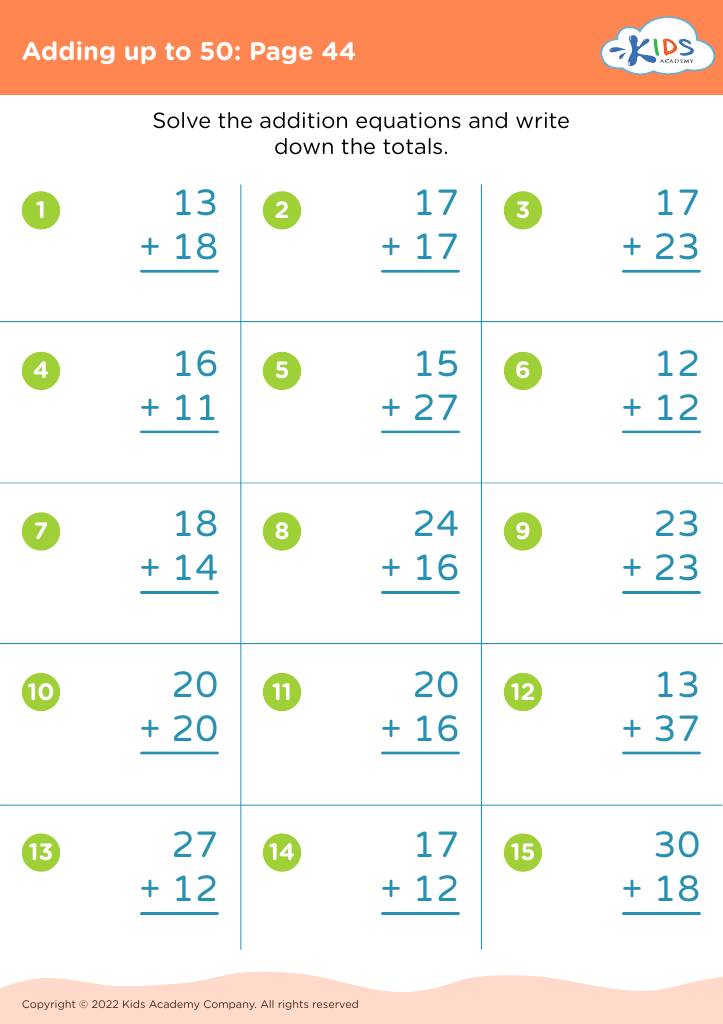
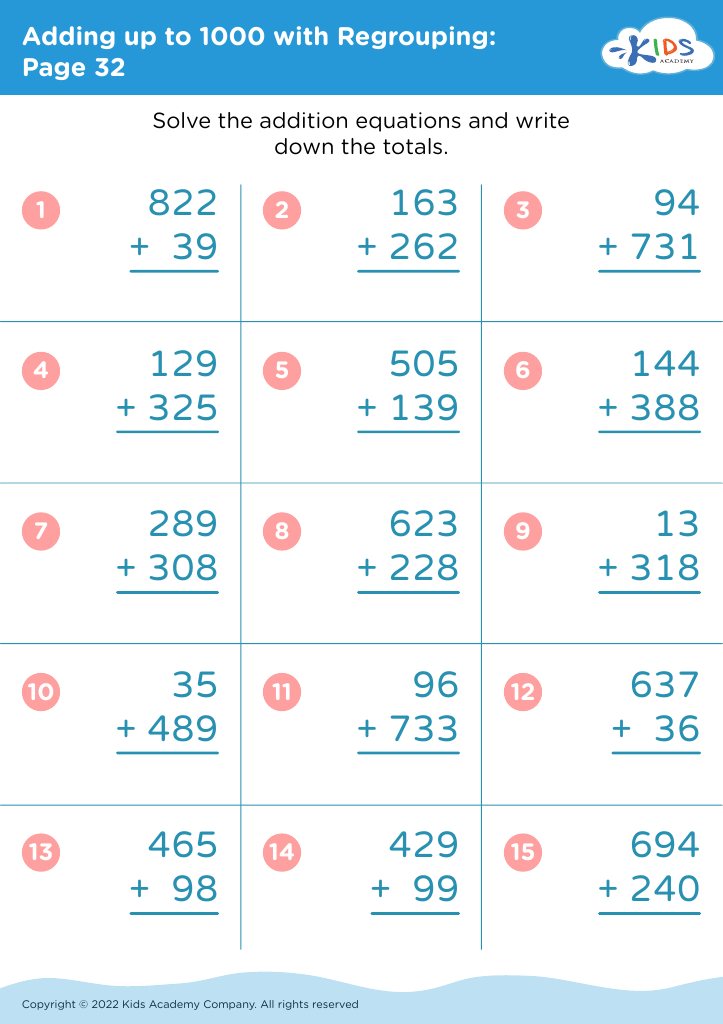
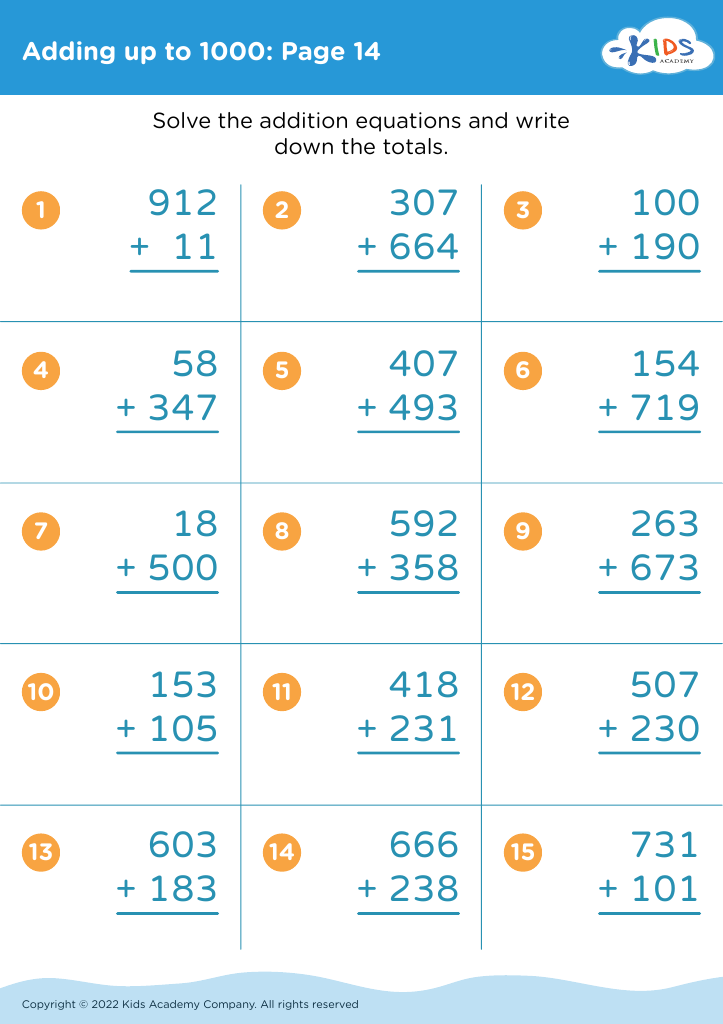








Practice in addition and subtraction for children ages 3-8 is vital for several reasons. First, these foundational mathematical skills are critical for overall cognitive development. As young learners engage in these basic operations, they develop important problem-solving abilities that extend beyond math, fostering logical reasoning skills applicable in everyday situations.
Second, early mastery of addition and subtraction builds confidence. When children can successfully solve problems, they gain a sense of achievement, motivating them to tackle more complex math tasks as they grow. This confidence can also positively influence their attitude toward learning in general.
Additionally, practicing these operations can enhance language skills as children learn to articulate their thought processes and engage in discussions about numbers. This promotion of communication skills is essential for academic success.
Furthermore, consistent practice helps solidify number sense, allowing children to understand concepts such as quantity, relationship, and spatial awareness, which are essential for future mathematical learning.
Lastly, integrating fun and engaging activities can also strengthen parent-child and teacher-student relationships, creating a supportive environment. Overall, prioritizing the practice of addition and subtraction during the crucial ages of 3-8 lays a strong foundation for a lifelong appreciation of mathematics and learning.








