Sea creatures identification Addition Worksheets for Ages 3-8
3 filtered results
-
From - To
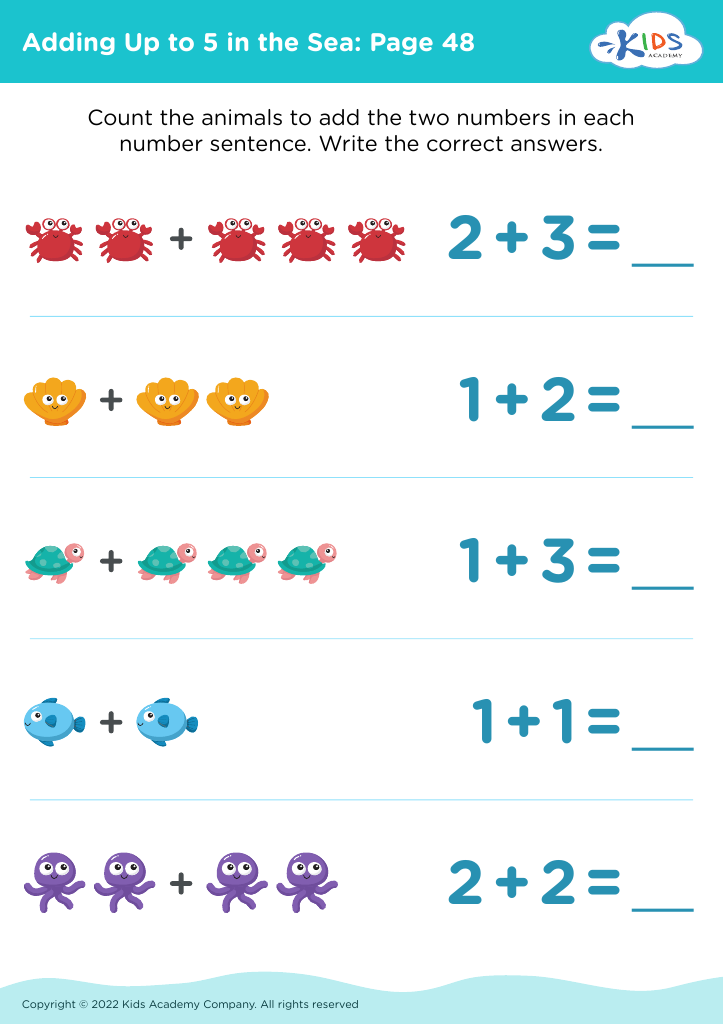
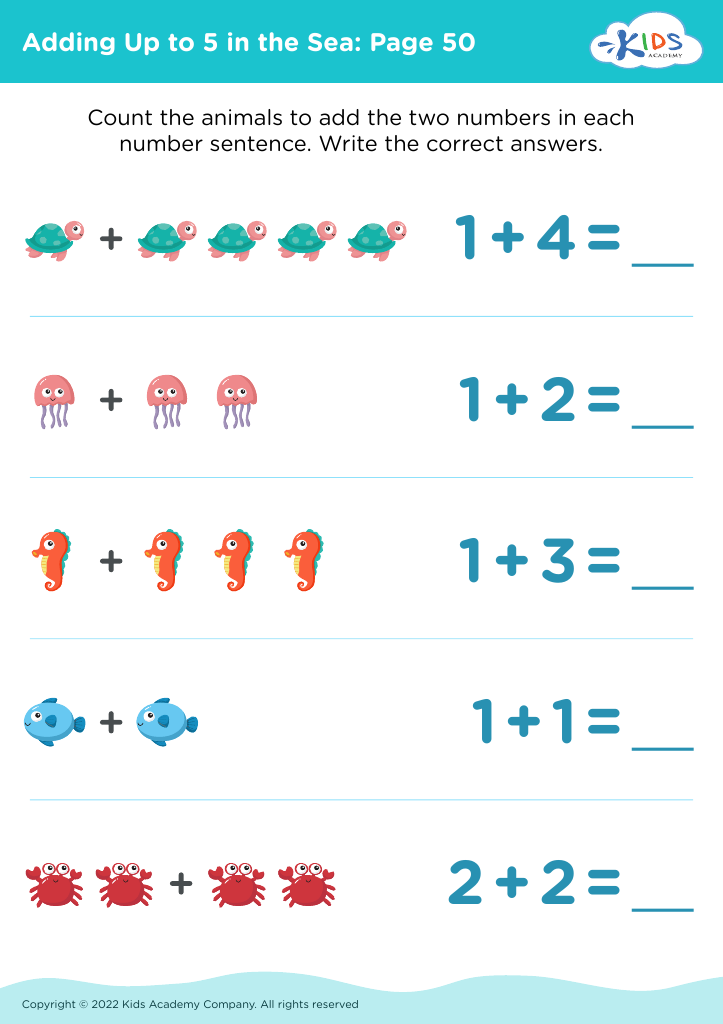
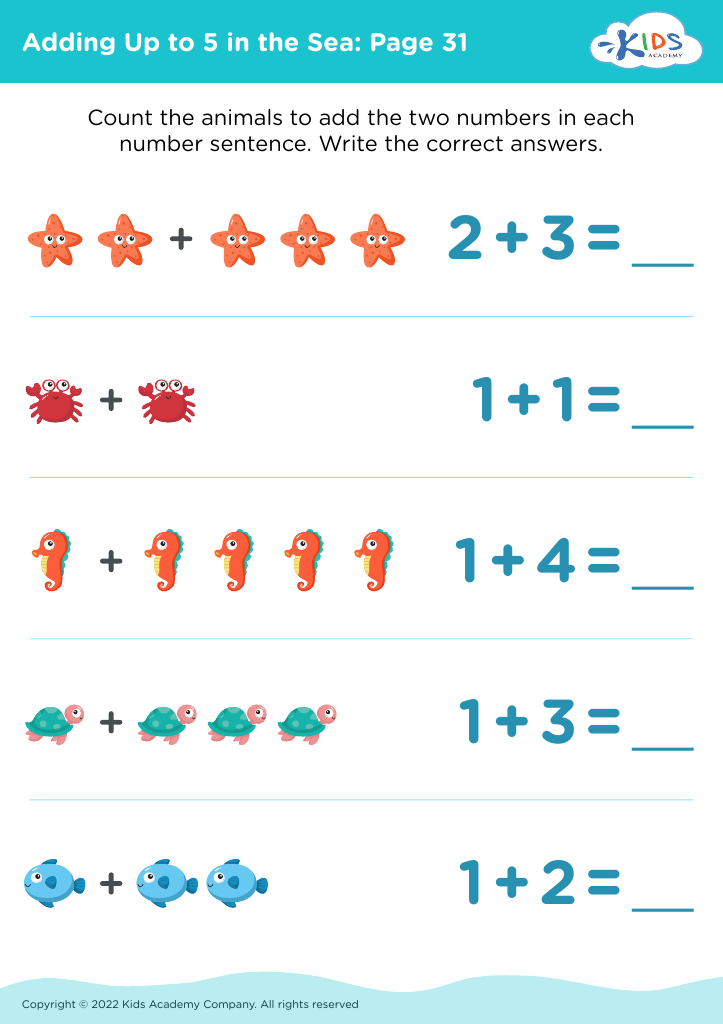
Discover the joy of learning with our Sea Creatures Identification Addition Worksheets designed specifically for children aged 3-8! These engaging worksheets combine fun ocean-themed imagery with essential math skills, helping young learners practice addition while exploring fascinating marine life. Each worksheet encourages identification and counting of various sea creatures, making math both educational and enjoyable. Perfect for preschoolers and early elementary students, our resources promote cognitive development, foster a love for learning, and enhance children’s ability to recognize marine animals. Dive into a world of knowledge and fun—download our Sea Creatures Addition Worksheets today and make math an exciting adventure!







Understanding and identifying sea creatures is vital for children aged 3-8 for several reasons, making it crucial for parents and teachers to engage in this topic. Firstly, early exposure to marine life fosters curiosity about the natural world. By exploring oceanic creatures, children can develop an appreciation for biodiversity and the interconnectedness of ecosystems. This knowledge promotes environmental stewardship from a young age, encouraging them to become responsible caretakers of the planet.
Additionally, identifying sea creatures can enhance language and cognitive skills. Through activities like naming different species and discussing their features, children expand their vocabulary and critical thinking abilities. Simple identification games can serve as effective teaching tools, making learning interactive and enjoyable.
Moreover, sea creature identification promotes social skills as children collaborate with peers in group activities or discussions, allowing them to share discoveries and express ideas. These experiences can also inspire creativity, whether through art projects, storytelling, or imaginative play related to oceanic themes.
Ultimately, parents and teachers who emphasize sea creatures' identification not only educate children about an essential aspect of our planet but also help cultivate a sense of wonder, empathy, and responsibility toward our environment.








