
Sequencing Skills Addition Worksheets for Ages 3-8
3 filtered results
Difficulty Level
Grade
Age
-
From - To
Subject
Activity
Standards
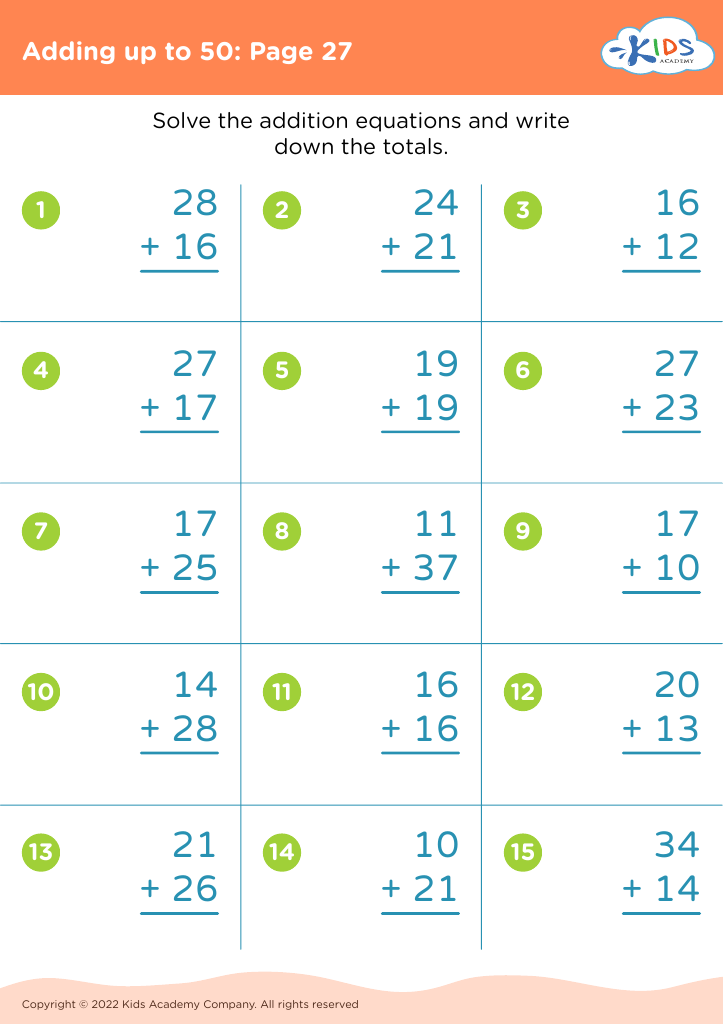
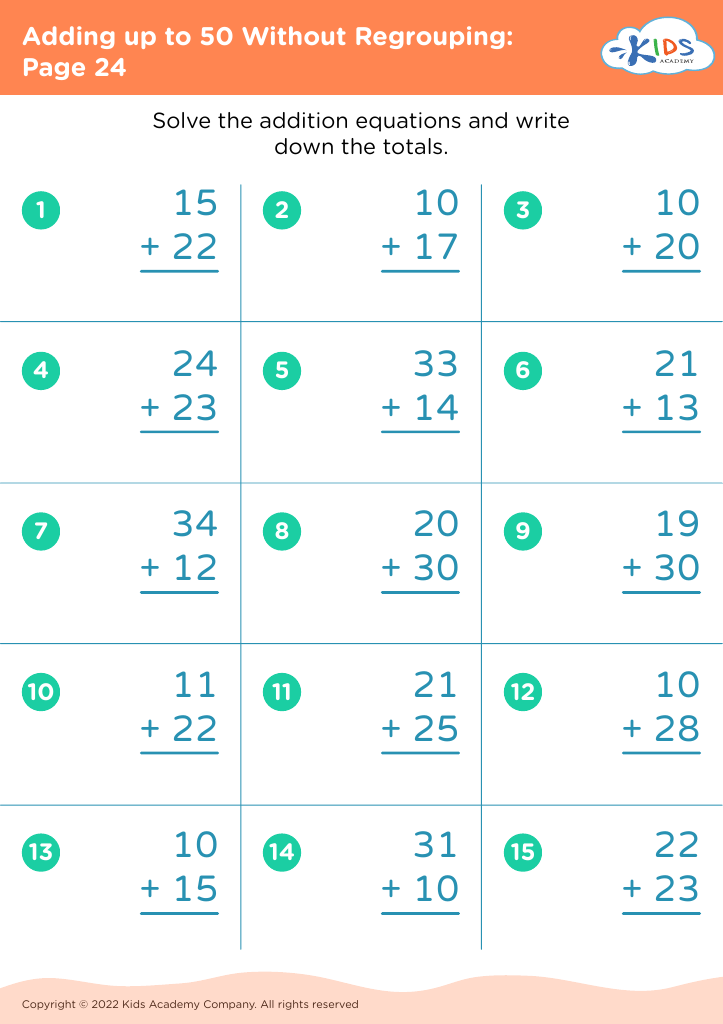
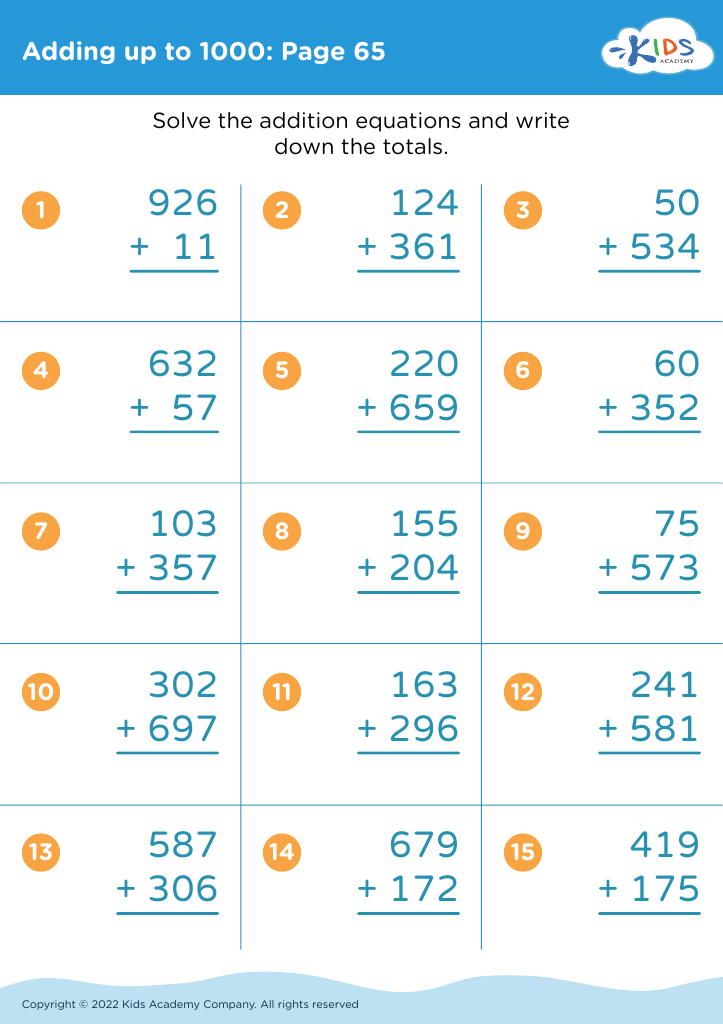
Enhance your child's mathematical abilities with our Sequencing Skills Addition Worksheets for Ages 3-8. Specially crafted to promote logical thinking and number sense, these engaging worksheets guide young learners through the importance of sequence in addition problems. From simple number sequences to more complex arithmetic patterns, each worksheet offers colorful illustrations and straightforward tasks to keep your child motivated. Ideal for both classroom use and home practice, these worksheets not only improve addition skills but also boost cognitive development. Give your child the advantage of strong foundational math skills with our fun and educational sequencing addition worksheets.
Favorites
With answer key
Interactive
Join Kids Academy for Free
Who is primarily going to use this learning content?


.jpg)





Sequencing skills are fundamental for the cognitive and social development of children, especially those aged 3-8. These skills refer to the ability to understand and arrange events, actions, or ideas in a specific order. This capability is crucial because it underpins numerous academic and everyday activities.
In early mathematics, addition is a key component, and sequencing aids in grasping the concept of number order and operations. For example, to add 2 + 3, a child must understand the sequence of counting from 2 up to 3 more. It teaches children logical thinking and helps them recognize that certain actions follow others in a predictable pattern.
Beyond math, sequencing skills contribute significantly to language development and reading comprehension. Storytelling, for instance, requires understanding of plot progression—beginning, middle, and end. This narrative sense enhances both expressive and receptive communication skills.
Moreover, daily routines and tasks—like getting dressed or following instructions—rely heavily on sequencing. Fostering these skills in early childhood supports independence, attentiveness, and problem-solving capabilities.
Teachers and parents who nurture sequencing skills through playful activities, reading, and guided interactions help lay a strong foundation for their child’s educational journey and personal growth. Ignoring this aspect can lead to gaps in learning that might affect future academic performance and daily functioning. Thus, making effort to enhance these skills is essential for early childhood development.








