
Spatial awareness Addition Worksheets for Ages 3-8
5 filtered results
Difficulty Level
Grade
Age
-
From - To
Subject
Activity
Standards
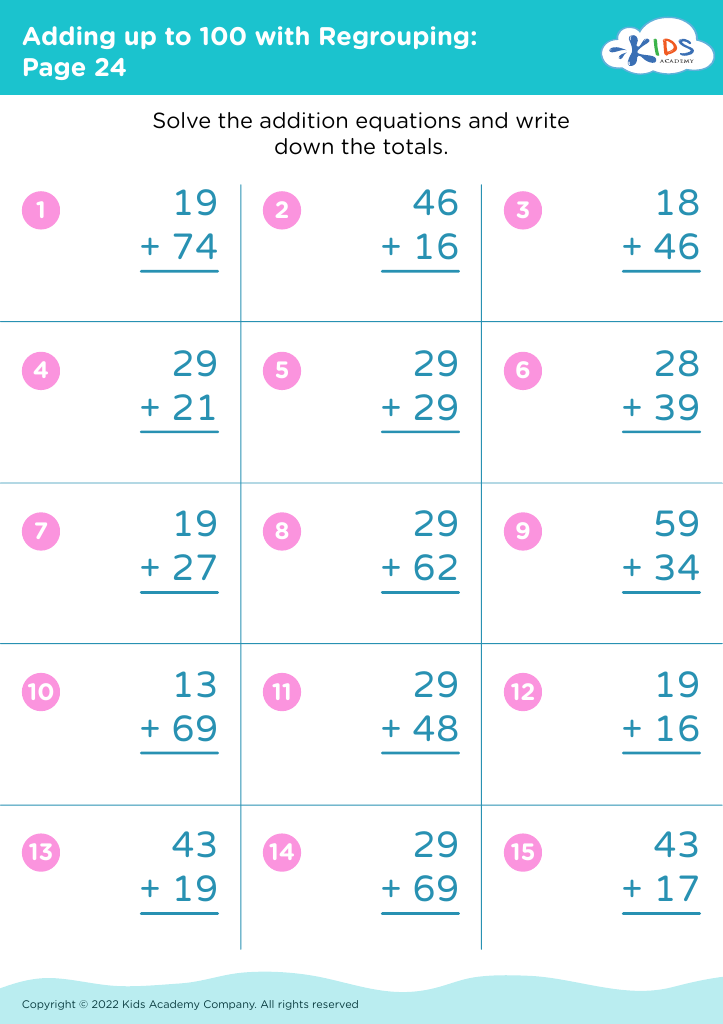
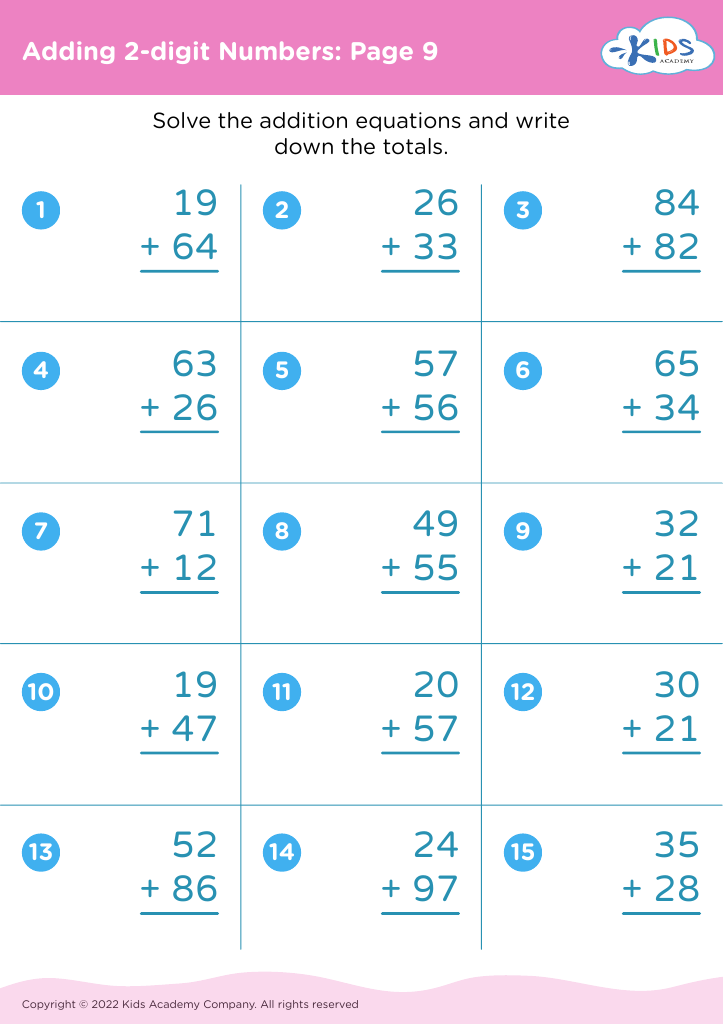
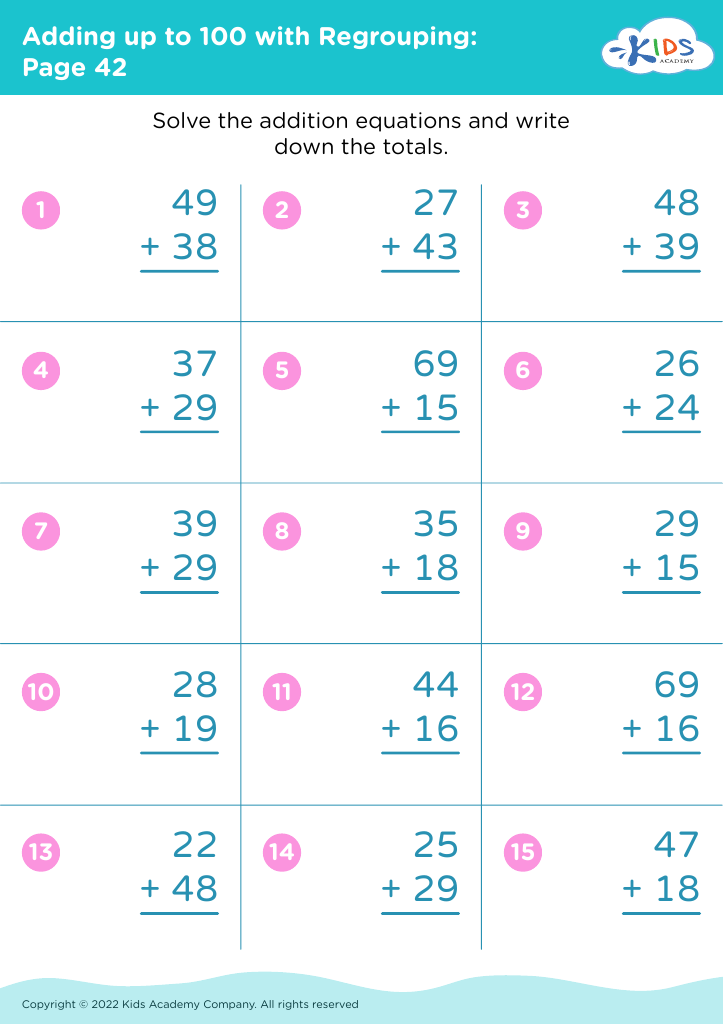
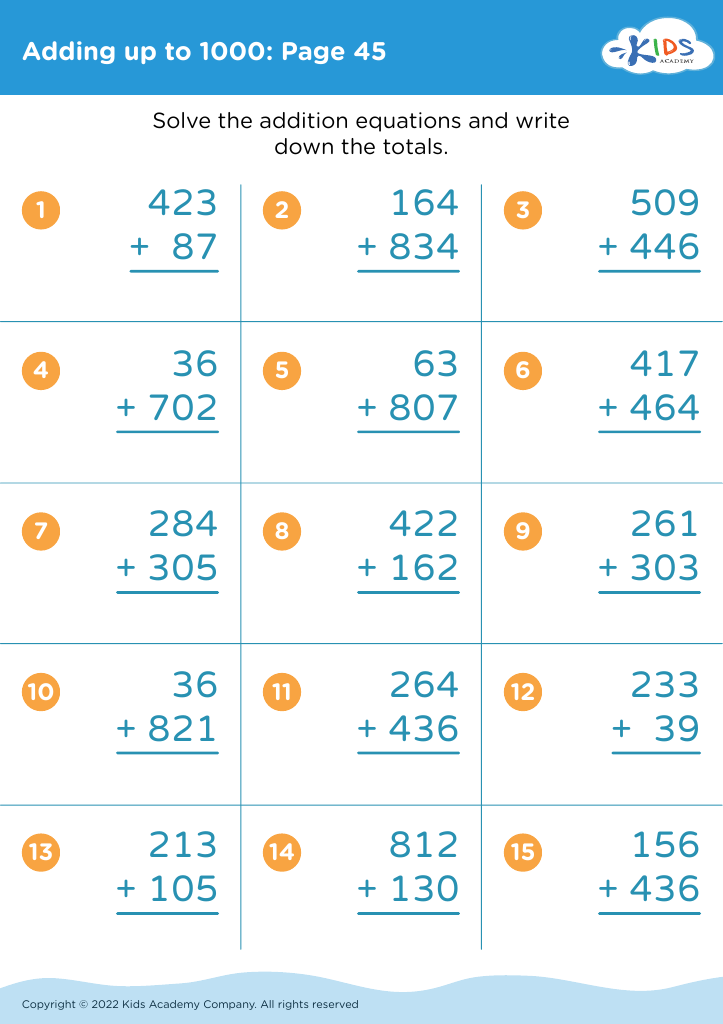
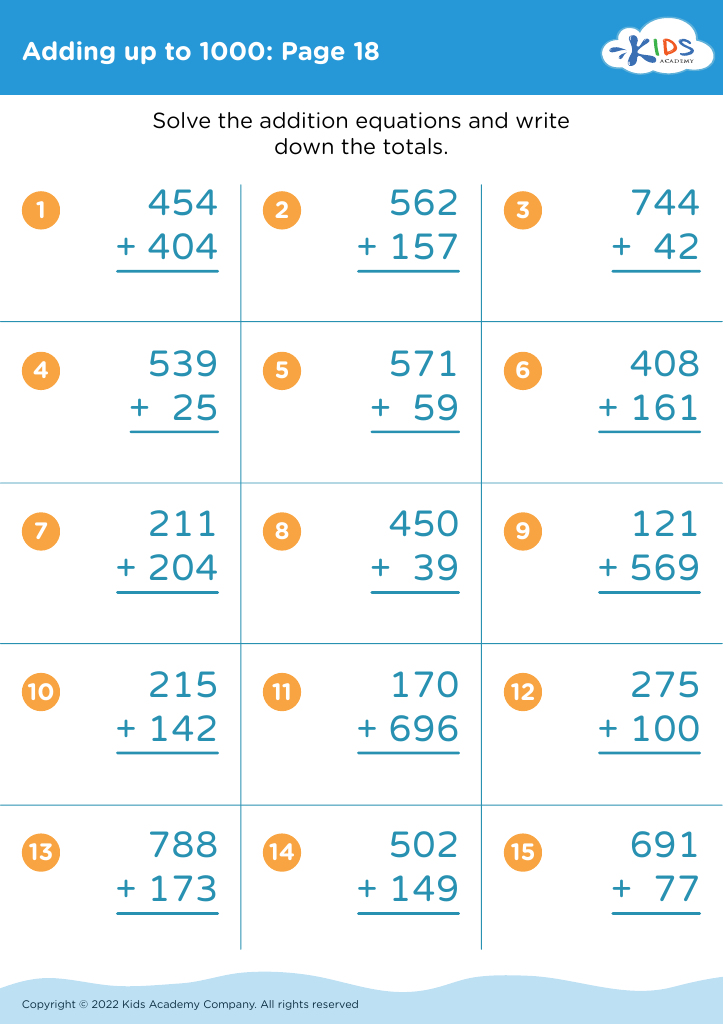
Enhance your child's math skills with our engaging Spatial Awareness Addition Worksheets for ages 3-8! Designed to boost both addition proficiency and geometric understanding, these worksheets provide young learners with fun exercises that intertwine math and spatial recognition. Children will explore numbers through interactive activities, developing a strong foundation in addition while simultaneously enhancing their ability to visualize and manipulate shapes. Perfect for parents and educators, our resources cater to various learning styles, ensuring a playful and effective learning experience. Start your child's journey to math mastery today with our comprehensive, easy-to-use worksheets that make learning a delightful adventure!
Favorites
With answer key
Interactive
Join Kids Academy for Free
Who is primarily going to use this learning content?






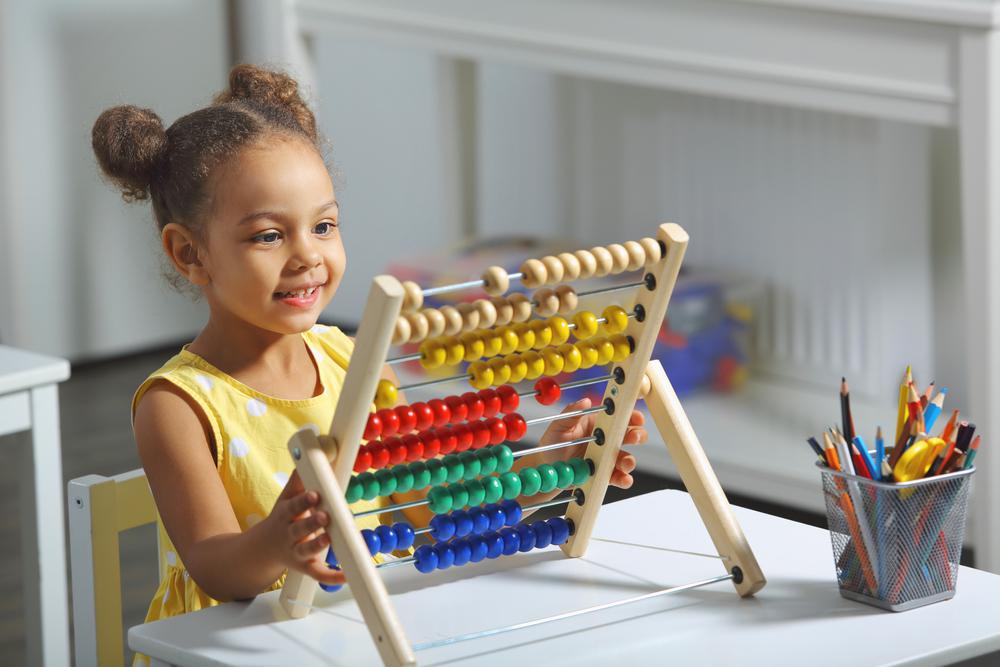

Spatial awareness is a crucial cognitive skill that significantly impacts a child’s overall development, particularly in mathematics and problem-solving. For ages 3-8, children are in a critical period of learning where foundational skills are built, making the understanding of spatial relationships vital.
Parents and teachers should prioritize spatial awareness as it lays the groundwork for essential skills such as addition. Children learn to visualize how objects relate to one another in space, which can enhance their ability to manipulate numbers. For instance, recognizing that 3 + 2 is equivalent to counting out five objects can reinforce both numerical and spatial concepts.
Moreover, fostering spatial awareness aids in various developmental areas, including fine motor skills, critical thinking, and language development. Activities that promote spatial reasoning—like puzzles, block building, and mapping games—encourage hands-on learning experiences, making math engaging and tangible for young learners.
Ultimately, by nurturing spatial awareness, parents and teachers are setting children up for future success in mathematics and related fields. This investment not only boosts early learning but also instills lifelong critical thinking and problem-solving skills, contributing to the child’s confidence and enjoyment in learning.








