Filters

20 filtered results

Clear all filters
Favorites
With answer key
Interactive

20 filtered results

Difficulty Level

Grade


Explore our engaging "Understand Fractions Addition Worksheets" designed specifically for children ages 3-8! These interactive worksheets aim to simplify the concept of fractions through fun and age-appropriate activities. Young learners will practice adding fractions using visual aids, ensuring they grasp foundational math skills while enjoying colorful illustrations. Each worksheet encourages critical thinking and helps build confidence in mathematical abilities. Whether at home or in the classroom, these resources are perfect for introducing young minds to the exciting world of fractions. Start your child’s journey toward math proficiency and make learning fractions a delightful experience today!
Check out this FREE Trial Lesson on Addition for age 3-8!

L

Favorites
With answer key
Interactive
  • 3-8
  • Understand fractions
  • Addition
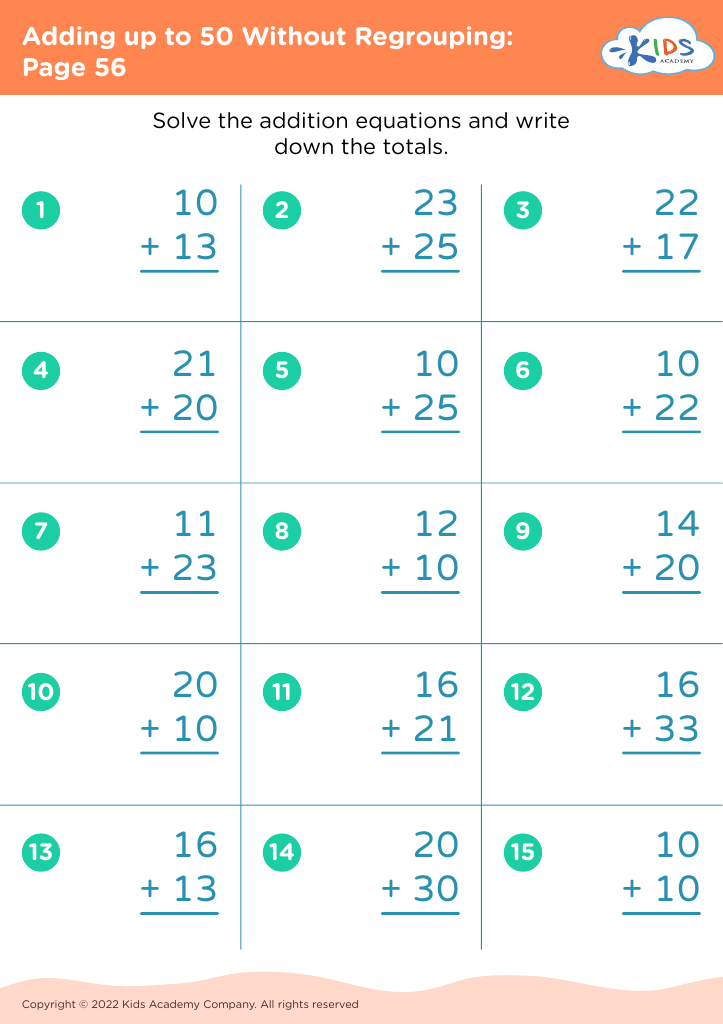
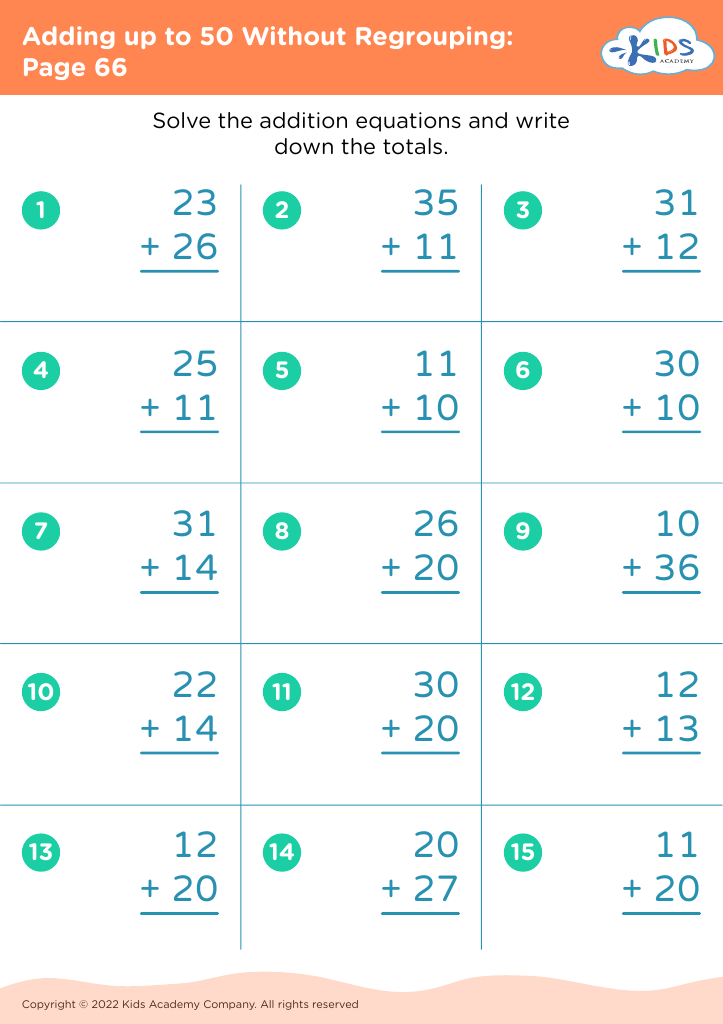
Adding up to 50 Without Regrouping: Page 66
Worksheet
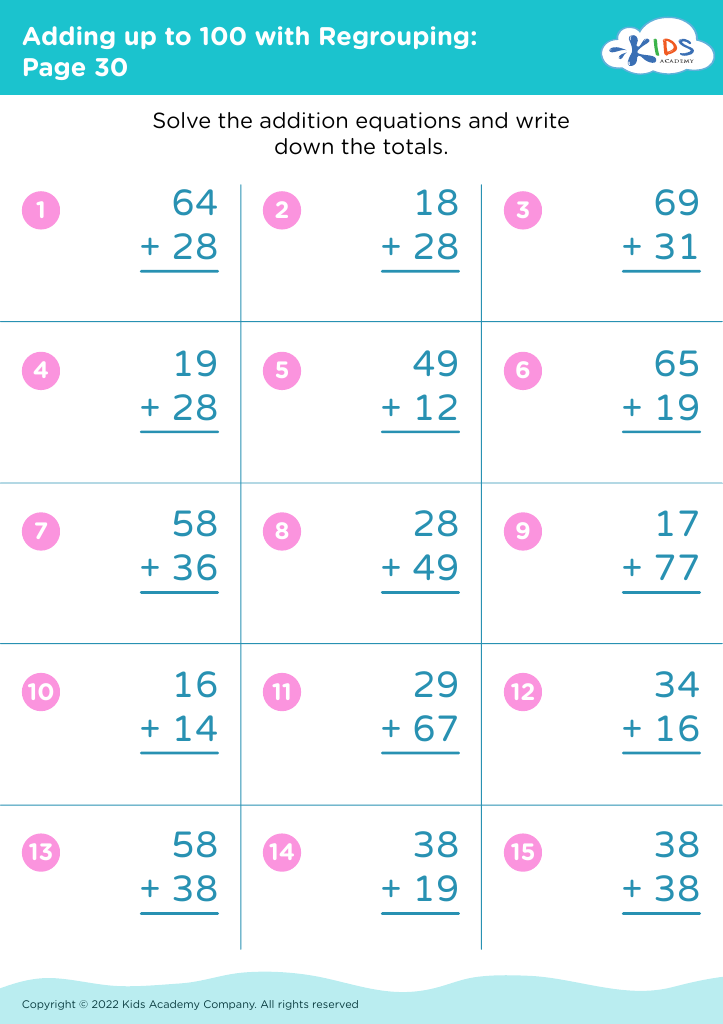
Adding up to 100 with Regrouping: Page 30
Worksheet
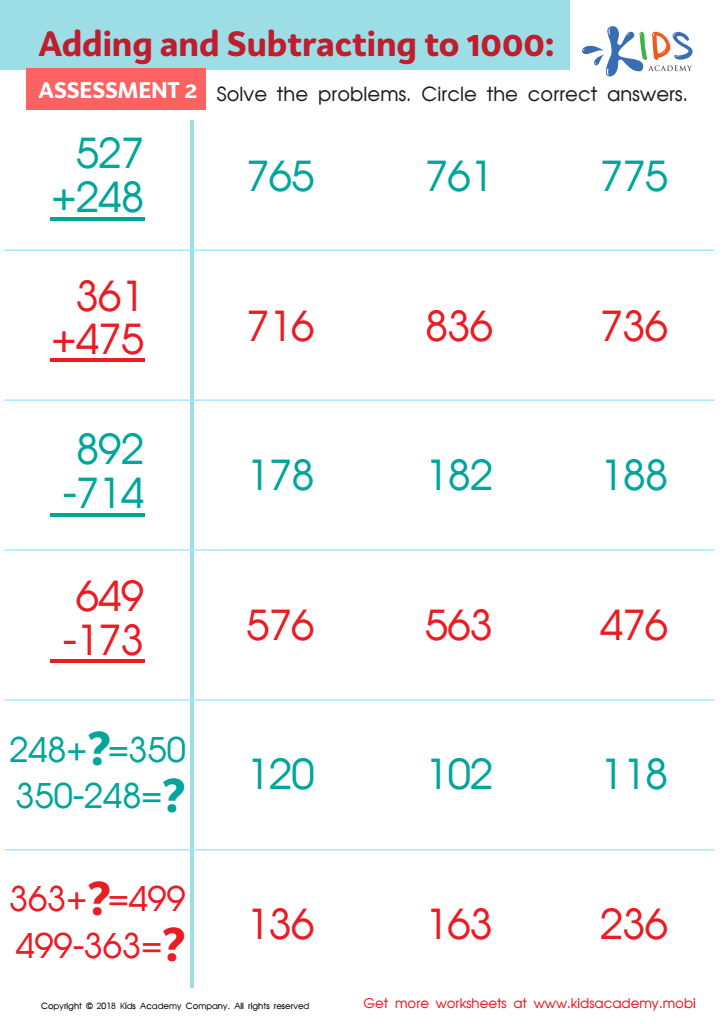
Adding and Subtracting to 1 Worksheet: Assessment 2

Adding and Subtracting to 1 Worksheet: Assessment 2

Test your child's addition and subtraction of 3-digit numbers with this assessment worksheet! They'll practice regrouping and pre-algebra skills to show their expertise. Have them work through the page and circle their answers, then see how many they got right to check their understanding and progress.
Adding and Subtracting to 1 Worksheet: Assessment 2
Worksheet
Adding up to 50 Without Regrouping: Page 56
Worksheet
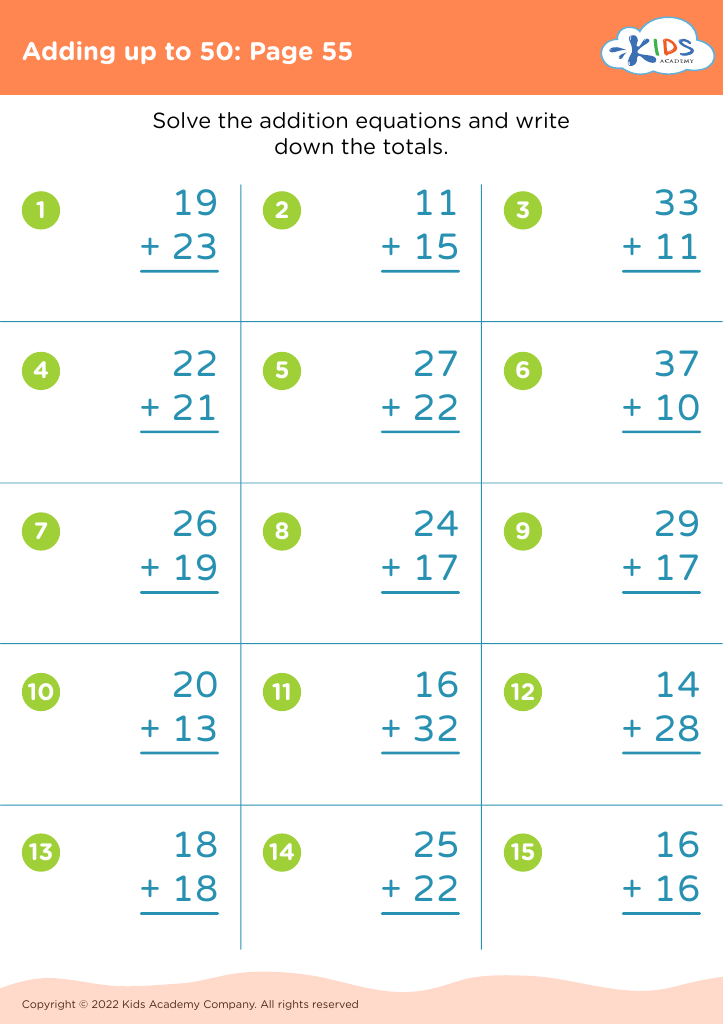
Adding up to 50: Page 55

Adding up to 50: Page 55

Adding up to 50: Page 55
Worksheet
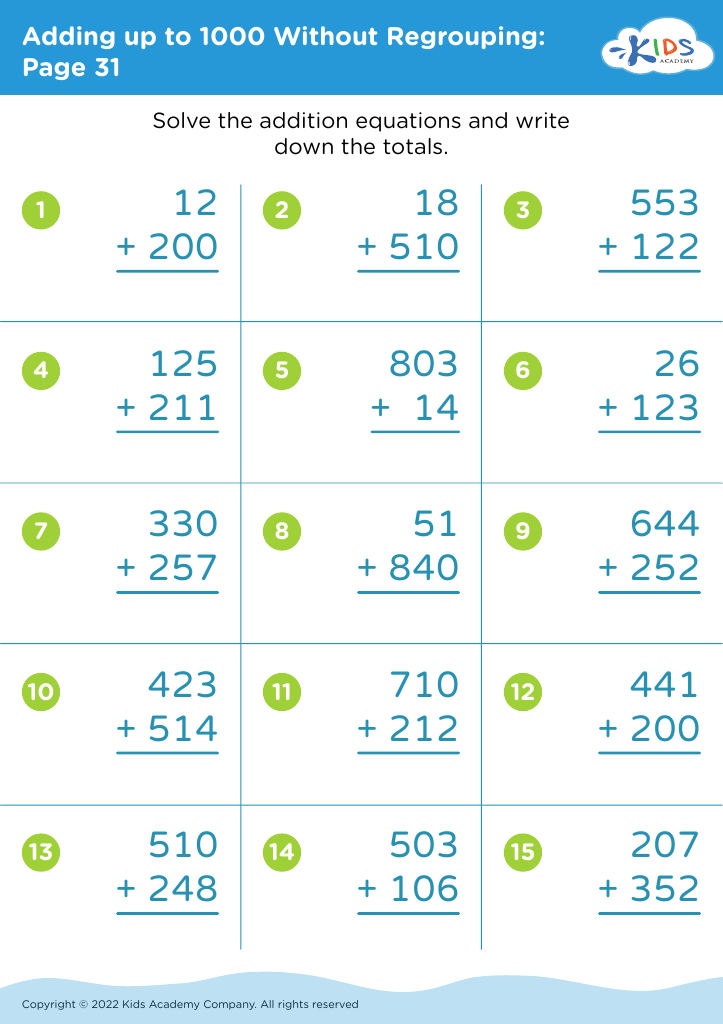
Adding up to 1000 Without Regrouping: Page 31
Worksheet
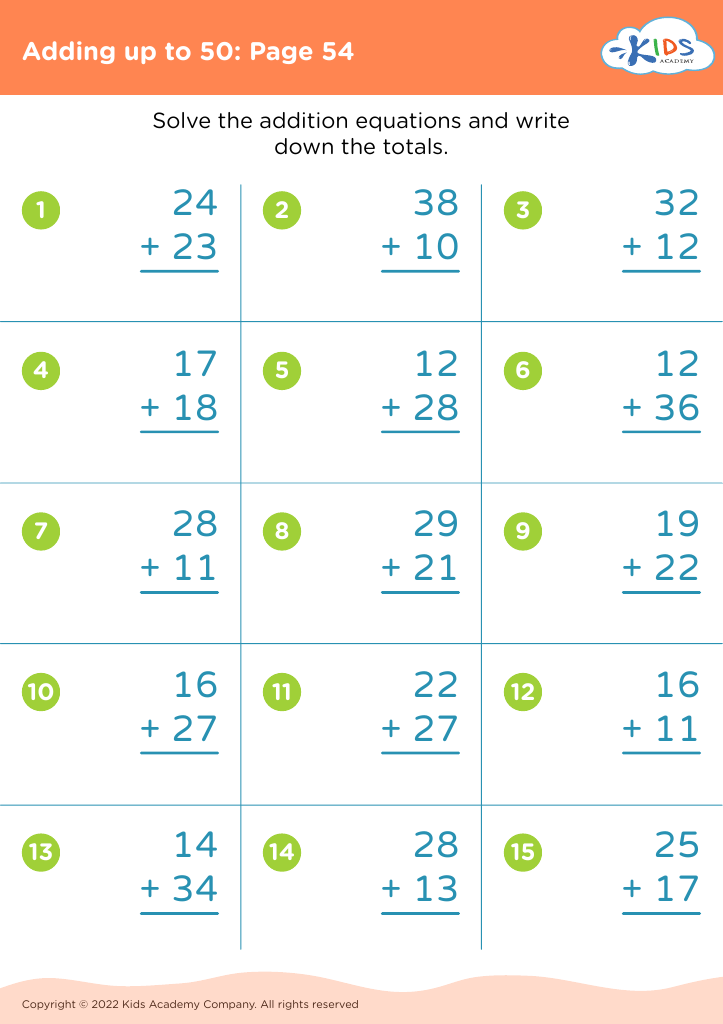
Adding up to 50: Page 54

Adding up to 50: Page 54

Adding up to 50: Page 54
Worksheet
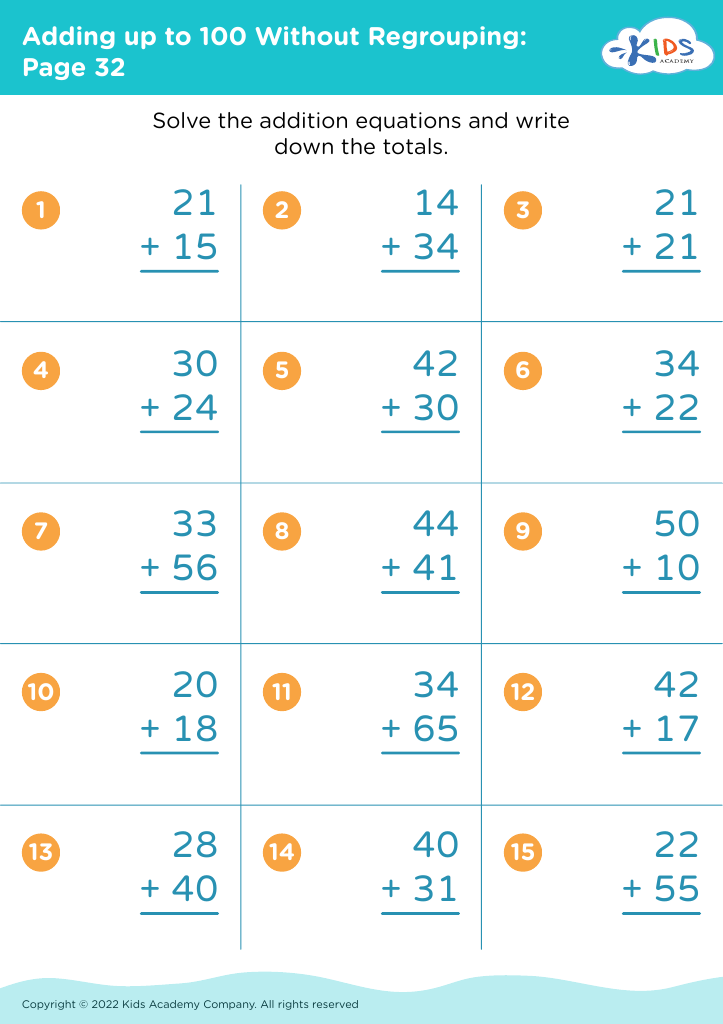
Adding up to 100 Without Regrouping: Page 32
Worksheet
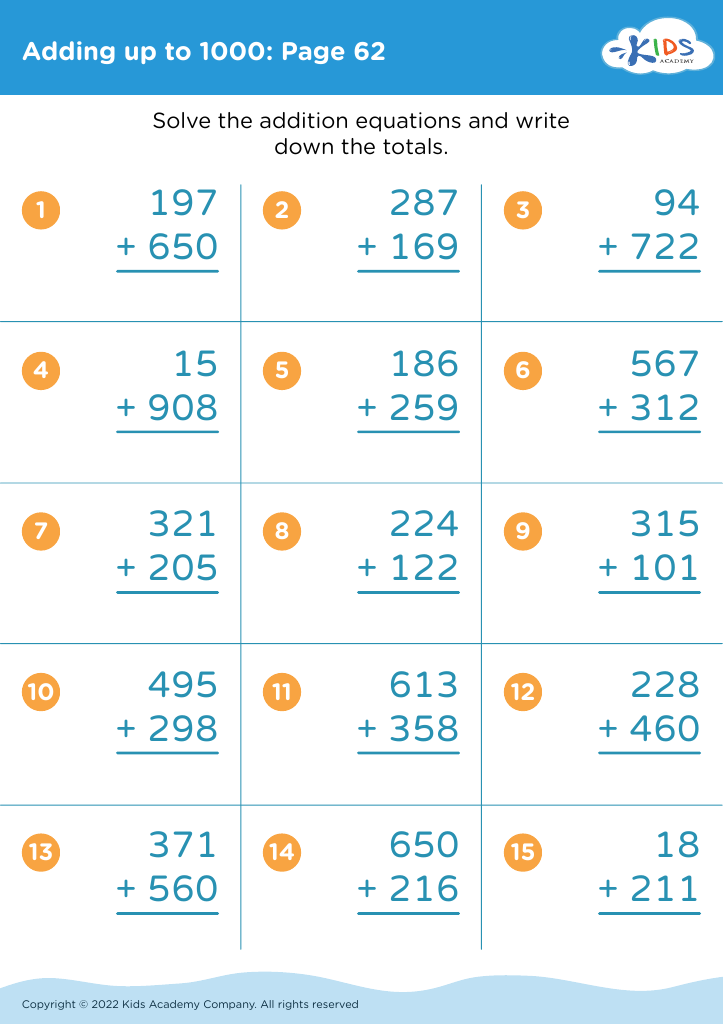
Adding up to 1000: Page 62

Adding up to 1000: Page 62

Adding up to 1000: Page 62
Worksheet
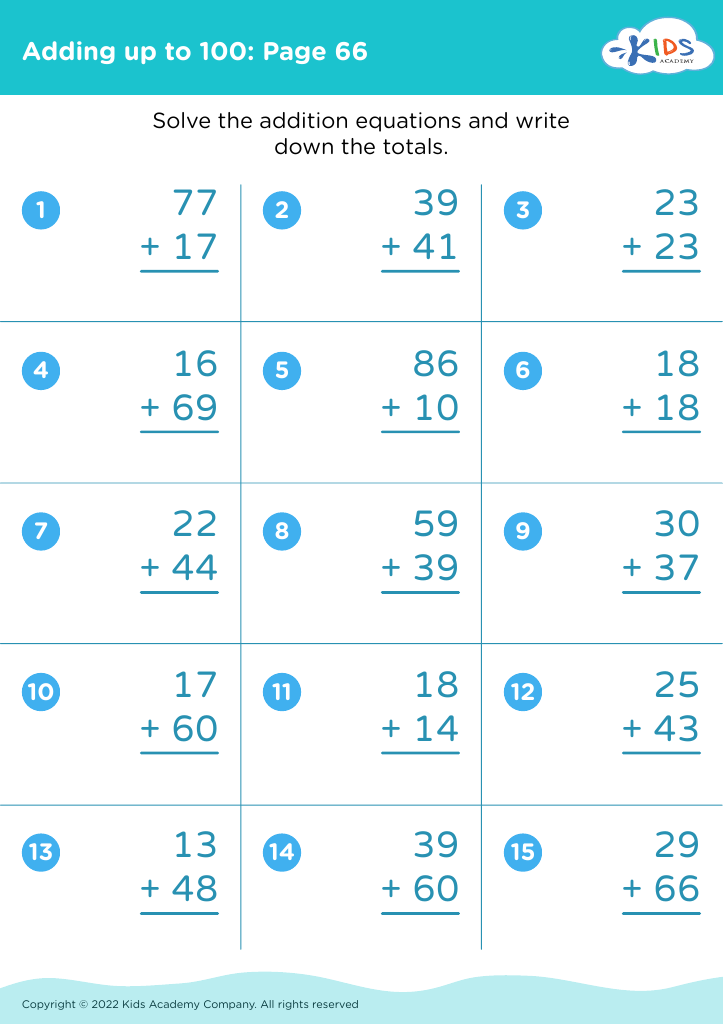
Adding up to 100: Page 66

Adding up to 100: Page 66

Adding up to 100: Page 66
Worksheet
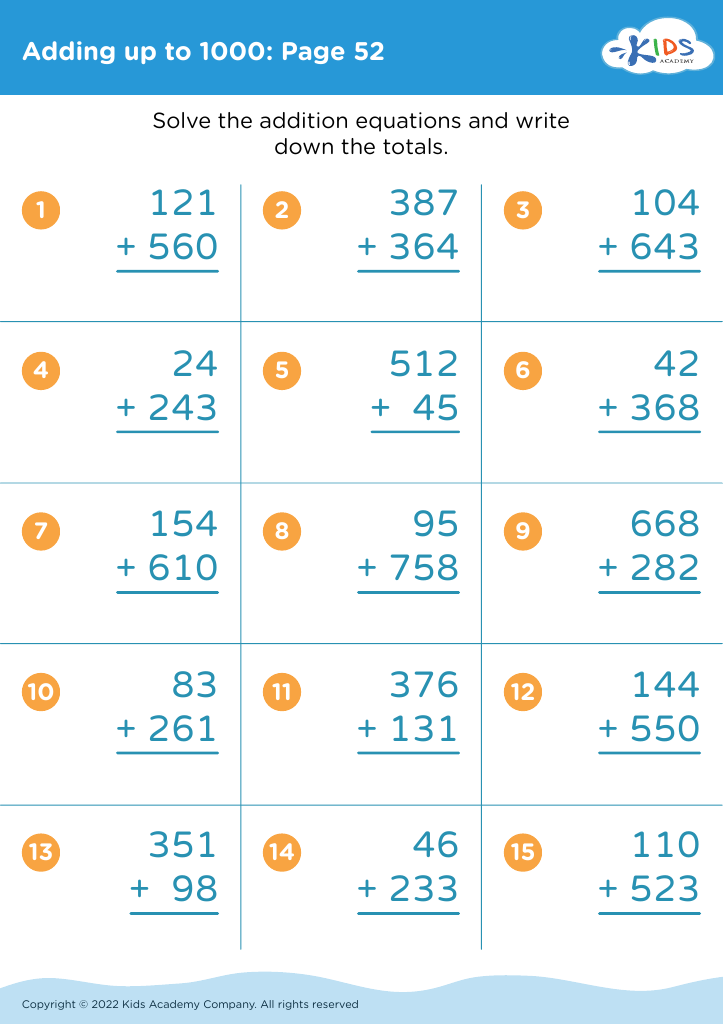
Adding up to 1000: Page 52

Adding up to 1000: Page 52

Adding up to 1000: Page 52
Worksheet
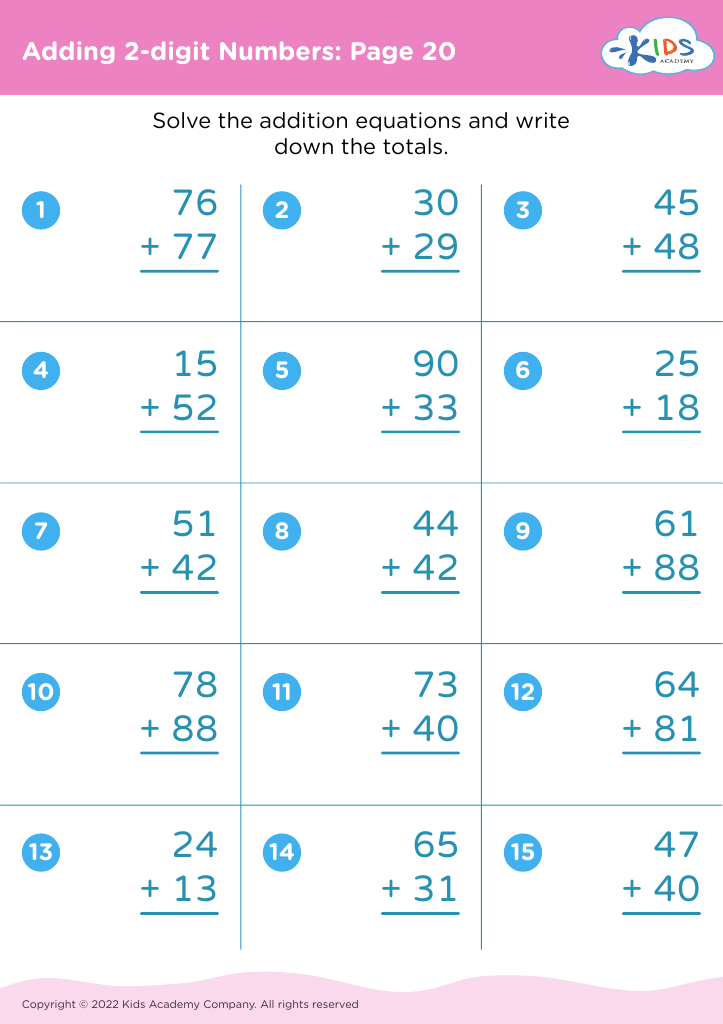
Adding 2-digit Numbers: Page 20

Adding 2-digit Numbers: Page 20

Adding 2-digit Numbers: Page 20
Worksheet
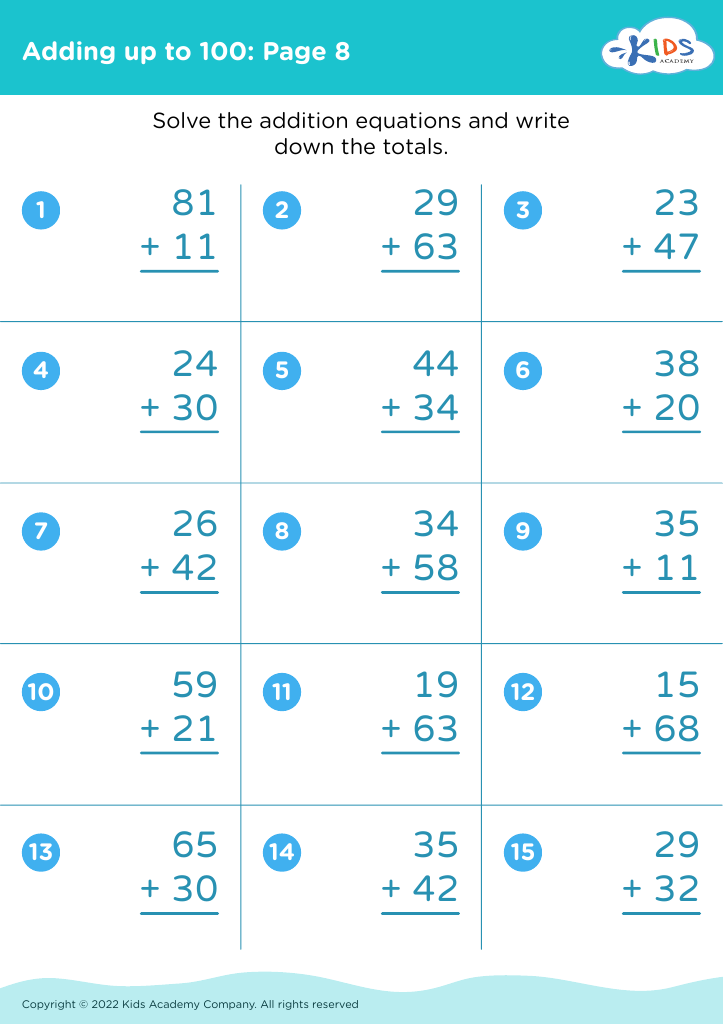
Adding up to 100: Page 8

Adding up to 100: Page 8

Adding up to 100: Page 8
Worksheet
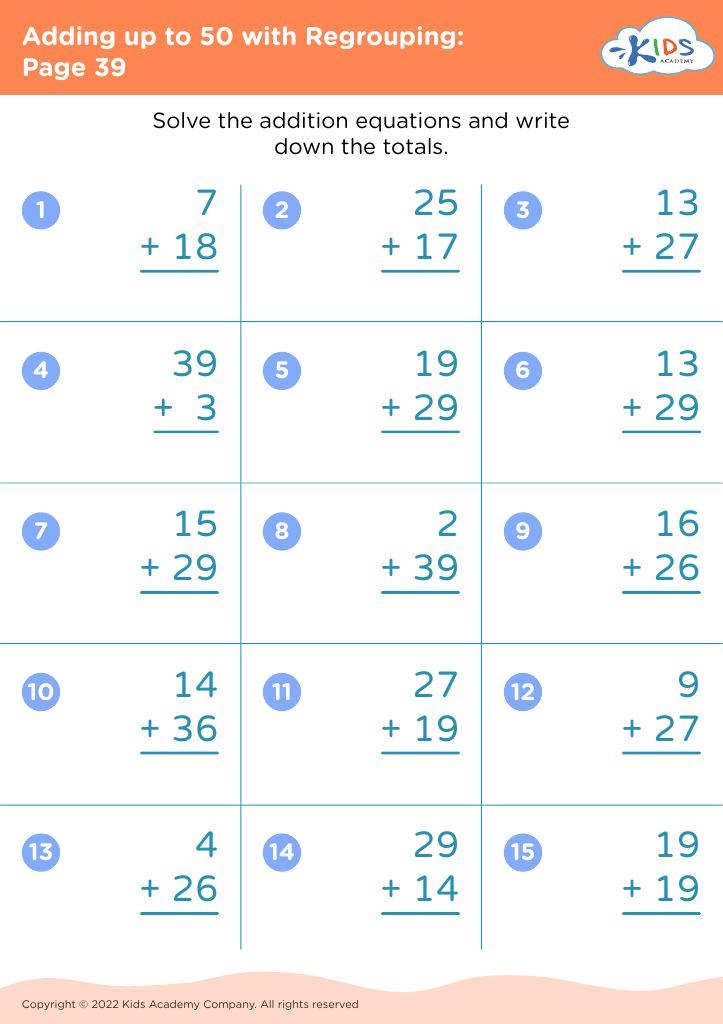
Adding up to 50 with Regrouping: Page 39
Worksheet
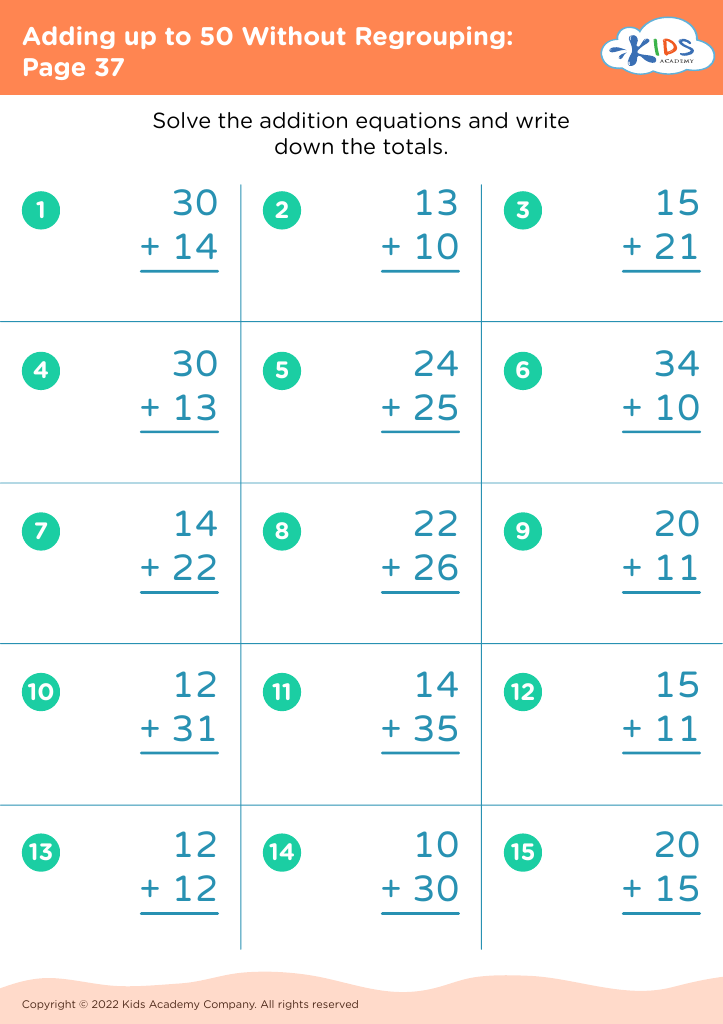
Adding up to 50 Without Regrouping: Page 37
Worksheet
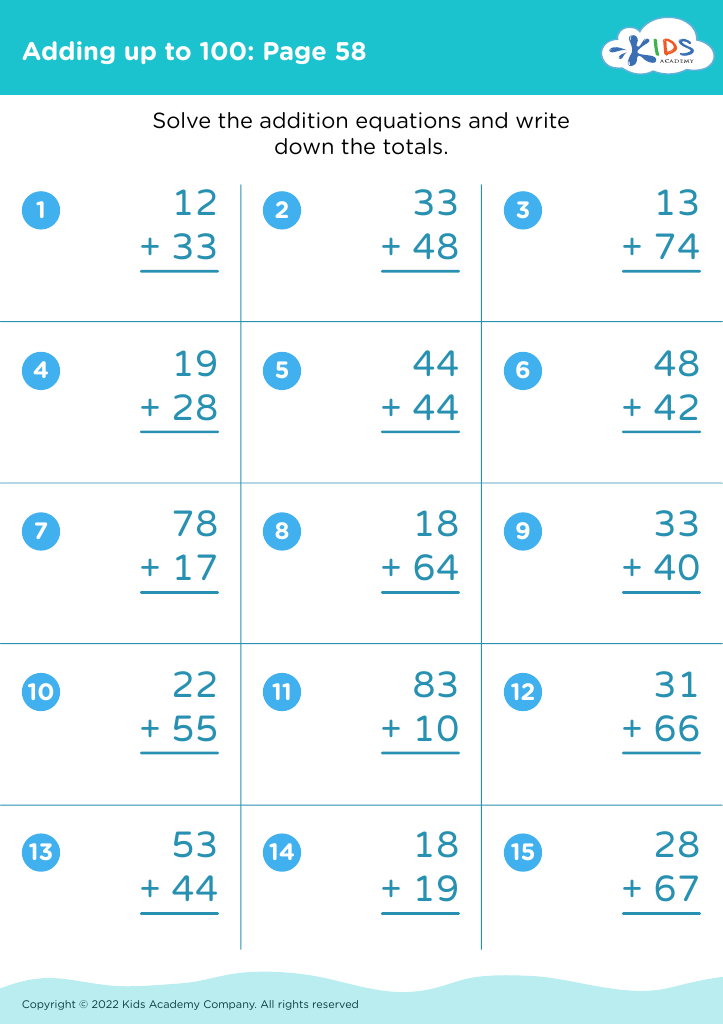
Adding up to 100: Page 58

Adding up to 100: Page 58

Adding up to 100: Page 58
Worksheet
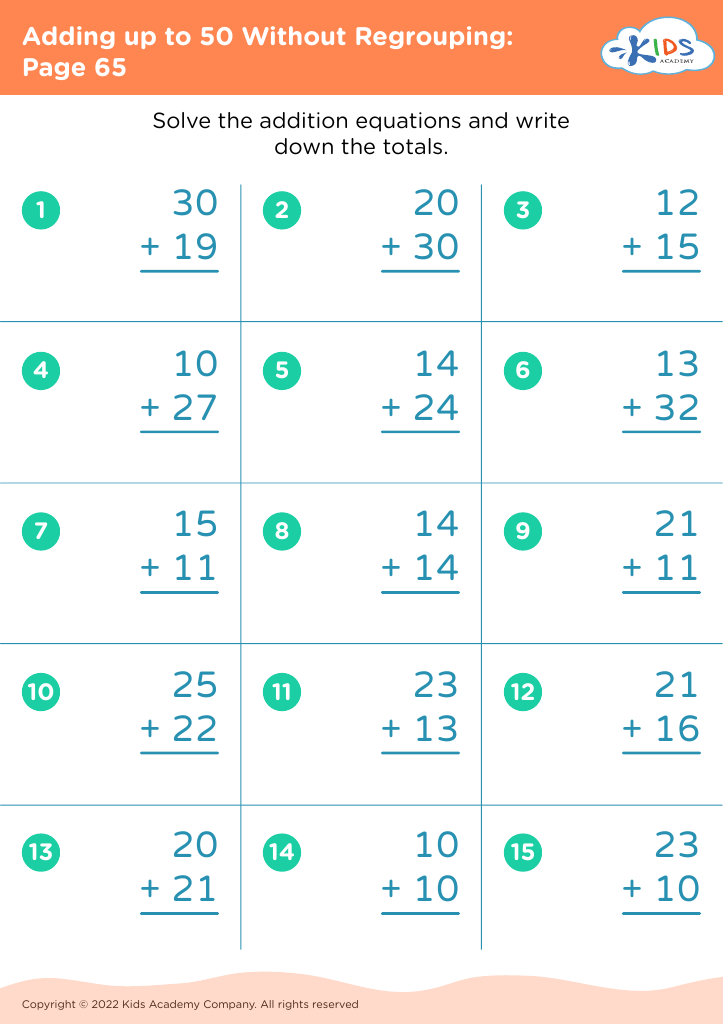
Adding up to 50 Without Regrouping: Page 65
Worksheet
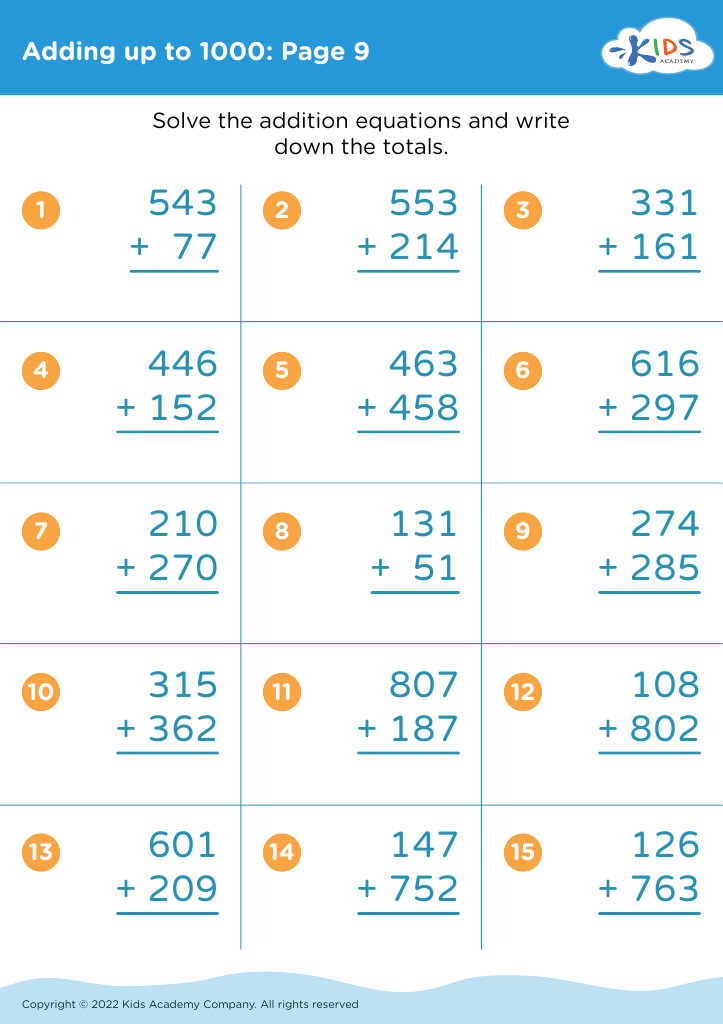
Adding up to 1000: Page 9

Adding up to 1000: Page 9

Adding up to 1000: Page 9
Worksheet
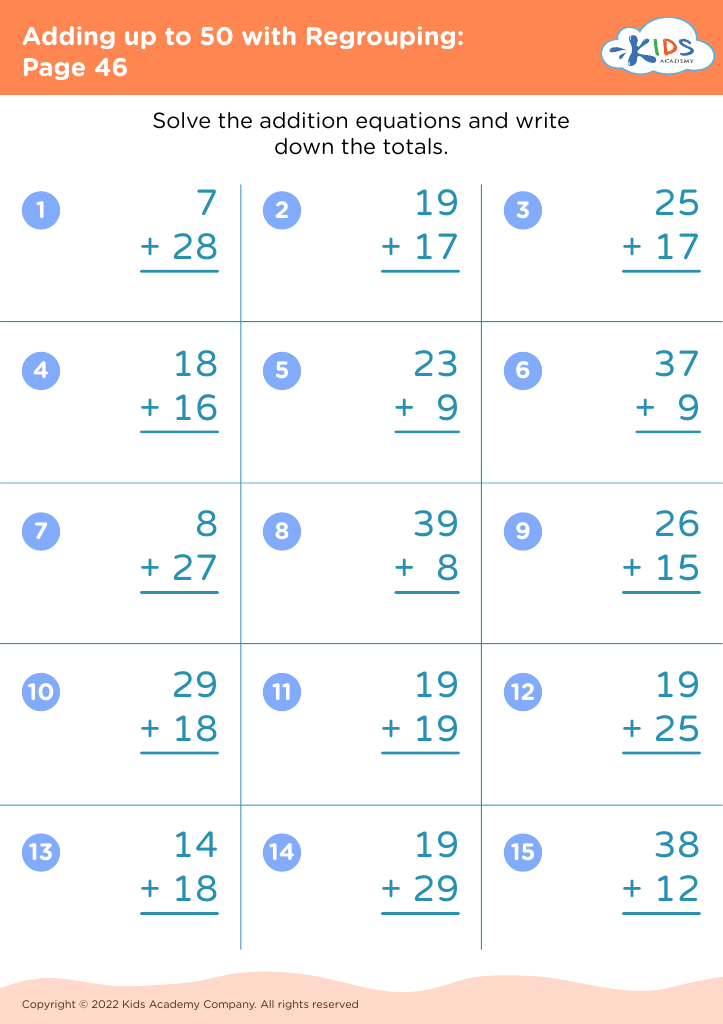
Adding up to 50 with Regrouping: Page 46
Worksheet
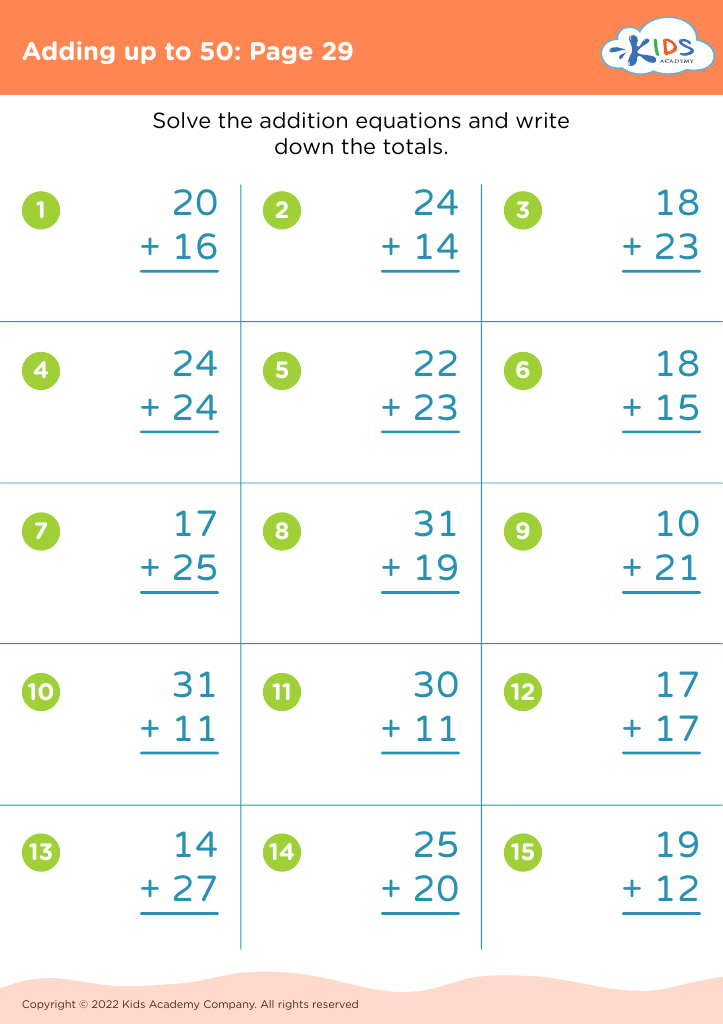
Adding up to 50: Page 29

Adding up to 50: Page 29

Adding up to 50: Page 29
Worksheet


Understanding fractions and addition at an early age is crucial for young learners, typically between the ages of 3-8, as it forms the foundation for their future mathematical skills. Parents and teachers should care about this because early math concepts directly impact a child's problem-solving capabilities, critical thinking, and confidence in tackling more complex math in later years.

Learning about fractions helps children grasp the idea of parts to a whole, which is essential not just in mathematics but also in everyday life, such as sharing food or measuring ingredients for recipes. Additionally, mastering addition alongside fractions enhances their ability to comprehend and relate to numbers, ensuring they build a strong numerical sense.

When children engage with these concepts through playful and relatable methods, such as using physical objects or visual aids, they are more likely to develop a positive attitude towards math, reducing anxiety about numbers. Engaging parents in this journey also reinforces understanding and appreciation for these fundamental skills, creating a collaborative learning environment. Ultimately, fostering these mathematical concepts early on sets the stage for lifelong learning and success in mathematics.