Understanding equality Addition Worksheets for Ages 3-8
3 filtered results
-
From - To
Discover a world of fun and learning with our "Understanding Equality Addition Worksheets for Ages 3-8" from Kids Academy. Specially designed for young learners, these worksheets help children grasp the concept of equality in addition through engaging activities. Featuring colorful visuals and simple exercises, kids will enjoy mastering the basics of addition while developing critical thinking and problem-solving skills. Perfect for parents and teachers, our resources support early math education in a playful and effective way. Empower your child’s learning journey today with these interactive and printable worksheets! Visit the link to explore more.
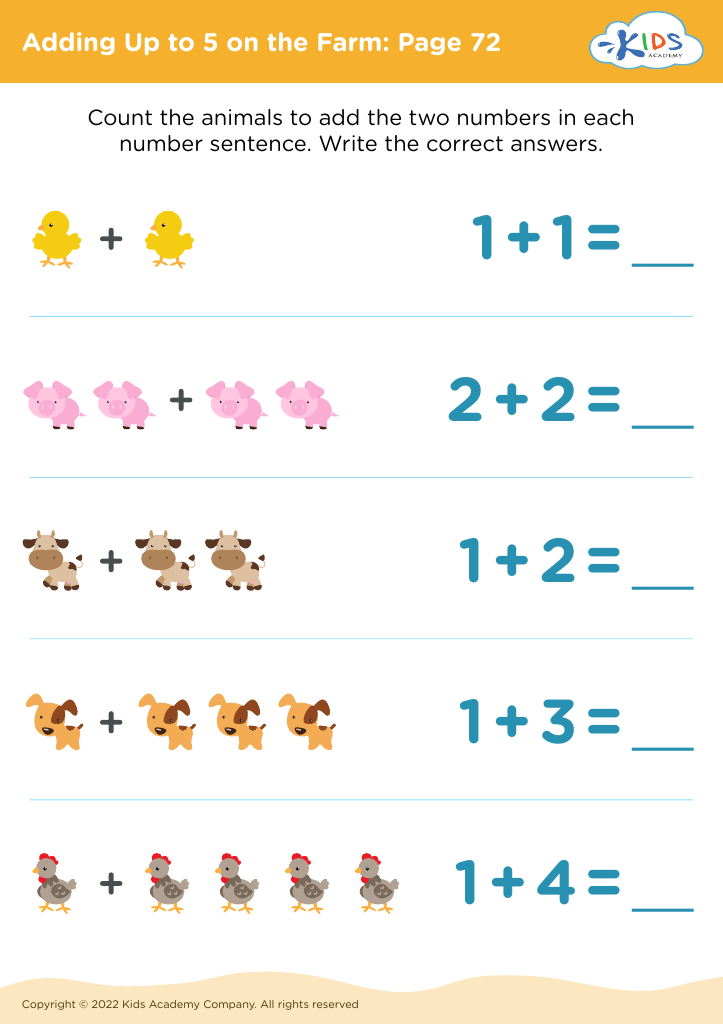
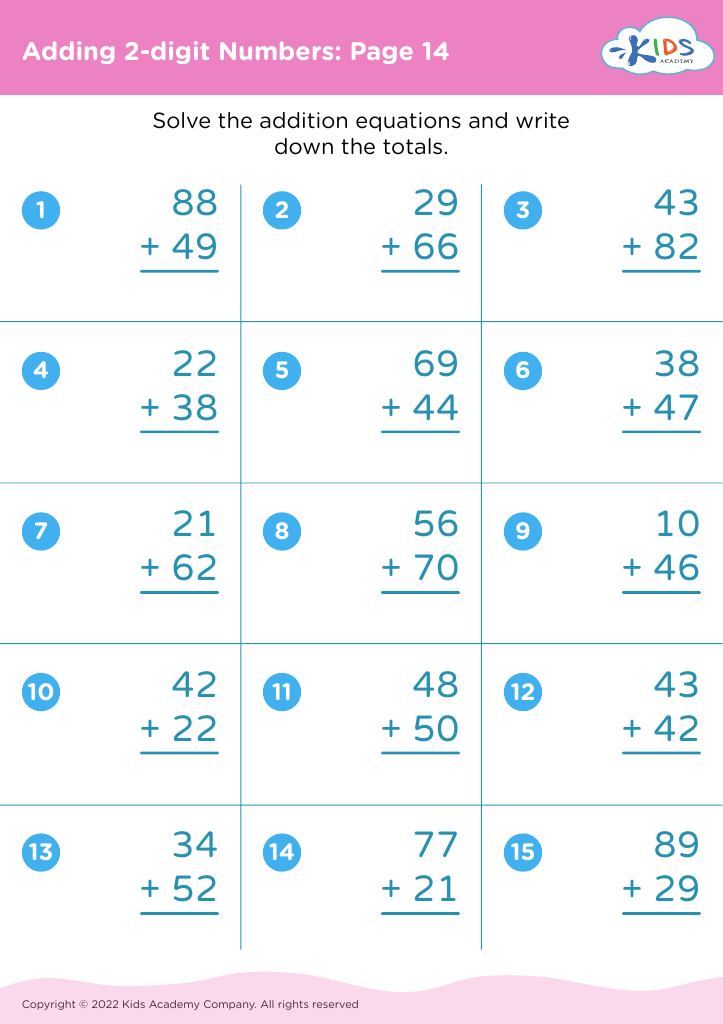
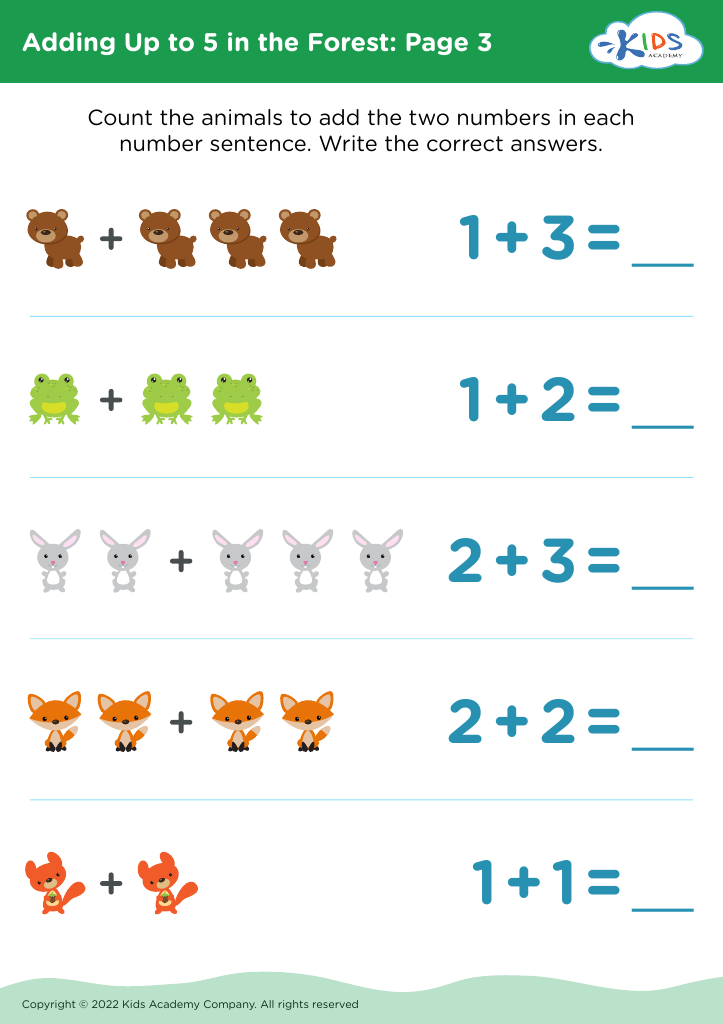








Understanding equality in addition at a young age is crucial for a child's cognitive and mathematical development. For ages 3-8, this foundational concept not only helps them grasp basic arithmetic but also strengthens their problem-solving and logical reasoning skills.
Recognizing that different sets of numbers can sum to the same total fosters flexibility in thinking and helps children understand the properties of numbers. For instance, knowing that 2 + 3 equals 5, just as 4 + 1 does, aids in developing an intuitive sense of numbers and their relationships. This early awareness makes more complex math topics accessible as they progress in their education.
From a parent's perspective, investing time in explaining equality in addition encourages a positive attitude towards math. It reduces math anxiety by demystifying processes early on, making numbers a source of curiosity rather than confusion. For teachers, ensuring students understand this concept allows for smoother instruction in more advanced topics, as students can build on a solid foundation.
Moreover, learning equality in addition fosters social fairness notions in children, reinforcing that different combinations can achieve the same outcome. This can further translate into life skills, like understanding fairness and cooperation within diverse groups. Therefore, graspers of mathematical equality early on meet academic and personal growth harmoniously.








