
Understanding money Addition Worksheets for Ages 3-8
3 filtered results
Difficulty Level
Grade
Age
-
From - To
Subject
Activity
Standards
Explore our engaging "Understanding Money Addition Worksheets" designed for children aged 3-8! These interactive resources help young learners master the basics of addition while familiarizing themselves with money concepts. Each worksheet features colorful illustrations and practical scenarios that make learning fun and relatable, ensuring kids develop essential math skills in a playful environment. As they count coins and solve addition problems, your child will gain confidence and competence in handling money. Ideal for classroom and home education, our worksheets promote critical thinking and problem-solving abilities. Perfect for budding mathematicians, our materials enrich their understanding of money management while reinforcing foundational math skills!
Favorites
With answer key
Interactive
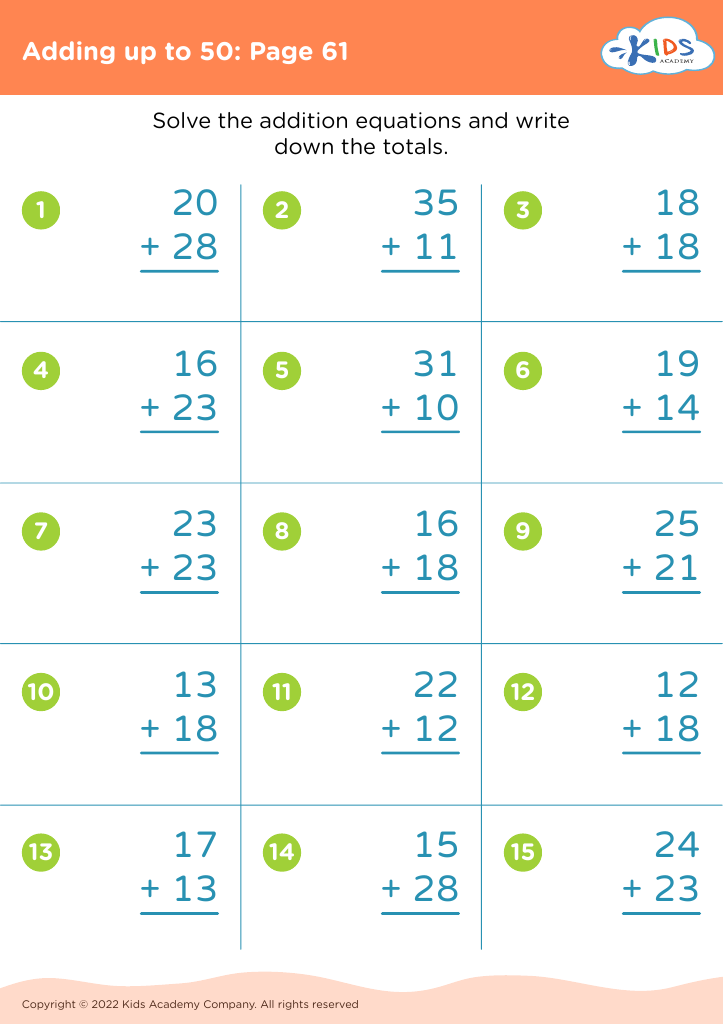
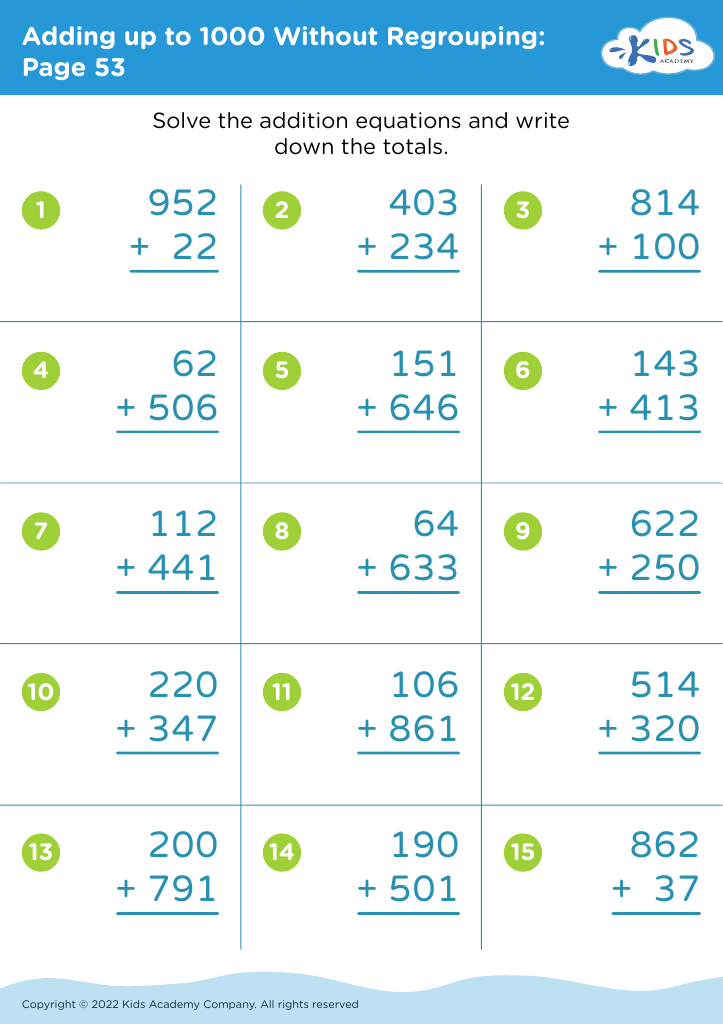
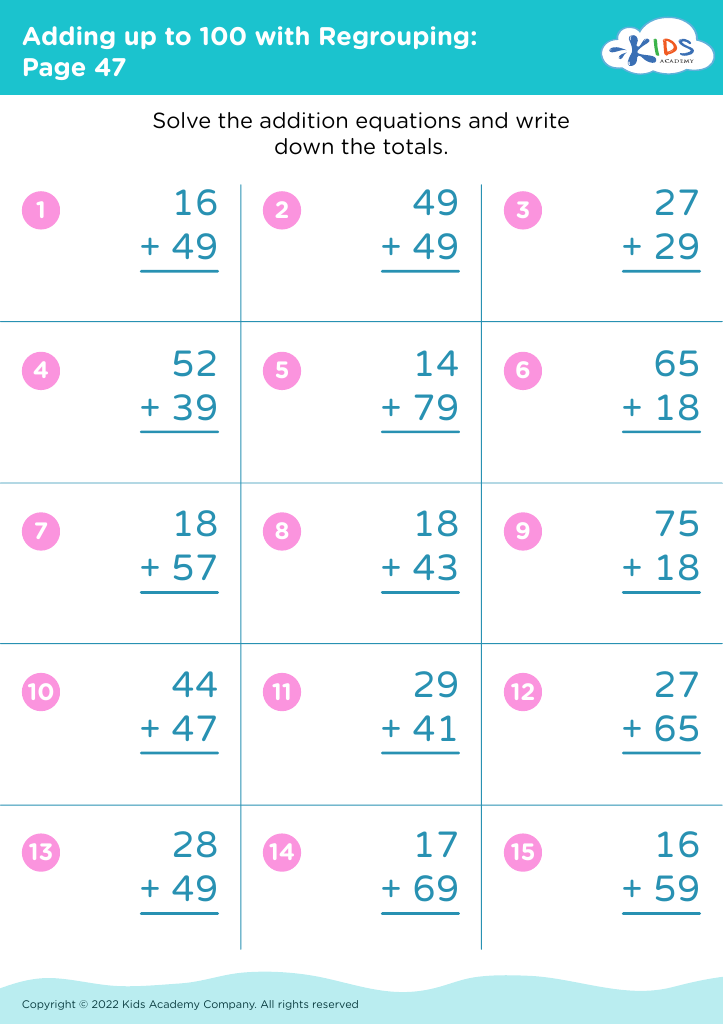
Join Kids Academy for Free
Who is primarily going to use this learning content?








Understanding money and the concept of addition is crucial for children ages 3-8 for several reasons. First, grappling with basic numeracy, like addition, lays the foundation for mathematical thinking and problem-solving skills that will serve them throughout their academic journey. Introducing money early helps children associate numbers with real-world contexts, making math more relatable and engaging.
Furthermore, teaching kids about money equips them with essential life skills. At this age, they begin to interact with money through play and shopping experiences, making it an ideal time to instill a basic understanding of how currency works, its value, and transactions. This early knowledge fosters financial literacy, allowing them to make informed decisions later in life.
Parents and teachers play a crucial role in nurturing this learning. By incorporating fun activities, such as counting change or role-playing shopping scenarios, they can make learning about money and addition enjoyable and impactful. Creating a strong mathematical foundation not only boosts confidence in young learners but also encourages a lifelong positive attitude toward finances—an invaluable asset in today’s economic landscape. Therefore, embracing money addition in early education helps prepare children for future academic challenges and responsible financial behavior.








