Understanding Quantities Addition Worksheets for Ages 3-8
40 filtered results
-
From - To
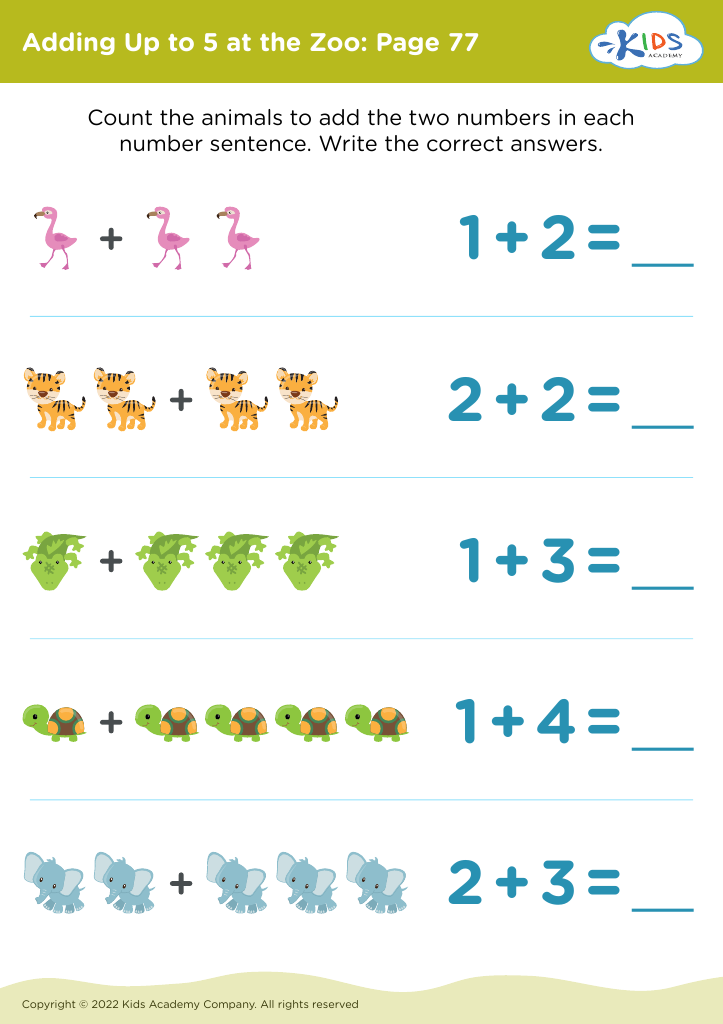
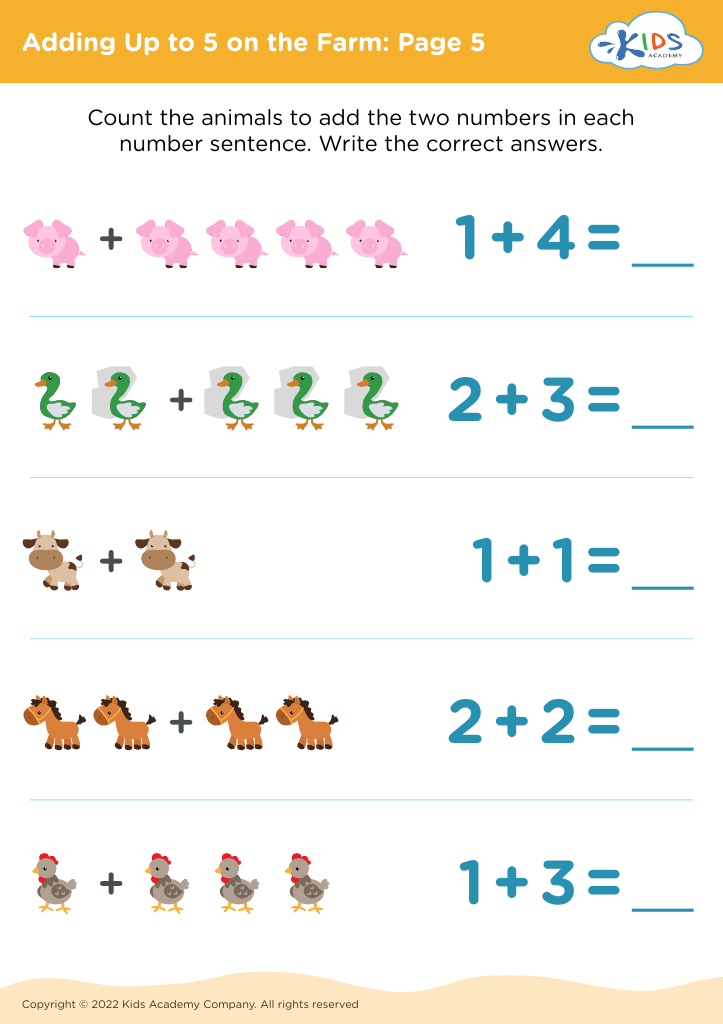
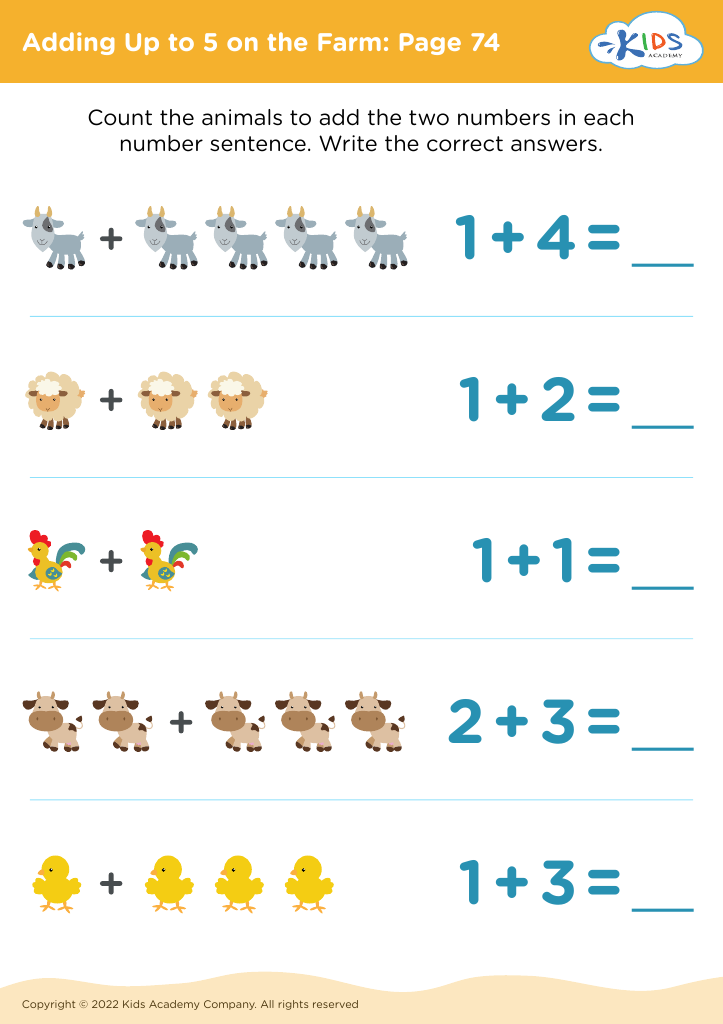
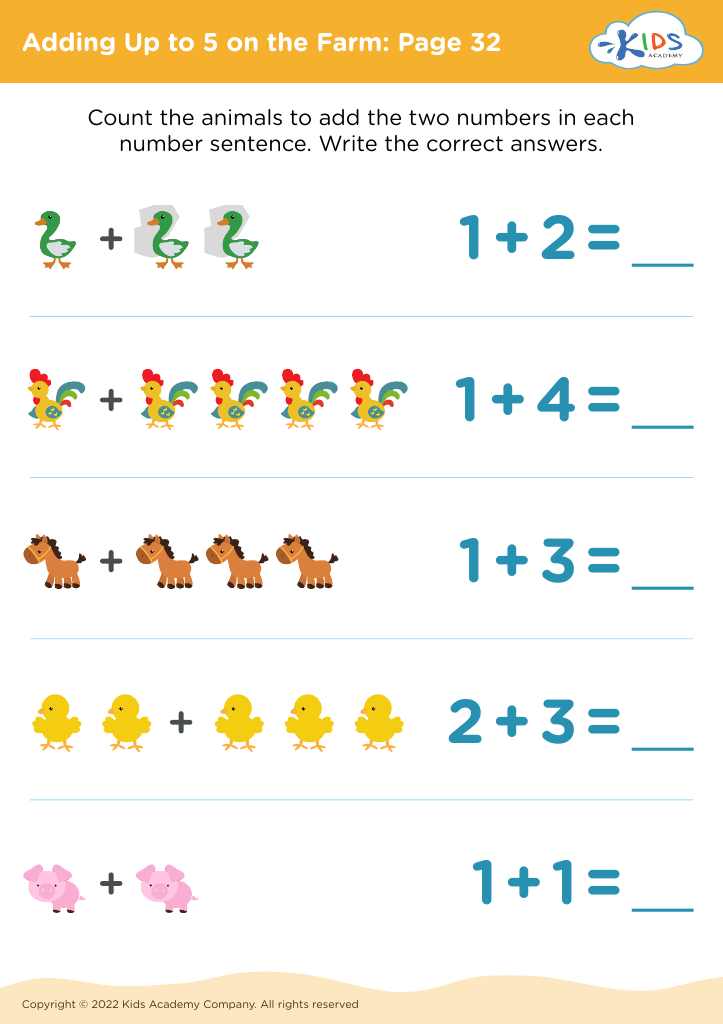
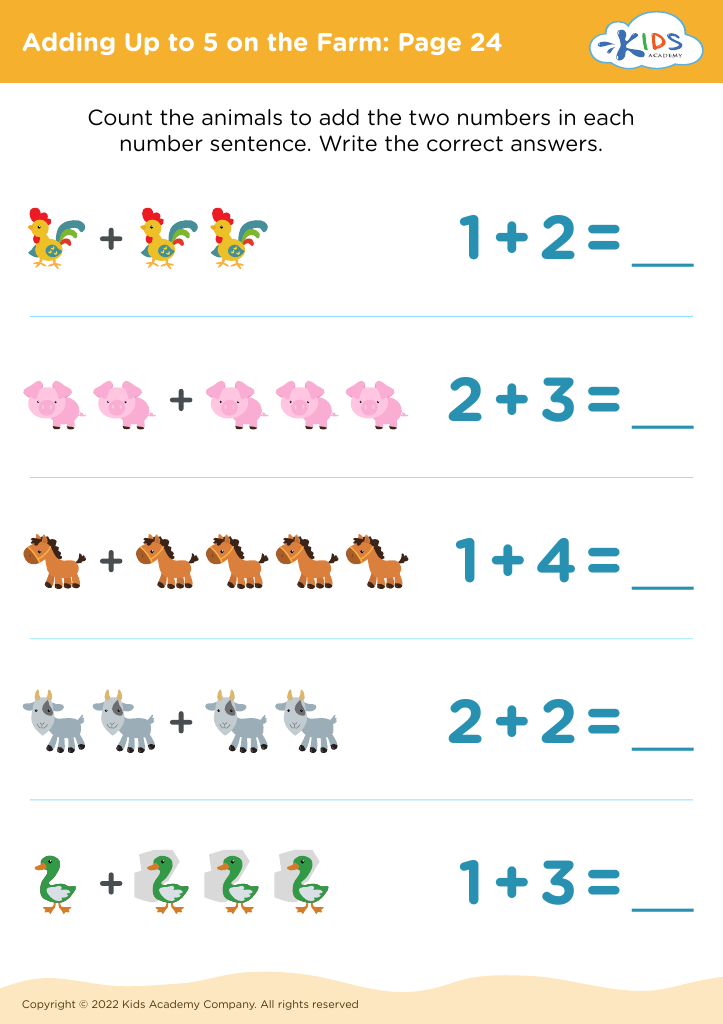
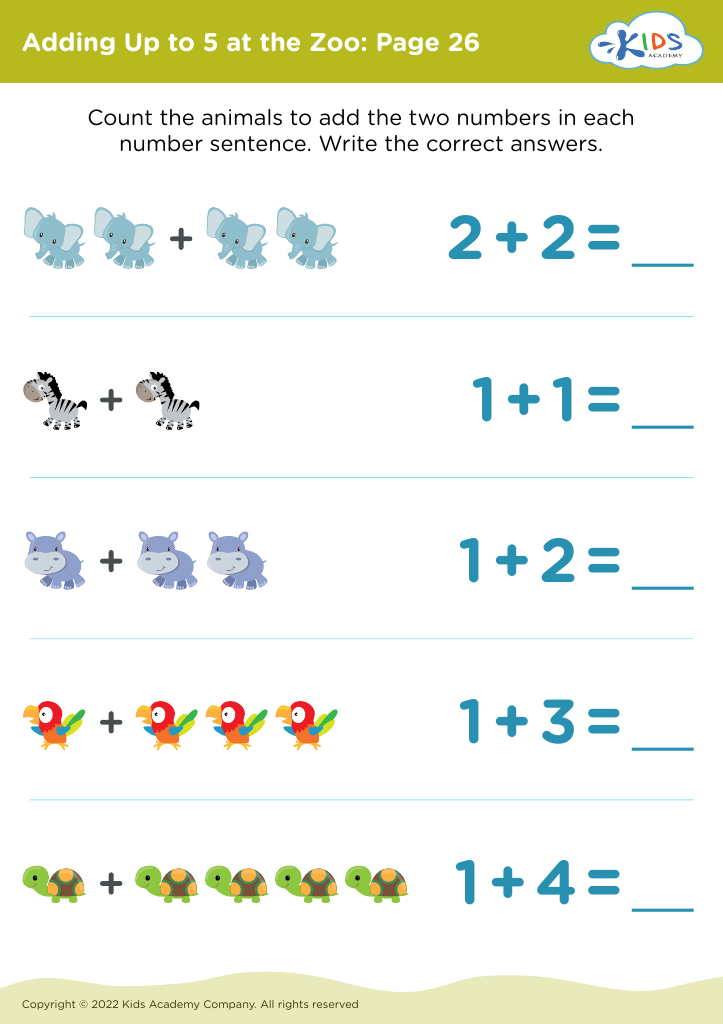
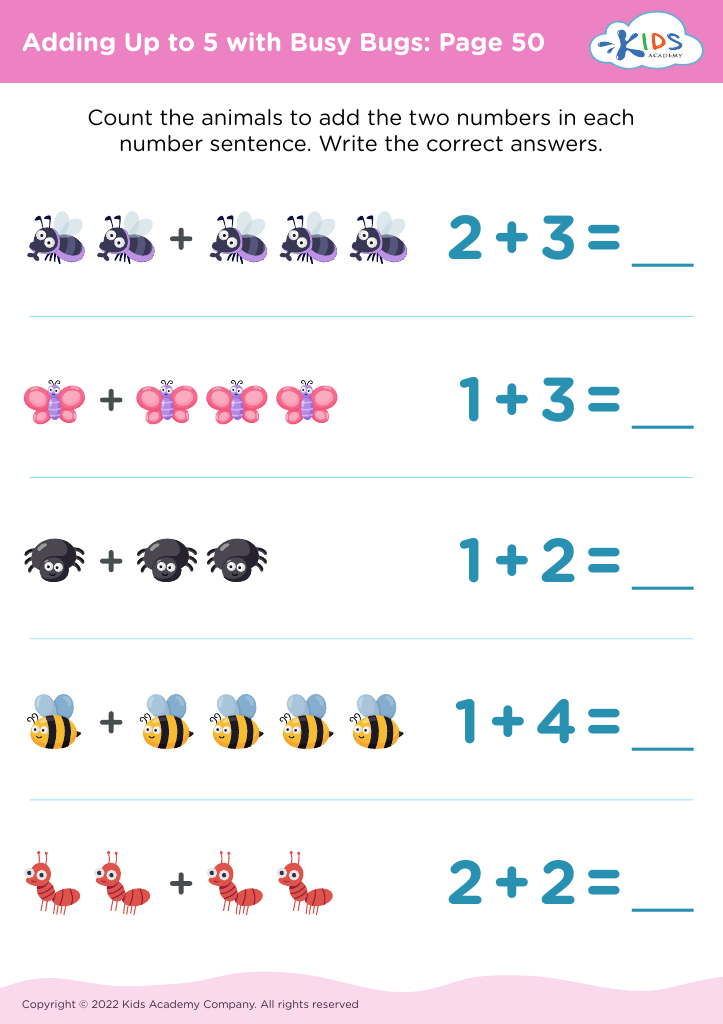
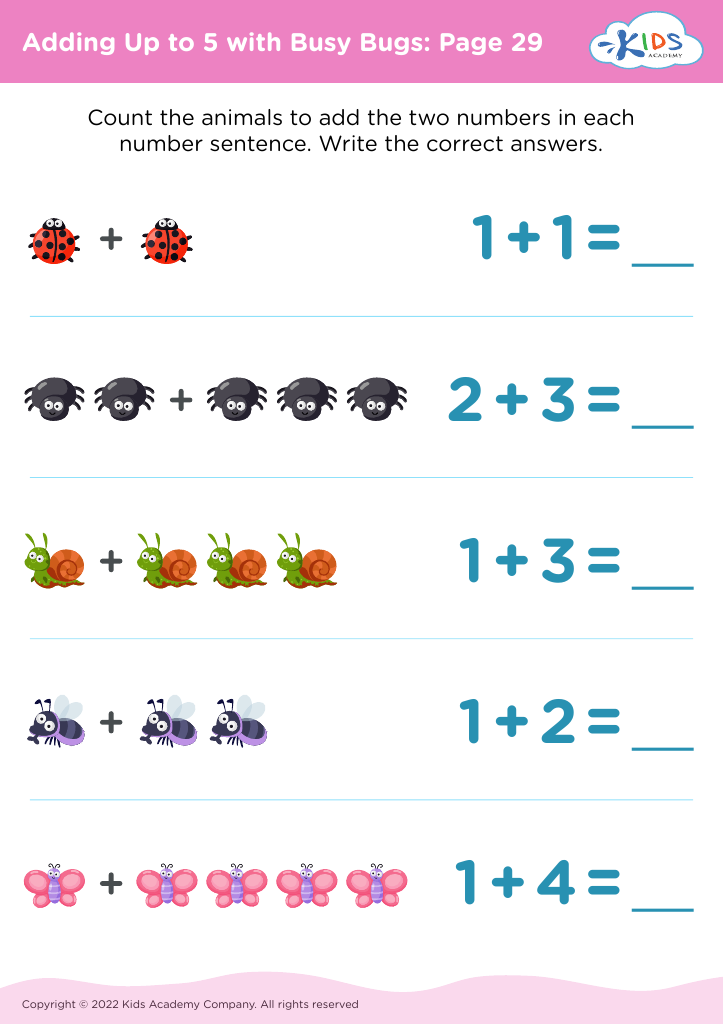
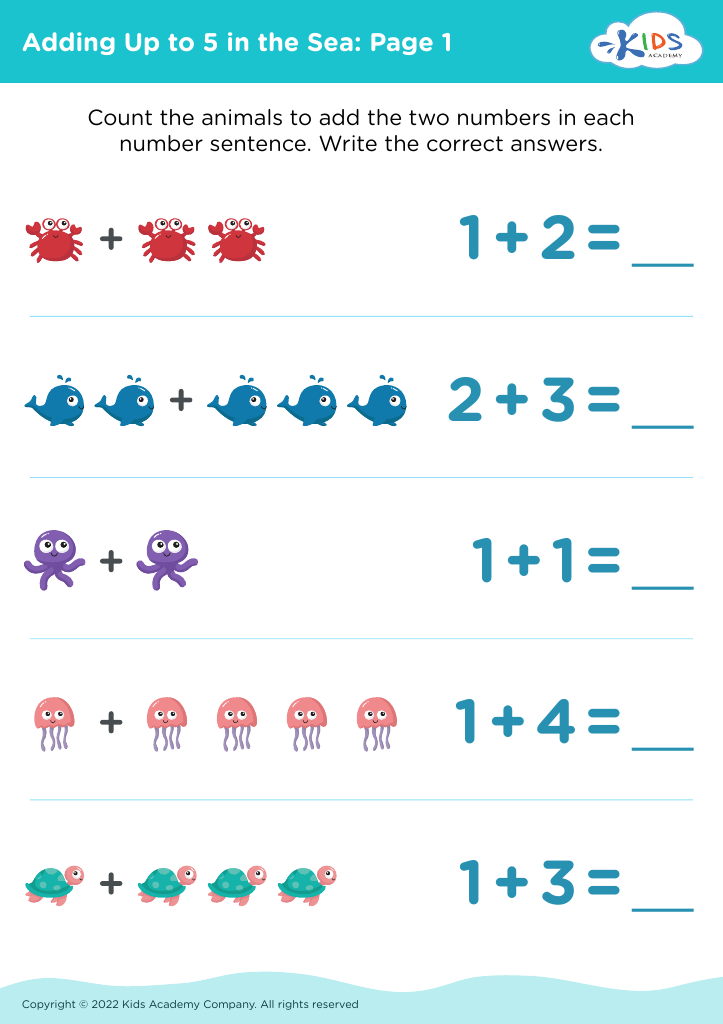
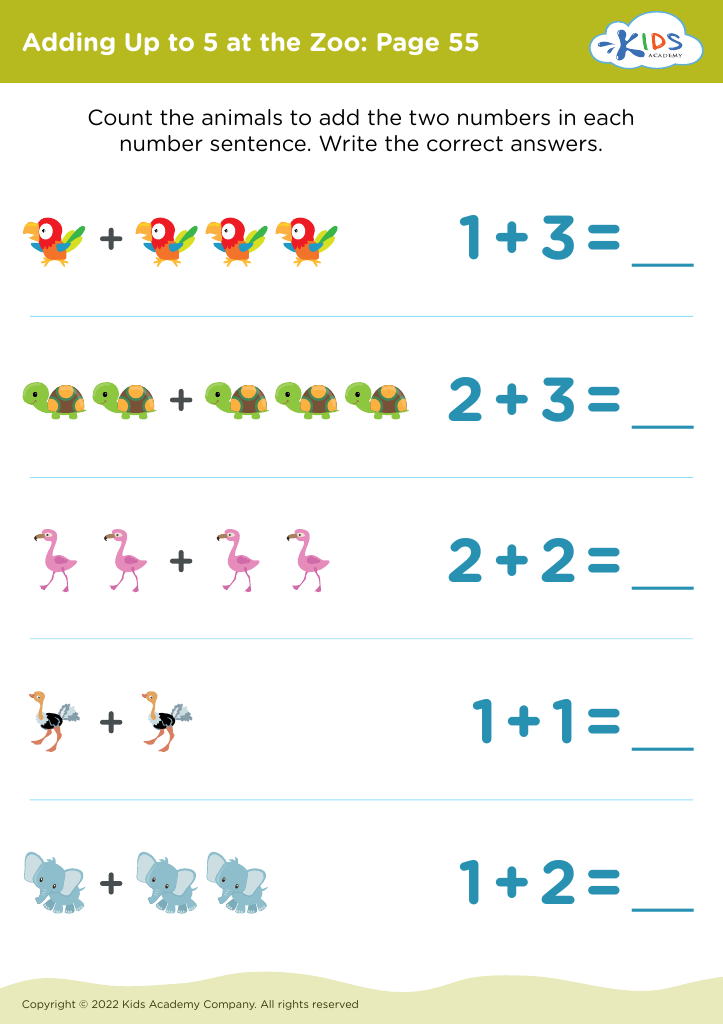
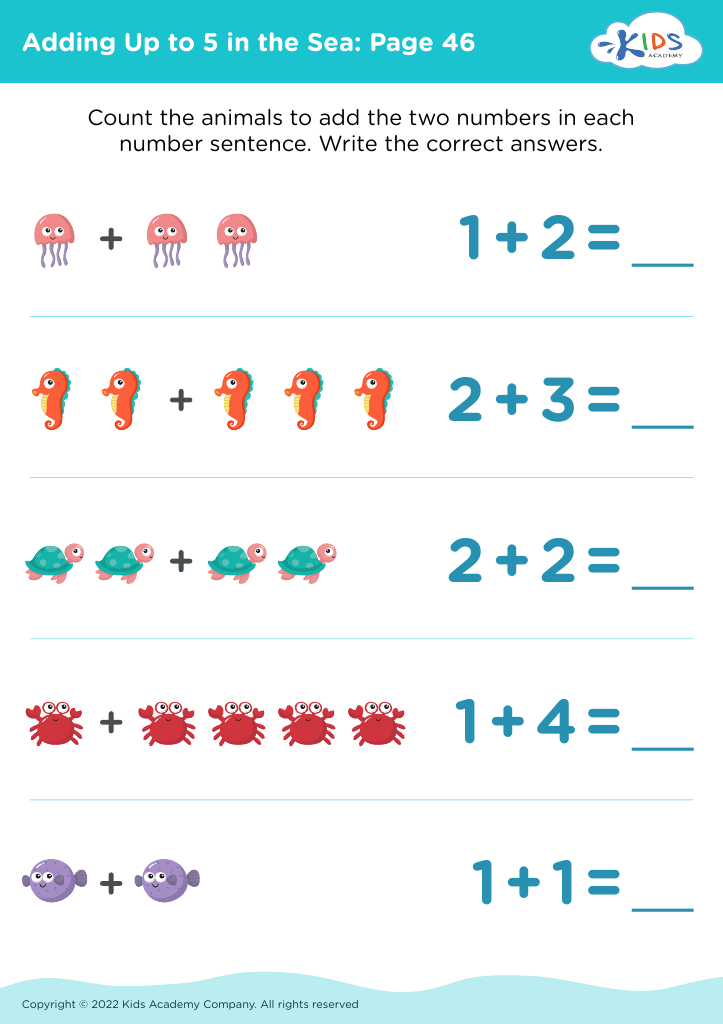
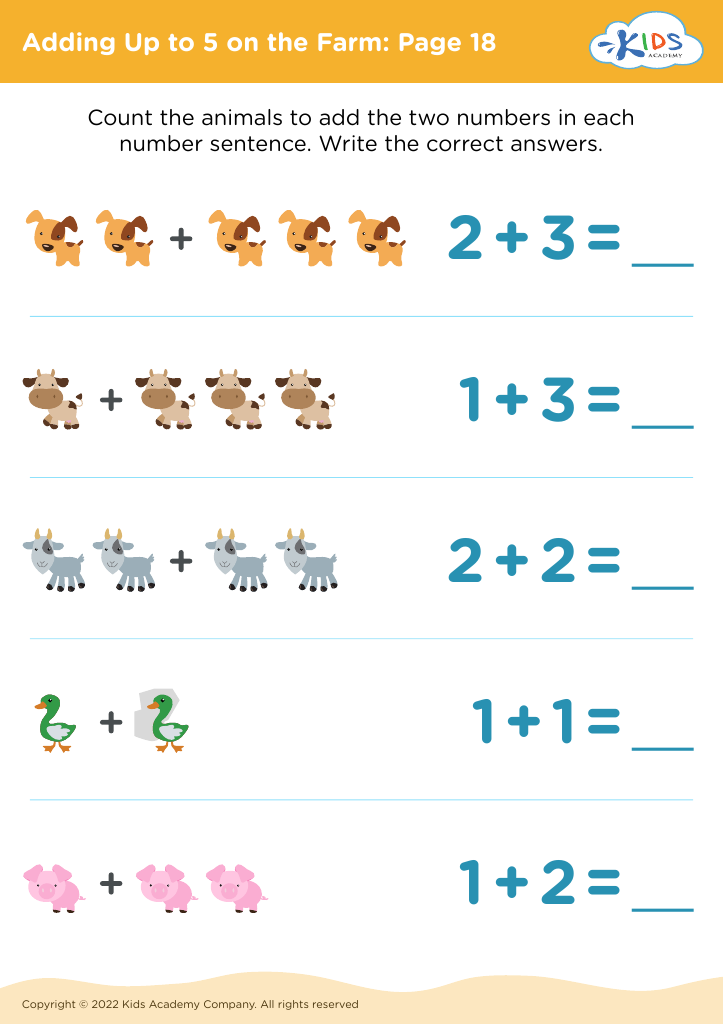
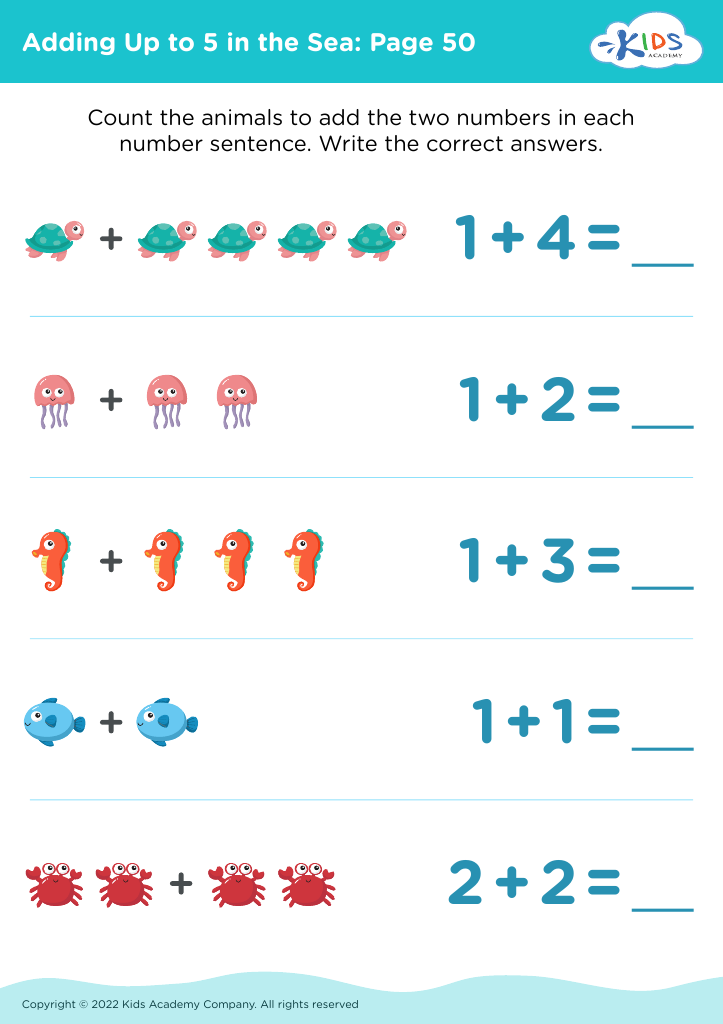
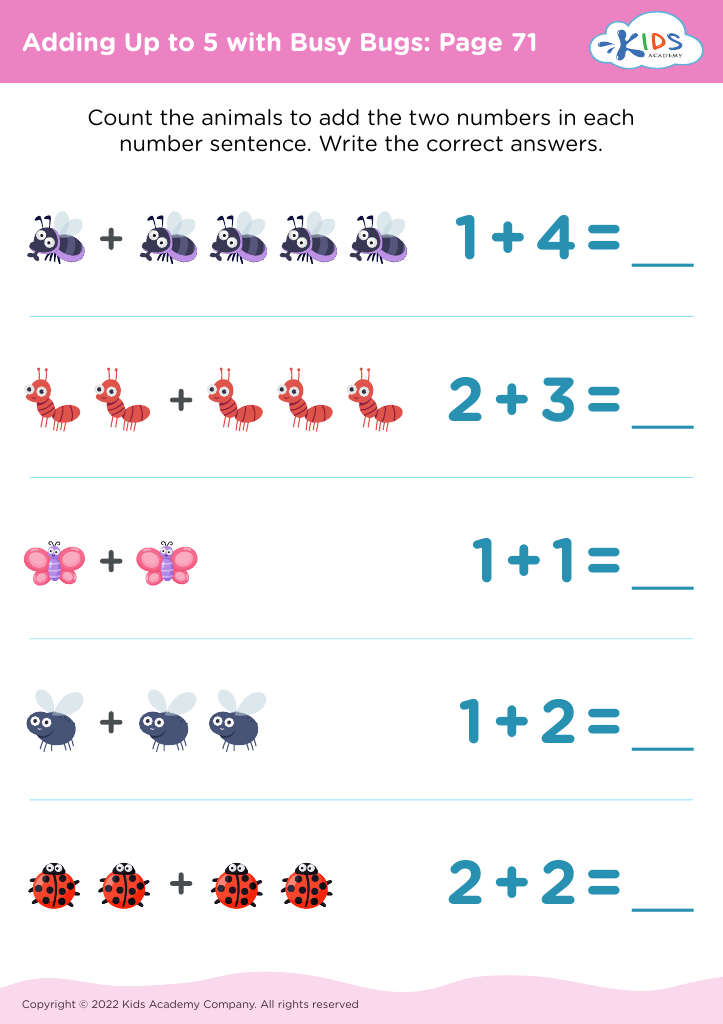
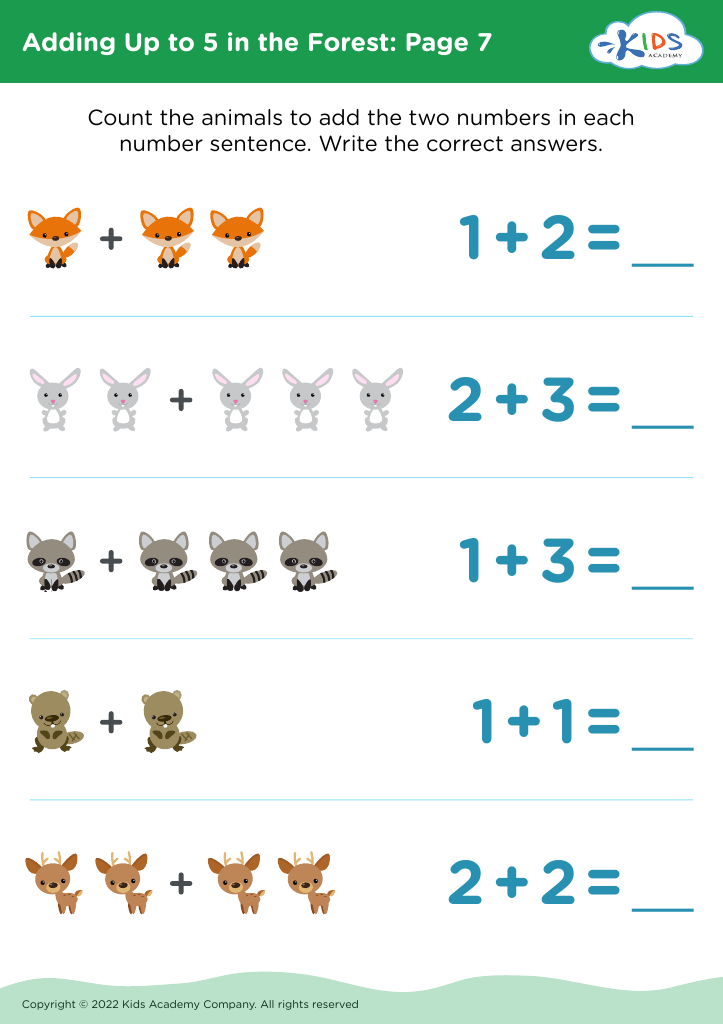
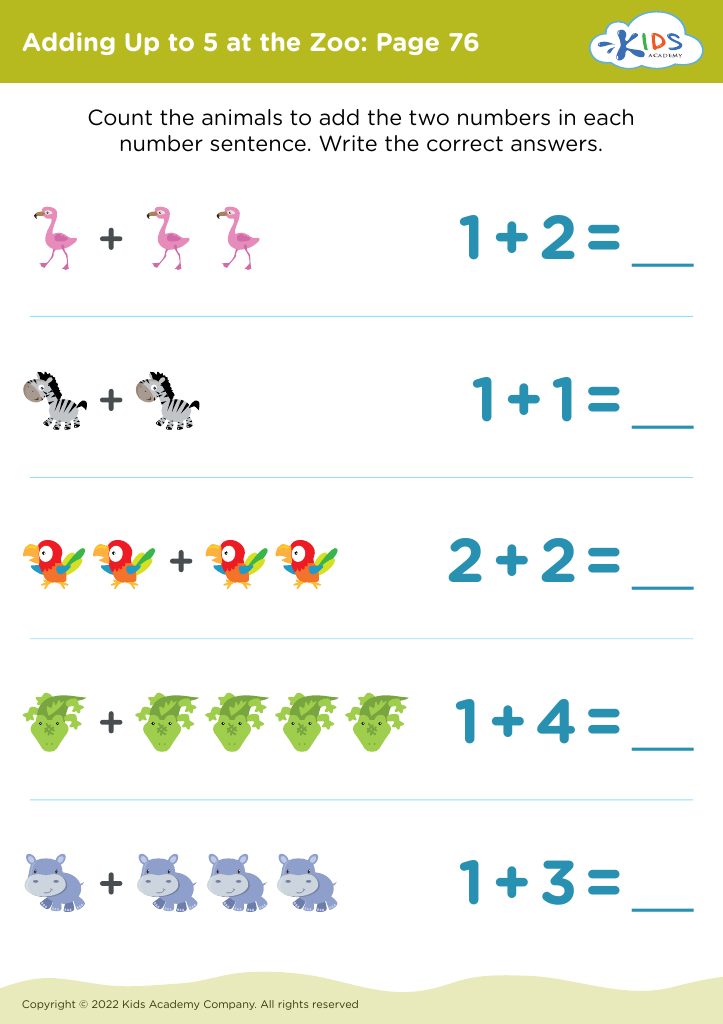
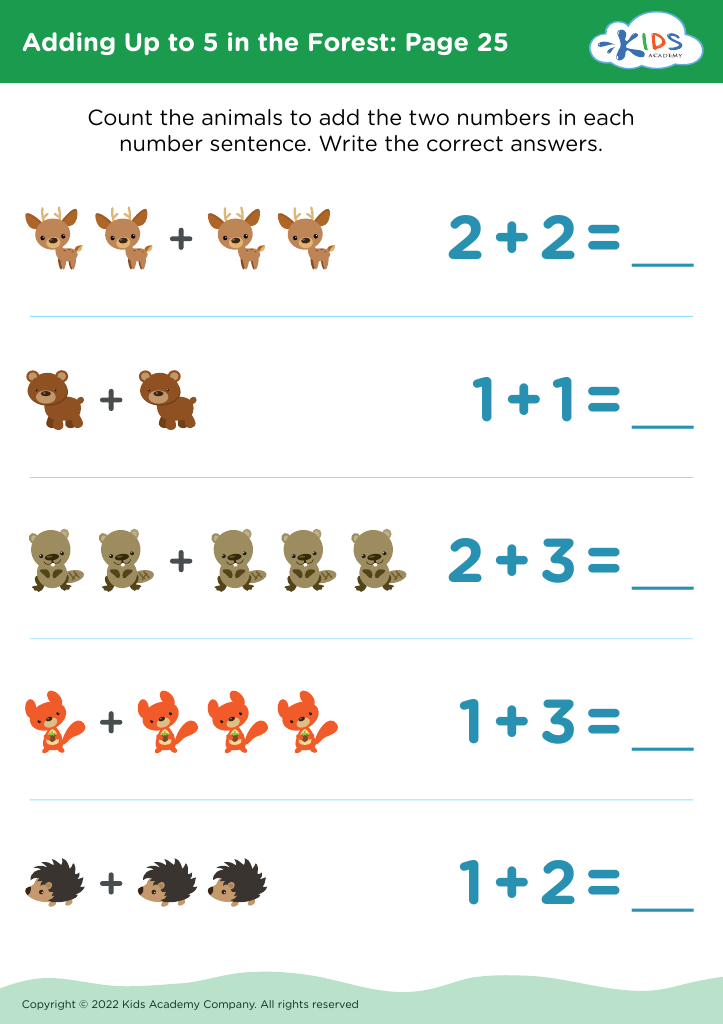
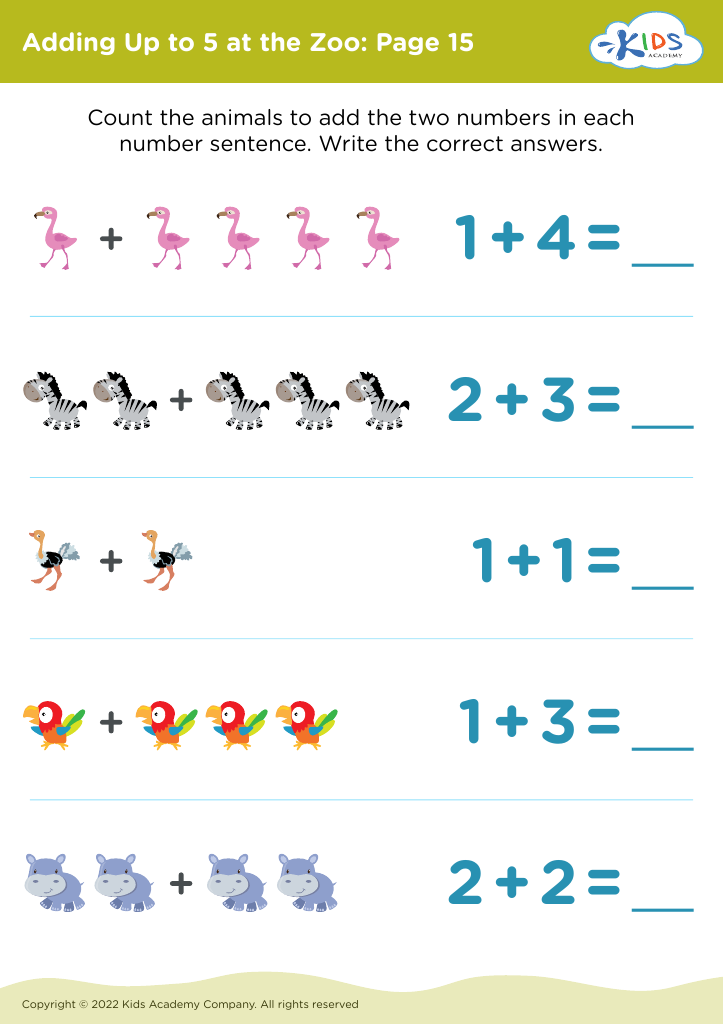
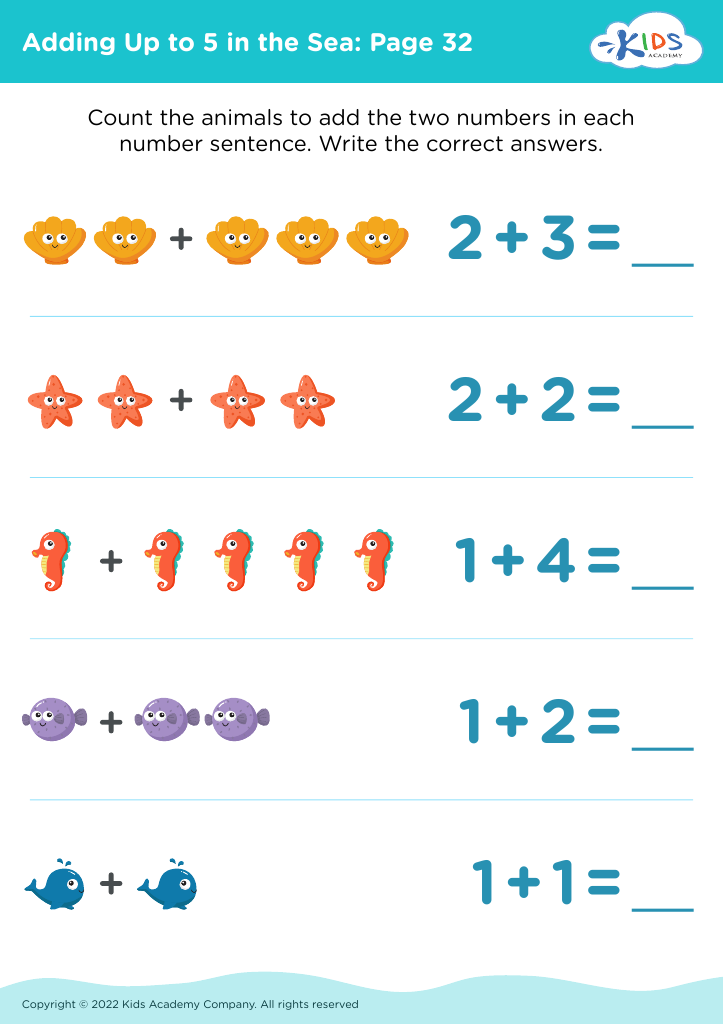
Explore our "Understanding Quantities Addition Worksheets" designed specifically for children ages 3-8! These engaging printables help young learners grasp the basics of addition by visualizing quantities. Through fun activities and colorful illustrations, children will improve their counting skills and develop a strong foundation for basic math concepts. Our worksheets encourage hands-on learning, making it easy for kids to relate quantities to numerical values. This essential skill prepares them for more advanced math challenges. Perfect for home or classroom use, our resources promote early mathematical understanding while keeping learning enjoyable. Bring the joy of math to your child's education today!
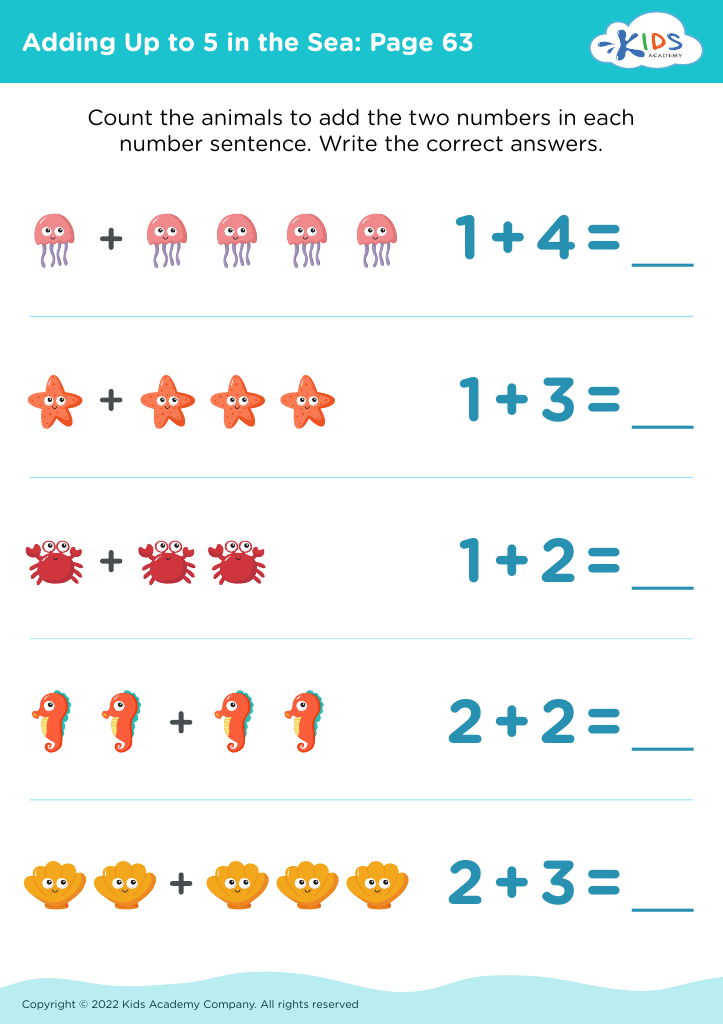
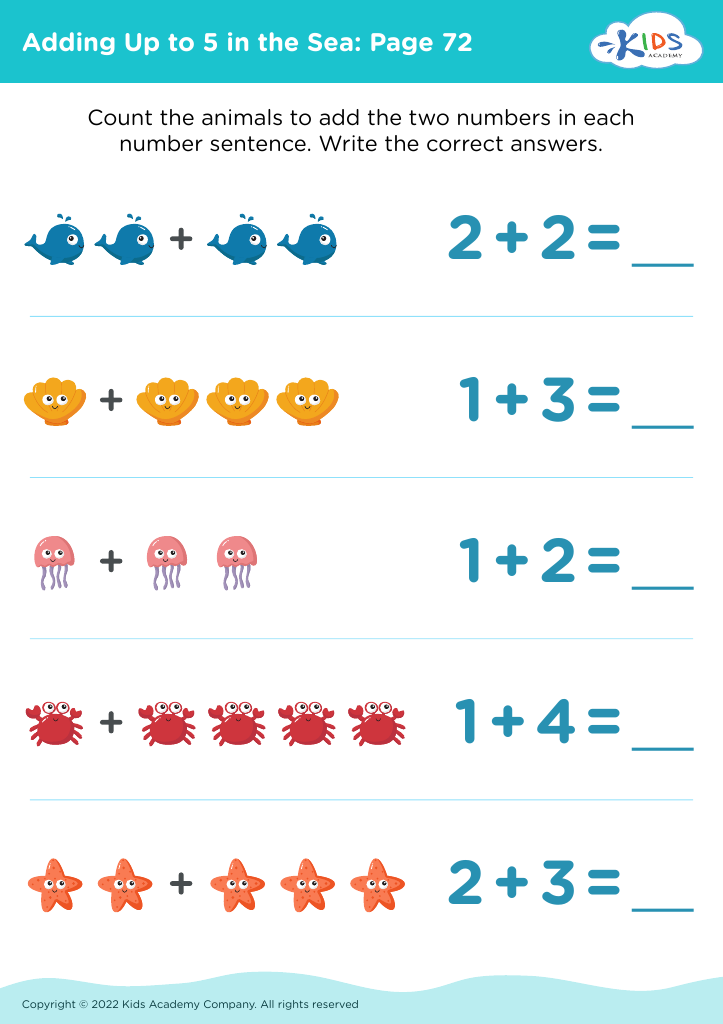
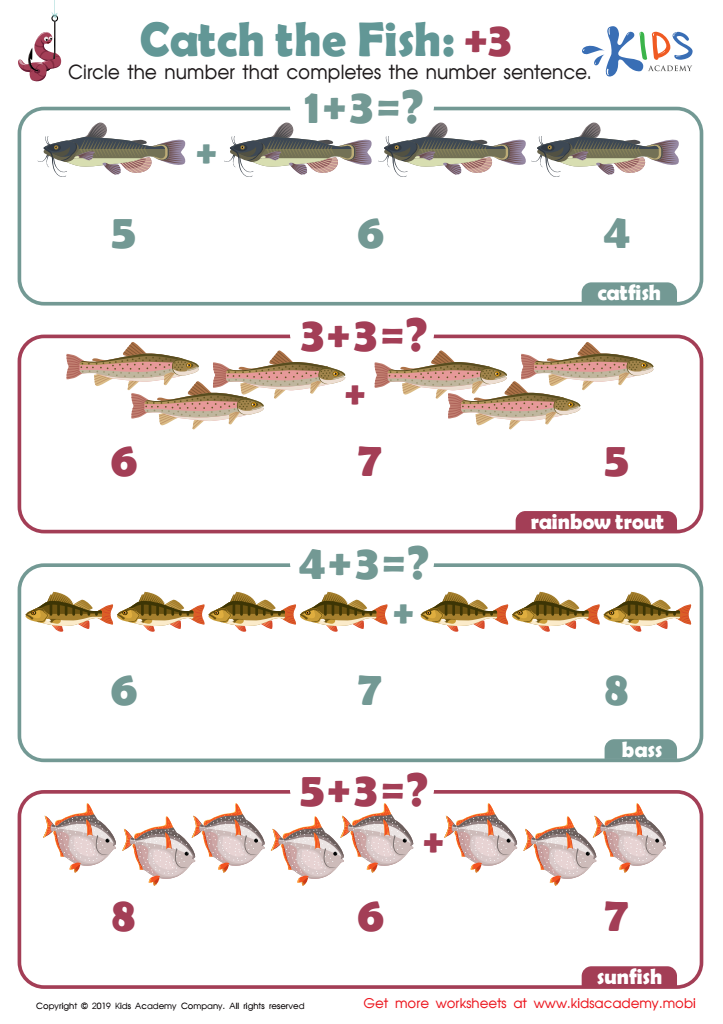
Catch the Fish: +3 Worksheet
 Assign to My Students
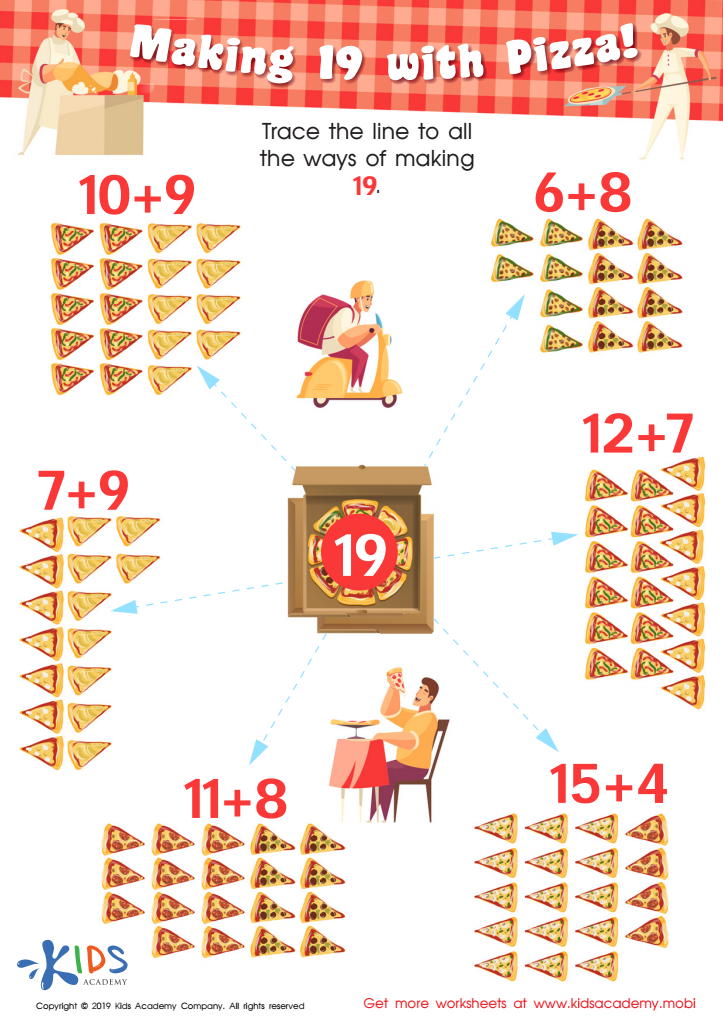
Making 19 with Pizza! Worksheet







.jpg)
Understanding quantities and addition is fundamental for children aged 3-8 as it lays the groundwork for future mathematical skills. Early exposure to these concepts fosters number sense, which is crucial for problem-solving and logical thinking. When parents and teachers engage young learners in activities that involve counting, comparing quantities, and simple addition, they enhance cognitive development and boost confidence in mathematics from an early age.
At this stage, play is a powerful teacher. Through games and hands-on activities, children explore how quantities interact, develop fine motor skills, and cultivate essential social skills by collaborating with peers. Early learners are naturally curious, and introducing mathematical ideas during this formative period capitalizes on that curiosity.
Moreover, a strong foundation in understanding quantities can reduce math anxiety later in life. When children grasp these concepts early on, they are better prepared for more complex math in later grades. This specific understanding also connects to various real-life situations, promoting practical skills needed for day-to-day problem-solving.
By investing time in supporting young learners with quantities and addition, parents and teachers help nurture not just abstract mathematical skills, but a lifelong appreciation and understanding of math as a vital part of everyday life.








