Financial literacy Coins Worksheets for Ages 3-8
4 filtered results
-
From - To
Enhance your child's understanding of money with our Financial Literacy Coins Worksheets designed for ages 3-8! These engaging worksheets introduce basic concepts of coins, focusing on recognition, counting, and their real-world values. Perfect for early learners, our materials promote essential financial skills in a fun and interactive way. Children will enjoy colorful illustrations and enjoyable activities that strengthen their math abilities while fostering responsible money habits. Our resources are aligned with developmental standards, ensuring valuable learning experiences. Start building your child's financial literacy foundation today with our captivating and educational worksheets, making learning about coins exciting and accessible!
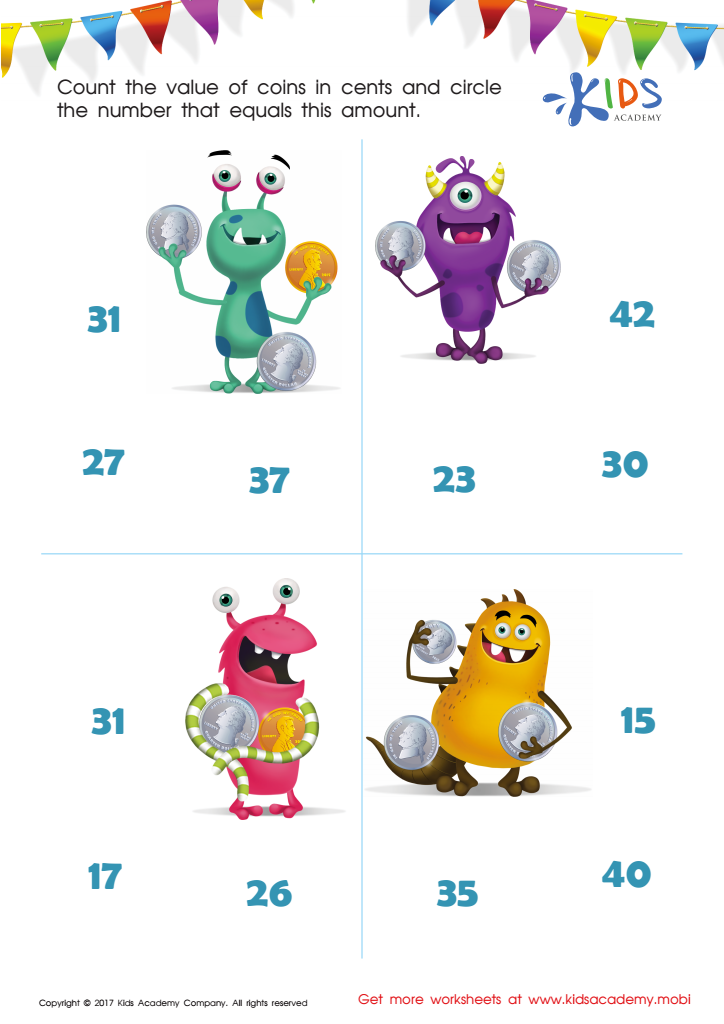
How Many Coins Money Worksheet
 Assign to My Students
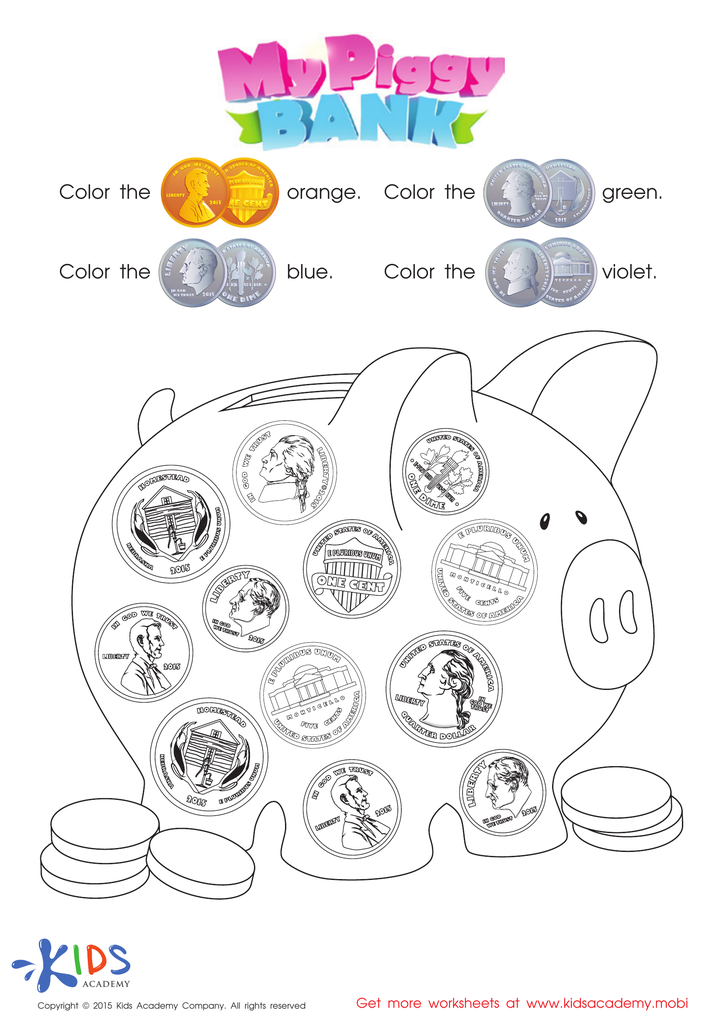
Recognizing Money Money Worksheet
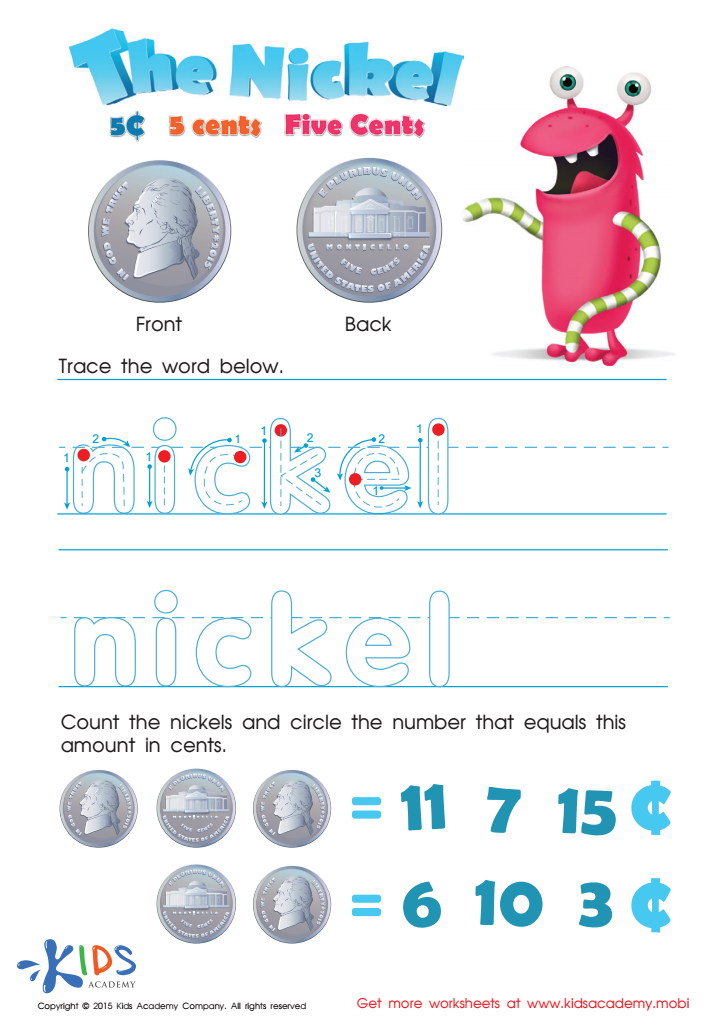
Five Cents or the Nickel Money Worksheet
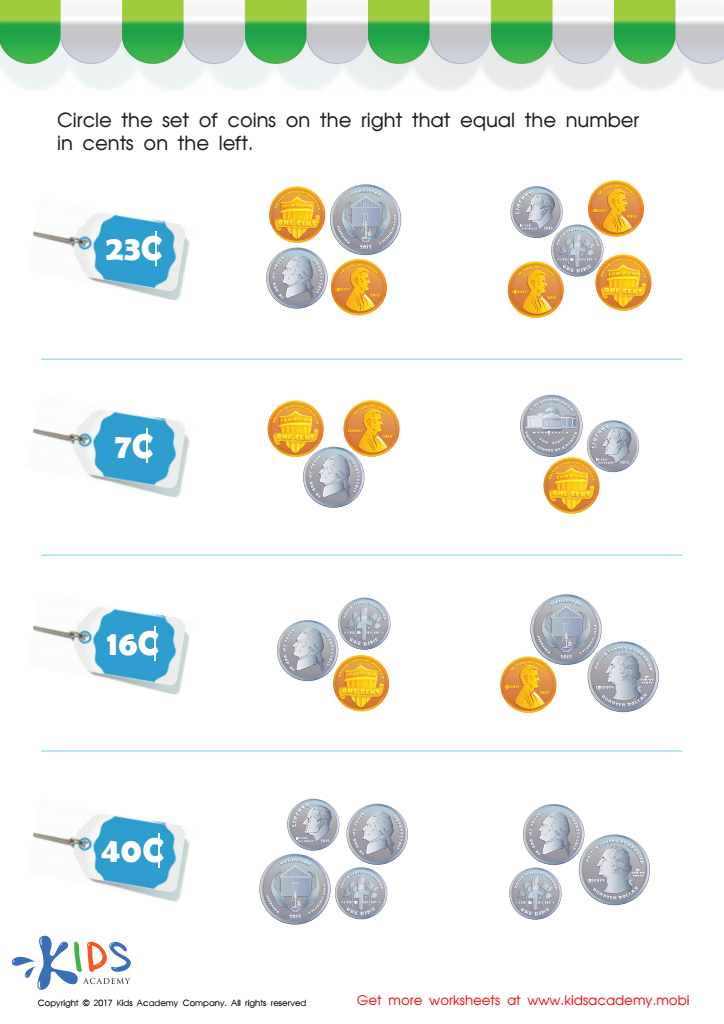
Picking the Coins You Need Money Worksheet








Financial literacy is a crucial life skill that should be introduced to children as early as age three. Teaching financial literacy coins to kids aged 3-8 can help them develop essential skills that will benefit them throughout their lives. Early exposure to concepts like saving, spending, and budgeting fosters a sense of responsibility and encourages good money habits.
Parents and teachers play a pivotal role in shaping a child's understanding of money. By incorporating financial literacy games and activities, they can make learning fun and engaging. Using tangible tools like coins, educators can teach children the value of various denominations, the basics of transactions, and the importance of making informed choices when it comes to spending.
Moreover, instilling a foundational knowledge of money management prepares children for future financial responsibilities. They learn the significance of setting goals, saving for bigger purchases, and making wise investment choices. Understanding financial concepts at a young age can lead to increased confidence in handling money later in life.
In essence, nurturing financial literacy in young children fosters independence, promotes critical thinking, and sets the stage for a financially savvy generation. Parents and teachers should prioritize this vital knowledge to ensure children are prepared for real-world financial challenges.








