Understanding fractions Comparing Numbers Worksheets for Ages 3-8
3 filtered results
-
From - To
Our "Understanding Fractions: Comparing Numbers Worksheets for Ages 3-8" are designed to make learning math fun and engaging for young children. These printable worksheets help kids grasp the basics of fractions and number comparison through interactive and age-appropriate activities. Each worksheet is crafted to reinforce foundational math skills, making complex concepts easy to understand. Perfect for preschoolers and early elementary students, our resources support both classroom teaching and at-home practice. Build your child’s confidence and math proficiency with our expertly designed worksheets, tailored to nurture mathematical understanding from an early age.
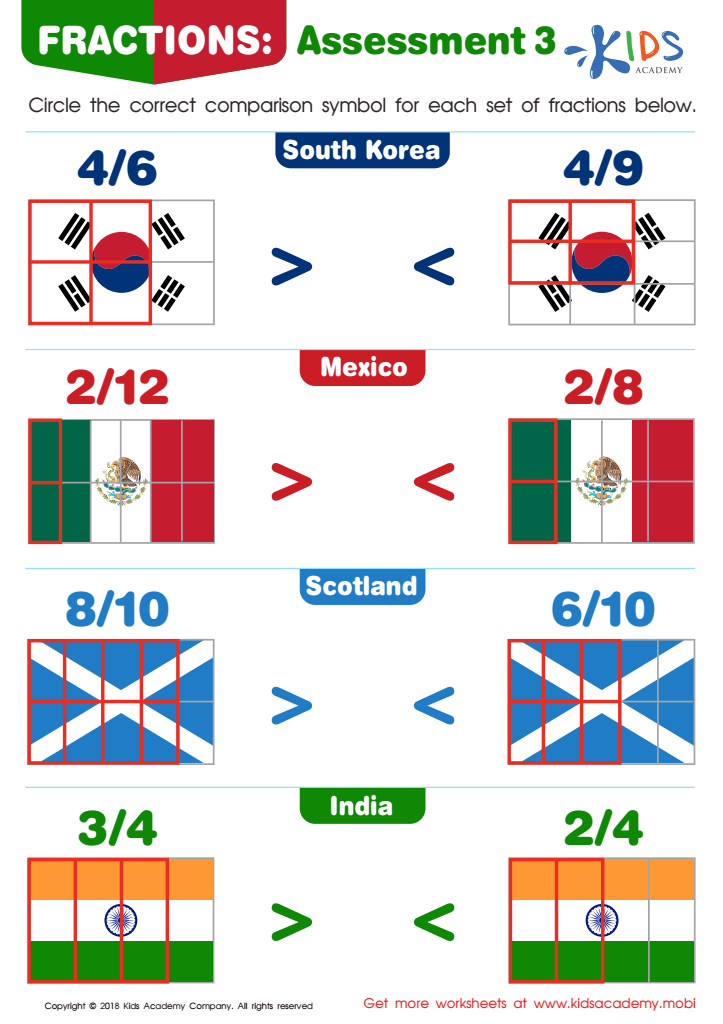
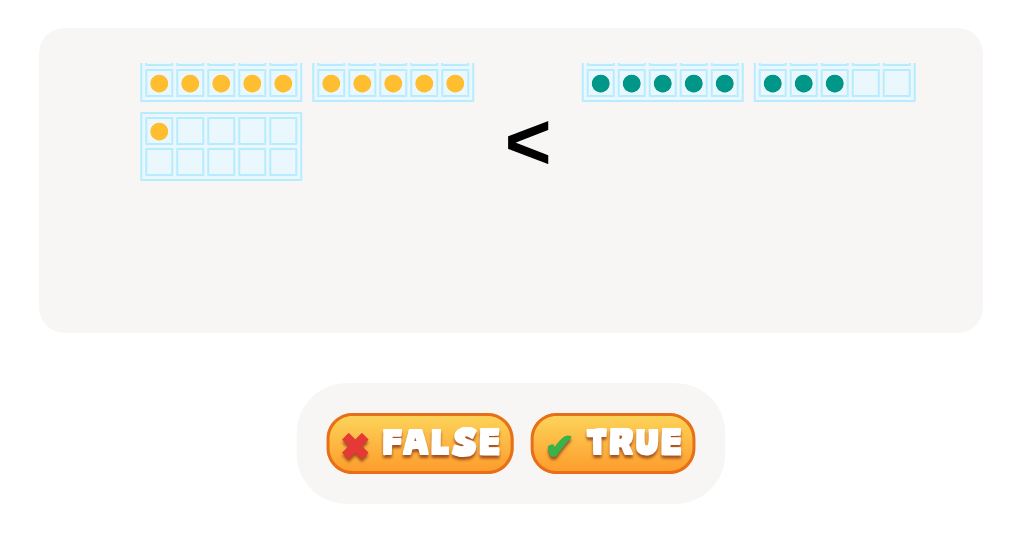
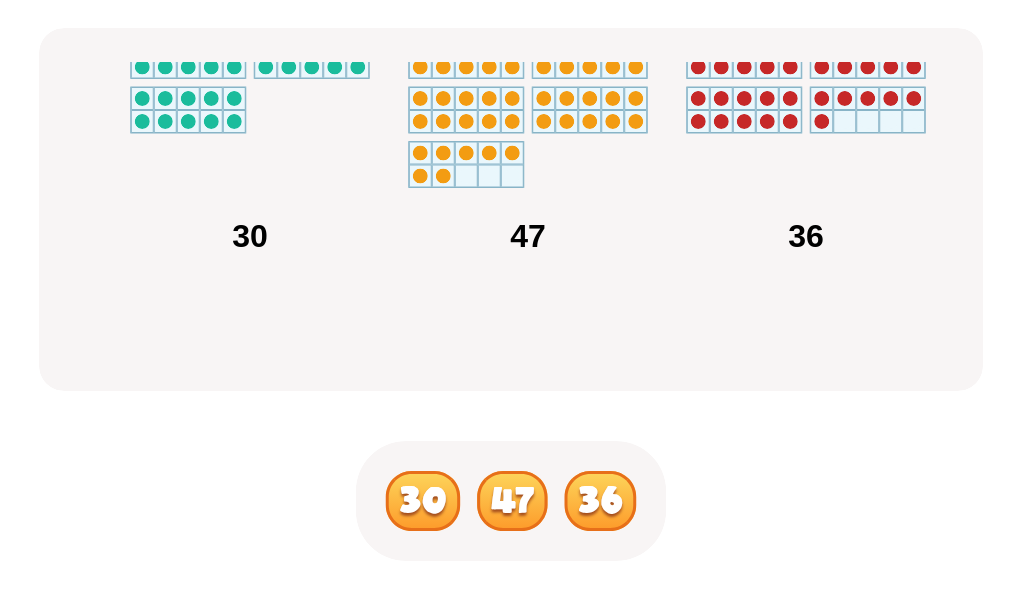
Fractions: Assessment 3 Worksheet
 Assign to My Students
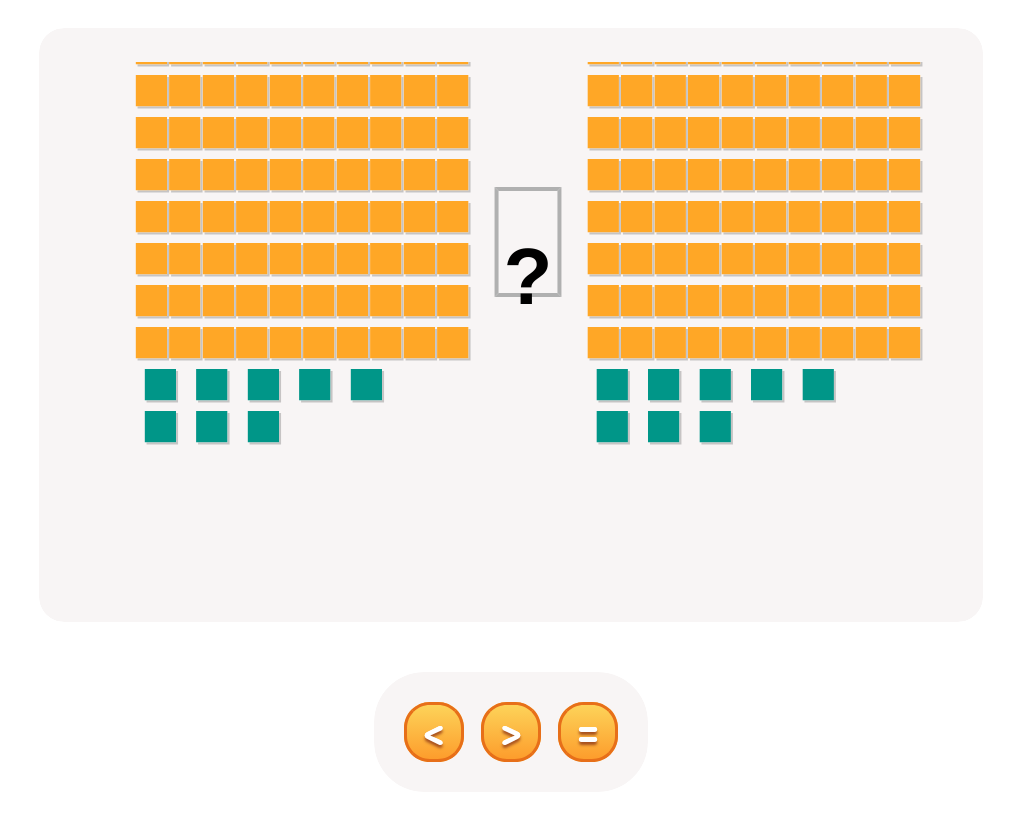

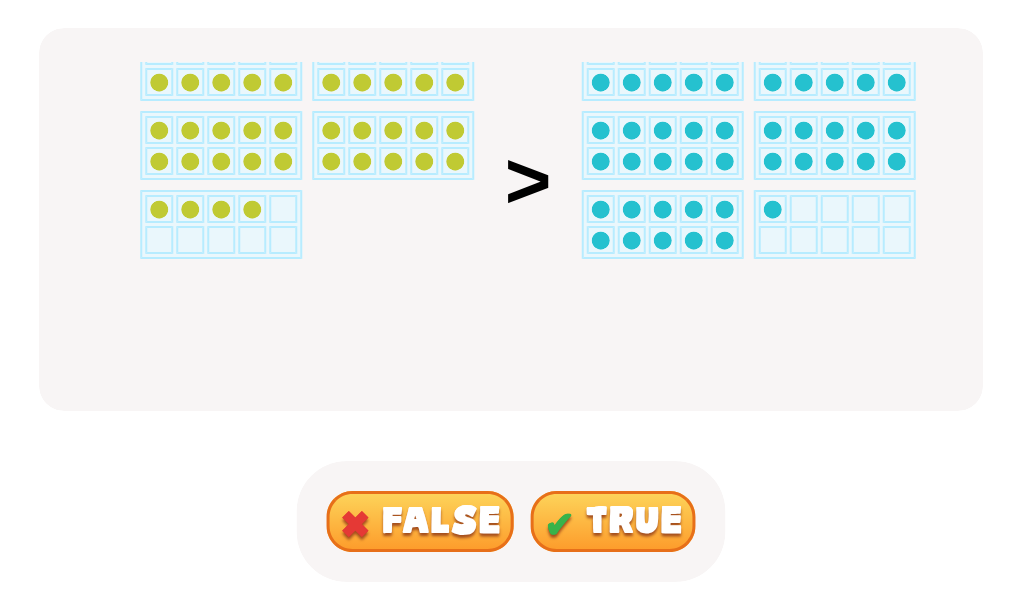
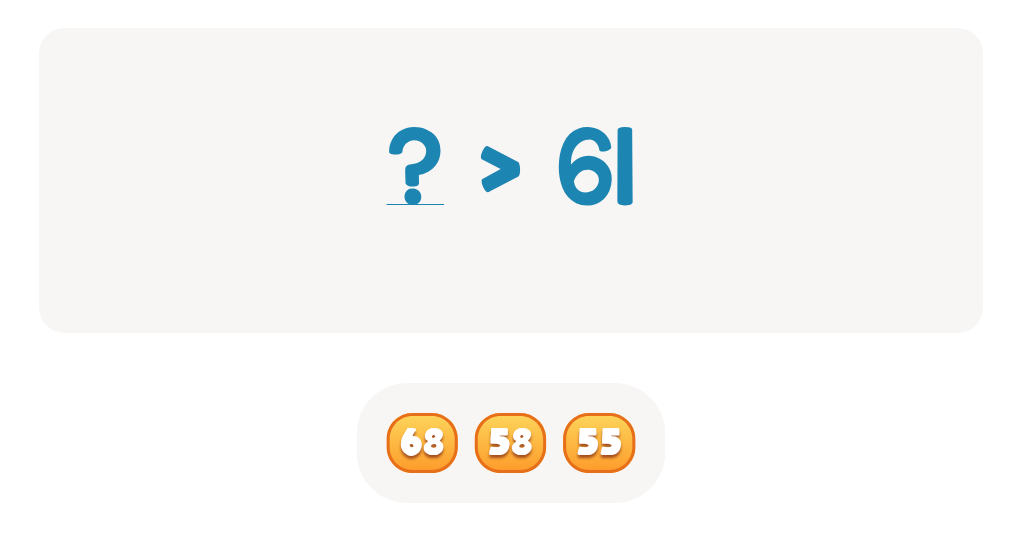
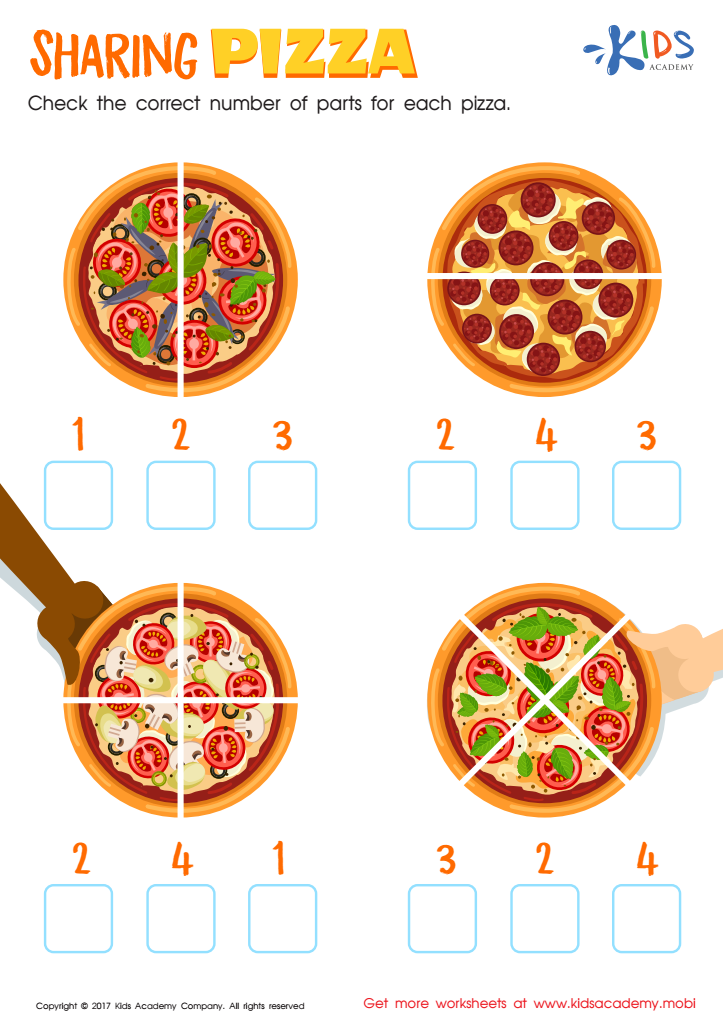
Sharing Pizza Worksheet
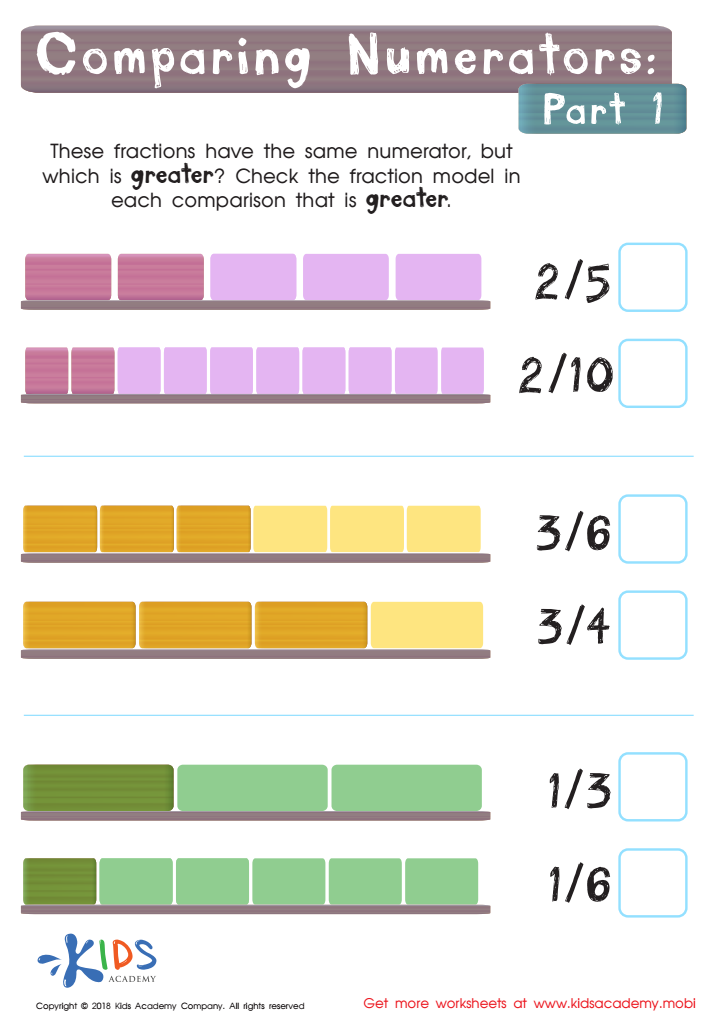
Comparing Numerators Part 1 Worksheet





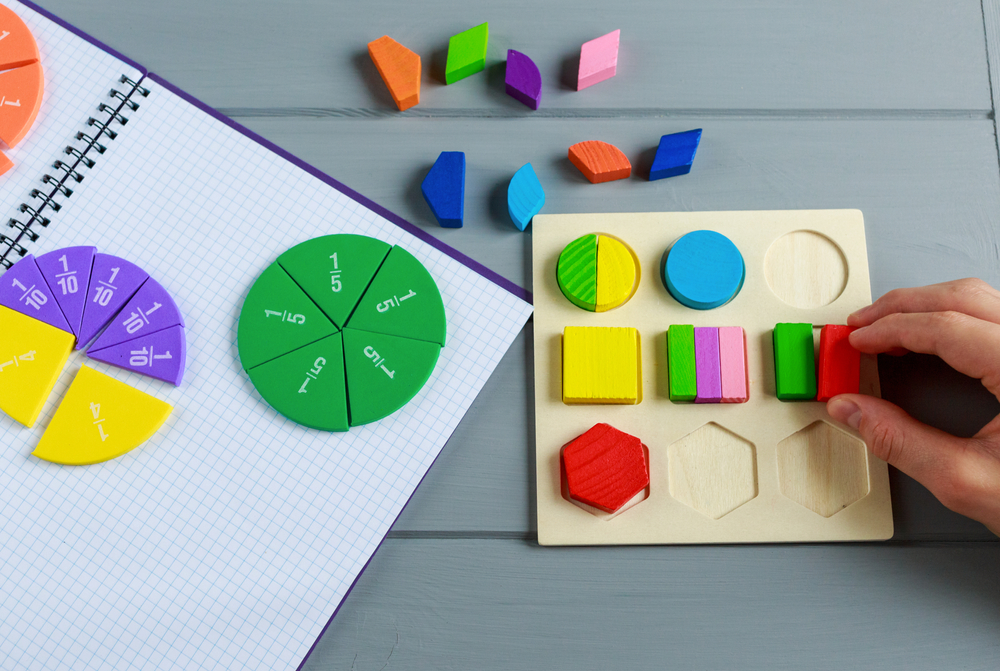


Understanding fractions and comparing numbers are foundational math skills critical for children aged 3-8. For parents and teachers, prioritizing these concepts is crucial for several reasons.
First, young minds are remarkably capable of grasping mathematical principles through hands-on activities and simple examples. Introducing fractions and number comparisons early on lays the groundwork for more complex arithmetic and problem-solving skills needed in later grades.
Second, these concepts help children develop a stronger sense of number relationships and quantity. By understanding how fractions represent parts of a whole and how to compare numbers, kids build essential cognitive skills, such as reasoning and logical thinking, which are critical not just in math but across all subjects.
Additionally, it builds confidence. Early mastery of fundamental math concepts can turn learning into an enjoyable experience and reduce math anxiety. Children who feel competent in math are more likely to approach new challenges with eagerness and persistence.
Moreover, mathematical literacy is essential in everyday life, from cooking and shopping to sharing and fairness. By equipping young children with these tools, parents and teachers provide them with practical skills they will use daily.
In summary, fostering an early understanding of fractions and number comparisons cultivates a robust mathematical foundation, enhances cognitive skills, and prepares children for future academic success and practical life applications.








