Comparing Fractions Fractions of Shapes Worksheets for Ages 3-8
3 filtered results
-
From - To
Explore our engaging "Comparing Fractions of Shapes" worksheets, specially designed for children aged 3-8! These interactive resources make learning fractions fun and accessible by using colorful shape visuals that capture young learners’ attention. With a variety of activities, kids will compare fractions of different shapes, enhancing their understanding of mathematical concepts while honing their fine motor skills. Our worksheets are perfect for teachers and parents looking to provide meaningful math practice at home or in the classroom. Start your child's journey to mastering fractions today, and watch them build confidence and enthusiasm for math! Download your worksheets now for infinite fun!
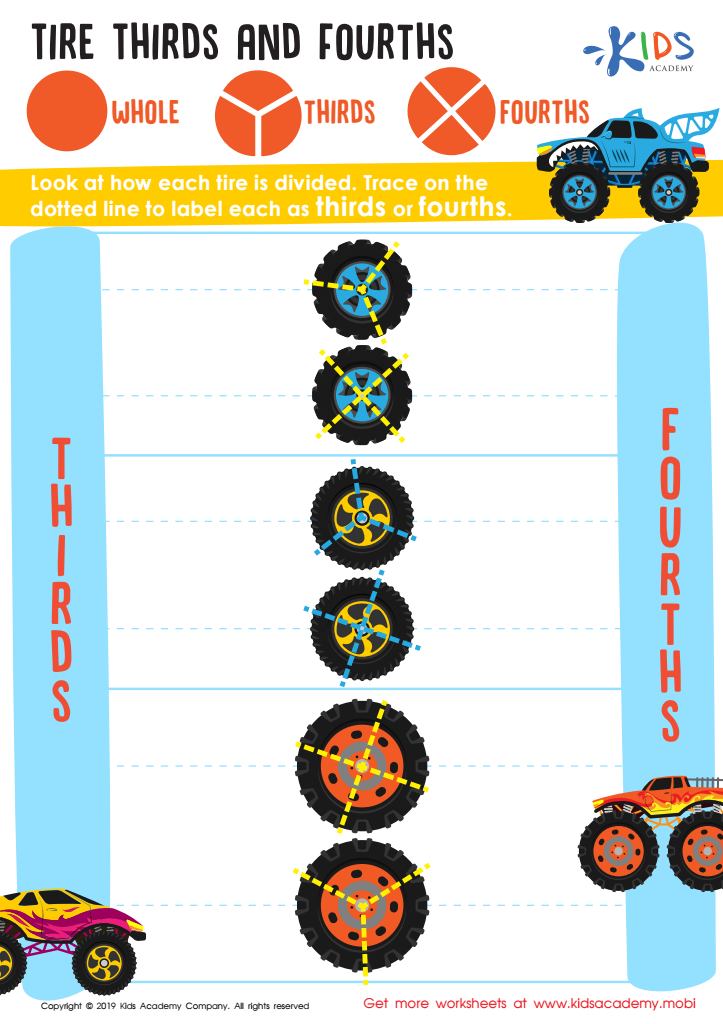
Tire Thirds and Fourths Worksheet
 Assign to My Students
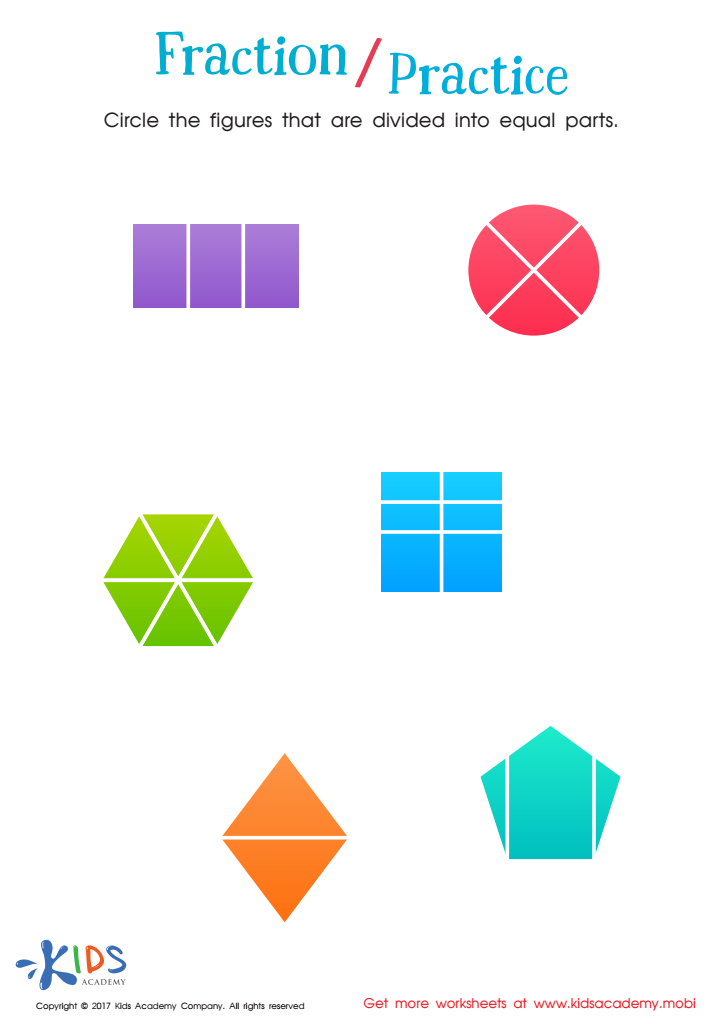
Fractions: Shapes Worksheet
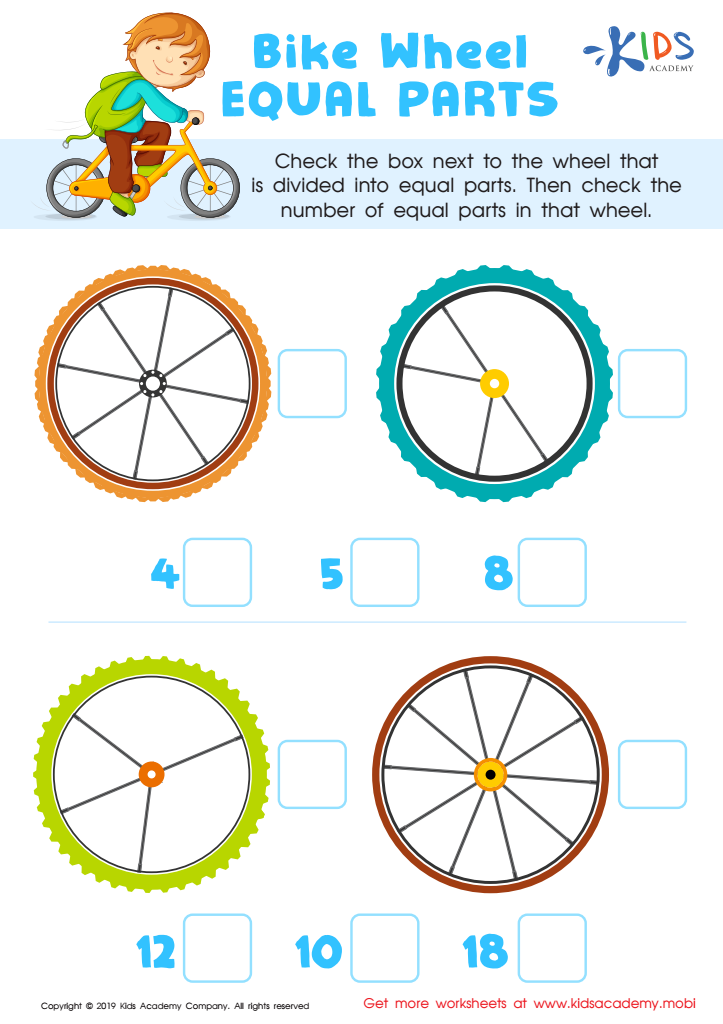
Bike Wheel Equal Parts Worksheet








Comparing fractions and understanding fractional parts of shapes is a fundamental skill for children aged 3-8, laying the groundwork for their understanding of mathematics and problem-solving. Parents and teachers should care about this concept because it encourages critical thinking and provides a tangible way for children to grasp the idea of part-to-whole relationships.
At this age, children are naturally curious about their environment. Fractions of shapes, such as dividing a pizza or sharing a chocolate bar, help them visualize and relate to everyday situations. This hands-on approach not only makes learning engaging but also develops their ability to communicate mathematical ideas. By introducing concepts of comparing fractions through visual aids like shapes, children can better understand equivalence, size relationships, and the concept of "more" or "less."
Moreover, mastering these early concepts supports later mathematical skills, such as addition and subtraction involving fractions, which is crucial in higher education. Emphasizing comparing fractions provides children with a strong mathematical foundation, promotes socio-emotional skills in cooperative tasks, and fosters a love for math by making it relatable and fun. By nurturing these skills, parents and teachers empower children to develop confidence in their mathematical abilities.