Basic counting skills Geometry Worksheets for Ages 3-8
3 filtered results
-
From - To
Unlock the joy of learning with our Basic Counting Skills Geometry Worksheets designed for ages 3-8. These engaging, printable activities seamlessly integrate fundamental math concepts with fun geometric shapes, fostering early counting proficiency. Tailored to young minds, the worksheets feature vibrant illustrations and interactive tasks that enhance children's ability to count, recognize shapes, and understand spatial relationships. Perfect for both classroom and home use, our worksheets encourage independent problem-solving and build a strong mathematical foundation. Watch your child’s confidence soar as they master early counting skills through playful, educational exercises. Explore our collection and make learning count!
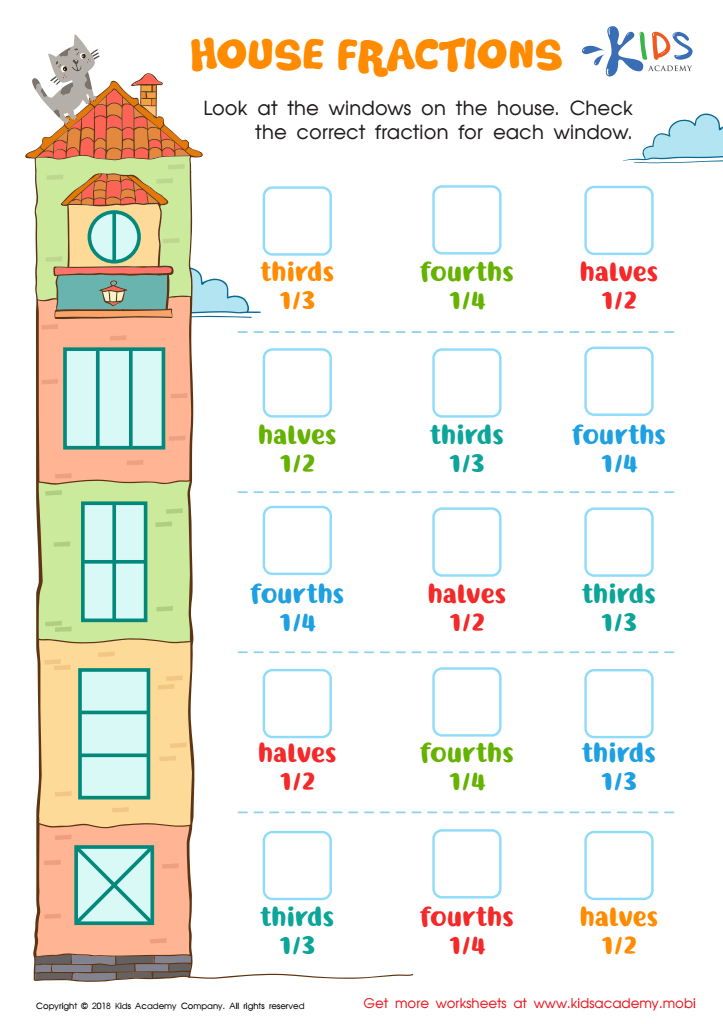
House Fractions Worksheet
 Assign to My Students











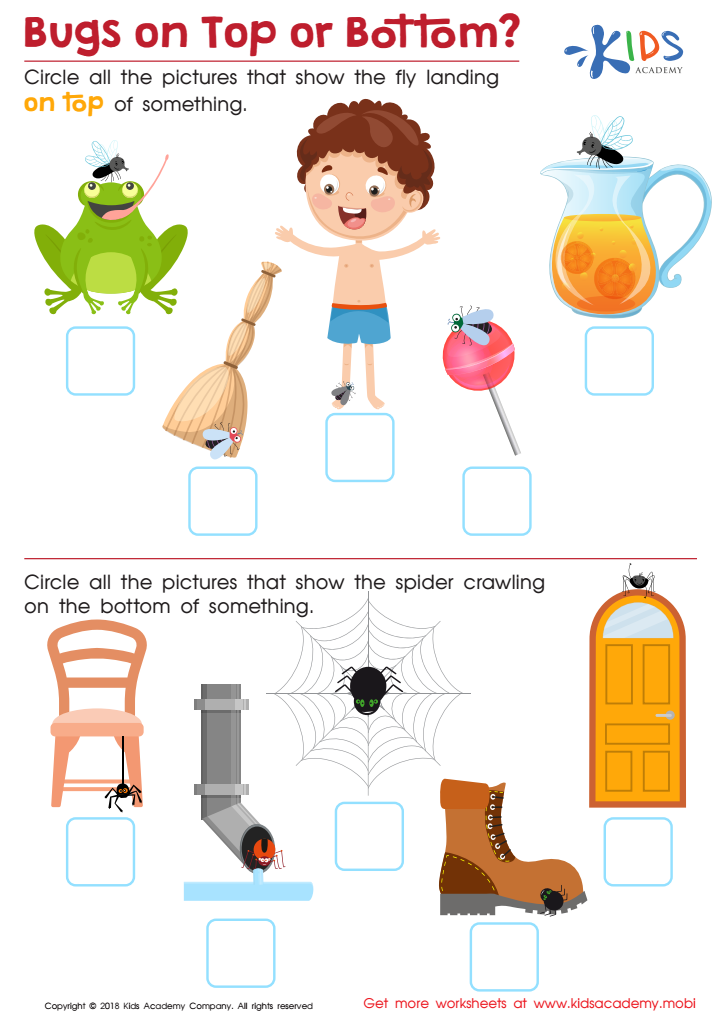
Bugs on Top or Bottom? Worksheet
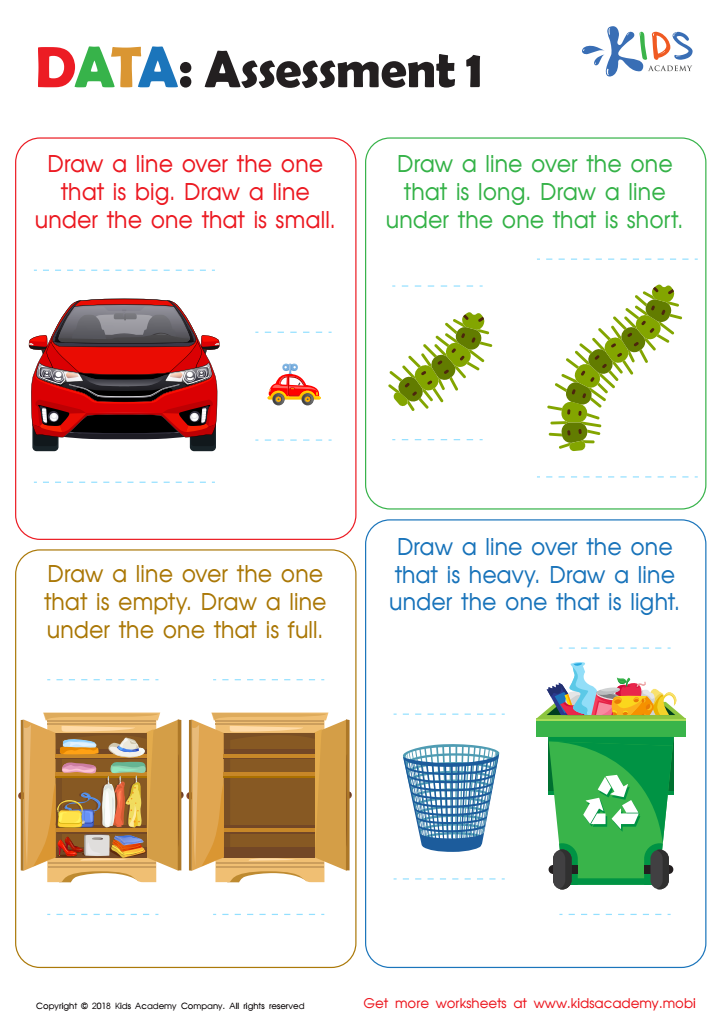
Data: Assessment 1 Worksheet








Basic counting skills and geometry for ages 3-8 form the foundation for a child's future understanding of math and science. These early years are a critical period for cognitive development, making it essential for parents and teachers to focus on these areas.
Counting skills teach children the concept of numbers and their relationships, which is fundamental for all mathematical operations. By knowing how to count, kids learn sequencing, number recognition, and simple arithmetic operations like addition and subtraction. Early exposure to counting also helps in sharpening memory, enhancing pattern recognition, and establishing problem-solving skills, which are crucial cognitive abilities.
Geometry, on the other hand, plays a significant role in developing spatial awareness and reasoning skills. Young children who explore shapes, sizes, and spatial relationships build the groundwork for understanding more complex geometric concepts later on. It can also aid in visual learning and fine motor skills as kids interact with different geometric shapes through hands-on activities like drawing, puzzles, and building blocks.
Moreover, integrating counting and geometry in early education can create a positive and curious attitude towards learning. It provides a well-rounded mathematical foundation that not only aids academic success but also equips kids with critical thinking and analytical skills necessary for everyday life. Therefore, parents and teachers should prioritize teaching these basic skills to foster a child's holistic development.








