Basic multiplication Geometry Worksheets for Ages 3-8
3 filtered results
-
From - To
Discover our engaging Basic Multiplication Geometry Worksheets designed specifically for children ages 3 to 8! These printable resources introduce young learners to foundational multiplication concepts through colorful shapes and fun activities that blend math with geometry. Each worksheet focuses on enhancing skills such as counting, shape recognition, and simple multiplication, making learning both enjoyable and educational. Ideal for home or classroom use, our worksheets encourage interactive play and independent practice. With a variety of exercises that cater to different learning styles, your child will build confidence in their math abilities while having a great time exploring the world of geometry. Start learning today!
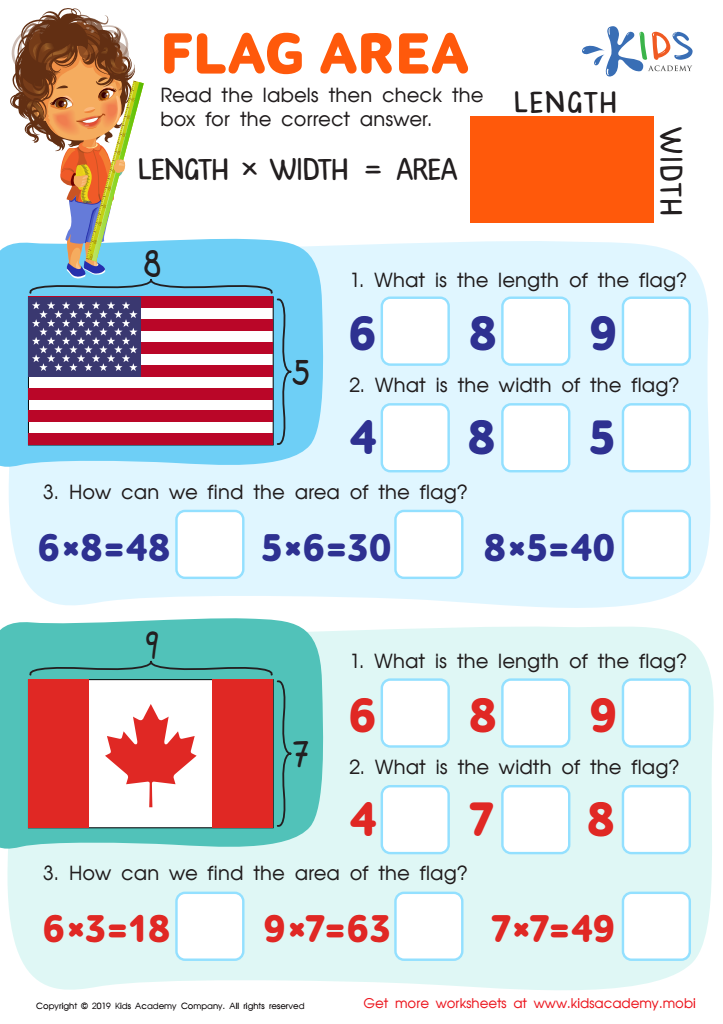
Flag Area Worksheet
 Assign to My Students











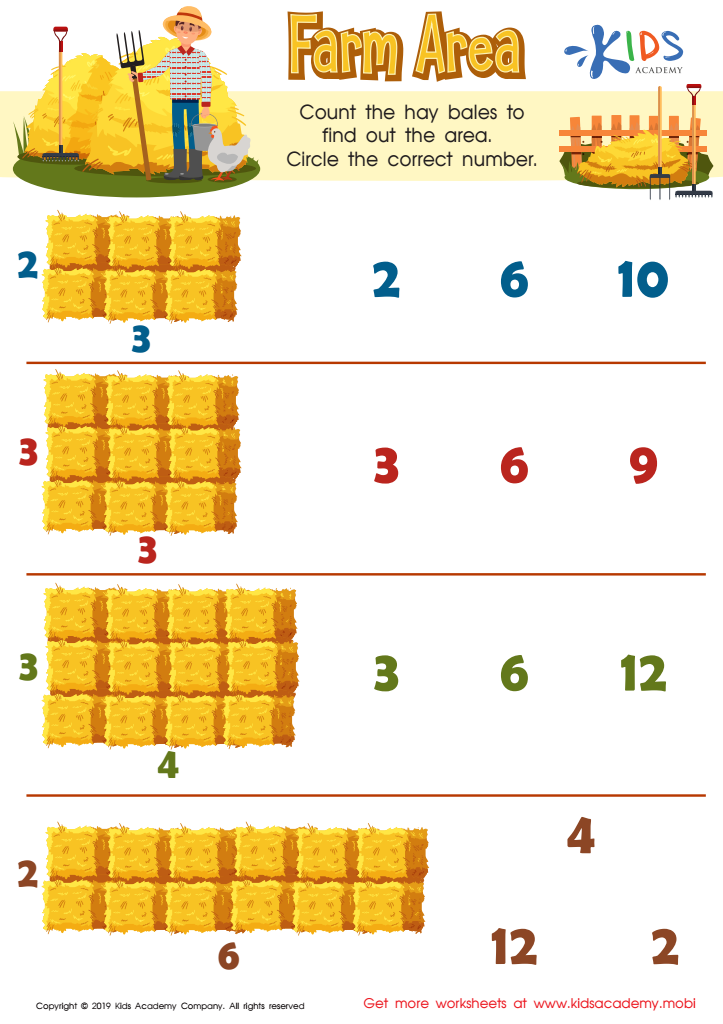
Farm Area Worksheet
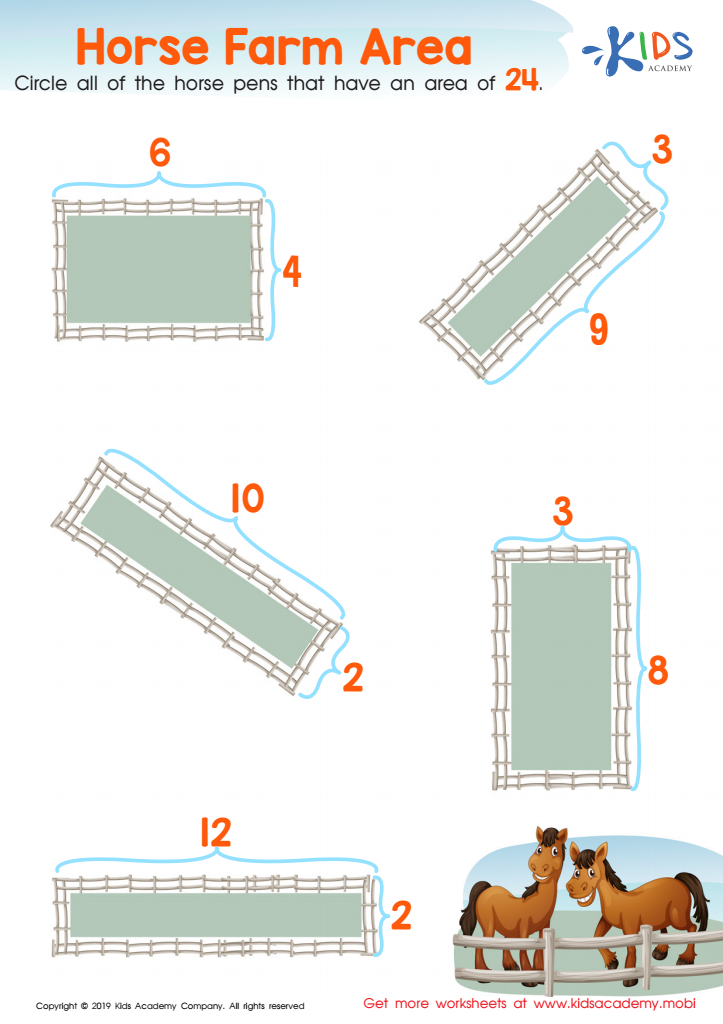
Horse Farm Area Worksheet








Parents and teachers should prioritize teaching basic multiplication in the context of geometry for children aged 3-8 because it fosters foundational math skills that are crucial for later learning. Understanding basic multiplication helps children grasp the concept of grouping and the idea of area, essential for geometry. By introducing multiplication through geometrical shapes, children can visualize and better understand numbers and their relationships.
Engaging with geometry at this age promotes spatial awareness, problem-solving, and critical thinking. By using shapes and manipulatives, children can explore multiplication as a concept of "equal groups" and "repeated addition," linking abstract math to tangible experiences. For instance, exploring how many squares fit into a rectangle encourages them to see math as a part of everyday life, laying the groundwork for more advanced concepts in mathematics.
Additionally, integrating these two subjects supports a cross-curricular approach to learning, making math more engaging. This foundation also builds confidence, as children begin to see themselves as capable mathematicians, encouraging a positive attitude towards math in their educational journey. Ultimately, understanding basic multiplication within geometry prepares them for future success in math, paving the way for critical problem-solving skills that reach far beyond the classroom.








