Improving counting skills Geometry Worksheets for Ages 3-8
3 filtered results
-
From - To
Nurture your child's mathematical potential with our "Improving Counting Skills Geometry Worksheets" designed for ages 3-8. These engaging printables blend counting and geometry concepts through playful activities that enhance number recognition and spatial awareness. Perfect for young learners, our worksheets offer a variety of exercises, from counting shapes to identifying patterns, ensuring a fun learning experience. By integrating vibrant illustrations and interactive tasks, we make math enjoyable and accessible, laying a strong foundation for future academic success. Help your child build confidence and improve their counting skills with our expertly crafted, age-appropriate geometry worksheets!
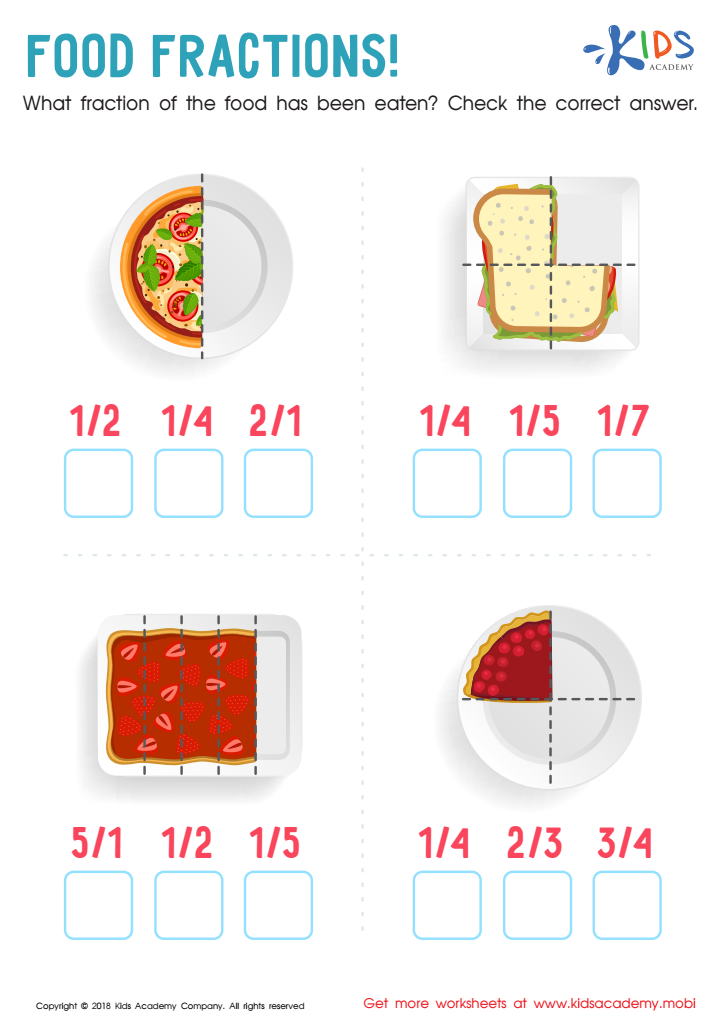
Food Fractions Worksheet
 Assign to My Students











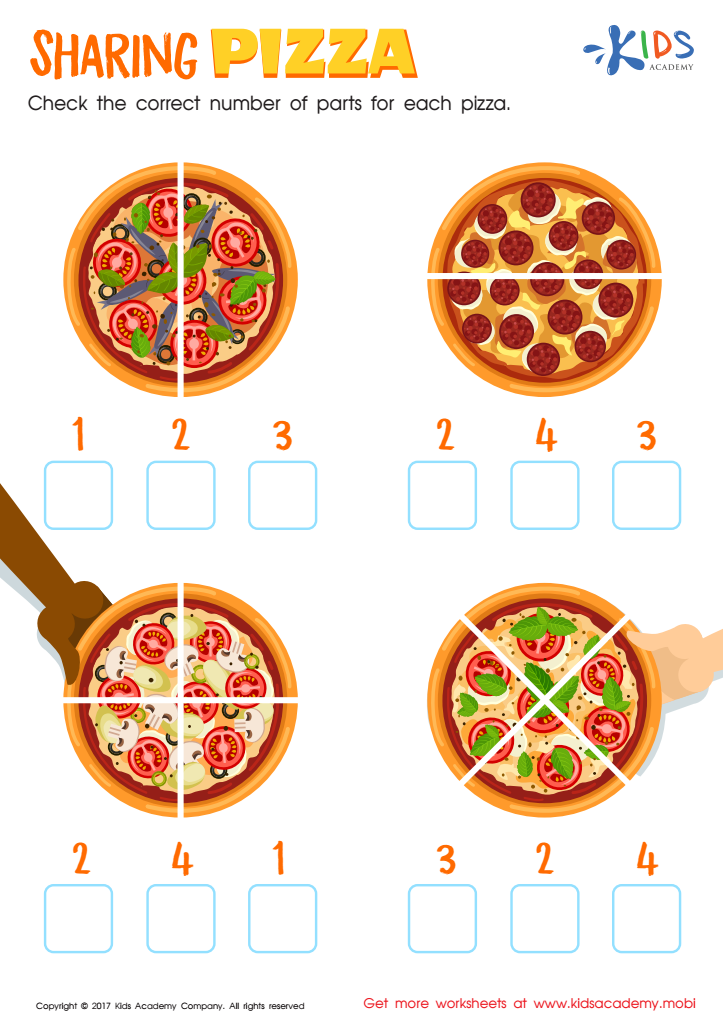
Sharing Pizza Worksheet
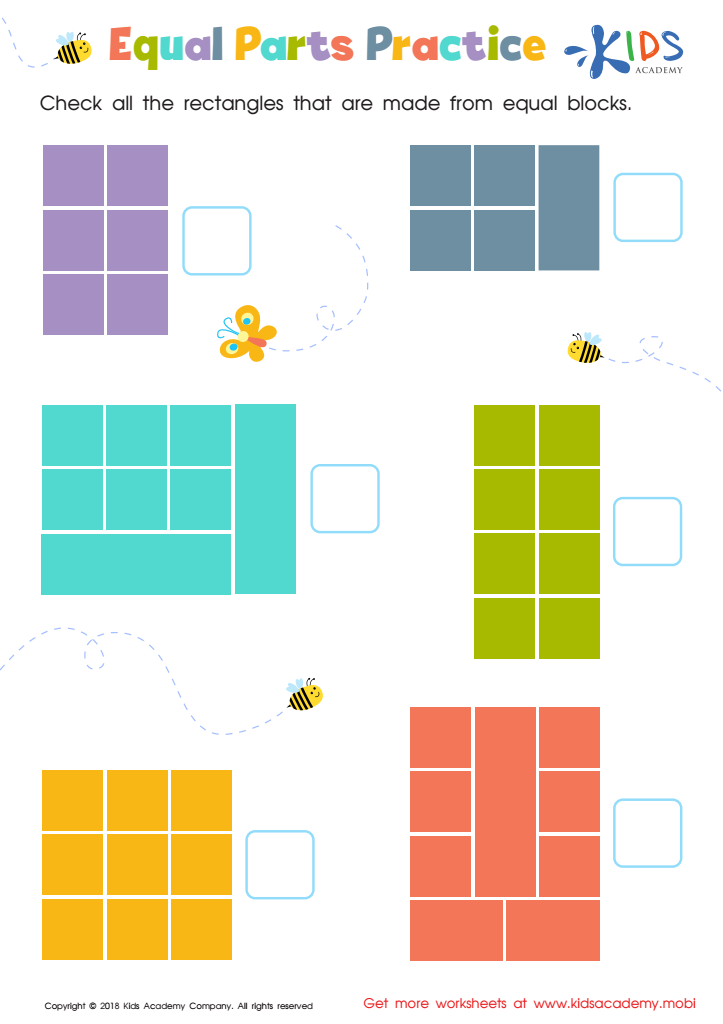
Equal Parts Practice Worksheet








Improving counting and geometry skills for ages 3-8 is crucial for laying a strong mathematical foundation. During these formative years, children’s brains are highly receptive to new concepts, and developing these skills fosters critical thinking, problem-solving, and cognitive development.
Counting teaches basic number sense, an essential building block for all future mathematical learning. When children master counting, they understand quantity, sequence, and patterns. This proficiency is fundamental not just in math, but in everyday activities, from measuring ingredients for a recipe to understanding the concept of time.
Geometry, on the other hand, helps children recognize and manipulate shapes and spatial relationships in their environment. Early exposure to geometric concepts aids in developing spatial awareness, which is key for subjects like science, engineering, and art. For instance, recognizing shapes and understanding how they fit together can improve a child’s ability to solve puzzles, build structures, and even improve their handwriting and physical coordination.
Furthermore, engaging young children in activities that improve counting and geometry skills enhances their confidence and eagerness to learn. It introduces them to the joy of discovering patterns and solving problems, laying a positive attitude towards learning that will benefit them throughout their lives. Investing in these skills is an investment in a child’s overall intellectual development, preparing them for advanced concepts and lifelong learning.








