
Mathematical reasoning Geometry Worksheets for Ages 3-8
3 filtered results
Difficulty Level
Grade
Age
-
From - To
Subject
Activity
Standards
Discover engaging Mathematical Reasoning Geometry Worksheets designed for children ages 3-8! Our carefully crafted worksheets focus on enhancing young learners' understanding of shapes, spatial awareness, and problem-solving skills. With vibrant visuals and appealing activities, these worksheets make learning about geometry fun and interactive. Kids will enjoy exploring concepts such as shape recognition, sorting, and pattern creation while developing critical thinking abilities. Perfect for teachers and parents, these resources provide a valuable tool to support early math education in both classroom and home settings. Foster your child's confidence in geometry with our exciting activities tailored to their developmental stage!
Favorites
With answer key
Interactive
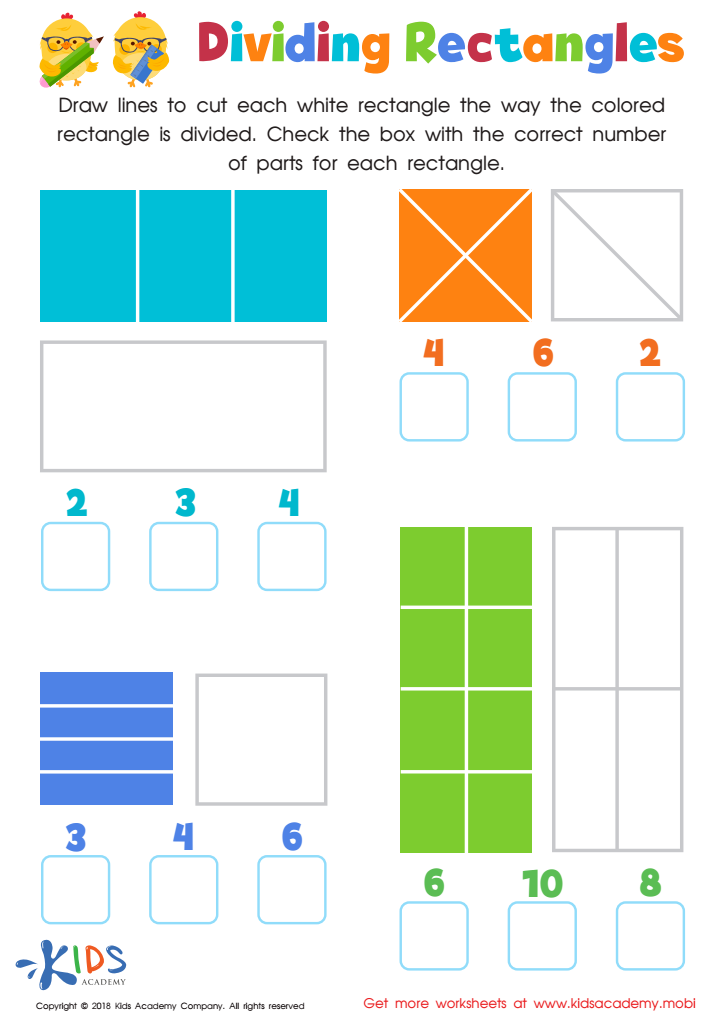
Dividing Rectangles Worksheet
Ask your child to draw lines to divide the white rectangles like the colored ones. Then, have them count the parts in each and choose the correct number. This worksheet will help them practice counting and dividing.
 Assign to My Students
Dividing Rectangles Worksheet
Worksheet











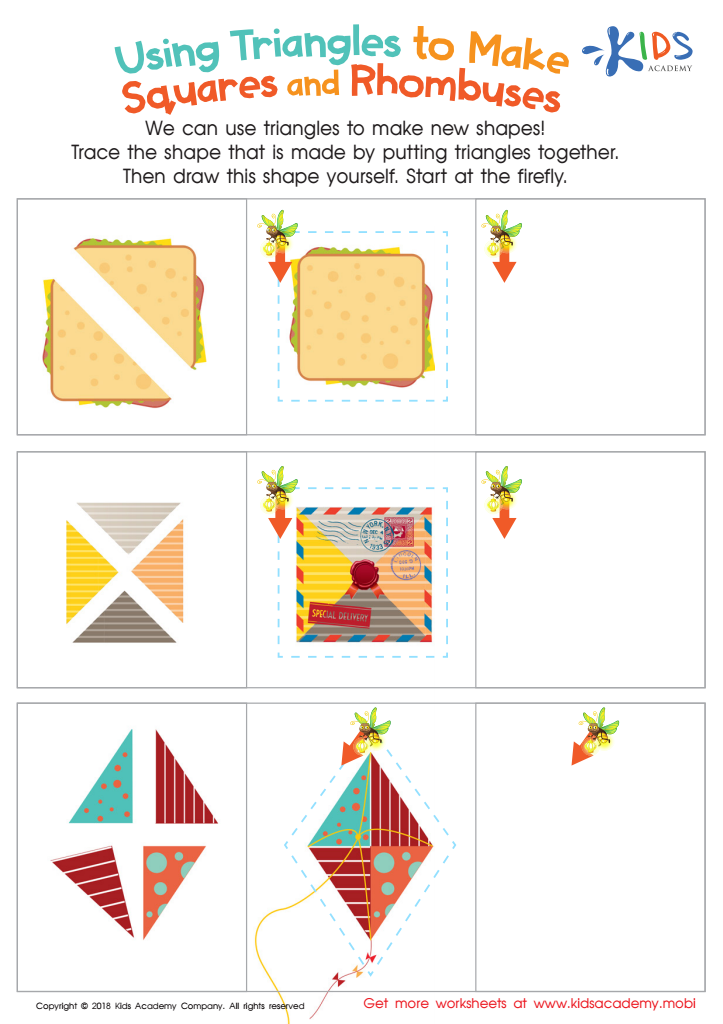
Using Triangles to Make Squares and Rhombuses Worksheet
Learning shapes is a fun way to boost spatial skills and critical thinking. This worksheet shows children how to use triangles to construct squares and rhombuses. Clear illustrations and a printout help children draw the new shape. A great activity for the math classroom! 80 words.
Using Triangles to Make Squares and Rhombuses Worksheet
Worksheet
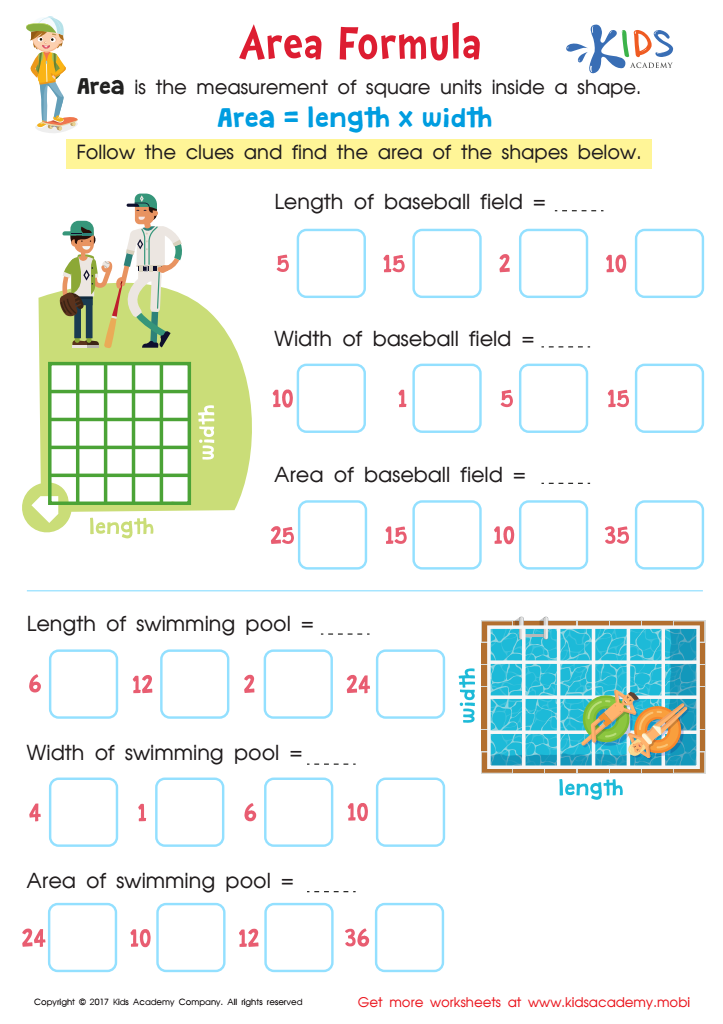
Area Formula Worksheet
This fun-filled area formula worksheet PDF helps kids learn the geometric concept of area. It breaks down the formula with easy-to-follow steps, starting with counting squares to determine the length and width, then multiplying them to get the area.
Area Formula Worksheet
Worksheet
Join Kids Academy for Free
Who is primarily going to use this learning content?








Mathematical reasoning in geometry is essential for young learners aged 3-8 as it lays a strong foundation for problem-solving and critical thinking skills. During these formative years, children are naturally curious and eager to explore the world around them. Engaging with geometric concepts helps them understand shapes, sizes, spatial relationships, and how objects relate to one another, fostering cognitive development.
Incorporating geometry into early education enhances children's ability to visualize and manipulate shapes, which is crucial in various real-life situations, such as navigation, construction, and even art. When children develop strong geometric reasoning skills, they gain confidence in math, setting a positive attitude toward future learning.
Moreover, geometry supports the development of other mathematical concepts, such as measurement and fractions, paving the way for a more comprehensive understanding of the subject. By caring about and actively promoting geometric reasoning, parents and teachers can create enriching environments where children develop essential skills vital for their academic success and daily lives. Integrating engaging activities, such as shape sorting, building blocks, and interactive games, helps children internalize these concepts while having fun, making learning both enjoyable and meaningful.








