Visual Learning Geometry Worksheets for Ages 3-8
5 filtered results
-
From - To
Explore our engaging Visual Learning Geometry Worksheets designed specifically for children ages 3-8. These interactive worksheets help young learners grasp foundational geometric concepts through vivid visuals and hands-on activities. From identifying shapes to understanding spatial relationships, our resources promote cognitive development and critical thinking skills. Each worksheet is crafted to encourage creativity while making the learning process enjoyable and accessible. Perfect for teachers and parents, these worksheets can be easily integrated into lesson plans or home study activities. Make geometry an exciting adventure for your child, helping them build confidence and a solid understanding of basic math concepts while developing essential visual learning skills!
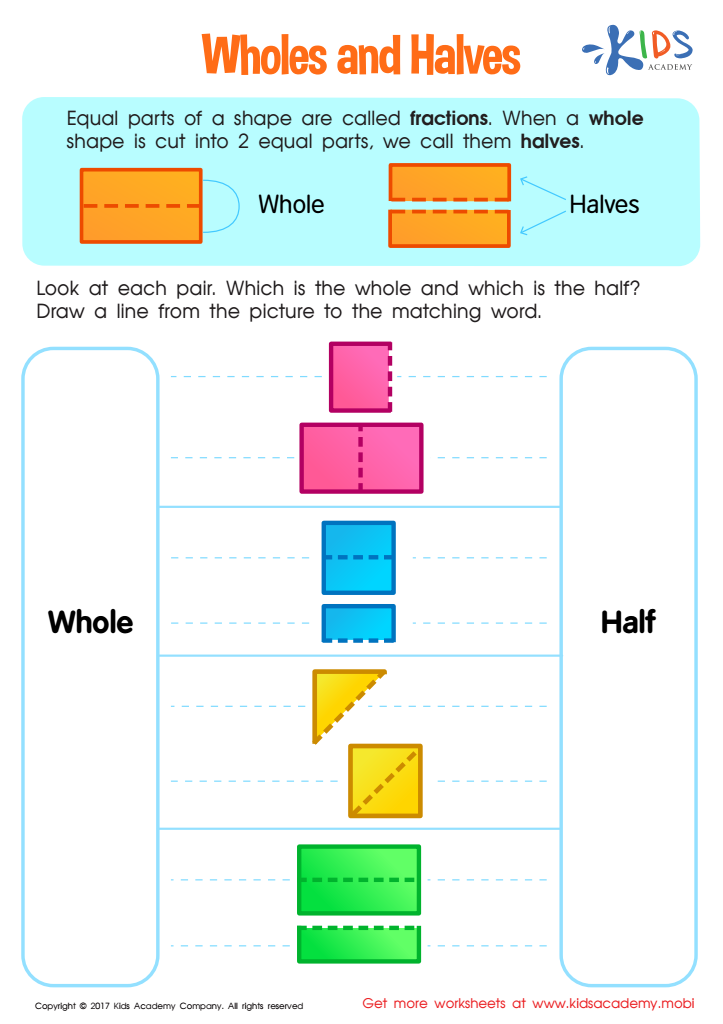
Wholes and Halves Worksheet
 Assign to My Students











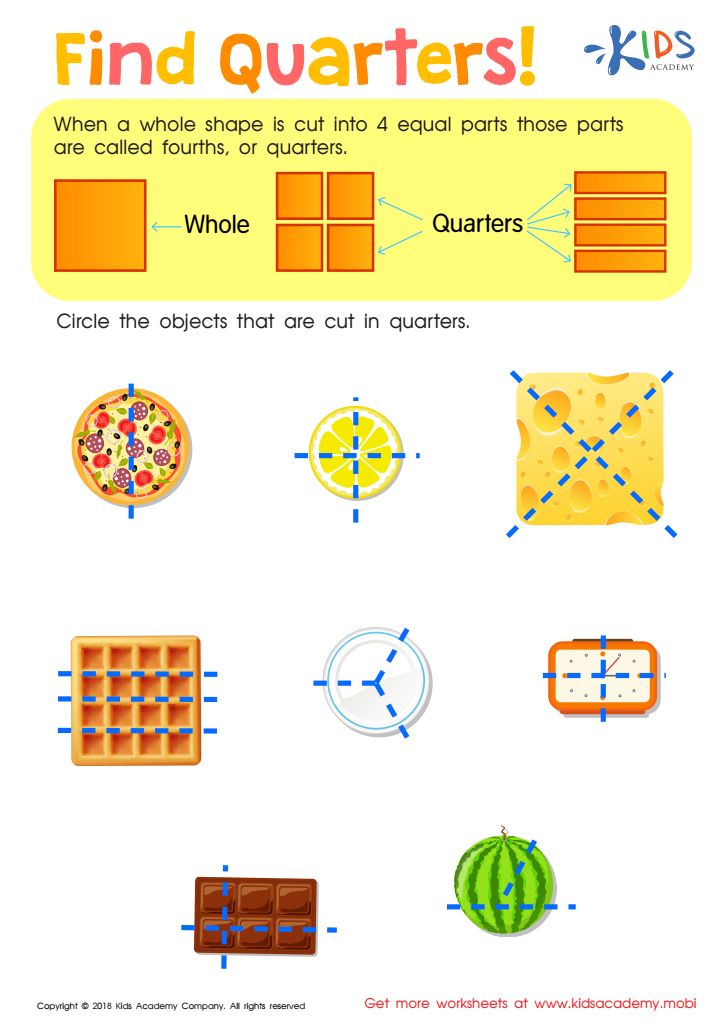
Find Quarters Worksheet
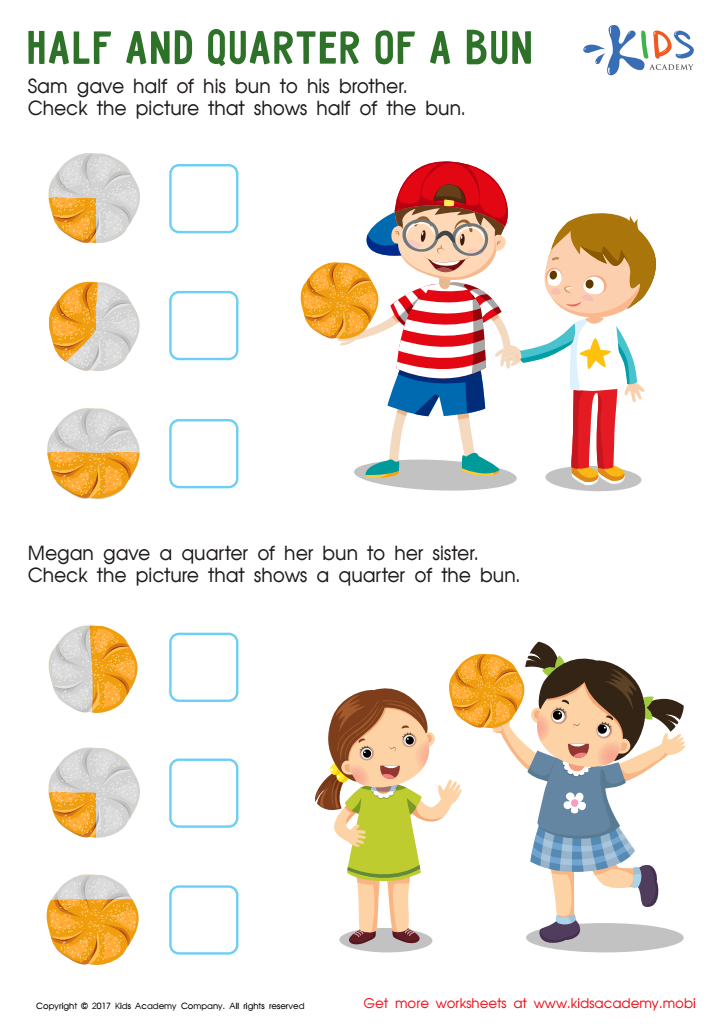
Half and Quarter of a Bun Worksheet
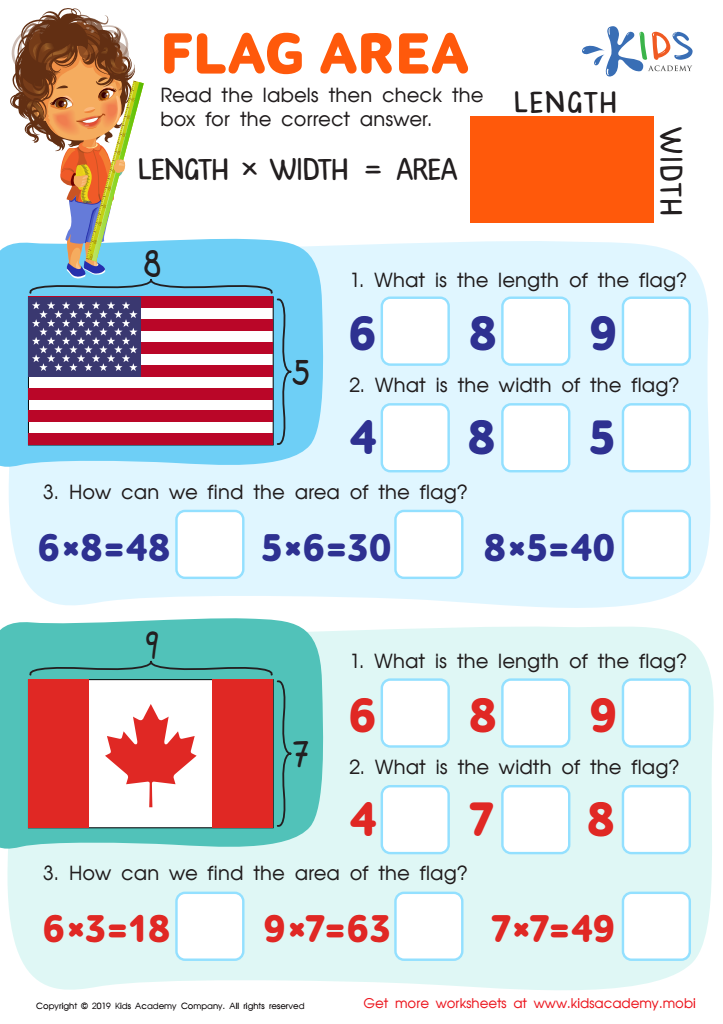
Flag Area Worksheet
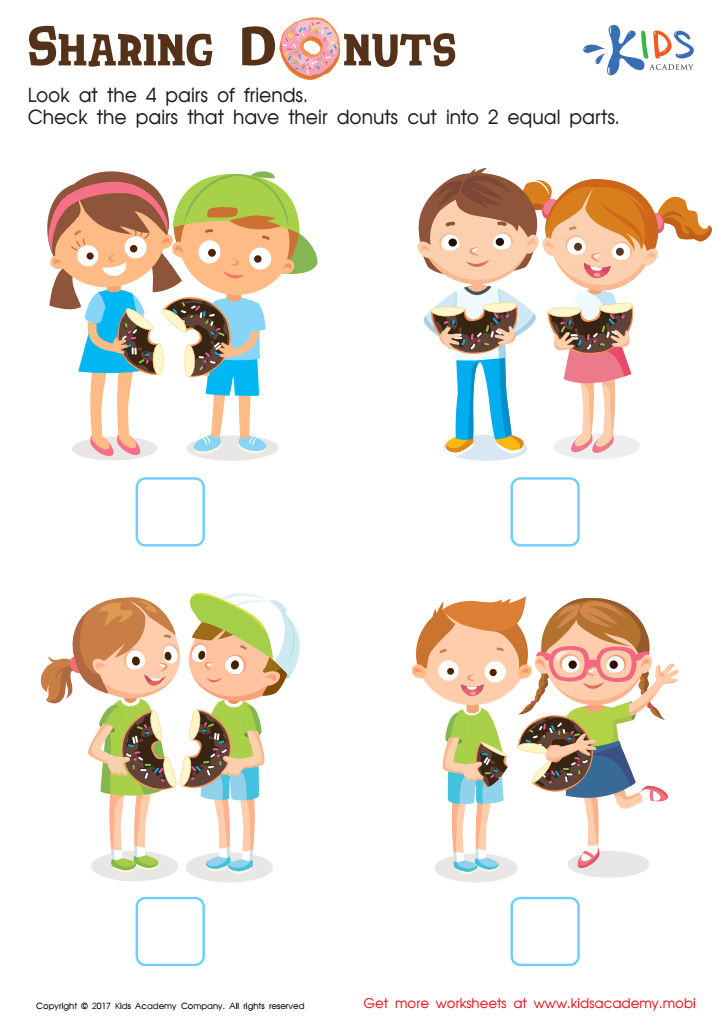
Sharing Donuts Worksheet








Visual learning geometry is crucial for children aged 3-8 as it lays the foundation for essential cognitive and spatial skills. During this developmental stage, children are naturally curious and eager to explore their environment. Visual learning engages their senses, enabling them to grasp complex geometric concepts through hands-on activities, shapes, and spatial relationships.
Understanding geometry is more than just recognizing shapes; it enhances critical thinking, problem-solving, and creative skills. Parents and teachers should prioritize geometric learning because it fosters a child's ability to visualize, manipulate, and comprehend the world around them. This early exposure equips children with the skills to excel in science, technology, engineering, arts, and mathematics (STEAM) fields later on.
Moreover, visual learning in geometry supports diverse learning styles. Children who might struggle with traditional verbal methodologies often thrive through visual input and tactile experiences. By incorporating visual geometry into daily learning, adults can nurture a child's capacity for logical reasoning and pattern recognition. Additionally, these skills improve their mathematical competence, laying a solid groundwork for higher-level learning.
Ultimately, engaging young learners in visual geometry cultivates confidence, creativity, and a lifelong love for learning, making it essential for holistic development.








