Counting skills Graphs Worksheets for Ages 3-8
6 filtered results
-
From - To
Boost your child's counting skills with our engaging Counting Skills Graphs Worksheets for ages 3-8! Designed to make learning fun, these worksheets blend interactive graph activities with essential counting practice. Children will learn to interpret data, understand basic graph concepts, and hone their numeracy skills through colorful, age-appropriate visuals. Each worksheet encourages hands-on learning, fostering critical thinking as kids explore numbers in exciting ways. Perfect for at-home learning or classroom use, our resources align with early education standards, ensuring your little ones build a strong mathematical foundation. Download today and watch your child's confidence and skills grow as they master counting through graphs!
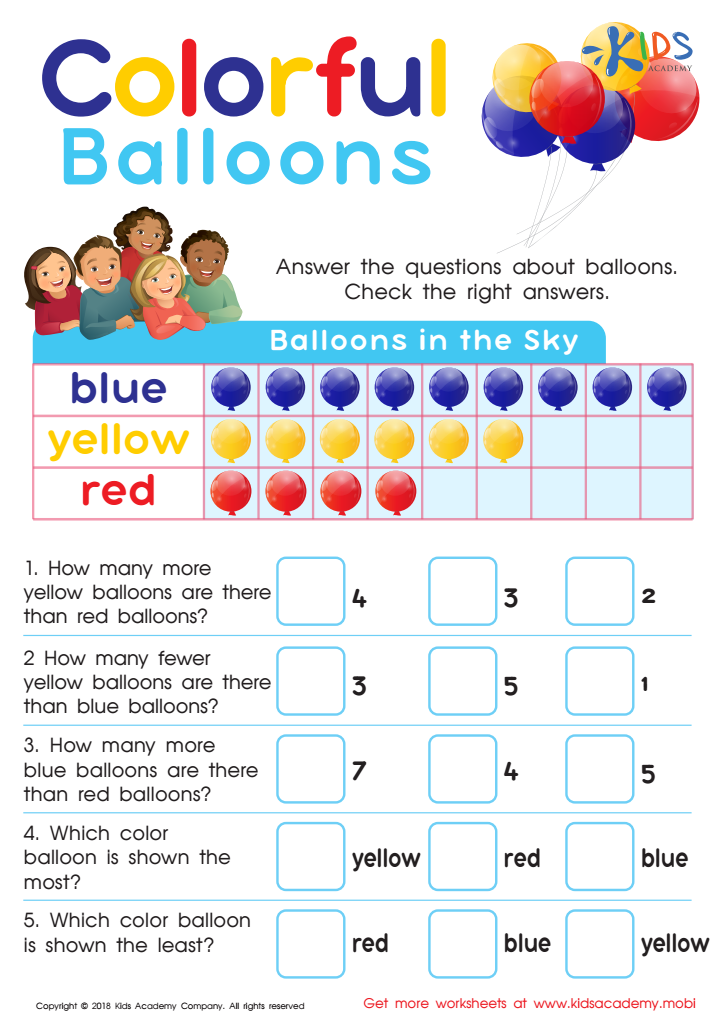
Picture Graphs: Colorful Balloons Worksheet
 Assign to My Students
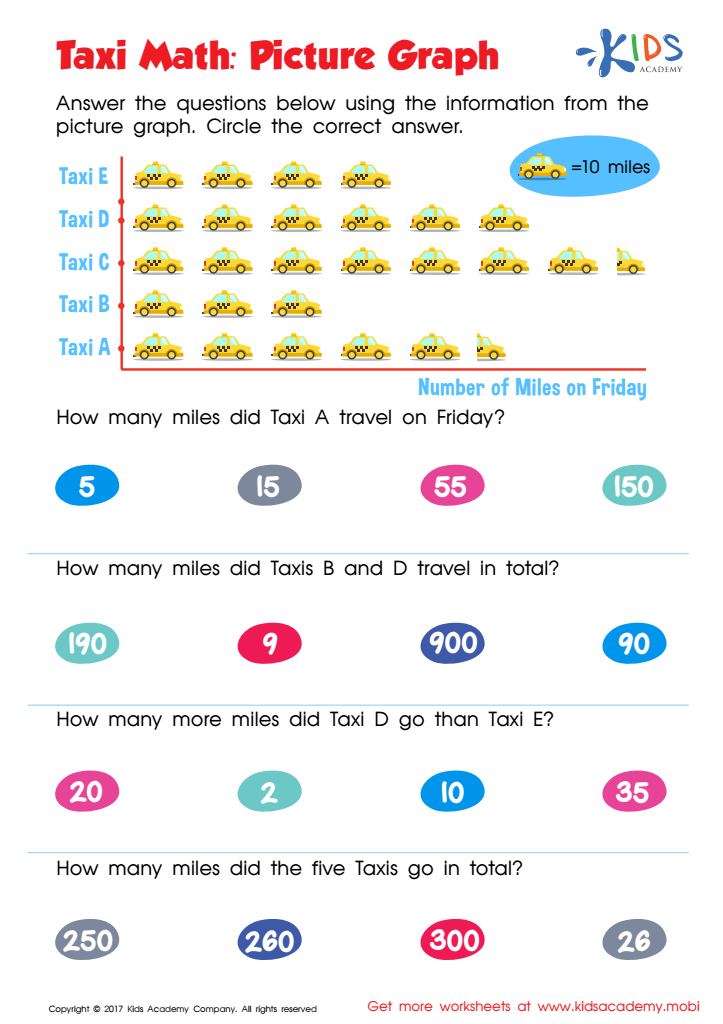
Taxi Math Worksheet
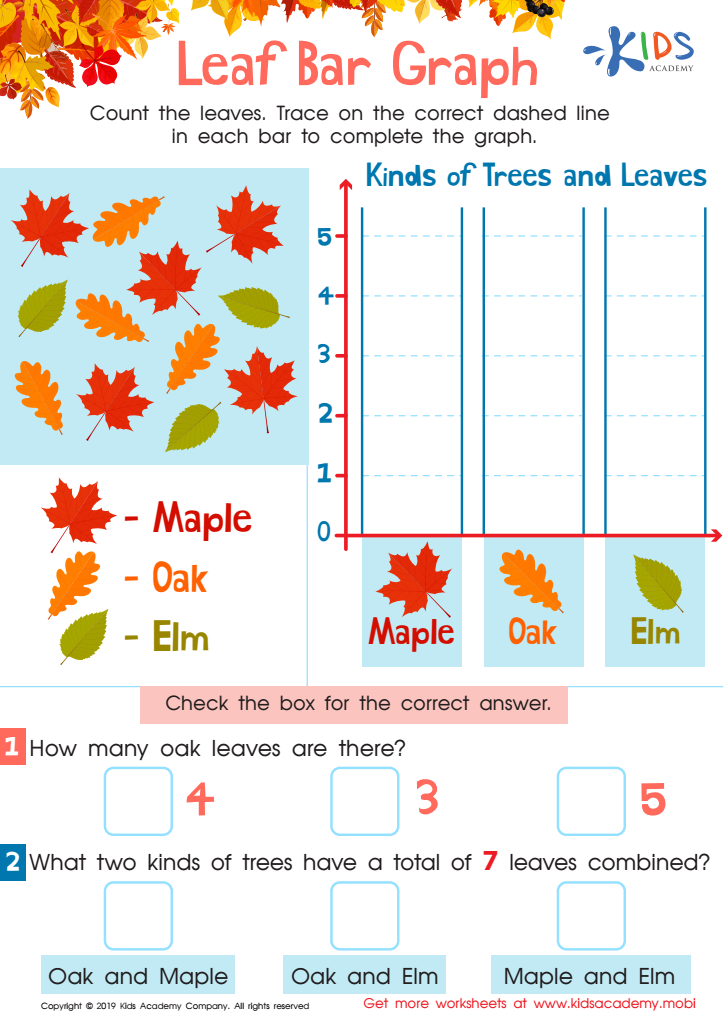
Leaf Bar Graph Worksheet
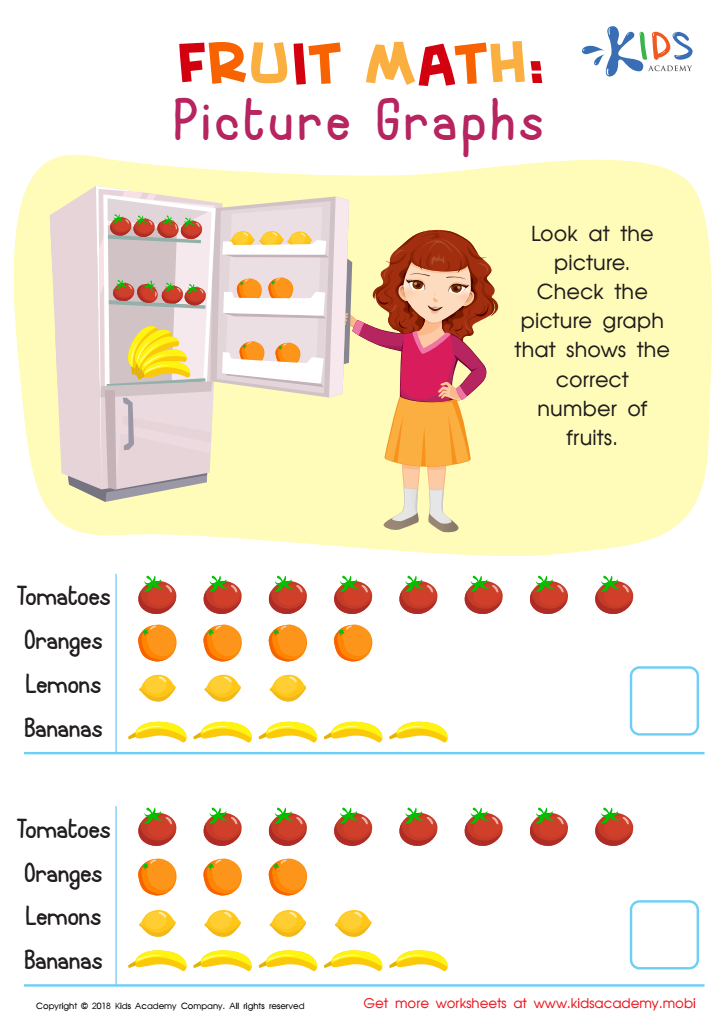
Fruit Math: Picture Graphs Worksheet
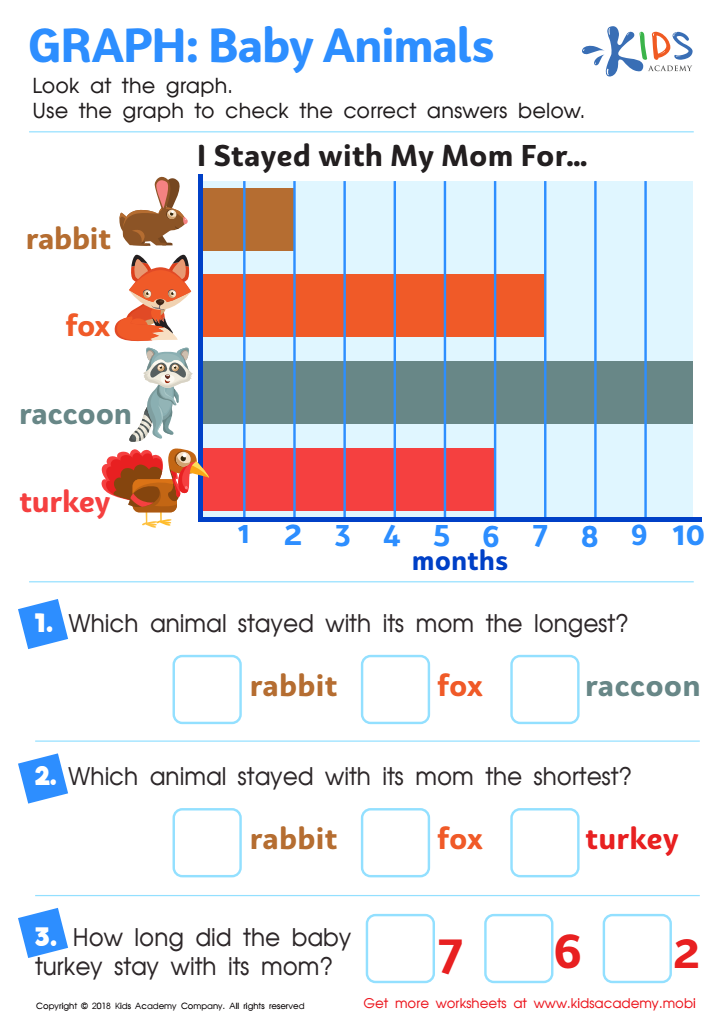
Graph: Baby Animals Worksheet

Aircraft Carrier Picture Graphs Worksheet







Counting skills and the understanding of graphs are fundamental building blocks in early childhood education, particularly for children aged 3 to 8. Mastering counting sets the stage for mathematical proficiency, aiding the development of critical cognitive skills such as problem-solving and logical thinking. When children learn to count, they not only recognize numbers but also understand quantity, which is essential for everyday life tasks, such as sharing items, measuring ingredients, or even managing time.
Graphs play a significant role in visually representing data, making abstract concepts more tangible for young learners. Introducing children to simple graphs (like bar graphs or pictographs) fosters their ability to interpret information, recognize patterns, and draw conclusions. This skill translates beyond mathematics, encouraging young learners to make informed decisions based on represented data in various contexts.
As active participants in a child's learning journey, parents and teachers should prioritize these skills not just to prepare children for advanced mathematical concepts, but to instill a love for learning through questioning and exploration. By engaging with counting and graphing activities, parents and teachers can enhance critical thinking, improve concentration, and motivate children to investigate the world around them, thereby laying a solid foundation for lifelong learning.








