
Understanding bar graphs Graphs Worksheets for Ages 3-8
3 filtered results
Difficulty Level
Grade
Age
-
From - To
Subject
Activity
Standards
Introduce young learners to the world of data with our "Understanding Bar Graphs Worksheets" for ages 3-8. These easy-to-follow worksheets are designed to help children grasp the basics of bar graphs through engaging and colorful activities. Kids will learn to interpret and create bar graphs, enhancing their math and analytical skills in a fun way. Suitable for preschool through early elementary, our printable worksheets foster critical thinking and data comprehension, setting a strong foundation for future math success. Encourage your child's curiosity and confidence in math with our expertly crafted resources. Download now for endless educational fun!
Favorites
With answer key
Interactive
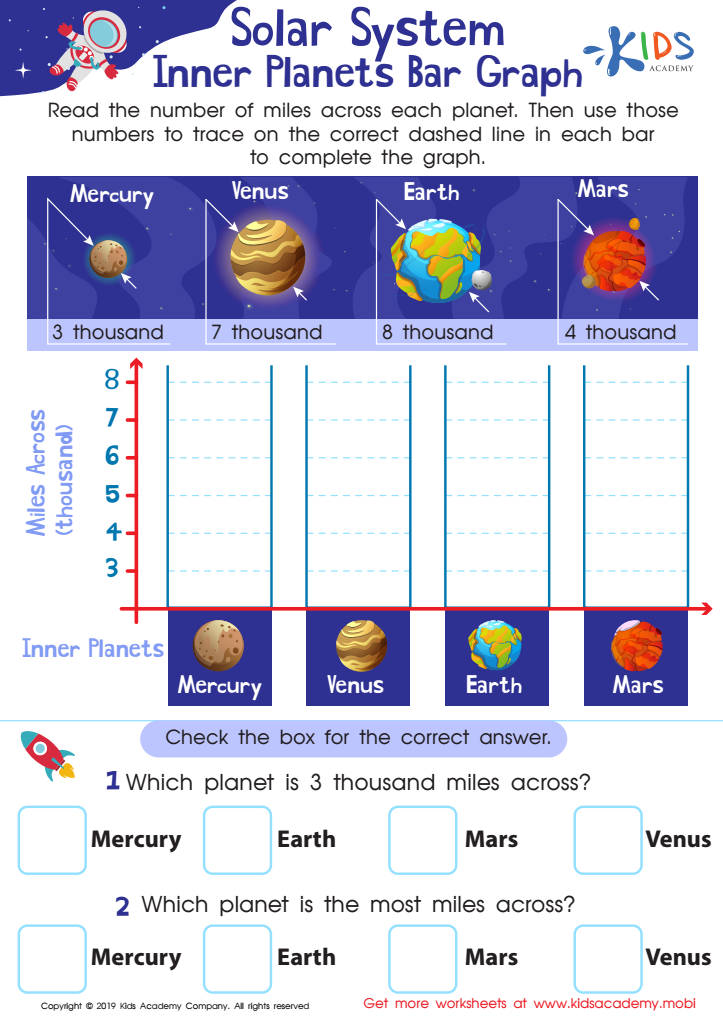
Planets Bar Graph Worksheet
With this fun, educational worksheet, kids can learn about bar graphs and the solar system simultaneously. Introduce them to the concept by reading out the number of miles for each planet, then help them trace the dashed lines in each bar to complete the graph.
 Assign to My Students
Planets Bar Graph Worksheet
Worksheet
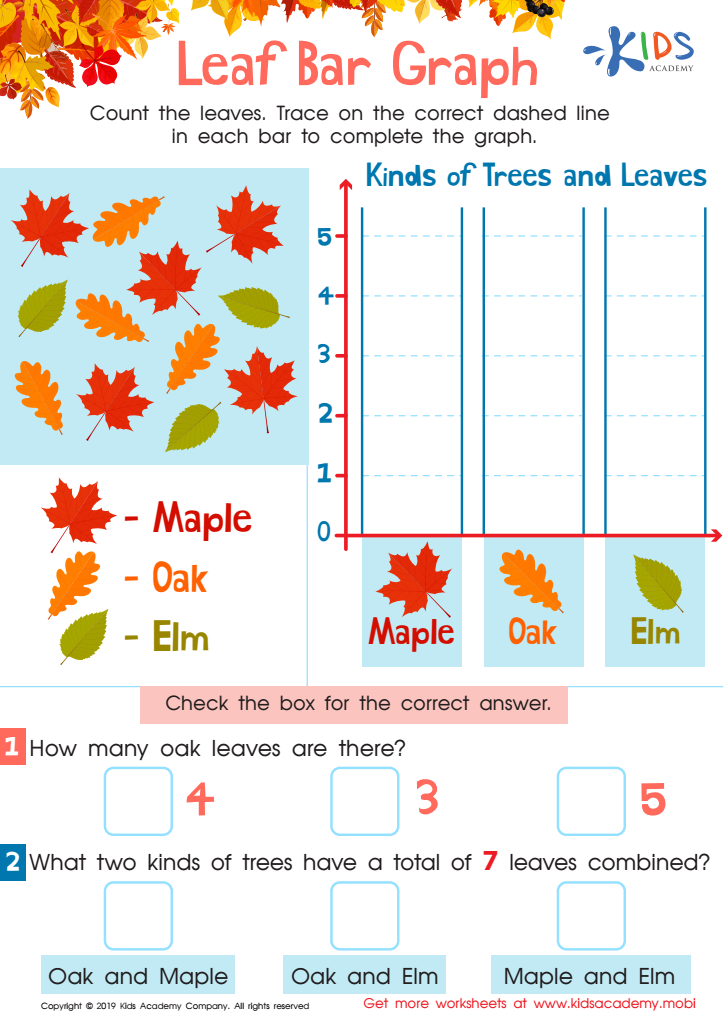
Leaf Bar Graph Worksheet
You can help your kids make learning easier and more enjoyable. While their teachers provide lessons and homework, you can take their education further. This worksheet can assist them in mastering bar charts. Count the leaves, then trace the correct line for each bar to complete the graph.
Leaf Bar Graph Worksheet
Worksheet
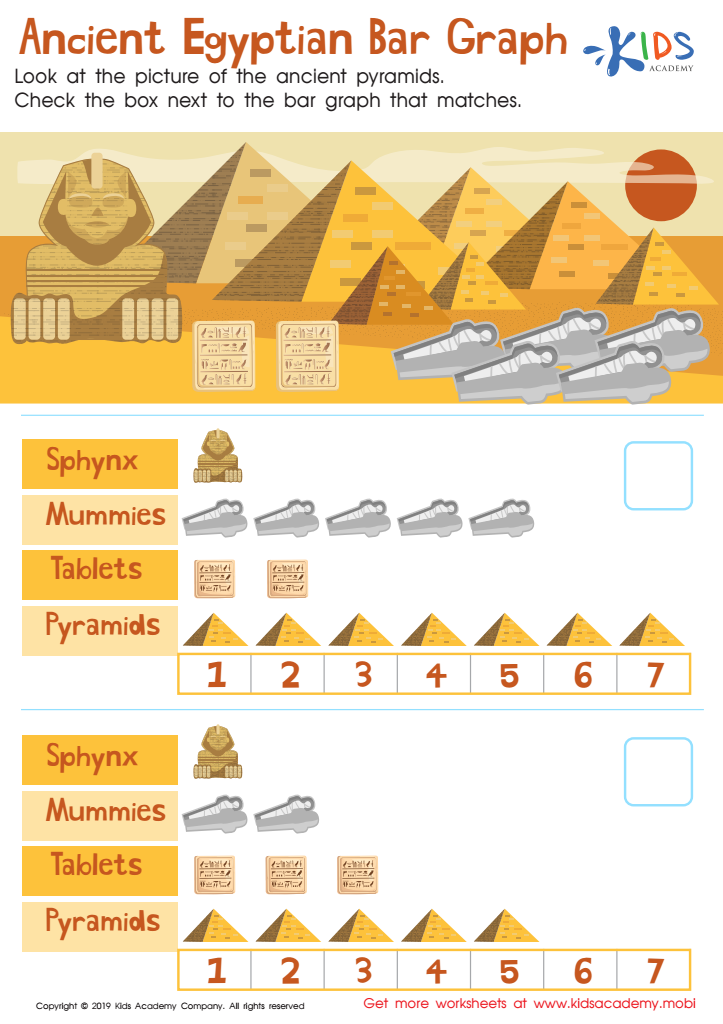
Egyptian Bar Graph Worksheet
Help your kids get a hang of bar graphs with this fun worksheet. Examine the picture of the ancient pyramids and help them match the bar graph to it. Check the box next to the correct bar graph and watch your little ones learn quickly!
Egyptian Bar Graph Worksheet
Worksheet
Join Kids Academy for Free
Who is primarily going to use this learning content?








Understanding bar graphs at an early age, between ages 3-8, is foundational for developing crucial mathematical and analytical skills. Bar graphs are simple yet powerful visual tools that help young children grasp concepts of comparison, measurement, and categorization. When children learn to interpret bar graphs, they become adept at observing and understanding differences in quantity—a skill that translates seamlessly into real-life decision-making, such as comparing the number of toys they have or the frequency of different fruits they eat.
Moreover, understanding bar graphs promotes cognitive development. It enhances a child's ability to think critically and analyze data, which are essential skills for academic success in subjects like math, science, and social studies. These skills are also vital in solving everyday problems and making informed decisions later in life.
For parents and teachers, introducing bar graphs early also supports national educational standards. Many curricula include data interpretation as a core competency in early education. Furthermore, engaging with bar graphs in playful and relatable contexts makes learning fun and effective. When children succeed in understanding and using simple graphs, it boosts their confidence and encourages a positive attitude toward learning complex subjects in the future.
In summary, bar graphs teach important concepts in a visual and interactive way, laying the groundwork for comprehensive mathematical understanding and critical thinking that benefits children throughout their educational journey and beyond.








