Comparing quantities Numbers Worksheets for Ages 3-8
4 filtered results
-
From - To
Discover engaging and educational Comparing Quantities Numbers Worksheets tailored for children ages 3-8. With our creative worksheets, young learners will develop essential math skills through fun and interactive activities. Kids will learn to compare numbers, understand greater than and less than concepts, and build a solid foundation for future math success. Perfect for in-class or at-home use, these worksheets are designed to strengthen critical thinking and problem-solving abilities. Bright visuals, cute designs, and age-appropriate challenges make learning enjoyable for young minds. Help your child boost their confidence with our expertly crafted Comparing Quantities Numbers Worksheets.
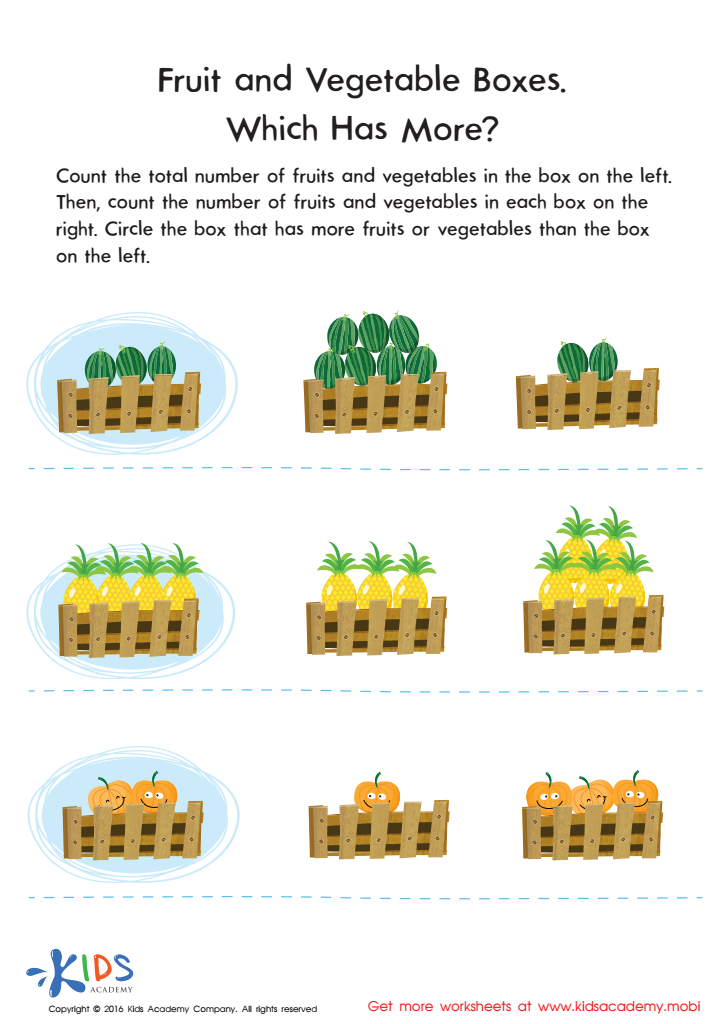
Which Has More? Size Worksheet
 Assign to My Students
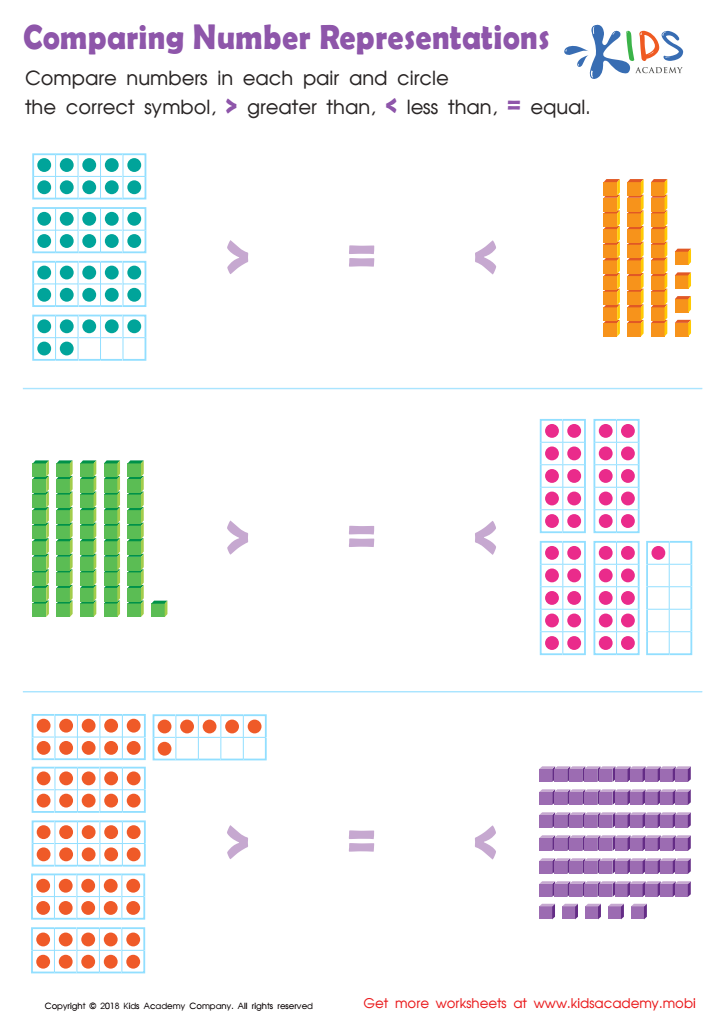
Comparing Number Representations Worksheet
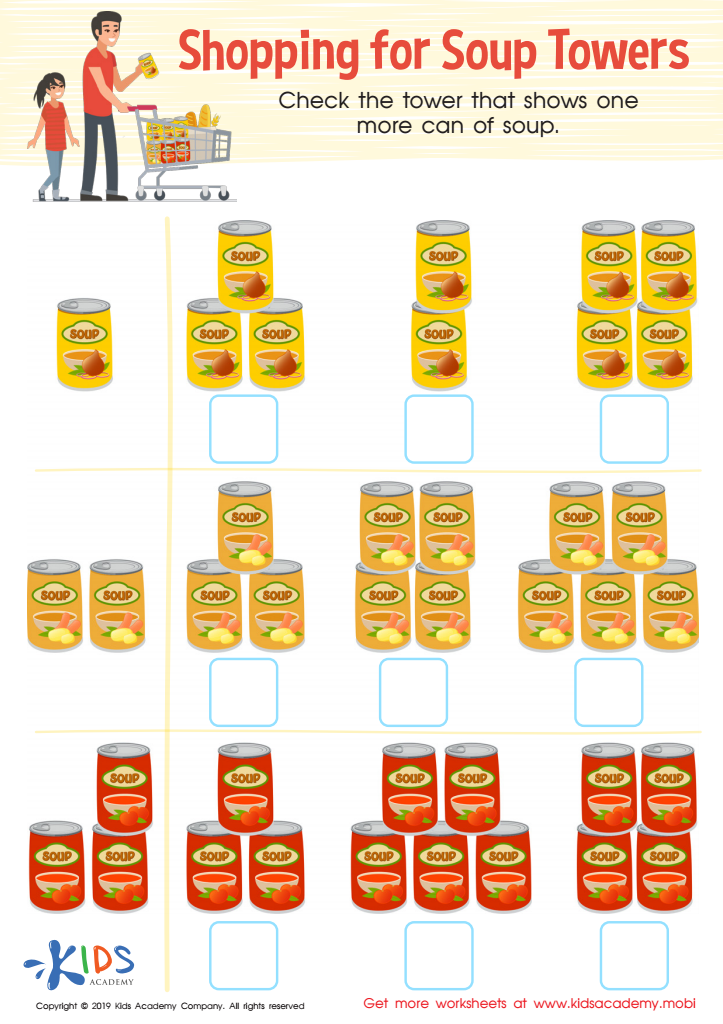
Soup Towers Worksheet
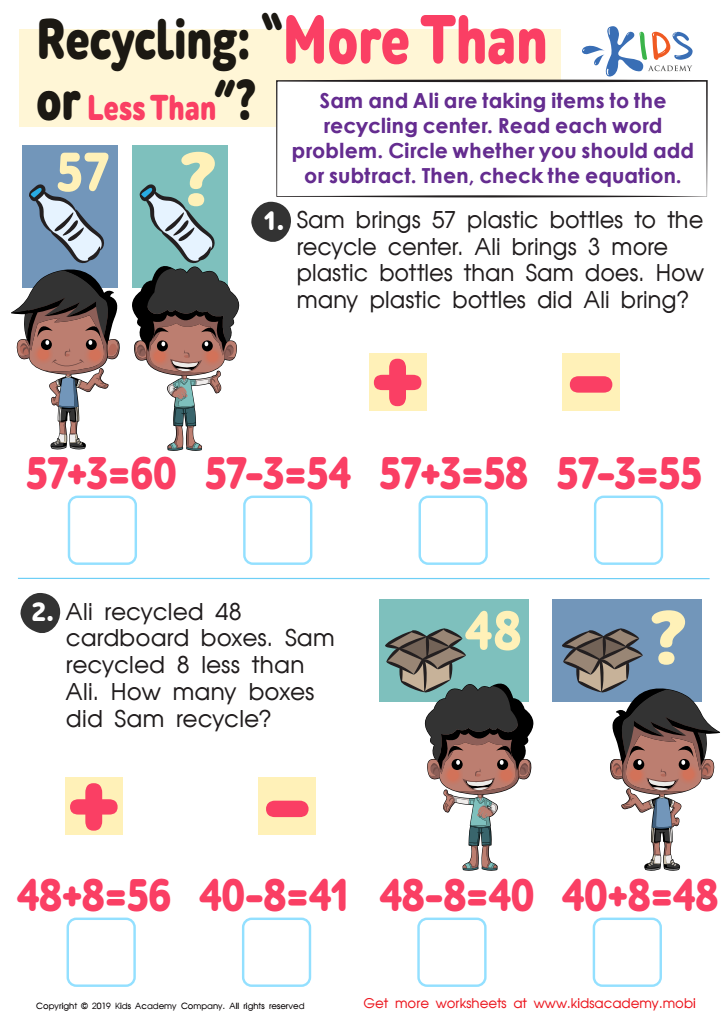
Recycling - More or Less Worksheet







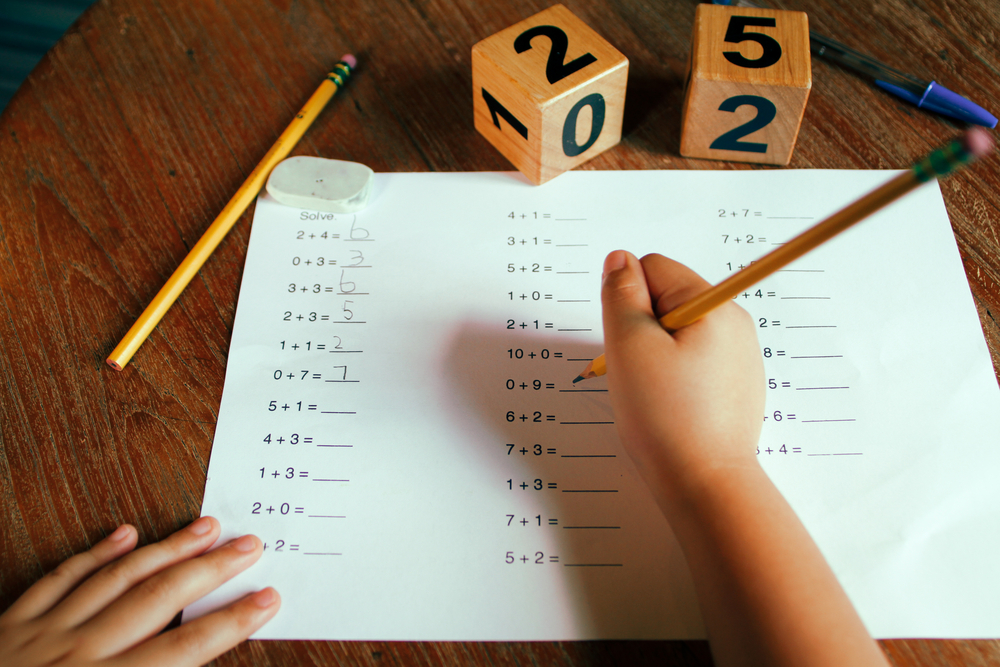
Understanding comparisons of quantities is a foundational math skill vital for children aged 3-8, as it serves as the basis for more advanced mathematical concepts. Parents and teachers should care about teaching this because it helps young learners develop their numerical sense, which is essential for understanding higher-level math topics such as addition, subtraction, and even algebra later on.
By learning to compare quantities, children grasp concepts like "more," "less," "equal to," and numerical ordering. These comparisons are directly tied to everyday decision-making and problem-solving skills, whether it's determining how many apples to share equally among friends or figuring out which jar has more cookies.
Engaging kids in activities that involve counting, measuring, and comparing quantities also bolsters their critical thinking and observation skills. It encourages them to articulate their thought process, enhancing their verbal communication abilities. Simple games, such as sorting objects by size or estimating amounts, make these lessons fun and interactive, fostering a positive attitude toward learning.
Furthermore, early mastery of comparison skills boosts children’s confidence in their math abilities, making them more likely to excel and maintain an interest in STEM-related fields in the future. Hence, parents and teachers play a crucial role in providing the appropriate experiences and support to nurture this essential skill set.








