Learning addition Numbers Worksheets for Ages 3-8
4 filtered results
-
From - To
Welcome to our Learning Addition Numbers Worksheets for Ages 3-8! Designed to make early math fun and engaging, these colorful worksheets help young learners build fundamental addition skills. Our resources cater to various skill levels, ensuring a gradual learning experience for everyone. Each worksheet features vibrant illustrations and interactive exercises that promote critical thinking and problem-solving. As children practice addition, they'll strengthen their number recognition, boost confidence, and develop a love for math. Perfect for homeschooling, classroom settings, or extra practice at home. Dive into the world of numbers and watch your child's math skills flourish with our exceptional resources!
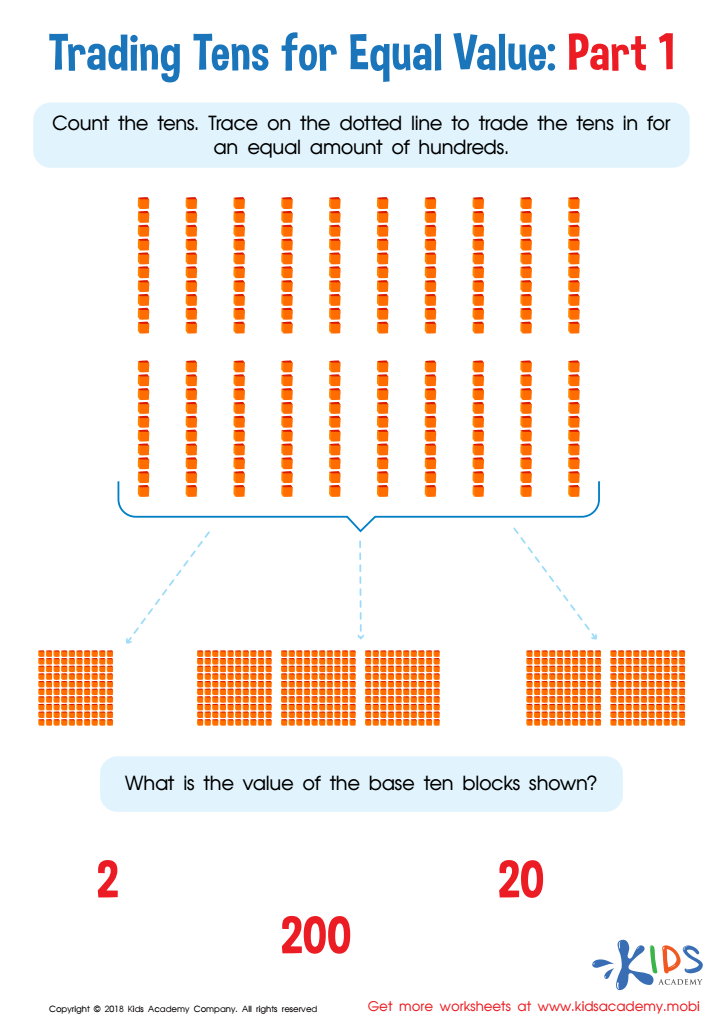
Trading Tens for Equal Value Worksheet: Part 1
 Assign to My Students
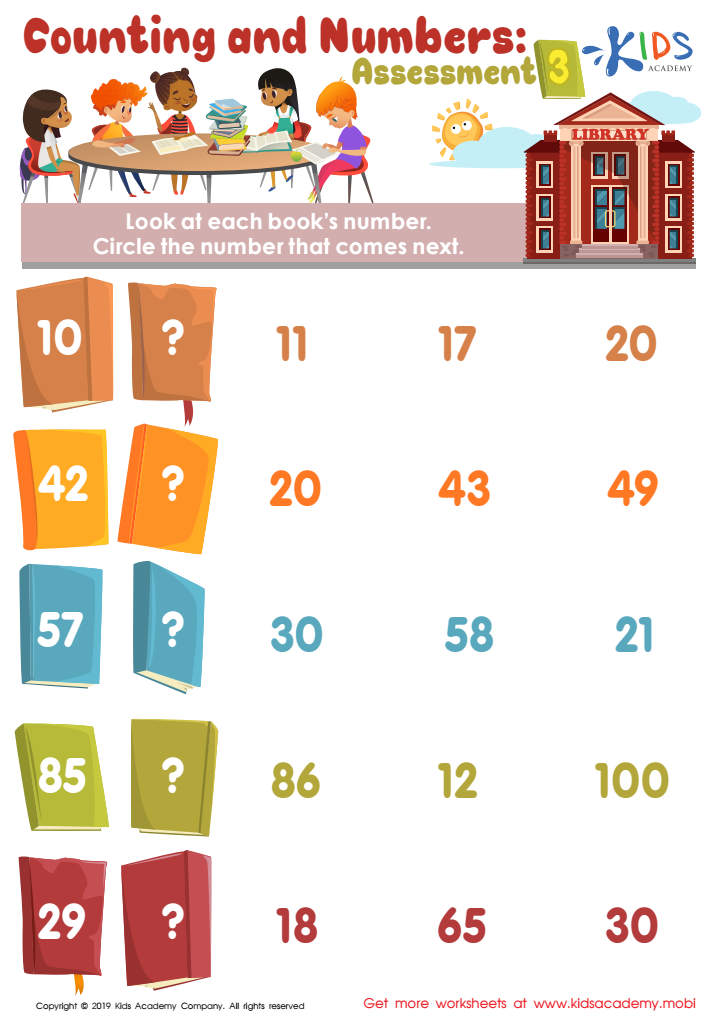
Counting and Numbers: Assessment Worksheet
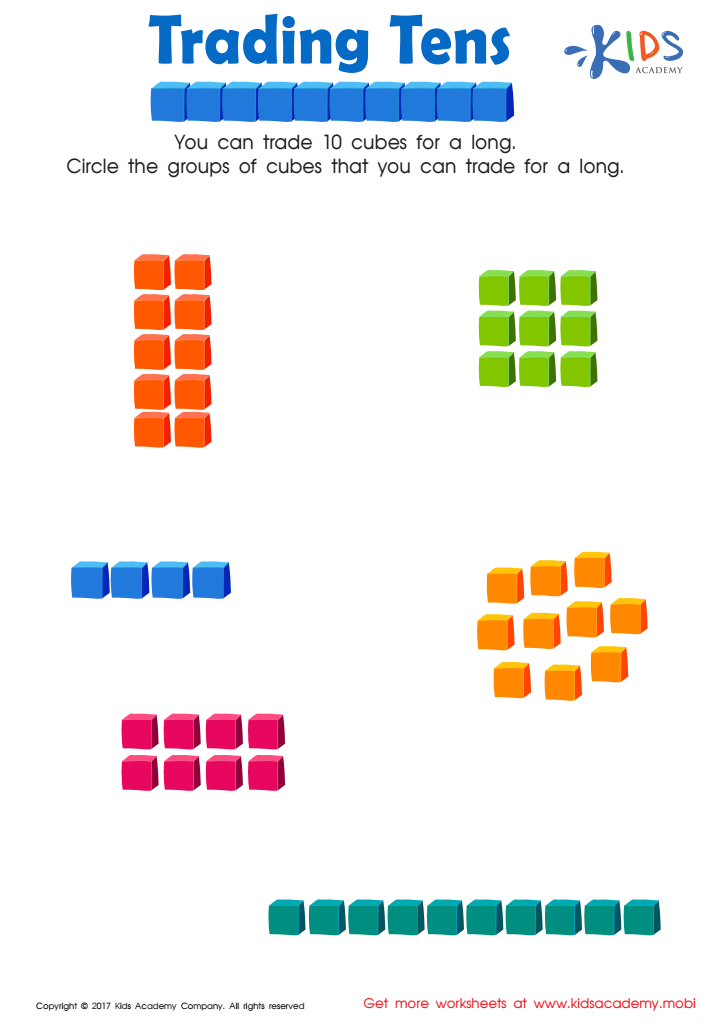
Trading Tens Worksheet
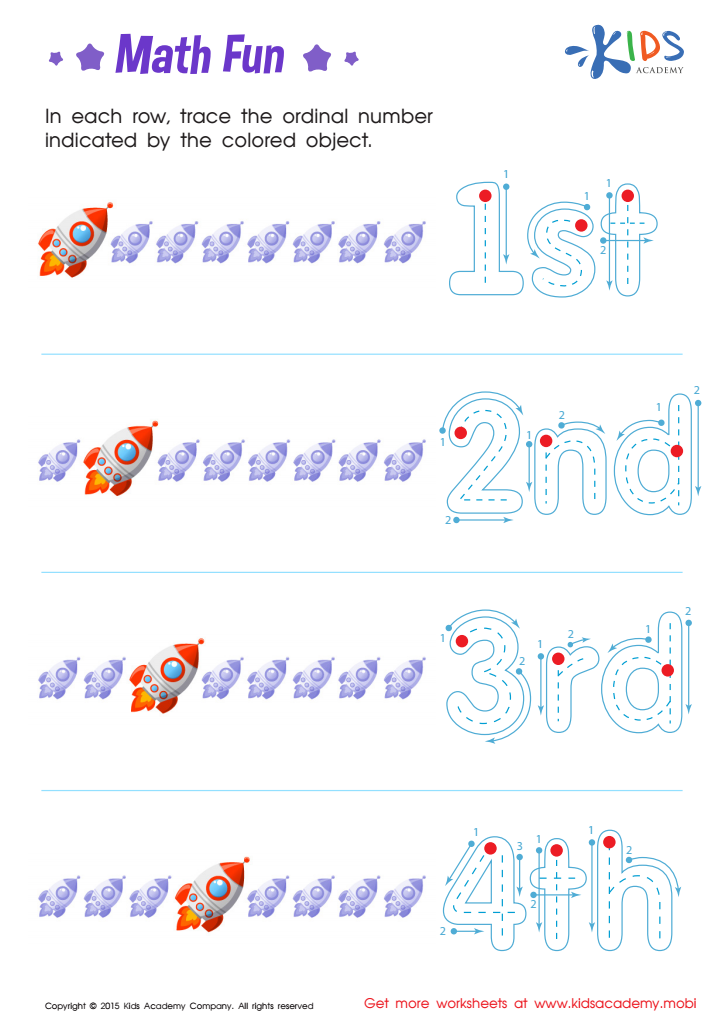
Ordinal Numbers: Math Fun Worksheet








Learning addition is a fundamental skill for children aged 3-8, laying the groundwork for their overall mathematical understanding. This period is crucial for cognitive development; early exposure to addition fosters critical thinking and problem-solving abilities. By introducing children to addition in a playful and engaging manner, teachers and parents can create a positive association with math, helping to reduce anxiety and build confidence in their mathematical abilities.
Building a strong foundation in addition not only prepares children for more complex mathematical concepts later on, but it also enhances their everyday life skills, such as managing money, counting objects, and scheduling activities. Incorporating real-life scenarios can make learning relevant and enjoyable, boosting a child's motivation to learn.
Additionally, learning addition enhances children's language skills, as they learn to articulate problems and solutions. Collaborative activities, such as games or group exercises, encourage social interaction and teamwork, vital aspects of early childhood learning.
Ultimately, supporting children in mastering addition not only equips them with essential academic skills but also lays the groundwork for a proactive attitude towards learning. Parents and teachers who focus on integrating addition in diverse and interactive ways contribute significantly to a child's educational journey and lifelong love for learning.








