Logical thinking Numbers Worksheets for Ages 3-8
5 filtered results
-
From - To
Introduce your child to the world of numbers with our "Logical Thinking Numbers Worksheets for Ages 3-8." Designed by educational experts, these engaging worksheets foster critical thinking through fun, number-based activities. Each worksheet aims to enhance your child's numerical understanding, pattern recognition, and problem-solving skills in a playful yet educational manner. Perfect for preschool and early elementary students, our resources lay a strong foundation for future math success. Equip your little one with the tools to develop logical thinking and a love for numbers, making learning an enjoyable journey with Kids Academy!
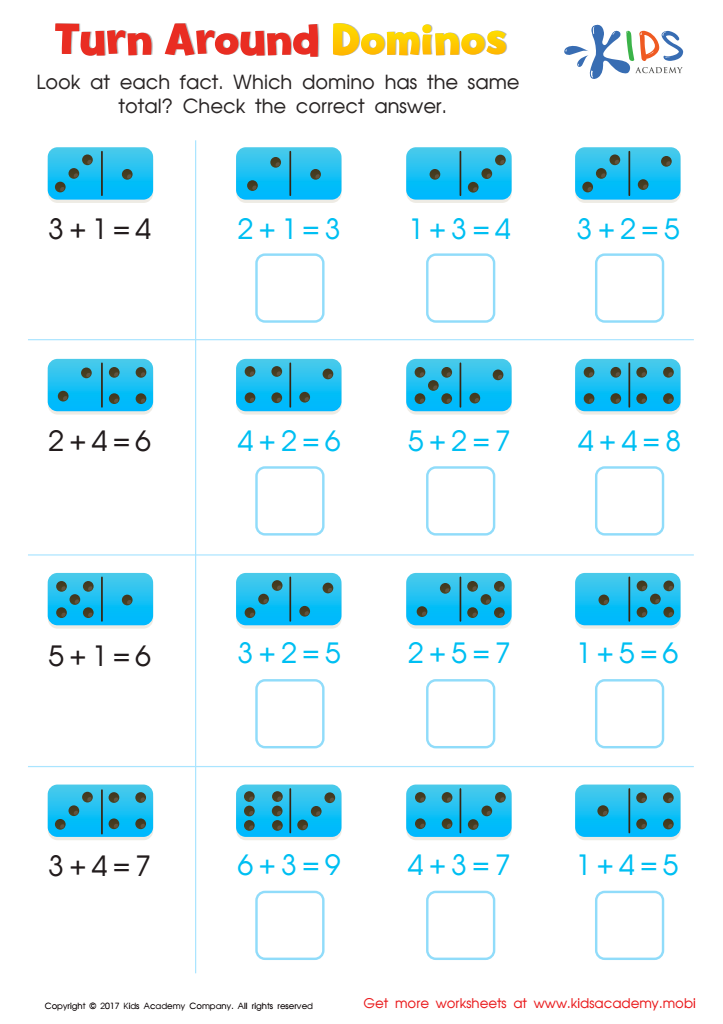
Turn Around Dominos Worksheet
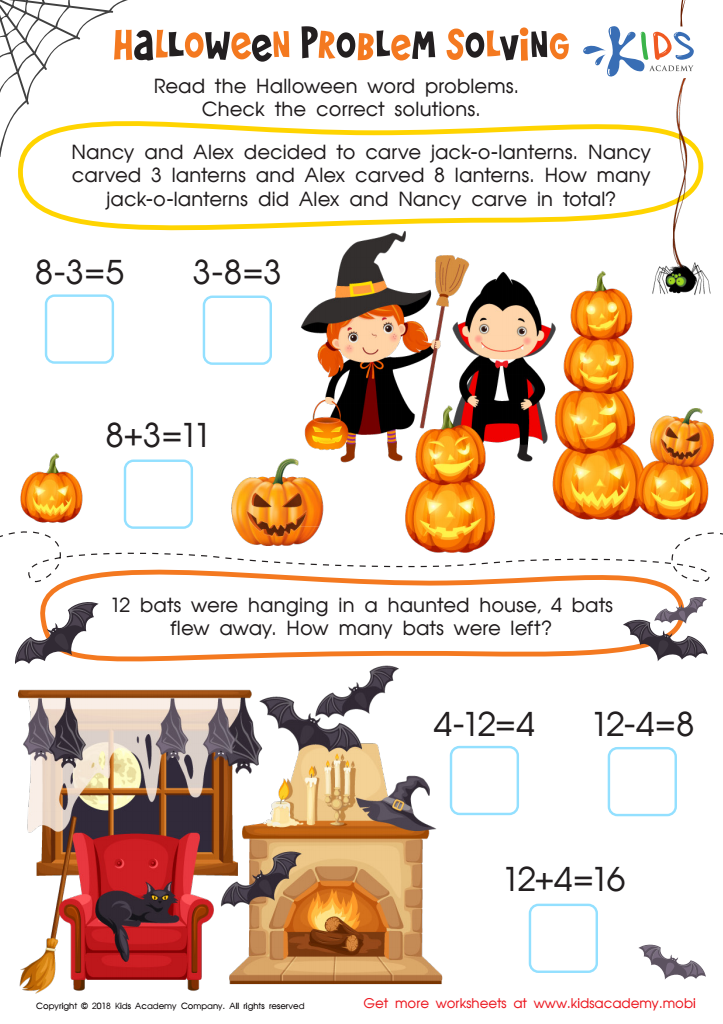
Halloween Problem Solving Worksheet
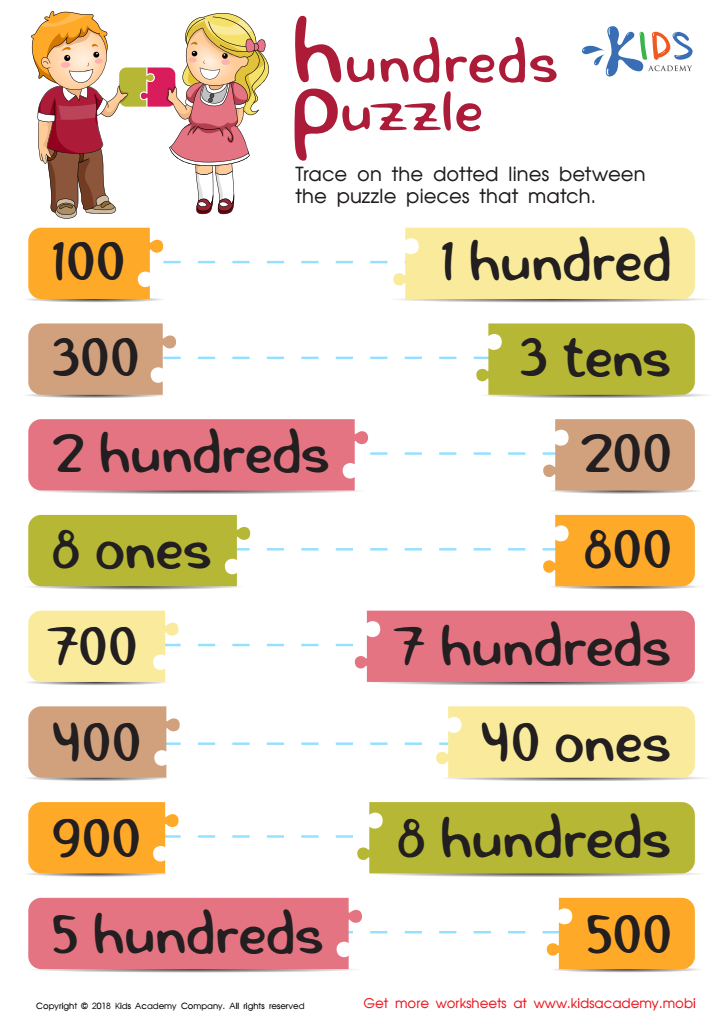
Hundreds Puzzle Worksheet
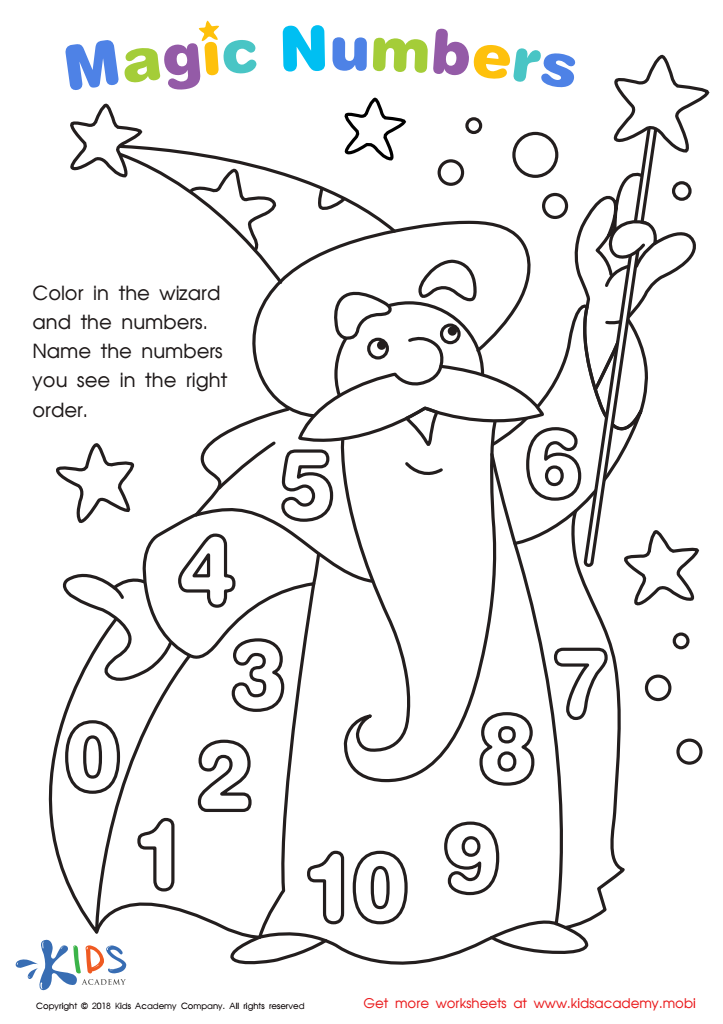
Magic Numbers Worksheet
 Assign to My Students
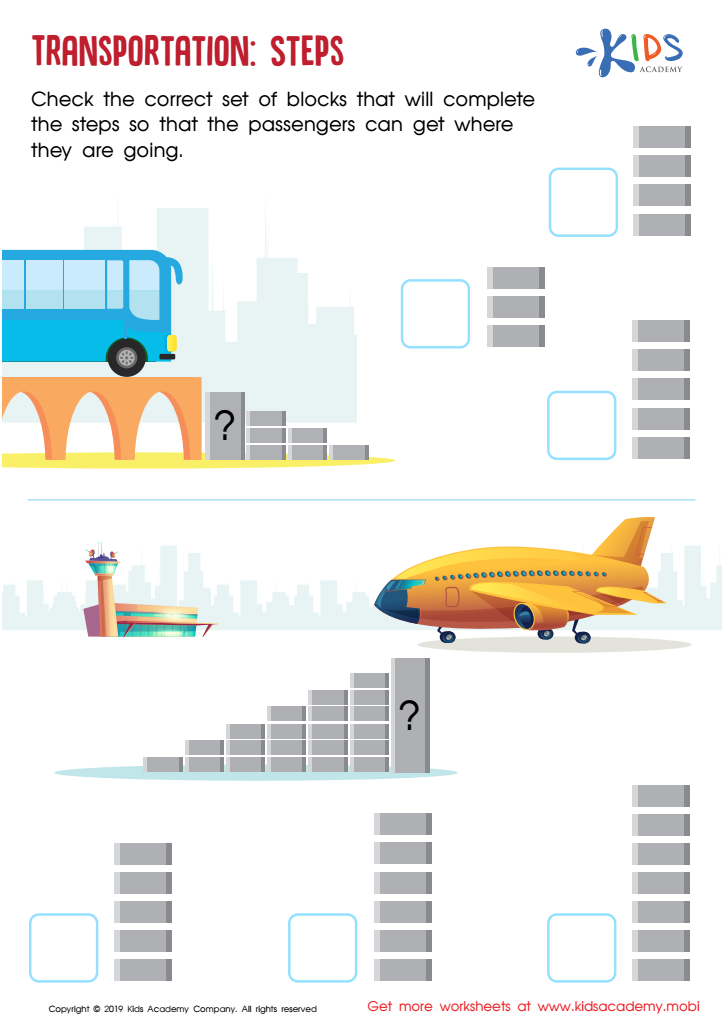
Transportation: Steps Worksheet








Logical thinking skills are crucial for young children, and engaging them with numbers helps lay a solid foundation for future learning. For ages 3-8, logical thinking with numbers enhances their ability to reason, solve problems, and understand cause and effect.
One primary reason parents and teachers should care is that activities like counting, sorting, and pattern recognition stimulate cognitive development. When children practice these skills, they're not just learning numbers; they're developing the ability to think logically and apply these skills across various subjects and everyday situations. This fosters critical thinking skills that help children navigate complex tasks and make sound decisions.
Moreover, understanding numbers and basic math concepts early can set children on a successful academic path. Early exposure helps them grasp more challenging mathematical and logical concepts later on. Engaging with numbers through play and practical activities also makes learning enjoyable, instilling a positive attitude toward education.
Lastly, logical thinking enhances social experiences. Collaborative problem-solving and sharing solutions with peers build communication skills and self-confidence. Therefore, focusing on logical thinking and numbers in early childhood education is essential, as it builds the cognitive and social tools needed for lifelong learning and success.








