Analog Clock Understanding Math Worksheets for Ages 3-8
3 filtered results
-
From - To
Explore our engaging Analog Clock Understanding Math Worksheets designed for children ages 3-8! These resources help young learners master telling time on analog clocks through fun and interactive activities. This collection includes visually appealing worksheets that simplify complex concepts, allowing children to grasp hours and minutes in an enjoyable way. Ideal for parents, teachers, and caregivers, our worksheets promote essential math skills while fostering cognitive development. Use these worksheets in classrooms or at home to enhance your child's understanding of time. Unlock their potential with activities that build confidence and help them become skilled at reading analog clocks!
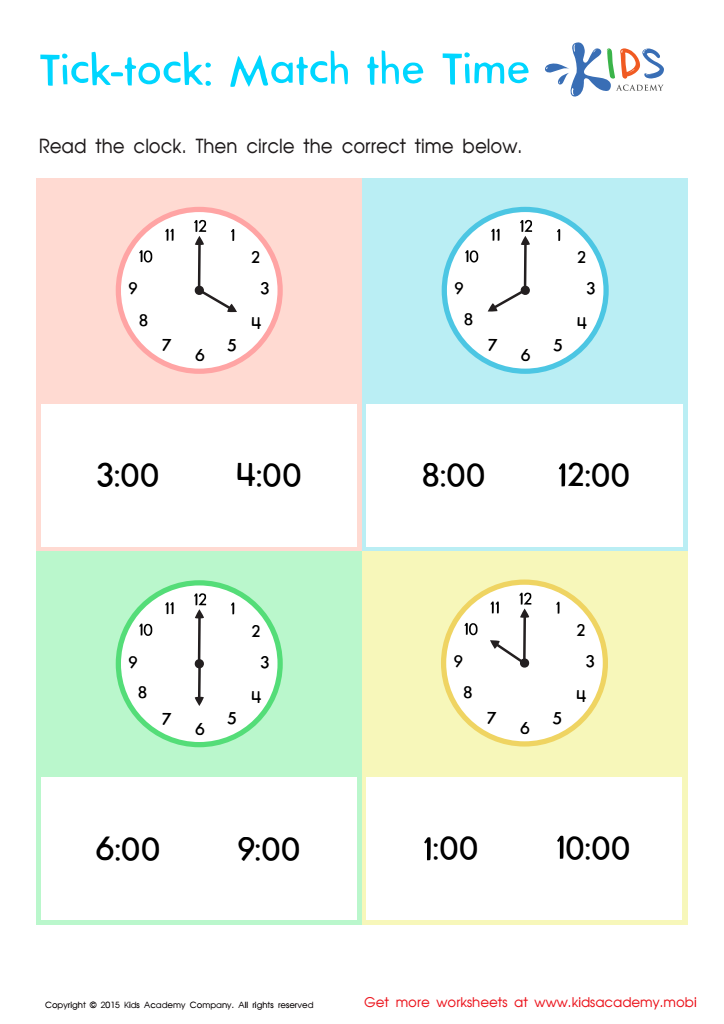
Telling The Time Worksheet: Part 4
 Assign to My Students
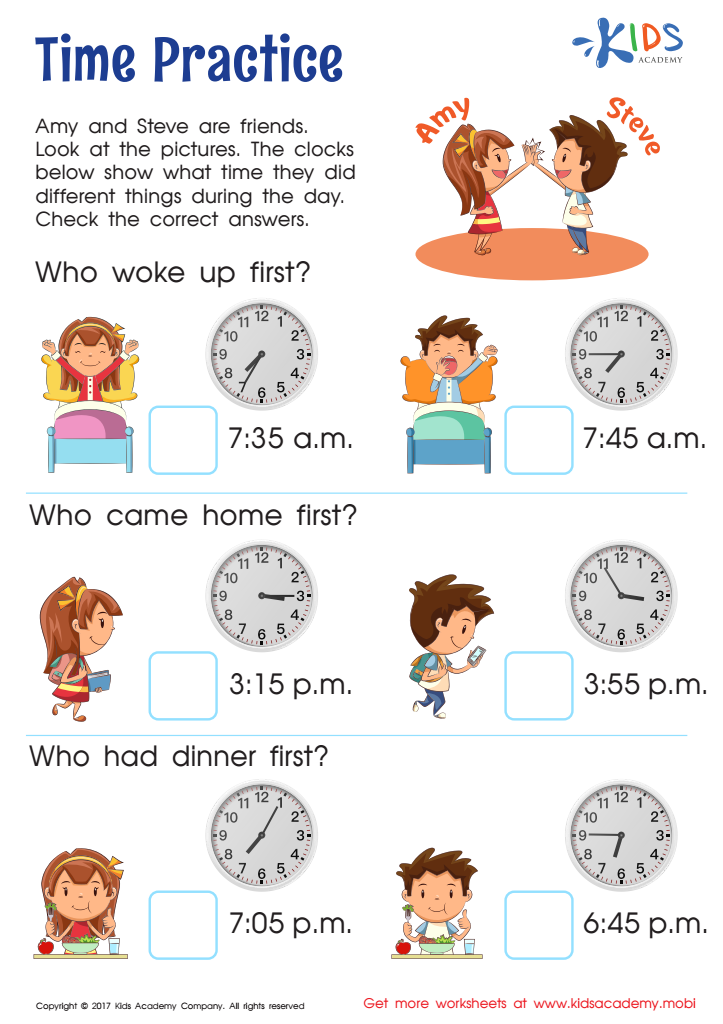
Time Practice Worksheet
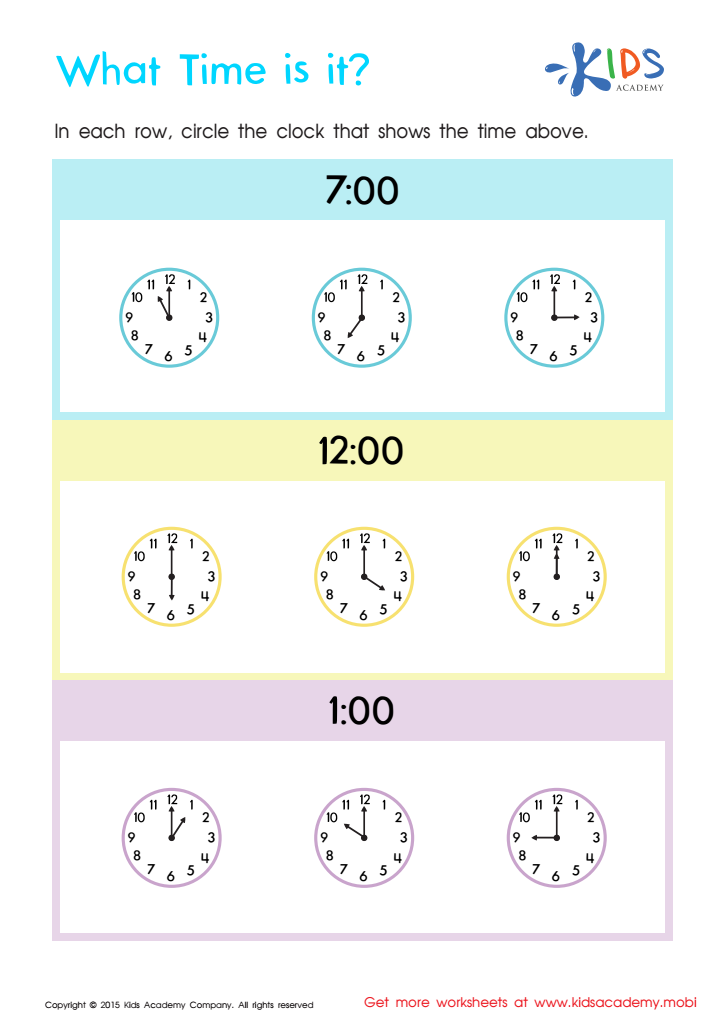
Telling The Time Worksheet: Part 3


.jpg)




.jpg)
Understanding analog clocks is crucial for children aged 3-8, as it provides foundational math skills and fosters critical cognitive development. Learning to read analog clocks enhances spatial awareness and fine motor skills, allowing children to engage with both numbers and hands. Unlike digital representations, analog clocks require children to interpret positions and angles, fostering a deeper understanding of time as a continuous concept.
Moreover, comprehending how to tell time encourages the development of crucial mathematical skills such as counting, addition, and subtraction, as children learn to calculate intervals and durations. This understanding of time can also teach important life skills, such as the concept of routine, punctuality, and time management—all essential for later school success and personal growth.
Engaging with analog clocks introduces children to patterns and sequences, reinforcing their overall mathematical literacy. It also provides opportunities for teachers and parents to bond during the learning process, promoting an interactive and supportive learning environment. Ultimately, equipping young children with the ability to read analog clocks lays the groundwork for future mathematical concepts, cultivates independence, and empowers them to relate more effectively to the world around them.








