Boost critical thinking Math Worksheets for Ages 3-8
4 filtered results
-
From - To
Discover a collection of expertly designed Boost Critical Thinking Math Worksheets for children aged 3-8. Engage young learners with fun, interactive activities that develop essential math skills while enhancing their critical thinking abilities. These worksheets are perfect for parents and educators seeking effective, age-appropriate resources to foster a strong foundation in mathematics. Watch your child or student confidently tackle challenges, from problem-solving to logical reasoning, through enjoyable exercises tailored to their developmental stages. Start nurturing sharp mathematical minds today and give them the tools they need to excel in their early educational journey with our comprehensive worksheet collection!

 Assign to My Students
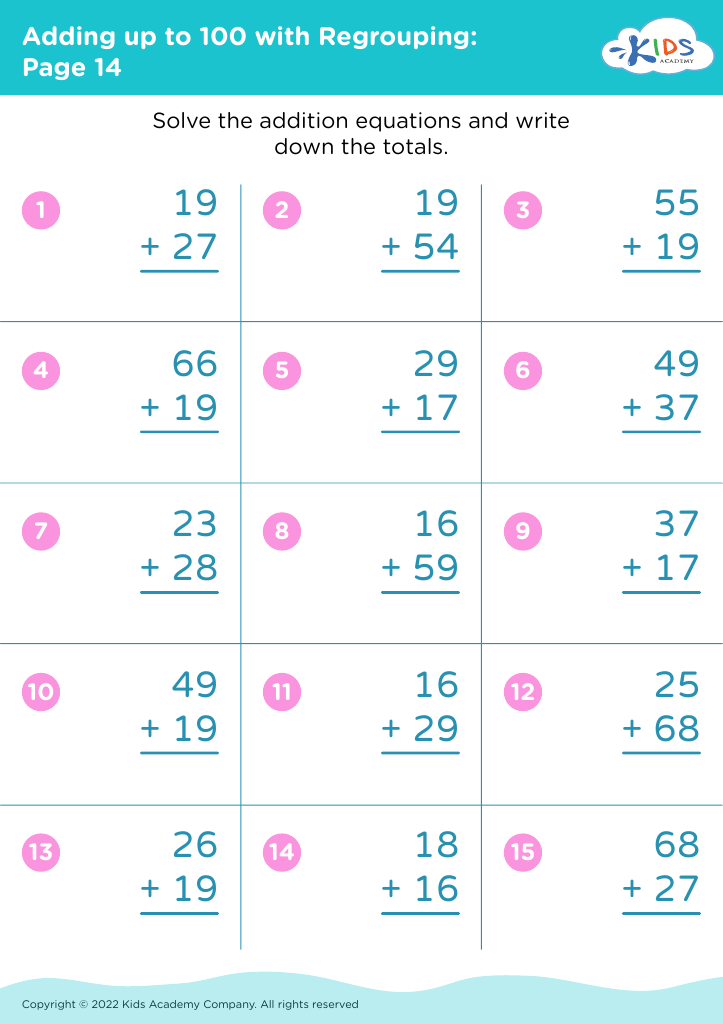
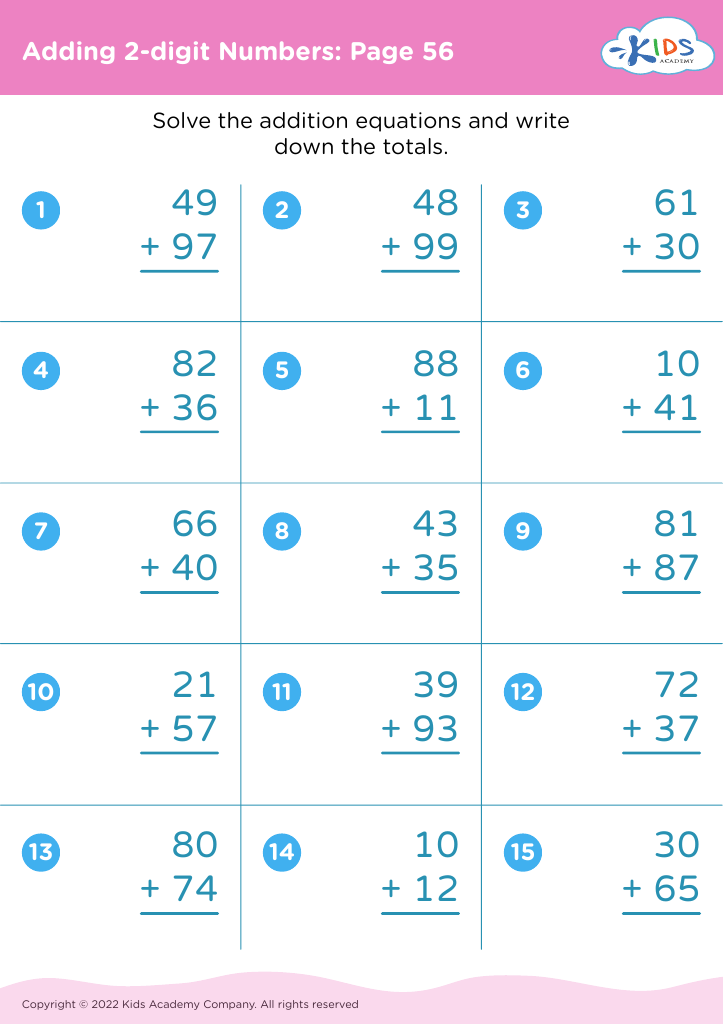
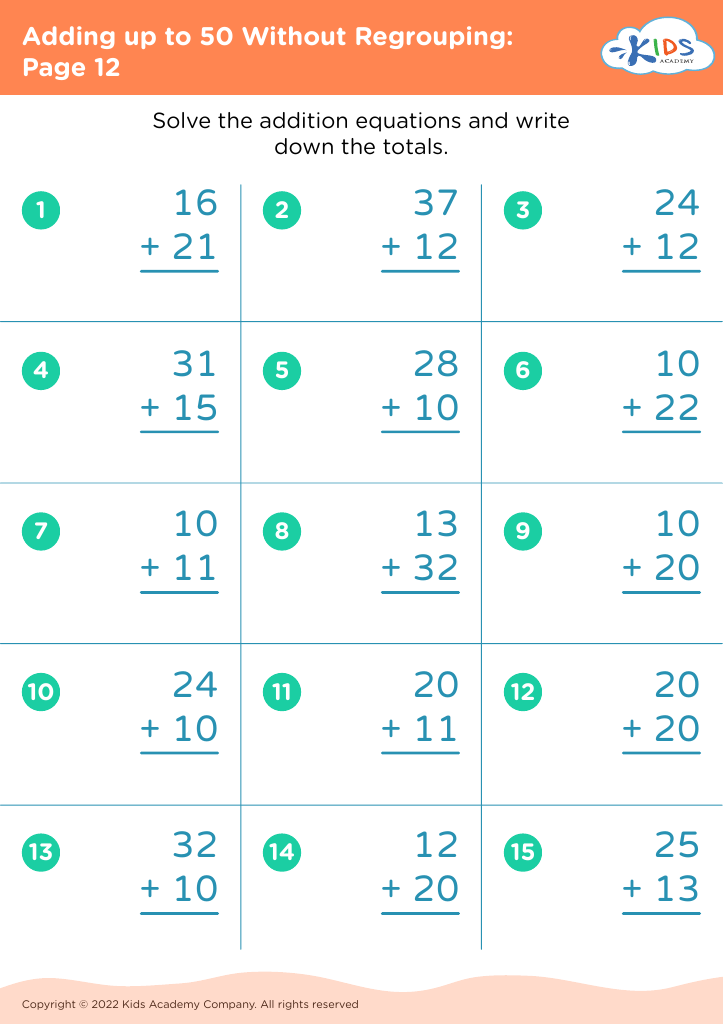







Encouraging critical thinking in math for ages 3-8 is crucial because it lays a strong educational foundation, fosters problem-solving skills, and enhances cognitive development. During these formative years, children's brains are highly adaptable and capable of absorbing new concepts rapidly. Introducing critical thinking through math helps children understand relationships, recognize patterns, and develop logical reasoning skills early on.
For parents, supporting critical thinking in math helps their children gain confidence in their problem-solving abilities. It equips children with the tools to tackle challenges independently, promoting a growth mindset where they view difficulties as opportunities to learn rather than insurmountable obstacles. Moreover, the skills acquired can be transferred to other subjects and everyday situations, leading to more successful lifelong learning.
Teachers benefit from instilling critical thinking in young students as it makes the learning process more engaging and interactive. Instead of rote memorization, students learn to think deeply about problems and understand the "why" and "how" behind mathematical concepts. This approach can lead to improved academic performance and a greater appreciation for learning.
By investing in critical thinking at an early age, parents and teachers can ensure a solid educational start that prepares children for future academic and life challenges.








